Ikkyu san, known for his “tonchi” (witty tricks), is still loved by many people today as a Zen monk who lived during the Muromachi period and as a character in a nationally beloved anime. Throughout Kyoto Prefecture, there are many temples associated with Ikkyu san, which have become popular pilgrimage destinations for history enthusiasts and anime fans alike.
In this article, we will trace the life of Ikkyu san and introduce in detail the major pilgrimage sites within Kyoto Prefecture. We will comprehensively explain admission fees, access information, and highlights of each temple, so please use this as a guide for planning your pilgrimage.
Who is Ikkyu Soujun? Learning About the Historical Ikkyu san
The Life and Character of Ikkyu san
Ikkyu Soujun (1394-1481) was a Zen monk of the Rinzai sect’s Daitoku-ji branch, representing the Muromachi period. His childhood name was Chigiku-maru, and he is said to have been of noble birth, either descended from Emperor Kommatsu or Ashikaga Yoshimitsu.
At age 6, he entered Ankoku-ji in Kyoto and was given the name Shuuken. He later studied under Kenno Soui and underwent strict training under Kasou Soudon. At age 21, there is a famous anecdote that he attained great enlightenment after listening to the sound of a crow cawing all night by Lake Biwa.
Zen Master Ikkyu was known for his unconventional behavior, openly eating meat and maintaining a wife, while criticizing established authority. However, he was simultaneously respected as a high priest who had attained a profound state of Zen. He spent his final years at Ikkyu-ji temple, where he passed away at age 88.
The Anime “Ikkyu san” and the Historical Ikkyu Soujun
The television anime “Ikkyu san,” broadcast in the 1970s, was based on “Ikkyu Banashi” (Tales of Ikkyu), a collection of anecdotes from the Edo period. The anime depicts young Ikkyu san during his training at Ankoku-ji, solving various difficult problems with his witty tricks.
The actual Ikkyu Soujun was not just a cute child as shown in the anime, but a person who lived a bold and free-spirited life even in adulthood. He excelled in poetry, calligraphy, and painting, leaving behind a collection of poems called “Kyoun-shu,” demonstrating his talents as a versatile cultural figure.
Shuuon-an Ikkyu-ji: The Place of Ikkyu san’s Final Days
The History and Origins of Ikkyu-ji
Shuuon-an, commonly called “Ikkyu-ji,” is a temple of the Rinzai sect’s Daitoku-ji branch located in Yakidono-chi, Kyotanabe City, Kyoto Prefecture. Originally called Myosho-ji, it was founded as a Zen training hall by Daio Kokushi during the Shoo era (1288-1293).
Later, the temple fell into disrepair after the fires of the Genko Rebellion. It was revived by Zen Master Ikkyu, a six-generation dharma heir, in 1456 (Kansho 2). Zen Master Ikkyu named it “Shuuon-an” to repay the kindness of his teacher Kasou Soudon, and spent his final 20 years there, passing away at age 88 in 1481 (Bunmei 13).
Highlights of Ikkyu-ji
The Abbot’s Residence Garden
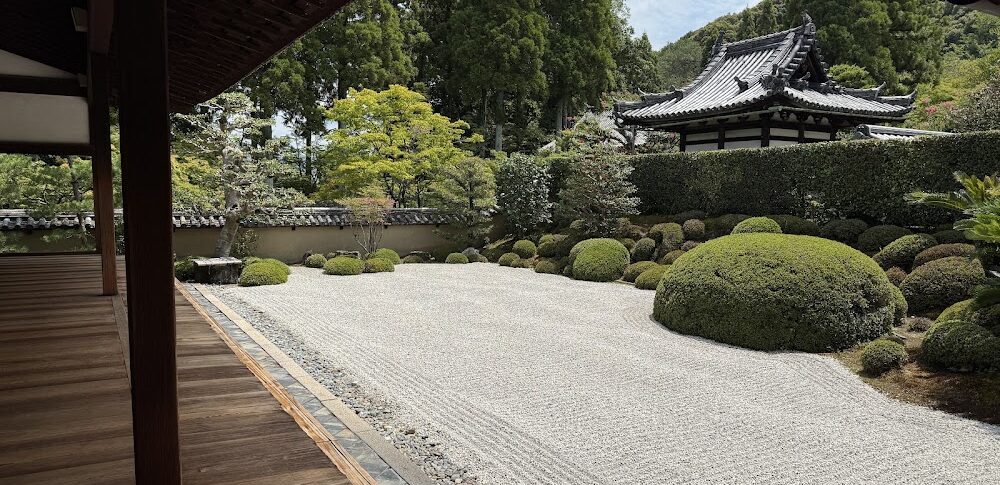
The garden of Ikkyu-ji’s abbot’s residence is a beautiful dry landscape garden designated as a National Place of Scenic Beauty. Composed of white sand and stone arrangements, it expresses the Zen worldview. The garden offers seasonal views throughout the year. Particularly during autumn foliage season, the red and golden maples paint the garden in color, making it a hidden gem where you can enjoy autumn leaves quietly away from central Kyoto.
Wooden Statue of Zen Master Ikkyu
An life-size wooden statue of Zen Master Ikkyu is enshrined in the main hall, which the master himself is said to have commissioned. This statue is designated as an Important Cultural Property and serves as a precious record of the zen master’s appearance during his lifetime.
Kokyuu-an (Tiger Hill Hermitage)
The hermitage where Zen Master Ikkyu actually lived and worked, displaying items the master cherished. It is occasionally opened to the public for special viewings, providing a precious opportunity to directly experience the living space of Ikkyu san.
Treasure Hall
Ink paintings, calligraphy, paintings, and personal belongings of Zen Master Ikkyu are displayed here. This important facility allows visitors to understand the master’s cultural contributions.
Admission Information
Visiting Hours
- 9:00 AM to 5:00 PM (Treasure Hall: 9:30 AM to 4:30 PM)
- Open year-round
Admission Fees
- Adults: 500 yen
- High and middle school students: 400 yen
- Elementary school students: 250 yen
- Treasure Hall: Additional 500 yen
Access
- From JR Gakken Toshi Line “Kyotanabe Station” or Kintetsu Kyoto Line “Shintanabe Station,” take Keihan Bus to “Ikkyu-ji-michi” stop, then walk about 7 minutes
- By car: About 5 minutes from Kyoto-Nara Expressway “Tanabe-nishi IC,” free parking available
Address
102 Yakidono-chi, Kyotanabe City, Kyoto Prefecture 610-0341
Annual Events at Ikkyu-ji
Various events are held at Ikkyu-ji throughout the year. Most notably, the “Ikkyu-ji Takigi-no” is held every autumn, where Noh theater is performed in the temple grounds. It is popular as a rare opportunity to enjoy traditional performing arts in a mystical atmosphere.
During the fall foliage season, the temple is also featured in the “Sou da, Kyoto, Iko.” campaign, attracting many tourists.
Daitoku-ji: The Headquarters of the Rinzai Sect That Ikkyu san Revived
The History of Daitoku-ji and Ikkyu Soujun
Daitoku-ji is the head temple of the Rinzai sect’s Daitoku-ji branch, located in Murasaki-no, Kita Ward, Kyoto City. Though founded by Daito Kokushi during the Kamakura period, most of it was destroyed and fell into ruin during the Onin War (1467-1477).
It was Ikkyu Soujun who revived this devastated Daitoku-ji. At age 81, Zen Master Ikkyu took the position of chief priest and devoted himself to reconstructing the temple buildings destroyed in war. With support from wealthy merchants in Sakai and nobility, Daitoku-ji was successfully revived, establishing the foundation for the vast temple complex seen today.
Highlights of Daitoku-ji
The Main Gate (Kinmou-kaku)
The main gate of Daitoku-ji is known for having been donated by Sen no Rikyu, who enshrined his own wooden statue there. This statue offended Toyotomi Hideyoshi, becoming one of the factors leading to Rikyu’s forced suicide. A wooden statue of Zen Master Ikkyu is also enshrined in the second floor.
The Dharma Hall
Designated as an Important Cultural Property, the Dharma Hall contains a ceiling painting of a “Cloud and Dragon” attributed to Kano Motonobu. It is famous as the “Eight-Direction-Gazing Dragon,” which appears to gaze down from any viewing angle.
Subsidiary Temple Compounds
Daitoku-ji has over 20 subsidiary temple compounds, each with its own unique charm.
- Shinjuan: A subsidiary temple founded by Ikkyu Soujun, normally closed to the public but accessible during special viewings, where you can see items associated with Zen Master Ikkyu and sliding door paintings by contemporary artists. It is also famous for its “Seven-Five-Three Garden,” a dry landscape garden.
- Daisen-in: Known as a masterpiece of dry landscape gardens, it is designated as a National Special Place of Scenic Beauty and Historic Site.
- Koto-in: Associated with Hosokawa Tadaoki and his wife Gracia, it is popular as a spot for viewing autumn foliage.
Admission Information for Daitoku-ji
Visiting Hours
- Temple grounds: Open to public (subsidiary temples vary by temple)
Admission Fees
- Temple grounds: Free (subsidiary temples vary, usually 400-500 yen)
Access
- City Bus “Daitoku-ji-mae” stop, immediate vicinity
- From Kyoto Station: About 35 minutes by City Bus routes 205 or 206
Address
53 Daitoku-ji-cho, Murasaki-no, Kita Ward, Kyoto City, Kyoto Prefecture 603-8231
Ankoku-ji: The Training Ground That Became the Anime Setting
Ankoku-ji in Ayabe City, Kyoto Prefecture
The “Ankoku-ji” where young Ikkyu san trains in the anime “Ikkyu san” is said to be modeled after Ankoku-ji in Ayabe City, Kyoto Prefecture. This temple is one of the Ankoku-ji temples built nationwide by Ashikaga Takauji, and is a different temple from the Ankoku-ji in central Kyoto where Ikkyu Soujun actually spent his childhood, but it is known as a pilgrimage destination for anime fans.
Highlights of Ankoku-ji
Ankoku-ji in Ayabe is a Zen temple nestled in a quiet mountain village, with beautifully maintained main hall and gardens. It has an atmosphere that overlaps with the anime imagery and holds a special place for Ikkyu san fans.
Admission Information
- Visiting hours: 9:00 AM to 5:00 PM
- Admission: Donation
- Access: Bus or taxi from JR Ayabe Station
Address
Ankoku-ji-cho, Ayabe City, Kyoto Prefecture
The Actual Ankoku-ji Where Ikkyu san Trained
Historically, Ikkyu Soujun entered Ankoku-ji in central Kyoto at age 6. This temple no longer exists today, but it is remembered as an important place where we can recall Ikkyu san’s training period.
Kenninji: A Zen Temple Associated with Ikkyu san
Kenninji in Higashiyama Ward, Kyoto City, is the head temple of the Kenninji branch of the Rinzai sect and is associated with Ikkyu Soujun. Zen Master Ikkyu is said to have also trained at Kenninji, and it is known as one of Kyoto’s Five Great Zen Temples, a temple of high prestige.
Highlights of Kenninji
- Fujin Raijin Zu Byobu (Wind God and Thunder God Folding Screen): A National Treasure by Tawaraya Sotatsu (currently a reproduction is displayed; the original is held by the Kyoto National Museum)
- Souryuu-zu (Twin Dragon Painting): An impressive dragon painting on the ceiling of the Dharma Hall
- Marubatsu-kaku-no Niwa (Circle Triangle Square Garden): A modern garden expressing the Zen worldview
Admission Information
- Visiting hours: 10:00 AM to 5:00 PM (last admission 4:30 PM)
- Admission: 600 yen for adults
- Access: 7 minutes walk from Keihan “Gojo-Kawaramachi Station,” 10 minutes walk from Hankyu “Kawaramachi Station”
Address
584 Komatsumachi, Shichijo-dori, Higashiyama Ward, Kyoto City, Kyoto Prefecture 605-0811
Ikkyu san Pilgrimage Model Courses
One-Day Course: Central Kyoto
Morning
- Daitoku-ji (2 hours): Explore the grounds and visit subsidiary temples
- Kenninji (1.5 hours): View the Wind God and Thunder God screen and gardens
Afternoon
- Ikkyu-ji (2 hours): Visit the place of Zen Master Ikkyu’s final days at a leisurely pace
Two-Day Course: In-Depth Pilgrimage
Day 1
- Morning: Visit Daitoku-ji and multiple subsidiary temples
- Afternoon: Visit Kenninji and explore the surrounding Higashiyama area
Day 2
- Morning: Trace the footsteps of Zen Master Ikkyu at Ikkyu-ji
- Afternoon: Visit Ankoku-ji in Ayabe City (for anime fans)
Enjoying Pilgrimage by Season
Spring (March to May)
The cherry blossoms at Ikkyu-ji and Daitoku-ji are beautiful during this season. Particularly, Ikkyu-ji’s grounds have many cherry trees, making it possible to enjoy flower viewing in a quiet environment. Fewer tourists visit during this period, making it an ideal time for leisurely pilgrimage.
Summer (June to August)
Fresh greenery is beautiful, and the temple gardens show their most vibrant appearance. Early morning visits are recommended, allowing you to immerse yourself in the Zen world in serene silence.
Autumn (September to November)
Autumn foliage season is the best time for Ikkyu san pilgrimage. Ikkyu-ji is a famous autumn foliage spot featured in the “Sou da, Kyoto, Iko.” campaign, and the autumn leaves in the abbot’s residence garden are exceptionally beautiful. The autumn foliage at Daitoku-ji’s subsidiary temples, particularly Koto-in, is also spectacular.
Ikkyu-ji hosts the “Ikkyu-ji Takigi-no,” where you can enjoy both autumn foliage and Noh theater simultaneously, creating a luxurious experience.
Winter (December to February)
Snow-covered Zen temples have a special charm. With fewer tourists, you can visit quietly. You can experience the harsh winter cold that Zen Master Ikkyu endured during his strict training, touching the spirit of Zen.
Useful Tips for Enriching Your Pilgrimage
Temple Etiquette
When visiting Zen temples, please follow these rules:
- Visit quietly (avoid speaking loudly)
- Photography only in permitted areas
- Do not touch garden stones or plants
- Arrange shoes neatly when removing them
- Set mobile phones to silent mode inside buildings
Money-Saving Tips
Online Shop
Ikkyu-ji operates an official online shop where you can purchase items associated with Zen Master Ikkyu, goshuin notebooks, and more. Even those unable to visit in person can feel connected to Ikkyu san.
Special Opening Information
Many of Daitoku-ji’s subsidiary temples are normally closed to the public but open for special viewings in spring and autumn. Check the Kyoto City Tourism Association website and each temple’s official site for the latest information.
Collecting Seals (Goshuin)
The temples associated with Ikkyu san each have distinctive seals. Ikkyu-ji has seals featuring Zen Master Ikkyu, while each subsidiary temple of Daitoku-ji has its own unique design. Bringing a seal collection notebook as a memento of your pilgrimage is recommended.
Nearby Tourist Attractions
Around Ikkyu-ji
Kyotanabe City Sightseeing
Kyotanabe City, where Ikkyu-ji is located, has other attractions worth visiting. The Kannon-ji (Fugen-ji) Temple’s Eleven-Faced Kannon Standing Image (National Treasure) and the views from Kannanbi Mountain are worthwhile sites to visit alongside Ikkyu-ji.
Around Daitoku-ji
Kinkaku-ji and Kitano Tenman-gu
Combining a visit to Kinkaku-ji and Kitano Tenman-gu, which are relatively close to Daitoku-ji, is a popular sightseeing option. You can efficiently tour these sites by city bus.
Resources and Books Helpful for Ikkyu san Pilgrimage
The following materials will deepen your enjoyment of pilgrimage:
- “Ikkyu Banashi”: An Edo-period collection of anecdotes and the original source of Ikkyu san’s witty tales
- “Kyoun-shu”: Poetry collection by Zen Master Ikkyu himself
- Pamphlets published by Ikkyu-ji: Available on the temple grounds
- Kyoto City Tourism Association official website: Latest information on special viewings
Conclusion: Experience History and Anime Through Ikkyu san Pilgrimage
Kyoto Prefecture has many temples associated with Ikkyu Soujun, making it an attractive pilgrimage destination for both history enthusiasts and anime fans.
At Ikkyu-ji, you can trace the master’s final years; at Daitoku-ji, you can witness his accomplishments in revival; and at Ankoku-ji in Ayabe, you can feel the anime world. By experiencing the unique charm of each temple and touching Zen Master Ikkyu’s unconventional yet profoundly spiritual nature, you will have an experience that transcends ordinary tourism.
Confirm admission fees and access information in advance, and make note of seasonal highlights to enjoy a fulfilling pilgrimage. By touching the Zen worldview underlying Ikkyu san’s “tonchi,” new discoveries and inspirations await you.
The Ikkyu san pilgrimage in Kyoto Prefecture will be a special journey where Japanese history and culture intersect with anime culture. By all means, visit in person and experience the spirit of Zen Master Ikkyu.