![[GeGeGe no Kitaro] Tottori Prefecture](https://anime-place.site/cms/wp-content/uploads/2026/07/places-1300-【ゲゲゲの鬼太郎】鳥取県.jpg)
Sakaiminato, Tottori Prefecture: A Sacred Pilgrimage Site for “GeGeGe no Kitaro” Fans
Sakaiminato City in Tottori Prefecture is known as the birthplace of Shigeru Mizuki, the creator of the nationally beloved anime “GeGeGe no Kitaro.” The “Shigeru Mizuki Road,” which stretches approximately 800 meters from Sakaiminato Station, is recognized as Japan’s largest yokai theme park and attracts countless fans each year as a sacred pilgrimage destination.
In this article, we provide a detailed guide to the must-visit sacred pilgrimage spots in Sakaiminato City for GeGeGe no Kitaro fans, along with an efficient route to explore them.
What is Shigeru Mizuki Road? The History and Charm of a Sacred Site
Shigeru Mizuki Road is a shopping street spanning approximately 800 meters that was created in 1993. As Sakaiminato City is the birthplace of Shigeru Mizuki, the street was developed as part of regional revitalization efforts.
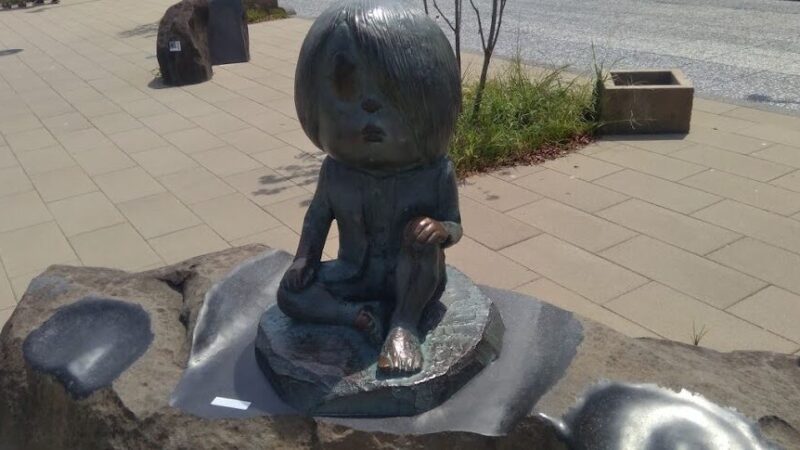
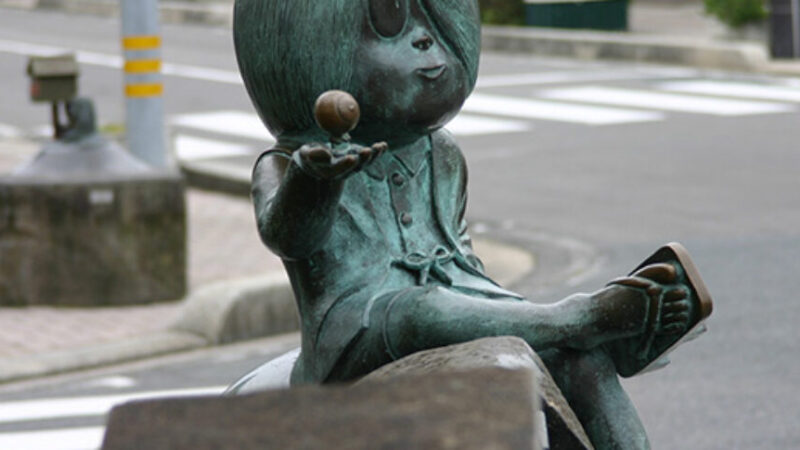
Today, 178 bronze yokai statues are installed on both sides of the road, welcoming visitors with characters from “GeGeGe no Kitaro” and traditional yokai from throughout Japan. The unique world created by these bronze statues and the retro Showa-era townscape is a mysterious space where reality and fantasy intersect.
Why Sakaiminato Became a Sacred Site
Although born in Osaka, Shigeru Mizuki spent his childhood in Sakaiminato, Tottori Prefecture. His experiences there had a profound influence on his later works, particularly the yokai stories he heard from a woman in the neighborhood called “Nonnonbaa,” which became the foundation of Mizuki’s creations.
Due to this deep connection, Sakaiminato has developed as a sacred site for Shigeru Mizuki’s works, especially “GeGeGe no Kitaro.” The entire town has been developed as a yokai world, making it a precious place for fans to immerse themselves in the world of the works.
Must-See! Complete Guide to 178 Yokai Bronze Statues
The main attraction of Shigeru Mizuki Road is undoubtedly the 178 yokai bronze statues. These statues are scattered throughout the area from Sakaiminato Station to the Shigeru Mizuki Memorial Museum, each crafted with precision.
Bronze Statues of Main Characters
Kitaro naturally plays the starring role on the road, with multiple statues positioned at various locations. Just outside Sakaiminato Station, there is a majestic statue of Kitaro in a dignified standing pose, which has become a standard photo spot.
Medama Oyaji (Eyeball Father), though small, has tremendous presence. It appears in various poses, such as bathing in a rice bowl bath or riding on Kitaro’s shoulder.
Nezumi Otoko (Rat Man) is popular for his comical expression and pose. The statue in the middle of the shopping street perfectly captures his cunning expression.
Neko Musume (Cat Girl) is displayed in various versions, from her cute appearance to her yokai form. It’s particularly popular with female fans as a photo spot.
Efficient Route to View the Bronze Statues
Viewing all 178 statues requires at least 2-3 hours. Here are tips for exploring efficiently:
- Proceed in one direction from the station to the memorial museum: Rather than going back and forth on both sides of the road, it’s more efficient to see one side on the way and the other side on the return trip.
- Use the stamp rally: A yokai stamp rally is held on Shigeru Mizuki Road. Stamp stations are positioned at major spots, and using them as landmarks helps you avoid missing any statues.
- Consider timing for photography: Early morning and late afternoon offer better lighting for beautiful photos. Midday sees heavy crowds, so early morning or evening is recommended.
- Use the official map: Maps distributed at information centers and stations show the locations of all bronze statues.
Shigeru Mizuki Memorial Museum | Deeply Understanding the World of Works
The Shigeru Mizuki Memorial Museum, located at the end of Shigeru Mizuki Road, is the highlight of a sacred pilgrimage. As of 2024, it operates from 9:30 to 17:00 (last admission 16:30) and is open year-round without holidays.
Highlights of the Museum
The museum allows visitors to experience the life and works of Shigeru Mizuki.
The Mizuki World Exhibition displays original artwork from “GeGeGe no Kitaro” and other masterpieces, as well as yokai collections that Mizuki gathered from around the world. The delicate brushstrokes of the original artwork have an impact that printed versions cannot convey.
Tokiwa-so Recreation recreates the room of the legendary apartment where Mizuki lived in his youth, allowing visitors to glimpse the origins of his creative work.
The Yokai Cave is a dimly lit cave-like space where various yokai appear. This interactive exhibit is enjoyable for both children and adults.
The Shop sells numerous museum-exclusive goods, making it ideal for purchasing souvenirs from your sacred pilgrimage.
Tips for Visiting the Museum
- Time needed: Allow 1.5 to 2 hours for a thorough viewing
- Crowded times: Weekends and holidays from 11:00 to 15:00 are busy; visiting right after opening or before closing is recommended
- Photography: Note that some areas of the museum prohibit photography
Yokai Shrine | A Power Spot to Pray for Yokai Power
Located in the middle of Shigeru Mizuki Road, Yokai Shrine is a rare shrine in Japan dedicated to yokai. Established in 2000, this shrine is believed to console the spirits of yokai and grant visitors yokai power (good fortune).
Characteristics of Yokai Shrine
The sacred object is a single cloth-like yokai (Ittan-momen) made of black granite standing over 3 meters tall. Placed in place of a traditional torii gate, it radiates an overwhelming presence.
At Medama Oyaji’s Purification Water, water flows from a statue of Eyeball Father, allowing visitors to purify themselves before praying.
Yokai ema (votive tablets) featuring various yokai designs can be inscribed with wishes and offered at the shrine. Unique wishes like “May I be energetic like a yokai” or “Please watch over me like Eyeball Father” fill the display.
Goshuin (shrine seals) are also available, and limited edition designs are popular as mementos of the sacred pilgrimage.
How to Pray
Worship at Yokai Shrine follows the same etiquette as a typical shrine. However, the Sakaiminato way is to ask the yokai with affection to “grant me yokai power.”
GeGeGe no Yokai Paradise | Interactive Attractions
GeGeGe no Yokai Paradise is an interactive yokai theme park along Shigeru Mizuki Road. It features various attractions both indoors and outdoors and is particularly popular with families.
Main Attractions
At the Yokai Plaza, visitors can take photos with life-size yokai characters. Taking photos in front of Kitaro’s house is a classic spot.
The Yokai Maze is a thrilling attraction where visitors navigate through a dimly lit maze and encounter yokai.
The Yokai Show, held mainly on weekends, is an interactive event where visitors can play yokai-catching games with Kitaro and friends.
The Gourmet Corner offers yokai-themed food such as “Eyeball Father’s Buns” and “Yokai Ramen.”
Kappa’s Fountain | Perfect Rest Stop
“Kappa’s Fountain,” located along Shigeru Mizuki Road, is the perfect place to rest while sightseeing. In this small park, bronze statues of water-dwelling yokai, including kappa, are arranged.
With benches arranged around a central fountain, this is an ideal spot to recover from the fatigue of sightseeing. Especially in summer, the sound of water provides a refreshing atmosphere.
Shops and cafes selling yokai merchandise are concentrated around Kappa’s Fountain, so you can enjoy shopping while resting.
Touring Yokai Shops | Acquiring Sacred Site Exclusive Goods
Numerous yokai shops line Shigeru Mizuki Road, each selling unique yokai merchandise. Hunting for sacred site memorabilia from each shop’s offerings is enjoyable.
Recommended Shops
Yokai Shop Ge-Ge-Ge is the largest merchandise shop on Shigeru Mizuki Road. It offers a wide variety of goods from standard merchandise to limited editions, including T-shirts, key chains, and plush toys.
Yokai Food Research Institute is popular for edible yokai goods such as “Eyeball Father Buns” and “Yokai Crackers.” Many items have long shelf lives and are perfect as souvenirs.
Yokai Shrine Gift Counter sells shrine amulets, goshuin books, and other limited-edition items available only at this location.
Target Items for Limited Goods
- Seasonal limited items: Limited merchandise appears for each season—spring, summer, fall, and winter.
- Event-limited items: Merchandise exclusive to specific events, such as the yokai qualification exam or special events, is sold only during those times.
- Store original merchandise: Each shop designs its own products available only at that store.
Sakaiminato Station | The Starting Point of Sacred Pilgrimage
JR Sakaiminato Station is the starting point for a sacred pilgrimage to Shigeru Mizuki Road. The station itself is affectionately known as “Kitaro Station,” and the entire station building is decorated in yokai style.
Highlights of Sakaiminato Station
The station exterior is decorated with illustrations of Kitaro and is recognizable from a distance.
Inside the station building, Eyeball Father hangs from the ceiling, and yokai statues are installed in the waiting area, creating the yokai world from the moment you step off the train.
The station plaza features large statues of Kitaro and Eyeball Father, serving as a standard photo spot.
The tourist information center provides maps of Shigeru Mizuki Road and the latest event information. It’s a must-visit place before starting your sacred pilgrimage.
Kitaro Train | Make Travel Part of the Sacred Experience
For access to Sakaiminato, riding the JR Geibi Line’s “Kitaro Train” is recommended. This train, connecting Yonago Station to Sakaiminato Station, has its entire body wrapped with yokai character designs.
Types of Kitaro Trains
Currently, six types of yokai trains operate:
- Kitaro Train: Featuring the main character Kitaro
- Nezumi Otoko Train: Characterized by a yellow body
- Neko Musume Train: A cute pink design
- Medama Oyaji Train: The entire train is designed as Eyeball Father
- Nurikabe Train: A white body with Nurikabe (wall yokai) depicted
- Konaki Jiji Train: A train with a subdued atmosphere
Which train you ride depends on luck, which is part of the fun. In-car announcements are also made by yokai characters, making the travel time part of the sacred experience.
Yokai Station Names at Each Stop
Each station on the JR Geibi Line has a yokai alias:
- Yonago Station: Nezumi Otoko Station
- Fujimichou Station: Umbrella Ghost Station
- Goto Station: Dorotabo Station
- Sakaiminato Station: Kitaro Station
All 16 stations are named after yokai.
Annual Event Calendar
Throughout the year, various events are held on Shigeru Mizuki Road.
Major Events
Yokai Qualification Exam (once yearly, around March): A qualification exam testing knowledge of Shigeru Mizuki’s works and yokai. Passing earns limited-edition goods.
Shigeru Mizuki Birthday Festival (around March 8): An event commemorating Shigeru Mizuki’s birthday, featuring special exhibitions and limited merchandise sales.
Yokai Bon Dance (August): A summer tradition where visitors enjoy bon dance with yokai.
Halloween Yokai Parade (October): Costumed participants parade down Shigeru Mizuki Road.
Yokai Illumination (November–January): A winter-limited illumination lights up Shigeru Mizuki Road fantastically.
Access Information and Time Required
Access to Sakaiminato City, Tottori Prefecture
By airplane:
- About 15 minutes by car from Yonago Kitaro Airport to Sakaiminato
- About 45 minutes by airport shuttle bus to Sakaiminato Station
By train:
- About 45 minutes by Geibi Line from JR Yonago Station to Sakaiminato Station
- About 2 hours by Limited Express Yakumo from Okayama Station to Yonago Station, then transfer to the Geibi Line
By car:
- About 30 minutes from Yonago IC on the Yonago Expressway
- Multiple parking lots (paid and free) are available around Shigeru Mizuki Road
Time Required for Sacred Pilgrimage
Minimum course (2–3 hours):
- Shigeru Mizuki Road exploration + major bronze statue photography
Standard course (4–5 hours):
- Shigeru Mizuki Road + Shigeru Mizuki Memorial Museum + Yokai Shrine + shopping
Full experience course (6–8 hours):
- All of the above + GeGeGe no Yokai Paradise + dining + completing all bronze statue views
Best Season for Sacred Pilgrimage
Shigeru Mizuki Road is enjoyable year-round, but each season offers different attractions.
Spring (March–May):
- Mild weather perfect for sightseeing
- Shigeru Mizuki Birthday Festival is held
- Cherry blossom season allows visitors to enjoy surrounding attractions simultaneously
Summer (June–August):
- Summer events including the Yokai Bon Dance are in full swing
- Strong sun requires hats or umbrellas
- Evening strolls to enjoy cool air are recommended
Autumn (September–November):
- The most comfortable season
- Busy with Halloween events
- Autumn foliage season allows visitors to enjoy surrounding attractions
Winter (December–February):
- Yokai illumination is fantastical
- Fewer tourists allow for leisurely viewing
- Warm clothing is essential
Nearby Sacred Pilgrimage Spots
Beyond Shigeru Mizuki Road, there are other pilgrimage sites within Sakaiminato City.
Shigeru Mizuki’s Childhood Home Site
A memorial stone stands at the site of the home where Shigeru Mizuki spent his childhood. Located about 10 minutes’ walk from Shigeru Mizuki Road, it’s a place to feel the origins of his works.
Nonnonbaa’s Grave
The grave of “Nonnonbaa,” the woman who told young Mizuki yokai stories, is also in Sakaiminato. It’s an essential spot for tracing the roots of Mizuki’s works.
Miho Shrine
Located in Miho-no-Seki, neighboring Sakaiminato, is Miho Shrine, the head shrine of Ebisu. It is said that Shigeru Mizuki visited this shrine, which has a mystical atmosphere.
Preparations to Enhance Your Sacred Pilgrimage
Packing Checklist
- Camera or smartphone: Essential for souvenir photos with bronze statues
- Chargers or mobile battery: Photo-taking drains batteries quickly
- Comfortable walking shoes: Essential for walking over 800 meters
- Hat or umbrella (summer): Sun protection
- Warm clothing (winter): Windy due to coastal location
- Eco-bag: For souvenir purchases
- Small change: For vending machines and goshuin purchases
Works to Watch Beforehand
To make your pilgrimage more enjoyable, we recommend watching these works in advance:
- Anime “GeGeGe no Kitaro” (various series)
- “Nonnonbaa and Me” (Shigeru Mizuki’s autobiographical work)
- Documentary programs about Shigeru Mizuki
Checking Official Information
Before your visit, check the following official sites for the latest information:
- Shigeru Mizuki Memorial Museum official website
- Sakaiminato City Tourism Association website
- Shigeru Mizuki Road official SNS
Event information and temporary closure notices are regularly updated.
Accommodation Information and Sample Itinerary
Accommodations in Sakaiminato City
Sakaiminato offers various accommodations, from business hotels to hot spring inns. Several lodgings feature rooms themed around yokai, allowing guests to enjoy the pilgrimage atmosphere until the very end.
1-Day 2-Night Sample Itinerary
Day 1:
- 12:00 Arrive at Sakaiminato Station, photo with Kitaro Train
- 12:30 Begin exploring Shigeru Mizuki Road
- 14:00 Visit Shigeru Mizuki Memorial Museum
- 16:00 Worship at Yokai Shrine
- 17:00 Shopping
- 18:00 Check in to accommodation
- 19:00 Dinner with fresh seafood of Sakaiminato
Day 2:
- 9:00 Depart hotel
- 9:30 Visit GeGeGe no Yokai Paradise
- 11:00 Photo remaining bronze statues
- 12:00 Lunch with yokai cuisine
- 13:30 Final souvenir purchases
- 14:30 Depart Sakaiminato Station
Gourmet Information | Enjoying Yokai Food
Numerous restaurants themed around yokai operate around Shigeru Mizuki Road.
Recommended Gourmet
Yokai Ramen: Ramen with Eyeball Father floating on top and other visually entertaining dishes.
Yokai Burger: Kitaro burgers using green buns are popular.
Eyeball Father Bun: A traditional Sakaiminato sweet that has become a local specialty. Both warm and cold versions are available.
Yokai Curry: Unique curries like “Nurikabe Curry” with black sauce can be enjoyed.
Seafood Rice Bowl: As Sakaiminato is a fishing port, fresh seafood cuisine is exceptional and pairs well with yokai gourmet.
Conclusion | Maximizing Your Sacred Pilgrimage Experience
Shigeru Mizuki Road in Sakaiminato City, Tottori Prefecture, is a must-visit sacred site for “GeGeGe no Kitaro” fans at least once in a lifetime. With 178 yokai bronze statues, the Shigeru Mizuki Memorial Museum, Yokai Shrine, and GeGeGe no Yokai Paradise, there are countless attractions.
Key points for a successful pilgrimage:
- Prepare thoroughly: Check official sites for the latest information and preview works you want to see
- Allow sufficient time: Spend at least a half-day, ideally a full day, for a thorough exploration
- Consider season and events: Choose a time that aligns with your interests
- Don’t forget souvenirs: Take home limited-edition goods or goshuin seals as mementos
- Enjoy nearby attractions: Make the most of Sakaiminato’s fresh seafood and other nearby spots like Miho-no-Seki
In Sakaiminato, where yokai await and reality and fantasy intersect, enjoy this special experience. In the hometown Shigeru Mizuki loved, a precious moment immersed in his world of works surely awaits you.