What is Zatsu Tabi? The Charm of Fukushima Prefecture as the Setting
“Zatsu Tabi -That’s Journey-” is a manga work based on real travel experiences by Kentaro Ishizaka, and was adapted into a television anime in 2020. It depicts the protagonist traveling throughout Japan using the Seishun 18 Kippu (Youth 18 Ticket), with Fukushima Prefecture serving as one of the important settings in the work.
In the Fukushima Prefecture arc, centered around the Aizu region, a variety of spots appear, from historic tourist attractions to dining establishments loved by locals. “Sacred site pilgrimages” by fans who have read the work are actively conducted, and many travelers visit Fukushima Prefecture in search of the same scenery as depicted in the work.
Basic Information on Fukushima Prefecture Sacred Site Pilgrimage
Access Methods
The main access methods to Fukushima Prefecture are as follows:
From the Tokyo area
- Approximately 1 hour 20 minutes to Koriyama Station via the Tohoku Shinkansen
- Approximately 5-6 hours via the Tohoku Main Line when using the Seishun 18 Kippu
Access to Aizu-Wakamatsu
- Approximately 1 hour 15 minutes from Koriyama Station via the Banetsu West Line
- Also accessible from the Niigata area via the Banetsu West Line
Recommended Pilgrimage Seasons
Sacred site pilgrimages in Fukushima Prefecture can be enjoyed year-round, but particularly recommended times are:
- Spring (April-May): Many famous cherry blossom viewing spots; the cherry blossoms at Tsuruga Castle are spectacular
- Summer (July-August): Lush green nature and summer festivals
- Autumn (September-November): Beautiful autumn foliage and comfortable weather
- Winter (December-February): Snowy landscapes and hot springs are appealing, though traffic caution is necessary
Sacred Sites in the Aizu-Wakamatsu Area
Tsuruga Castle (Aizu-Wakamatsu Castle)
Tsuruga Castle, the symbol of Aizu-Wakamatsu that appears impressively in the work, is also the stage of the Boshin War, known for the tragedy of the Byakkotai (White Tiger Unit). Currently, the interior of the keep is open to the public as a museum.
Basic Information
- Address: 1-1 Oitecho, Aizu-Wakamatsu City, Fukushima Prefecture
- Operating Hours: 8:30-17:00 (Admission until 16:30)
- Admission: Adults ¥410, Elementary and middle school students ¥150
- Parking: Paid parking available in surrounding areas
Sacred Site Pilgrimage Point
The angle that appears in the work is a composition looking up at the keep from the front. Especially during the cherry blossom season, you can photograph beautiful scenery similar to that in the work. The view from the keep is also wonderful, offering a panoramic view of the Aizu Basin.
Nanoka-machi Street
A street with nostalgic charm reminiscent of Taisho-era romanticism. Historic storehouse buildings line the street, with cafes, miscellaneous goods shops, and souvenir stores clustered together.
Points of Interest
- Shiraki-ya Urushi-ki Store: A long-established shop of traditional Aizu lacquerware
- Eki Cafe: A cafe utilizing the Nanoka-machi Station building
- Various antique shops and old house cafes scattered throughout
In the work, scenes of the protagonist strolling through the streetscape are depicted, allowing you to experience the atmosphere of Taisho-era romanticism while walking at a leisurely pace.
Iidashiyama
Known as the site of the Byakkotai’s ritual suicide. The work also introduces it alongside its historical background.
Access
- Approximately 15 minutes by bus from Aizu-Wakamatsu Station, get off at “Iidashiyama-shita”
- About 5 minutes walk to the trailhead
Points of Interest
- Tomb of the nineteen members of the Byakkotai
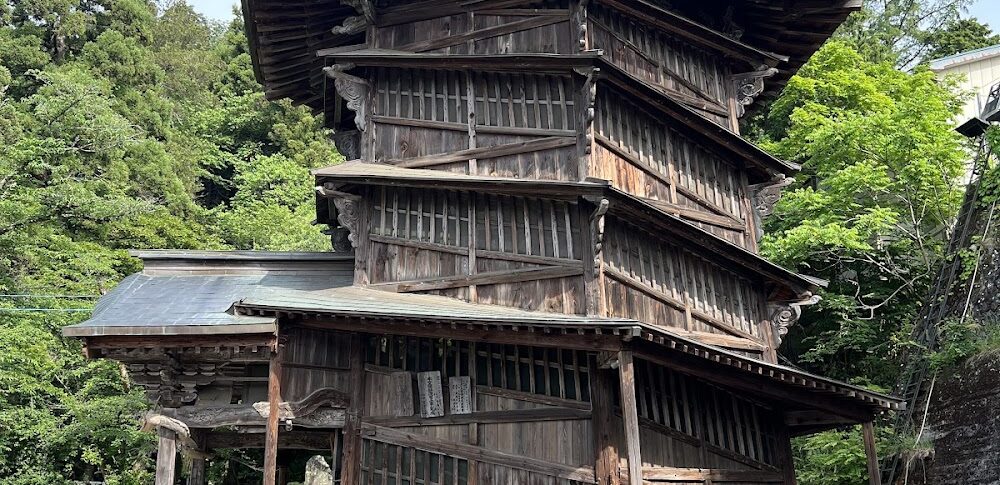
- Sazae-do (Designated Important Cultural Property)
- View of Tsuruga Castle from the summit
There are 183 steps, but a paid escalator (¥250) is also available. The work depicts the protagonist climbing while feeling the weight of history.
Sacred Sites in the Kitakata Area
Kitakata Ramen Shop Tour
In “Zatsu Tabi,” Kitakata ramen appears as a local cuisine of Fukushima Prefecture. In Kitakata City, there are over 100 ramen shops, each competing with its unique flavor.
Representative Ramen Shops
- Sakauchi Shokudo: Representative of Kitakata ramen, pork bone-based soy sauce soup
- Makoto Shokudo: Long-established shop loved by locals
- Genraikenr: Reportedly the birthplace of Kitakata ramen
Characteristics of Kitakata Ramen
- Flat, aged, high-hydration noodles
- Light, soy sauce-based soup
- Simple toppings of chashu pork and menma bamboo shoots
Asa-ra (eating ramen in the morning) is also a specialty of Kitakata, with many shops opening early.
Storehouse Streetscape
Kitakata City is known as the “Town of Storehouses,” with over 4,000 storehouses remaining. Various storehouses are scattered throughout, including miso warehouses, sake breweries, and soy sauce warehouses.
Recommended Spots
- Yamato-gawa Sake Brewery: Sake brewery tours with tastings available
- Wakaqi-shouten: Beautiful brick storehouses
- Kai Honke Kuraza-shiki: Public display of a wealthy merchant’s storehouse residence
In the work, scenes of strolling through the streetscape of storehouses and rediscovering the charm of regional cities are depicted.
Sacred Sites in the Koriyama and Other Areas
Koriyama Station Area
Koriyama Station, a major transportation hub in Fukushima Prefecture. It appears in the work as a transfer station, with station bento and station-area cuisine introduced.
Station Bento Information
- Nori-nori-ben: A famous station bento of Koriyama
- Fukushima Beef Rice Bowl: Made with locally produced beef
Around Bandai Mountain
In the work, the majestic figure of Mount Bandai visible from the train window is depicted impressively. The view from the train window on the Banetsu West Line is one of the charms of “Zatsu Tabi.”
Recommended View Points
- Lake Inawashiro: Spectacular scenery with Mount Bandai in the background
- Goshiki-numa: A mysterious group of colored lakes
Sacred Site Pilgrimage Model Courses
1 Night 2 Days Aizu Full Experience Course
Day 1
- 9:00 Arrive at Koriyama Station
- 10:30 Arrive at Aizu-Wakamatsu Station
- 11:00 Visit Tsuruga Castle
- 13:00 Lunch with source katsudon in Aizu-Wakamatsu City
- 14:30 Stroll through Nanoka-machi Street
- 16:00 Pay respects at Iidashiyama
- 18:00 Stay at Higashiyama Hot Spring
Day 2
- 9:00 Travel to Kitakata
- 10:00 Experience morning ramen
- 11:00 Stroll through the storehouse streetscape
- 13:00 Sake brewery tour and tasting
- 15:00 Depart from Kitakata Station
- 17:00 Arrive at Koriyama Station
Day Trip Seishun 18 Kippu Course
Like the protagonist of the work, a day trip using the Seishun 18 Kippu is also possible.
Departing from Tokyo
- 6:00 Depart Tokyo Station (Tohoku Main Line)
- 11:30 Arrive at Koriyama Station
- 12:00 Purchase station bento at Koriyama Station
- 13:00 Arrive at Aizu-Wakamatsu Station (Banetsu West Line)
- 13:30 Visit Tsuruga Castle
- 15:30 Stroll through Nanoka-machi Street
- 17:00 Depart from Aizu-Wakamatsu Station
- 23:00 Arrive at Tokyo Station
Gourmet Information
Aizu Cuisine
Source Katsudon
A specialty dish of Aizu-Wakamatsu. Freshly fried cutlet placed on cabbage and topped with special sauce.
- Nakajima: A long-established favorite among locals
- Tsuruga: A famous restaurant near Tsuruga Castle
Kozu-yu
A local dish of Aizu. An refined soup made with scallop broth and vegetables and bean fu.
Horse Meat Sashimi
Horse meat culture is deeply rooted in the Aizu region, and fresh horse meat sashimi can be enjoyed.
Kitakata Cuisine
Kitakata Ramen (mentioned above)
Dengaku
A local dish of Kitakata. Tofu or taro coated with miso and grilled dengaku-style.
Souvenir Information
Aizu Souvenirs
Aizu Lacquerware
- Traditional craft with a history of over 400 years
- Various products including chopsticks, bowls, and tiered boxes
- Price range: ¥1,000 to tens of thousands of yen
Okiagari-koboshi (Roly-poly Daruma Doll)
- An auspicious symbol of Aizu
- Represents the spirit of “fall seven times, stand up eight”
- Price: Approximately ¥300 to ¥1,000
Aizu Local Sake
- Suehiro Sake Brewery, Haruharu Sake Brewery, and others
- Japanese sake made with Bandai Mountain spring water
- Price: ¥1,000 to ¥5,000
Kitakata Souvenirs
Kitakata Ramen (souvenir)
- Fresh noodle type and dried noodle type
- Sets with soup
- Price: ¥500 to ¥1,500
Miso and Soy Sauce
- Products from long-established breweries
- Additive-free, naturally brewed
- Price: ¥500 to ¥2,000
Sacred Site Pilgrimage Etiquette and Cautions
Photography Precautions
- No trespassing on private property: Even if a place appears in the work, do not enter private property without permission
- Photography at shops: Always ask permission from staff
- Consideration for other tourists: Avoid monopolizing a location for long periods
Public Transportation Etiquette
- Use of Seishun 18 Kippu: Verify validity period and applicable trains in advance
- Caution with local lines: Confirm timetables as service frequency is limited
- Consideration during peak times: Avoid commuting and school commute hours during tourist season
Consideration for the Community
- Take trash with you: Absolutely no littering at tourist sites
- Be mindful of noise: Keep quiet in residential areas
- Support the local economy: Use local shops whenever possible
Accommodation Information
Aizu-Wakamatsu Area
Higashiyama Hot Spring
- 10 minutes by car from Aizu-Wakamatsu City center
- A hot spring resort with 1,300 years of history
- Price range: 1 night with 2 meals ¥10,000 to ¥30,000
Hotels in Aizu-Wakamatsu City Center
- Various options from business hotels to resort hotels
- Price range: Room only ¥4,000 to ¥10,000
Kitakata Area
Atsushio Hot Spring and Hinaka Hot Spring
- Hot spring resort on the outskirts of Kitakata City
- Price range: 1 night with 2 meals ¥8,000 to ¥15,000
Hotels in Kitakata City Center
- Primarily business hotels
- Price range: Room only ¥5,000 to ¥8,000
Seasonal Highlights
Spring (March-May)
Cherry Blossom Spots
- Tsuruga Castle: Mid-to-late April, approximately 1,000 Somei Yoshino cherry trees
- Ishibe Cherry: One of the Aizu Five Cherries, over 600 years old
- Nicchu Line Weeping Cherry Blossom Row: Kitakata City, a cherry blossom tunnel spanning approximately 3 km
Summer (June-August)
Festivals
- Aizu Festival (late September): Aizu clan procession is the highlight
- Kitakata Summer Festival (early August): Fireworks display also held
Autumn (September-November)
Autumn Foliage Spots
- Bandai-Azuma Skyline: Peak viewing from early to mid-October
- Goshiki-numa: Contrast between autumn foliage and lake colors
- Tsuruga Castle Park: Peak viewing early November
Winter (December-February)
Snow Scenery
- Ouchi-juku: Thatched-roof houses covered in snow
- Tsuruga Castle: Snow-covered keep
Winter Events
- Aizu Picture Candle Festival (February): Approximately 10,000 candles are lit
Surrounding Tourist Attractions
Ouchi-juku
About 40 minutes by car from Aizu-Wakamatsu. A Preservation District for Groups of Historic Buildings that retains the character of an Edo-period post town. Thatched-roof houses line the old road.
Local Specialty
- Negi Soba: Buckwheat noodles eaten using green onion as a substitute for chopsticks
Lake Inawashiro
Japan’s fourth-largest lake. Spectacular scenery can be enjoyed with Mount Bandai in the background.
Activities
- Sightseeing cruises
- Water sports
- Cycling
Goshiki-numa
A group of more than 30 large and small lakes created by the eruption of Mount Bandai. Characterized by mystical colors such as cobalt blue and emerald green.
Hiking Course
- Goshiki-numa Natural Exploration Trail: Approximately 3.6 km, 1 to 1.5 hours
Practical Information
Tourist Information Centers
Aizu-Wakamatsu Station Tourist Information Center
- Operating Hours: 8:30-17:30
- Phone: 0242-32-0688
- Services: Tourist map distribution, accommodation information, luggage storage
Kitakata Tourism and Products Association
- Operating Hours: 9:00-17:00
- Phone: 0241-24-5200
- Services: Tourist information, bicycle rentals
Bicycle Rentals
Aizu-Wakamatsu
- Rentals available around Tsuruga Castle
- Rental fee: Approximately ¥500 to ¥1,000 per day
Kitakata
- Rental available in front of Kitakata Station
- Rental fee: Approximately ¥300 to ¥500 per day
Wi-Fi Environment
Free Wi-Fi is available at major tourist sites, stations, and cafes. Public wireless LAN services such as “FUKUSHIMA City Wi-Fi” are available.
Making the Most of the Charm of “Zatsu Tabi”
Review the Work Before Your Visit
By reviewing the relevant episodes before the sacred site pilgrimage, you can immerse yourself more deeply in the world of the work. The enjoyment of comparing the depictions in the work with actual scenery also increases.
Maintain a Leisurely Travel Pace
The charm of “Zatsu Tabi” lies in enjoying the journey unhurriedly and slowly. Avoid cramming too much in, and cherish conversations with locals and unexpected encounters.
Enjoy Local Gourmet Foods
Gourmet dining is an important element in the work as well. Actively tasting the regional cuisine and local specialties of Fukushima Prefecture will deepen your understanding of the work.
Share on Social Media
To connect with fellow fans of the same work, it is recommended to share your experiences using hashtags such as “#zatsu-tabi” and “#zatsu-tabi-sacred-site-pilgrimage.”
Conclusion
A sacred site pilgrimage to Fukushima Prefecture for “Zatsu Tabi -That’s Journey-” is a fascinating journey that allows you to experience the world of the work while savoring Fukushima’s rich history, culture, and gourmet cuisine. There are many attractions to see, including historic structures in Aizu-Wakamatsu, ramen and storehouse streetscapes in Kitakata, and the majestic nature of Mount Bandai.
A trip on local lines using the Seishun 18 Kippu will be a special experience to tour Fukushima Prefecture from the same perspective as the work’s protagonist. Take your time, enjoy interactions with local people, and create your own unique “zatsu tabi.”
Fukushima Prefecture has beautiful scenery in each season, and new discoveries await with every visit. Using this article as a reference, please try planning your sacred site pilgrimage to Fukushima Prefecture. By visiting places you learned about through the work, your enjoyment of travel will expand even further.