“From Up on Poppy Hill,” a Studio Ghibli work released in July 2011, is a youth romance film set in Yokohama in 1963 (Showa 38). Directed by Goro Miyazaki, this work depicts the cityscape of Yokohama during the period of high economic growth and the pure romance between the protagonist Umi Matsuzaki and Shun Kazama, continuing to captivate many fans to this day.
In this article, we introduce in detail the actual filming locations and places that served as models in the film. We present a complete guide to visiting the sacred sites of this work, which was created in collaboration with Yokohama City.
Yokohama as the Setting of “From Up on Poppy Hill”
Reasons for Choosing Yokohama in 1963
The year 1963, when the film is set, was a time when Japan was in the midst of high economic growth, with the Tokyo Olympics scheduled to take place the following year. As an international city since its opening to foreign trade, Yokohama had a unique atmosphere where Western and Japanese cultures merged, a port town with character.
In Yokohama at that time, the vitality of postwar reconstruction and the nostalgic scenery of old-fashioned Showa coexisted. The film features various locations that have been carefully preserved from that time to the present, including the Western-style mansions of Yamate, Motomachi Shopping Street, and Yamashita Park.
Collaboration Between Studio Ghibli and Yokohama City
“From Up on Poppy Hill” was officially tied up with Yokohama City, and commemorative events and exhibitions were held at various locations in the city at the time of its release. Even now, a commemorative signboard is installed at Minato no Mieru Oka Park, serving as a landmark for sacred site pilgrimages.
【Minato no Mieru Oka Park Area】The Setting of Poppy Hill
Attractions of Minato no Mieru Oka Park
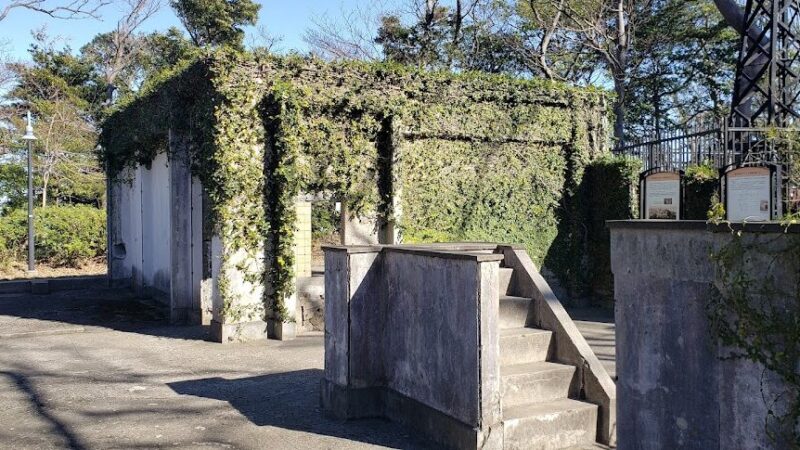
The area around Minato no Mieru Oka Park is said to be the model for “Poppy Hill,” which is also the title of the film. Located on top of a small hill, this park offers panoramic views of the Yokohama Bay Bridge, Yokohama Port, and the Minato Mirai cityscape.
A signboard commemorating the film’s setting is installed in the park and is popular as a photography spot for film fans. Additionally, the international signal flag “U·W Flag” (meaning “wishing for safe navigation” and “wishing for your good fortune”), which Umi raised every morning, is actually displayed.
Access Information:
- 5 minutes walk from Exit 6 of Minato Mirai Line “Motomachi-Chukagai Station”
- About 20 minutes walk from JR Ishikawa-cho Station
- Free admission, open 24 hours
Kanagawa Modern Literature Museum and Poppy Hill
Near the Kanagawa Modern Literature Museum, located at the back of Minato no Mieru Oka Park, is said to be the model for the “Poppy Hill” scenery that appears in the film. The view of Yokohama Port from the slope evokes scenes from the film.
The actual place name “Poppy Hill” does not exist in Yokohama and is a fictional location created for the film. However, the atmosphere and landscape of this area became important elements in shaping the film’s world.
Is the Model for Poppy Hill House Real?
Poppy Hill House, the boarding house where Umi lives with her family, is the centerpiece of the film. It is set as a Western-style mansion on Poppy Hill, but in fact, it is said that there is no specific model.
However, the theory that the former Yanagishita residence within Negishi Natsukashi Park, which will be discussed later, is close to the image of its exterior is strong. Additionally, it is believed that the atmosphere of the group of Western-style mansions scattered throughout the Yamate district (such as the Diplomat’s House and Bluff No. 18 Building) was comprehensively referenced.
【Yamate Area】A Street of Western-style Mansions Full of Exotic Atmosphere
Western-style Mansions in Yamate
The Yokohama Yamate district developed as a foreign settlement after the opening of the port, and many Western buildings still remain. The landscape of Western-style mansions appearing in the film strongly reflects the atmosphere of this area.
Main Western-style Mansion Facilities:
- Diplomat’s House (Important Cultural Property)
- Bluff No. 18 Building
- Bahlick Hall
- Errisman House
- Yamate No. 234 Building
These mansions are free to view and are valuable spots where you can experience the lifestyle of that era. It is an ideal area to explore while feeling the world of the film.
Yamate Main Street and Stone-Paved Slopes
Yamate Main Street is a main street lined with exotic street trees and Western-style mansions. The slope scenes in the film are believed to be modeled after the stone-paved slopes in the surrounding area.
In particular, Yatosaka is a steep slope that continues from Motomachi Shopping Street to the Yamate district and still retains an atmosphere like the film.
【Motomachi Area】The Shopping Street Where Umi and Shun Walked
Motomachi Shopping Street: Then and Now
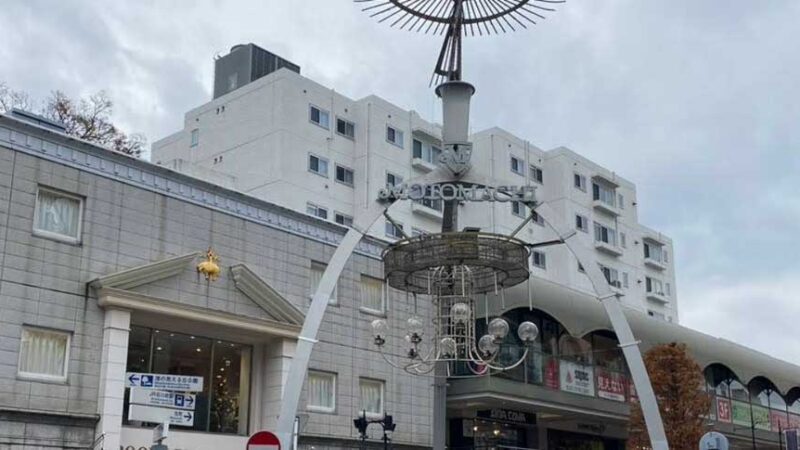
Motomachi Shopping Street is a representative shopping street of Yokohama with a history dating back to the opening of the port. In the film, it appears in scenes where Umi and Shun go on a date walk.
Although the stores have changed since 1963, the basic structure and atmosphere of the shopping street remain intact. The European-style landscape created by the stone-paved street and street trees is the world of the film itself.
Access:
- Directly at Exit 5 of Minato Mirai Line “Motomachi-Chukagai Station”
- 5 minutes walk from JR Ishikawa-cho Station
Film Appearance Spots around Motomachi
Throughout the Motomachi area, fine details from the film can be seen in places. There are numerous locations where you can recall scenes from the film while taking a walk, such as the appearance of old buildings, the scenery of back alleys, and the view of the port from slopes.
【Yamashita Park Area】A Symbol of Yokohama That Remains Unchanged
Attractions of Yamashita Park
Yamashita Park, where Umi and Shun walk in an impressive scene, has maintained virtually unchanged scenery more than 10 years after the film’s release. From the park facing Yokohama Port, you can see the Osanbashi, Hikawa Maru, and Marine Tower.
Main Attractions:
- Hikawa Maru (Important Cultural Property): A historic passenger ship also appearing in the film
- Girl in Red Shoes Statue
- Indian Water Tower
- View of Yokohama Port
Hikawa Maru and the Landscape of Yokohama Port
The Hikawa Maru moored in Yamashita Park is a cargo-passenger ship built in 1930, which was still in operation in 1963, the year in which the film is set. It appears multiple times in port scenes in the film and is an important element in creating the atmosphere of Yokohama at that time.
The Hikawa Maru is now open to the public as a museum ship, and visitors can tour the interior (paid). It is a valuable spot where you can experience the luxurious interior of a passenger ship from the early Showa period.
Hikawa Maru Viewing Information:
- Hours: 10:00-17:00 (Last admission 16:30)
- Closed: Mondays (or the following weekday if Monday is a holiday)
- Admission: General 300 yen, Senior (65 and over) 200 yen, Elementary/Middle/High School Students 100 yen
Yokohama Marine Tower
The Yokohama Marine Tower appearing in the film opened in 1961 and is a symbol of Yokohama. It also functioned as a lighthouse at that time. It reopened in 2022 with renovations and is now a tourist attraction offering observation decks and restaurants.
【Sakuragichō and Kannai Area】A Transportation Hub
Around Sakuragichō Station
Sakuragichō Station appearing in the film was the terminal station of the Tōyoko Line in 1963. While the current Sakuragichō Station has changed dramatically, the view of Yokohama Port from the station remains intact.
In the film, the area around Sakuragichō Station appears in scenes where Umi and Shun commute by train. Although the original station building no longer exists, the surrounding topography and distance to the port allow you to feel the atmosphere of the film.
Former Tōyoko Line and Tunnels
In 1963, the Tōyoko Line operated to Sakuragichō Station, and the film features scenes of tracks running under a bridge and a train entering a tunnel. This section is now an abandoned railway line, and part of it has been developed into a pedestrian walkway.
【Isogo Ward】Candidates for the Model of Poppy Hill House
Negishi Natsukashi Park and the Former Yanagishita Residence
The former Yanagishita residence within “Negishi Natsukashi Park” in Isogo Ward, Yokohama is known as the building most similar to the exterior of Poppy Hill House. This wooden Western-style mansion, built in the 1920s, has a similar atmosphere to Poppy Hill House in the film.
Facility Information:
- Location: 5-127 Nishi-machi, Isogo Ward, Yokohama
- Access: About 15 minutes walk from JR Negishi Station, or by bus to “Takigashira”
- Viewing: Exterior only (interior not open to the public)
- Free admission
The former Yanagishita residence is positioned on high ground and once afforded views of Tokyo Bay. Due to development in the surrounding area, the sea is no longer visible, but the building’s appearance retains much of the film’s world view.
Around Negishi Forest Park
Near Negishi Natsukashi Park is the vast Negishi Forest Park. Built on the site of a former racetrack, it is a park with open lawns and historic buildings. While not a setting in the film, it is recommended to stop by as a spot where you can feel the atmosphere of the Showa era when making a pilgrimage to the sacred sites.
Fine Details Appearing in the Film
The Meaning of the International Signal Flag “U·W Flag”
The international signal flag that Umi raises every morning is a combination of two flags.
- U Flag (Uniform): “You are heading into danger” → transformed to mean “wishing for safe navigation”
- W Flag (Whiskey): “Medical assistance is needed” → transformed to mean “wishing for your good fortune”
This flag combination expresses thoughts of her late father and prayers for those traveling the seas. At Minato no Mieru Oka Park, this flag is actually raised and has become a popular photography spot for film fans.
Yokohama Trivia from Showa 38
The film incorporates detailed descriptions throughout that symbolize Yokohama in 1963.
- Construction boom ahead of the Tokyo Olympics
- Streetcar (municipal train) scenery
- Early Showa modern architecture
- Uniforms and lifestyle of the period
- The charming scenery of old shopping streets
These details give the film realism and nostalgia.
Sacred Site Pilgrimage Model Courses
Half-Day Course (approximately 4 hours)
- Start at Motomachi-Chukagai Station (9:00)
- Minato no Mieru Oka Park (9:10-10:00): Commemorative signboard, international signal flag, viewing spots
- Western-style Mansion Tour in Yamate (10:00-11:30): Diplomat’s House, Bluff No. 18 Building, etc.
- Motomachi Shopping Street Exploration (11:30-12:30): Lunch and shopping
- Yamashita Park (12:30-13:30): Hikawa Maru viewing, seaside stroll
- Around Sakuragichō Station (13:30-14:00): Station surroundings
Full-Day Course (approximately 7 hours)
In addition to the half-day course:
- Negishi Natsukashi Park (15:00-16:00): Former Yanagishita Residence viewing
- Negishi Forest Park (16:00-17:00): Exploration
When using public transportation, using Yokohama Municipal Bus and the Minato Mirai Line is efficient.
How to Enjoy Sacred Site Pilgrimages
Enjoy Comparing the Film and Reality
The pleasure of sacred site pilgrimages lies in comparing film scenes with actual landscapes. A popular way to enjoy this is to save screenshot photos of film scenes on your smartphone or tablet and photograph the same angle.
Different Landscapes by Season
The city of Yokohama shows different faces in each season.
- Spring: Cherry blossoms on Yamate, roses at Minato no Mieru Oka Park
- Summer: Blue sea and sky, vibrant port scenery
- Autumn: Contrast of fall foliage and Western-style mansions
- Winter: Illuminations, port views under clear skies
Although the film is a summer story, you can discover different charms no matter what season you visit.
Enjoy Yokohama Cuisine Too
During your sacred site pilgrimage, indulge in cuisine unique to Yokohama.
- Motomachi: Historic Western restaurants, cafes
- Chinatown: Authentic Chinese cuisine
- Around Yamashita Park: Seafood restaurants
- Sakuragichō: Minato Mirai commercial facilities
Visiting long-established restaurants that existed during the era of the film is also one of the pleasures of a sacred site pilgrimage.
Access and Transportation Information
Access from Major Stations
From Tokyo:
- JR Tokaido/Yokosuka Line to Yokohama or Sakuragichō Station (approximately 30 minutes)
- Tōyoko Line/Minato Mirai Line to Motomachi-Chukagai Station (approximately 40 minutes)
From Haneda Airport:
- Keikyu Line to Yokohama Station (approximately 30 minutes)
- Limousine bus to Minato Mirai area (approximately 40 minutes)
In-City Transportation
- Minato Mirai Line: A convenient line connecting Motomachi-Chukagai Station to Yokohama Station
- Municipal Bus: Routes connecting major tourist attractions are well-developed
- Akaikutsugō: A sightseeing bus making the rounds (100 yen and up)
- On Foot: The Yamate-Motomachi-Yamashita Park area is within walking distance
Recommended Time to Visit
Weekdays: Relatively few tourists, allowing for a leisurely exploration.
Weekends and Holidays: You can enjoy a lively atmosphere, but be aware of crowds.
Times to Avoid: Golden Week, Obon, and year-end/New Year are very crowded.
Related Nearby Attractions
Yokohama Red Brick Warehouse
Although not a setting in the film, it is a shopping and gourmet spot created by renovating warehouses from the Meiji and Taisho periods. The atmosphere of historic buildings shares something with the world view of the film.
Nippon Yusen Hikawa Maru and Nippon Yusen History Museum
A facility where you can learn about the history of maritime shipping and better understand the historical background of the film.
Yokohama Port Opening Museum
A museum where you can learn about Yokohama’s history in detail. It also displays materials about what Yokohama was like in 1963.
Notes on Sacred Site Pilgrimages
Enjoy While Following Manners
- Photography in Residential Areas: Do not speak loudly, do not enter private property
- Western Mansion Viewing: Follow facility rules, confirm whether photography is permitted
- Parks: Take trash with you, do not damage plants
- Shopping Streets: Do not interfere with store operations
For Safe Exploration
- The Yamate district has many slopes, so shoes suitable for walking are recommended
- The sun is strong in summer, so hats, umbrellas, and hydration are important
- Utilize map apps and guidebooks
- Confirm operating hours and closed days in advance
Conclusion: Experiencing Yokohama’s Charm in “From Up on Poppy Hill”
Yokohama, the setting for “From Up on Poppy Hill,” is a charming city where the history and culture since its opening to foreign trade remain alive. Many of the landscapes appearing in the film are preserved to this day, more than 60 years later, retaining their original character.
By visiting the actual filming locations such as Minato no Mieru Oka Park, Yamate’s Western-style mansions, Motomachi Shopping Street, and Yamashita Park, you can experience the film’s world more deeply. Do not miss places like the former Yanagishita residence in Negishi Natsukashi Park, which is said to be the model for the film.
Among Studio Ghibli works, “From Up on Poppy Hill,” which is set in real locations, is an ideal work for sacred site pilgrimages. You will enjoy it even more if you watch the film again before visiting.
Yokohama, where Showa-era nostalgia and contemporary vitality coexist. Through a sacred site pilgrimage of “From Up on Poppy Hill,” discover the multifaceted charm of this port city. If you actually walk the slopes where Umi and Shun walked, the emotion of the film will be revived, and you will surely encounter new attractions of Yokohama.