
The Studio Ghibli film “From Up on Poppy Hill” released on July 16, 2011. This second directorial work by Goro Miyazaki depicts the youth of Umi Matsuzaki, a girl living in Kokuriko House, and Shun Kazama, a newspaper club member, set in Yokohama in 1963 (Showa 38).
An important setting for this film is “Park with a View” (Minato no Mieru Oka Koen) located in Naka Ward, Yokohama, Kanagawa Prefecture. This park houses Studio Ghibli’s first official movie memorial spot, making it a special pilgrimage site for fans.
In this article, we will thoroughly introduce information that all “From Up on Poppy Hill” fans must see, covering the attractions of Park with a View, its connection to the film, access methods, and nearby pilgrimage spots.
Park with a View: A Spectacular Spot Representative of Yokohama
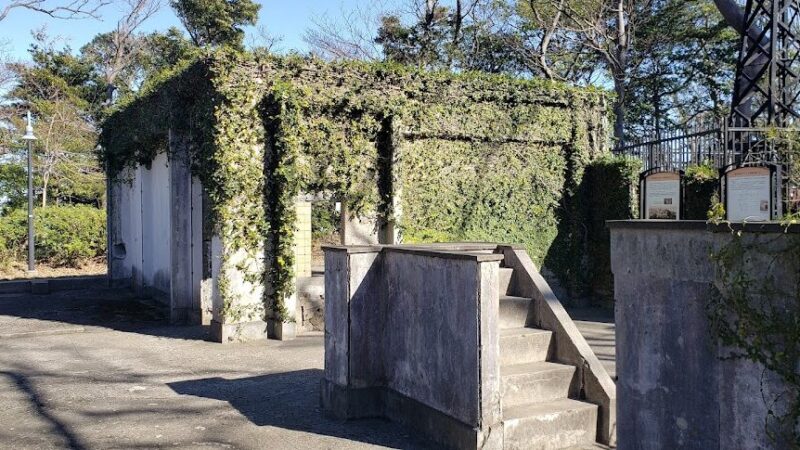
Park with a View is located at 114 Yamote-cho, Naka Ward, Yokohama, and is a hilltop park overlooking Yokohama Harbor. Opened in 1962 (Showa 37), this park has been loved by local residents and tourists alike as a scenic spot offering views of the harbor as its name suggests.
The Park’s History and Characteristics
The year the park opened, 1962, was just one year before 1963, the year the film “From Up on Poppy Hill” is set. It is a precious place where you can still feel the atmosphere of Yokohama in Showa 38 as depicted in the film.
The park features an observation deck offering panoramic views of the Yokohama Bay Bridge, Yokohama Harbor, and the Minato Mirai district. On clear days, you can even see as far as the Boso Peninsula. The park also has cultural facilities including the Osaragi Jiro Memorial Museum and the Kanagawa Museum of Modern Literature, making it a place where you can feel literature and history.
Deep Connection to “From Up on Poppy Hill”
In the film “From Up on Poppy Hill,” Kokuriko House, where the protagonist Umi Matsuzaki lives, is a fictional building, but the area around the observation deck of Park with a View, the Osaragi Jiro Memorial Museum, and the Kanagawa Museum of Modern Literature is considered to be its intended location.
The international signal flags (U and W flags) that Umi hoisted in the garden every morning mean “safe voyage,” reflecting her thoughts of her father who died in the Korean War. This impressive scene’s setting is precisely Park with a View.
Studio Ghibli’s First Official Memorial Spot: International Signal Flags and Commemorative Panel
In March 2012, to commemorate the release of “From Up on Poppy Hill,” an official movie memorial spot, the first of its kind for Studio Ghibli, was installed in Park with a View. This was realized as a result of an official tie-up between Yokohama City and Studio Ghibli, a groundbreaking event in the history of Ghibli pilgrimage sites.
International Signal Flag (U and W Flags) Pole
A pole installed near the observation deck displays the same international signal flags that Umi hoisted every morning in the film. These flags are characterized by distinctive red and white and blue and white striped patterns and are commonly used flags for ship-to-ship communication.
The U flag means “you are heading toward danger,” and the W flag means “medical assistance is needed,” but the combination of U and W flags means “safe voyage.” For fans who know the film’s story, seeing this flag brings special emotion.
Commemorative Panel with Director Goro Miyazaki’s Autograph
Installed alongside the international signal flag pole is a commemorative panel. This panel bears the handwritten signature and illustration of director Goro Miyazaki, indicating that it is an officially recognized memorial spot by Studio Ghibli.
The panel includes information about the film and notes that this location is the intended setting of Kokuriko House, making it easy for first-time visitors to understand the connection to the film. Many fans enjoy taking commemorative photos in front of this panel, and it has become a popular spot frequently seen on SNS.
Comparing Film Scenes with Real Scenery: Walking the Intended Location of Kokuriko House
When visiting Park with a View, you can enjoy it even more by imagining the scenes from the film as you take a walk.
Views from the Observation Deck
The view of Yokohama Harbor visible from Kokuriko House in the film is modeled after the scenery seen from the observation deck. The harbor lit by morning sun, passing ships, and distant cityscape. While the buildings and harbor have changed since 1963 when the film is set, the atmosphere of the sea, sky, and harbor town remains unchanged today.
Visiting in the early morning hours allows you to overlay the scene of Umi hoisting the signal flags each morning, allowing you to immerse yourself more deeply in the film’s world.
Where Was Kokuriko House? Identifying the Intended Location
According to official materials such as the “From Up on Poppy Hill Visual Guide,” Kokuriko House was said to be located around the observation deck of Park with a View, the Osaragi Jiro Memorial Museum, and the Kanagawa Museum of Modern Literature. Although it is actually a fictional building, the hilltop location overlooking the harbor in this area perfectly matches the film’s setting.
Walking through the park imagining “what if Kokuriko House were here” is the essence of pilgrimage sightseeing. The experience of tracing the steps Umi and Shun walked while ascending and descending the slopes will be an irreplaceable time for fans.
Complete Guide to Access Methods to Park with a View: Train, Bus, and Walking Routes
There are multiple ways to access Park with a View. Understanding the characteristics of each route will help you choose the one that suits you best.
Access from Minatomirai Line “Motomachi-Chukagai Station” (Shortest Route)
The most convenient access is from Minatomirai Line “Motomachi-Chukagai Station.”
- About 5 minutes’ walk from Exit 6 (Americayama Park Exit)
- Elevator to the surface, and you’re immediately in the park area
- Route with almost no slopes, the easiest route
This route is especially recommended for those without much physical confidence or those traveling with small children.
Access from JR Negishi Line and Municipal Subway “Sakuragi-cho Station” and “Kannai Station”
If using JR, you can access by bus or on foot from Sakuragi-cho or Kannai Station.
From Sakuragi-cho Station:
- Kanagawa Chuoh Traffic Bus “Route 11” to “Park with a View Bus Stop” immediate proximity
- About 20 minutes’ walk if going by foot (walking tour via Yamashita Park)
From Kannai Station:
- About 20 minutes’ walk
- Route ascending slopes via Yamashita Park
If choosing the walking route, you can pass through Yamashita Park and Motomachi areas, which also appear in the film, allowing you to enjoy a pilgrimage sightseeing walk.
Car Access and Parking Information
If visiting by car, there is no dedicated parking lot for the park, but there are several paid parking lots in the surrounding area.
- Yamashita Park Parking Lot (about 10 minutes’ walk)
- Coin parking around Motomachi and Chukagai
Since weekends and tourist seasons get crowded, using public transportation is recommended.
“From Up on Poppy Hill” Pilgrimage Spots to Visit Along with Park with a View
Once you’ve visited Park with a View, be sure to explore nearby pilgrimage spots as well.
Yamategumi Area: Kokurico Slope and Yamate Western-Style Buildings
Yato Slope (Model for Kokurico Slope)
“Yato Slope” accessible immediately from Exit 5 of Motomachi-Chukagai Station is said to be the model for “Kokurico Slope,” which is also the film’s title. While a slope actually named “Kokurico Slope” doesn’t exist—it’s fictional—the slopes in the Yamategumi area, including Yato Slope, create the film’s atmosphere.
Imagining Umi’s daily school commute while walking up the slope, the remaining stonework and the harbor view from partway up the slope are exactly like the film’s world.
Around Yamategumi Reference Room
Western-style buildings built from the Meiji through early Showa periods are scattered throughout the Yamategumi area. This is a precious area where you can feel the atmosphere of Yokohama during the film’s 1963 setting.
Place Where Tracks Run Under a Bridge
In the Yamategumi area, there’s a place where tracks run under a bridge and trains enter a tunnel. This became the model for an impressively depicted scene in the film, and you can still see the same scenery today.
Motomachi Area: The Shopping Street Where Umi and Shun Walked
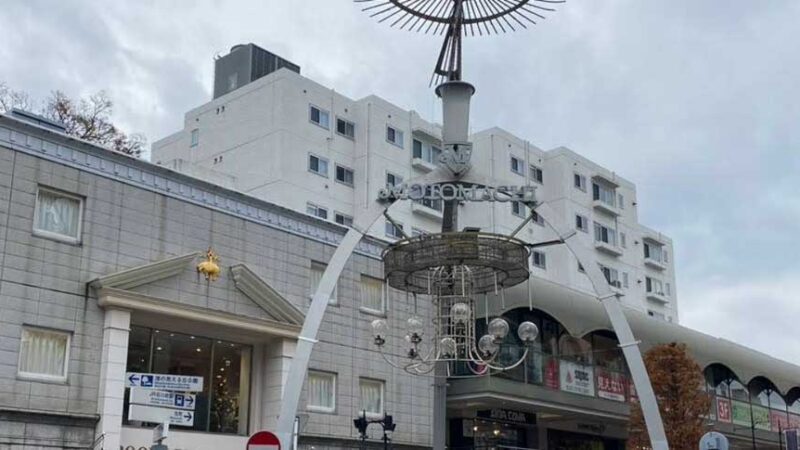
Motomachi Shopping Street is modeled after the scenes where Umi and Shun walk in the film. Old established shops that have continued since 1963 remain, allowing you to feel the Showa atmosphere.
Walking through the shopping street searching for Yokohama trivia that appears in the film is another fun aspect. You may discover buildings and signs that retain the appearance of that time.
Yamashita Park: Unchanged Harbor Views
Yamashita Park, where Umi and Shun walked, has maintained an almost unchanged landscape for over ten years since the film’s release.
- Hikawa Maru (a moored historic passenger ship)
- Benches overlooking the sea
- The Yokohama Harbor view from the park
These are depicted as important backgrounds in the film, and visiting them in person brings the film’s scenes vividly back to life. The park at dusk especially evokes the film’s atmosphere.
Around Sakuragi-cho Station: Places Retaining Showa Appearance
The area around Sakuragi-cho Station is also an important area featured in the film. While development has progressed compared to 1963, part of the station building and surrounding streetscape still retain Showa characteristics.
The film depicts scenes from the station plaza and views of streetcars running. While streetcars are no longer in operation today, photograph panels from that era are displayed in some places.
Isogo Ward: “From Up on Poppy Hill” Scenery Still Remaining in Yokohama
Throughout Isogo Ward in Yokohama, various locations that served as models for scenes in the film are scattered about. Dedicated fans who explore these places will gain a deeper understanding of the film’s world.
Basic Information About Park with a View You Should Know Before Your Visit
Opening Hours and Admission Fee
- Opening Hours: Open 24 hours (always open)
- Admission: Free
- Closed Days: None
However, the Osaragi Jiro Memorial Museum and Kanagawa Museum of Modern Literature within the park each have their own opening hours and closure days, so please confirm before your visit.
Suggested Viewing Time
- Park viewing only: 30 minutes to 1 hour
- Viewing including surrounding facilities: 2 to 3 hours
- Pilgrimage sightseeing of the entire Yamategumi area: Half day to full day
We recommend visiting with plenty of time to spare.
Best Seasons and Points When Visiting
Spring (March to May):
The park has a rose garden with roses blooming beautifully in spring and fall. The peak viewing season is especially mid-May through early June.
Summer (June to August):
Since the film is set in early summer (around June), visiting during the same season allows you to feel the film’s atmosphere even more. However, heat countermeasures are essential.
Autumn (September to November):
The autumn rose season (mid-October through early November) also offers beautiful scenery. The mild climate is ideal for walks.
Winter (December to February):
Clear air makes the views from the observation deck the clearest. However, strong winds and cold weather require windproof clothing.
Photography Tips
Tips for enjoying photography during pilgrimage sightseeing:
- Early morning hours: If you want to recreate the scene of Umi hoisting the signal flags, early morning is recommended
- Dusk: The silhouette of the flag and sunset over the harbor is beautiful
- In front of the commemorative panel: A standard spot where many fans take photos
- Harbor views from the observation deck: You can capture shots like scenes from the film
Don’t forget consideration for other visitors and enjoy photography while following etiquette.
To Enjoy “From Up on Poppy Hill” More Deeply: Background Knowledge of the Work
Deepening your knowledge about the work will make your pilgrimage sightseeing more fulfilling.
Film’s Historical Background: Yokohama in 1963
The film’s setting, 1963 (Showa 38), was in the midst of Japan’s rapid economic growth period. The following year, 1964, would see the Tokyo Olympics, and all of Japan was moving forward. Yokohama was no exception, continuing to develop as a port city. The film carefully depicts the atmosphere of Yokohama at the time, where old and new, tradition and innovation coexisted.
Meaning of International Signal Flags: Wishes Contained in U and W Flags
Let’s look a bit more closely at the international signal flags, an important motif in the film.
International signal flags are a universally recognized system for transmitting information visually between ships. There are 40 different flags corresponding to letters and numbers, and various meanings can be expressed through combinations.
The combination of U and W flags that Umi hoisted each morning means “safe voyage.” This contained her wishes for her father who died in the Korean War and prayers for all sailors crossing the sea.
Looking up at the same flags installed in Park with a View allows you to understand more deeply the film’s themes: “carrying on memories” and “moving into the future.”
Director Goro Miyazaki’s Feelings
Through this work, director Goro Miyazaki depicted “young people facing the past while moving into the future.” Kokuriko House, an old building, and the preservation issue of the Cartier Latin film club room are central themes of the work, showing the struggle of preserving old things while welcoming a new era.
The fact that a new commemorative spot was installed in 2012 at Park with a View, a historic place that opened in 1962, also resonates with the film’s themes.
Nearby Tourism and Gourmet Information: Enjoying Yokohama Alongside Pilgrimage Sightseeing
When you visit Park with a View, enjoy the surrounding tourism and gourmet offerings as well.
Osaragi Jiro Memorial Museum: A Literary Great Associated with Yokohama
The Osaragi Jiro Memorial Museum within the park introduces the achievements of author Osaragi Jiro, who was associated with Yokohama. Known for works like “Kurama Tengu,” Osaragi Jiro was an author who loved Yokohama.
During the film’s 1963 setting, Osaragi Jiro was still living and active. Understanding literature and Yokohama’s history allows deeper comprehension of the film’s background.
Kanagawa Museum of Modern Literature: Literary Walks
The Kanagawa Museum of Modern Literature, also within the park, displays materials from literary figures associated with Kanagawa. Experiencing Showa literature deepens understanding of the film’s historical setting.
Yamategumi Western Building Tours: Architecture Brimming with Exotic Atmosphere
Seven western buildings in the Yamategumi area are open to the public. All are free to enter and allow you to feel Yokohama’s history from the Meiji through early Showa periods.
- Bluff 18
- Diplomat’s House
- Berrick Hall
- Elissamen Residence
- Yamategumi 234
- Yokohama British House
- Yamategumi 111
While these western buildings don’t directly appear in the film, they are valuable architecture for feeling 1963 Yokohama’s atmosphere.
Enjoy Gourmet Food at Motomachi and Chinatown
After your pilgrimage sightseeing, enjoying gourmet offerings at Motomachi Shopping Street or Chinatown is also recommended.
Motomachi Shopping Street:
- Established pastry shops
- Cafes and coffee shops (some with retro Showa atmosphere)
- Bakeries
Chinatown:
- Authentic Chinese cuisine
- Dim sum and appetizers
- Chinese sweets
You may find old established shops that have continued since the film’s era.
Summary: Immerse Yourself in the World of “From Up on Poppy Hill” at Park with a View
Park with a View is loved by many people as a pilgrimage site for the Studio Ghibli work “From Up on Poppy Hill” and as a representative tourist spot in Yokohama.
The official Studio Ghibli memorial spot installed in 2012 is a special place for film fans. The time you spend gazing up at international signal flags swaying in the wind while reminiscing about Umi and Shun’s story will surely become an irreplaceable experience.
Whether you visit after watching the film or rewatch it after visiting, Park with a View is a place where you’ll make new discoveries no matter how many times you visit.
The beautiful harbor views of Yokohama, the historic streetscape of Yamategumi, and the world of “From Up on Poppy Hill.” Please spend special pilgrimage sightseeing time at Park with a View where all these elements converge.
The message “praying for safe voyage” unchanged since 1963 reaches us living today as well. Please receive that message by visiting Park with a View.