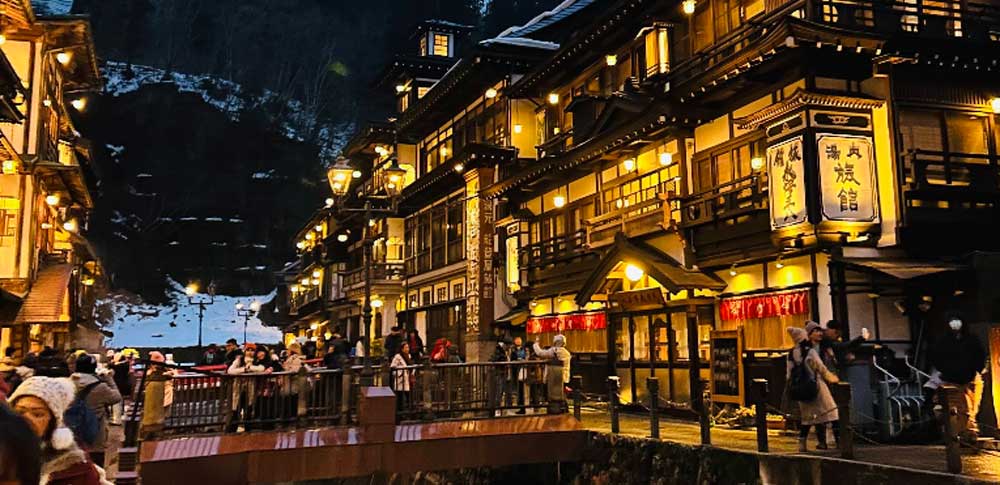
Ginzan Onsen, located in Obanazawa City, Yamagata Prefecture, is one of Japan’s representative hot spring towns, with wooden multi-story inns built from the Taisho to early Showa periods lining both banks of the Ginzan River. Due to its fantastical atmosphere, it has become a sacred site visited by many fans as the model for Studio Ghibli’s masterpiece “Spirited Away.”
This article provides thorough explanations of everything you should know before visiting, including the relationship between Ginzan Onsen and Spirited Away, attractions, ways to enjoy it, and access methods.
The Relationship Between Ginzan Onsen and “Spirited Away”
Officially “No Specific Model,” but the Atmosphere is Strikingly Similar
Director Hayao Miyazaki has officially stated that “Spirited Away has no specific model location.” However, it is certain that the atmosphere of the bathhouse “Yubaba’s Bathhouse” and the hot spring town depicted in the film are “symbolically recreated” representations of hot spring architecture that once existed in Japan.
The landscape of Ginzan Onsen is precisely a precious place that preserves such symbolic Japanese hot spring culture to this day. Especially at dusk when gas lamps light up and wooden structures are reflected on the river’s surface, the scene is truly like the spirit world into which Chihiro wandered.
Why Ginzan Onsen is Said to be the “Model”
There are multiple reasons why Ginzan Onsen is said to be the model for Spirited Away:
Similarities in Architectural Style
The group of wooden four-story inns built in Taisho 10 (1921) bear a striking resemblance to the multi-layered structure of Yubaba’s Bathhouse depicted in the film. In particular, the Notoya Inn is designated as a Registered Tangible Cultural Property of Japan, and its dignified appearance is truly impressive.
Existence of a Red Bridge
The red bridge near the entrance of the hot spring town evokes memories of the bridge Chihiro crosses to enter the spirit world. Crossing this bridge, one is enveloped in a sensation of stepping into another world.
Nostalgic Atmosphere
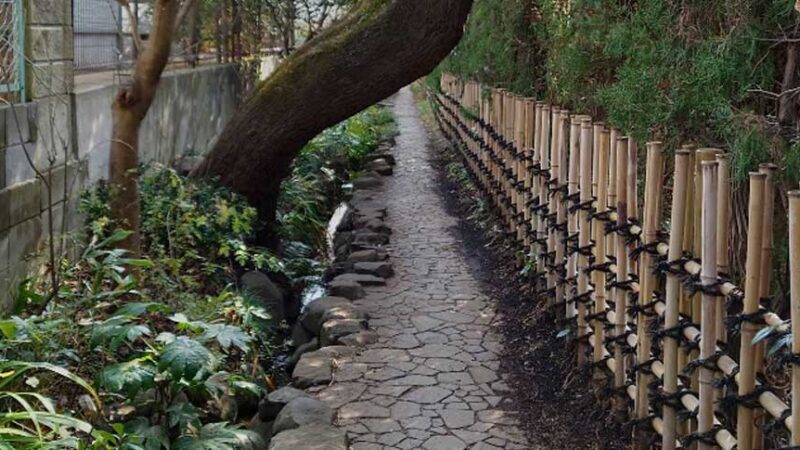
The inns lining the Ginzan River, the stone-paved paths, the light of gas lamps, and the silence of the mountains—all of these combined create a unique worldview as if one has traveled back in time.
The History and Development of Ginzan Onsen
From the Discovery of the Silver Mine to a Hot Spring Resort
The history of Ginzan Onsen dates back to the early Edo period, during the Keicho era (1596-1615). At that time, a silver mine called “Nobasawa Silver Mine” was discovered in this region and mining was conducted. It is said that miners working in the silver mine began using the hot springs to heal their fatigue.
Mining continued throughout the Edo period, but the resources became depleted in the Meiji era and the mine was closed. However, the hot spring remained, and in the Taisho period, it developed into a full-fledged hot spring resort.
A Group of Taisho-era Romantic Architecture
The current landscape of Ginzan Onsen was formed from the Taisho to early Showa period. In particular, after a major flood in Taisho 2 (1913) devastated the hot spring town, each inn competed to rebuild grand wooden structures.
Many inns built during this period incorporated “Taisho Romantic” style influenced by Western architecture, possessing a unique beauty of East-West fusion. The decorative beauty of details such as decorative stucco plasterwork called “tote-e,” stained glass, and arched windows is a must-see.
The NHK Morning Drama “Oshin” Also Brought Fame
When the NHK morning asadora “Oshin” was broadcast in 1983, Ginzan Onsen appeared as the setting and gained nationwide recognition. Subsequently, with the 2001 release of “Spirited Away,” it became a tourist destination drawing attention from around the world.
Attractions and Ways to Enjoy Ginzan Onsen
Notoya Inn: Architecture Evoking the “Yubaba’s Bathhouse” of Spirited Away
The symbolic existence of Ginzan Onsen is the “Notoya Inn.” The main building, a four-story wooden structure constructed in Taisho 10, is designated as a Registered Tangible Cultural Property of Japan.
The exterior of the building is said to have the highest similarity to “Yubaba’s Bathhouse” featured in the movie “Spirited Away.” If you compare details such as the multi-layered structure, the shape of the roof, and the arrangement of windows, you will make interesting discoveries.
At night, the entire building is illuminated, and its majestic appearance becomes the perfect photography spot. The combination with snowy winter landscapes is particularly breathtakingly beautiful, like a painting.
Night Strolls Through the Hot Spring Town with Lit Gas Lamps
The greatest charm of Ginzan Onsen lies in its scenery from dusk through the night. As darkness falls, gas lamps installed throughout the hot spring town are lit, enveloping everything in a fantastical atmosphere.
Night Stroll Highlights:
- Best Time: 30 minutes to 1 hour after sunset is the most beautiful time
- Photography Spot: The best angle is from the bridge in the center of the hot spring town, overlooking the inns on both banks
- Winter Appeal: The contrast between a snowy hot spring town and gas lamp light is exceptional
- Avoiding Crowds: Weekday evenings are relatively quiet and allow for leisurely strolls
Walking on the stone-paved streets of the hot spring town while appreciating the architectural beauty of each inn is truly an experience as if wandering into Chihiro’s spirit world.
Foot Bath “Wara-Shiyu (和楽足湯)” for a Break
A worthwhile stop during your stroll is the free foot bath “Wara-Shiyu (わらしゆ)” located in the hot spring town. You can soothe your travel fatigue while listening to the babbling of the Ginzan River.
The foot bath has a roof and can be used even in winter. Towels can be brought along or purchased at nearby shops. It is popular as a place for interaction between locals and other tourists.
Shared Bath “Shirogane Yu (白銀湯)” for Day-Trip Bathing
Even without staying overnight, you can enjoy Ginzan Onsen’s waters at the shared bath “Shirogane Yu.” It is a public bathhouse also used by locals, where you can experience authentic hot springs at reasonable rates.
Features of Shirogane Yu:
- Natural hot spring with source water flowing directly
- Retro-atmosphere bathhouse
- Admission: Approximately 500 yen for adults (subject to change)
- Operating Hours: From morning to late afternoon (details require confirmation)
The water quality is a sodium chloride sulfate hot spring, with efficacy for neuralgia, muscle pain, and joint pain.
Shiragin Waterfall: A Natural Spot Full of Negative Ions
Following the hiking trail along the Ginzan River upstream for about 20-30 minutes from the hot spring town, you will find “Shiragin Waterfall.” With a fall of 22 meters, it is a beautiful waterfall that harmonizes with the surrounding nature.
The hiking trail is well-maintained, making it ideal for forest bathing hikes. Especially during the new green season and autumn foliage period, you can discover a different aspect of Ginzan Onsen’s charm beyond the hot spring town.
In winter, the trail may be closed due to snow accumulation, so advance confirmation is necessary.
Nobasawa Silver Mine Ruins: Industrial Heritage Filled with Historical Romance
The site of “Nobasawa Silver Mine,” which gave Ginzan Onsen its name, is also open for viewing. There are preserved mining tunnels from the Edo period and exhibits conveying what mining looked like at that time.
It is especially recommended for history enthusiasts, allowing you to understand not only Ginzan Onsen as a hot spring resort but also its value as industrial heritage. However, since mountain paths are involved, comfortable clothing and shoes are necessary.
Mountain Deity Shrine Branch: A Power Spot to Pray for Travel Safety
The “Mountain Deity Shrine Branch” quietly stands in the depths of the hot spring town and is a power spot revered by locals. Though small, it has a quiet and sacred atmosphere, with visitors coming to pray for safe travels and good health.
The area around the shrine is surrounded by nature, offering a quiet place to spend time away from the bustle of the hot spring town.
Ginzan Onsen’s Cuisine and Souvenirs
Nogawa Tofu Shop: Famous Curry Pan and Tofu Sweets
A must-visit when coming to Ginzan Onsen is “Nogawa Tofu Shop.” The specialty here is “Curry Pan,” a deep-fried bread characterized by a crispy exterior and chewy interior. Each one is handmade and served freshly fried.
Also popular are soy milk soft serve ice cream and tofu donuts, sweets made with tofu. Light meals perfect for a break during your stroll are available.
Recommended Menu Items:
- Curry Pan (fried bread)
- Soy Milk Soft Serve Ice Cream
- Fresh Fried Tofu
- Tofu Donuts
The shop is small, so you may have to wait during busy times, but it is well worth it.
Soba Restaurant Takimitei: The Authentic Taste of Locally-Produced Soba
Yamagata Prefecture is known as a soba production region, and delicious soba can be enjoyed in Ginzan Onsen as well. “Soba Restaurant Takimitei” specializes in handmade soba using locally-grown soba flour.
You can enjoy simple yet ingredient-focused dishes such as chilled flat soba and hot soy sauce broth soba. Side menus using local ingredients, such as vegetable tempura, are also abundant.
Hot Spring Town Cafes and Sweets
Ginzan Onsen has scattered retro-atmosphere cafes and sweet shops.
Recommended Cafes:
- Izu no Hana: A Showa-retro coffee shop where you can enjoy coffee and cake
- Haikara-san Street: A combined souvenir and cafe shop located near the entrance of the hot spring town
Stopping by during your stroll and spending leisurely time is one of the joys of enjoying Ginzan Onsen.
Souvenir Shopping: Items Unique to Ginzan Onsen
Popular souvenirs from Ginzan Onsen include:
Food Items:
- Local sake (Yamagata-produced Japanese alcohol)
- Soba (dried noodles)
- Hot spring buns
- Local pickles
Handicrafts and Goods:
- Postcards featuring Ginzan Onsen landscapes
- Hand towels
- Wooden crafts
- Hot spring goods
Since many shops are scattered throughout the hot spring town, searching for your favorite items while strolling is also one of the pleasures.
Ginzan Onsen’s Accommodations
How Many Months in Advance Should You Book? Lodging Strategy
Ginzan Onsen is a popular hot spring resort nationwide, and especially during weekends, holidays, autumn foliage season, and winter snow-viewing season, reservations are extremely difficult to obtain.
Reservation Tips:
- Reservation Opening: Most inns begin accepting reservations 3-6 months in advance
- Popular Inns: Inns such as Notoya and Koyamakaku may be fully booked even six months ahead
- Weekday Targeting: Weekdays are easier to book than weekends
- Cancellation Waiting List: Without giving up, applying for a cancellation waiting list is also effective
- Last-Minute Reservations: Occasionally cancellations occur, so frequent checking is worthwhile
Recommended Inns and Hotels
Notoya Inn
A symbolic presence in Ginzan Onsen. The main building, designated as a Registered Tangible Cultural Property of Japan, is a must-see. Guest rooms with private open-air baths are available, allowing for luxurious time.
Koyamakaku
The highest-positioned inn in Ginzan Onsen. Its claim to fame is the spectacular view overlooking the hot spring town, with the view from the observation open-air bath being particularly exceptional.
Mountain Stream Inn Ginzan-so
A large inn located somewhat away from the hot spring town. It features spacious communal baths and open-air baths, and is also attractive for its relatively easy-to-obtain reservations. Day-trip bathing is also accepted.
Inn Nagasawa Hachihei
A small inn famous for its homely hospitality. Local ingredients are the hallmark of its cuisine.
Waterfall and Soba Inn Takimi-kan
Characterized by its location overlooking Shiragin Waterfall. Recommended for those who wish to spend time quietly in a peaceful environment.
Day-Trip Tourism or Lodging
Ginzan Onsen can be enjoyed sufficiently as a day trip, but the experience gained through lodging is extraordinary.
Day-Trip Advantages:
- No reservation concerns
- Reduced costs
- Easy to combine with other tourist attractions
Lodging Advantages:
- Can fully enjoy the nighttime gas lamp atmosphere
- Can stroll through the quiet hot spring town in early morning
- Can savor the inn’s hot springs and cuisine
- Can spend leisurely time without time constraints
Especially Ginzan Onsen from evening through early morning has fewer day-trippers and allows you to experience true serenity and beauty. If possible, lodging is recommended.
Ginzan Onsen Through the Four Seasons
Spring (March-May): Season of Melting Snow and New Greenery
Spring in Ginzan Onsen is the season when new greenery arrives with the melting of snow. In March, snow still remains, allowing you to enjoy both winter and spring expressions. From April through May, the mountains come alive and the Ginzan River’s water volume increases, creating a more powerful landscape.
During this period, there are relatively few tourists, making it possible to stroll leisurely through the hot spring town.
Summer (June-August): A Cool Mountain Retreat for Summer Heat
Summer in Ginzan Onsen is attractive for its cool mountain climate. Even during the day, it is relatively comfortable, and it is also popular as a summer retreat. The babbling of the Ginzan River and lush green landscape make you forget the heat.
This is the ideal season for hiking the trail to Shiragin Waterfall and enjoying surrounding hikes. However, summer vacation periods are crowded, so weekday visits are recommended.
Autumn (September-November): Autumn Foliage and Golden Landscape
Autumn in Ginzan Onsen is known for the beauty of its autumn foliage. Mid-October through early November is peak season, when the mountains surrounding the hot spring town turn red and yellow.
The contrast between the gas lamp light at dusk and the autumn foliage is breathtakingly beautiful. During this period, lodging reservations become most difficult, so early planning is essential.
Winter (December-February): Snowy Landscape and the World of Spirited Away
Winter in Ginzan Onsen is the season closest to the worldview of “Spirited Away.” A snow-covered hot spring town, white breath, and the warm light of gas lamps. Everything creates a fantastical atmosphere.
Especially from January through February, there is heavy snowfall, creating a truly painting-like landscape. A snowy hot spring bath at night becomes an extraordinary experience.
Winter Precautions:
- Be cautious of snowy and icy roads (studless tires essential)
- The hot spring town is also slippery; shoes with non-slip soles are recommended
- Take thorough cold-weather precautions
- The hiking trail to Shiragin Waterfall may be closed
Access Methods and Travel Time
Public Transportation Access
From Tokyo:
- From Tokyo Station on the Yamagata Shinkansen to Oishida Station (approximately 3 hours 30 minutes)
- From Oishida Station by bus to Ginzan Onsen (approximately 40 minutes)
From Sendai:
- From Sendai Station by highway bus to Obanazawa (approximately 1 hour 30 minutes)
- From Obanazawa by bus or taxi to Ginzan Onsen (approximately 30 minutes)
Bus Notes:
- Bus service from Oishida Station to Ginzan Onsen is limited (approximately 4-5 buses per day)
- Winter snow may cause delays or service cancellations
- Check schedules in advance and plan with time to spare
- Some inns offer shuttle service from Oishida Station (advance reservation required)
Car Access
From Tokyo:
- Tohoku Expressway → Murata JCT → Tohoku Central Expressway → Obanazawa IC → Approximately 30 minutes via Route 347
- Total travel time: Approximately 5 hours
From Sendai:
- Tohoku Expressway → Murata JCT → Tohoku Central Expressway → Obanazawa IC → Approximately 30 minutes via Route 347
- Total travel time: Approximately 1 hour 30 minutes
Parking Information:
- Shared parking lot at hot spring town entrance (free)
- Vehicle traffic prohibited in the hot spring town; walk from the parking lot
- Winter parking lots are covered with snow; caution is necessary
- Lodging guests can use inn parking (confirmation required)
Access from Nearby Airports
From Yamagata Airport:
- Approximately 1 hour 30 minutes by rental car from airport
- Airport bus to Yamagata Station → JR to Oishida Station → Bus to Ginzan Onsen
From Sendai Airport:
- Approximately 2 hours by rental car from airport
- Airport railway to Sendai Station → Highway bus or JR to Oishida Station → Bus to Ginzan Onsen
Nearby Tourist Attractions
Yamadera (Risshaku-ji): Ancient Temple with Spectacular Views
Located approximately 1 hour by car from Ginzan Onsen, Yamadera (Risshaku-ji) is a historic temple famous for Matsuo Basho’s poem “How silent it is here, / stinging into the rocks, / the sound of a locust.” After climbing 1,015 stone steps, spectacular views await.
Many tourists visit Yamadera in combination with Ginzan Onsen, making it a standard course in Yamagata tourism.
Zao Hot Spring and Okama: Yamagata’s Signature Tourist Sites
Zao Hot Spring is approximately 1 hour 30 minutes by car from Ginzan Onsen, known for its strongly acidic sulfur hot spring and famous as a “beauty bath.” Additionally, Zao’s crater lake “Okama” enchants visitors with its emerald-green mystical color.
In winter, the frost-covered trees (juhyo) of Mount Zao are also a major attraction.
Kamiyama Hot Spring: A Historic Hot Spring Resort
Kamiyama Hot Spring in Kamiyama City is a hot spring resort with a history of over 560 years. It offers many historical sites such as Kamiyama Castle (Tsukioka Castle) and samurai residences. Combining it with Ginzan Onsen for a hot spring tour is also recommended.
Cherry Blossom Picking: Yamagata’s Early Summer Tradition
Yamagata Prefecture is Japan’s top cherry blossom producer. From June to July, cherry blossom picking is available. There are pick-your-own orchards around Ginzan Onsen where you can taste fresh cherries.
Mogami River Boat Tour: Historical River Journey
The Mogami River boat tour is a historic tourist activity experienced by Matsuo Basho himself. You can enjoy approximately one hour of river travel listening to the boatman’s narrative while taking in the majestic scenery of the Mogami River.
Precautions and Etiquette During Your Visit
Photography Etiquette in the Hot Spring Town
Ginzan Onsen is popular as a photography spot, but certain etiquette must be observed:
- Interior Photography of Inns Prohibited: Exteriors may be photographed, but inns may prohibit photography of interiors and lobbies by non-guests
- Tripod Use: Tripod use during crowded times inconveniences other tourists and should be avoided
- Night Photography: Flash disturbs inn guests and should be avoided
- Privacy Consideration: Be mindful not to include other tourists or locals in photographs
Maintaining a Quiet Hot Spring Town
Ginzan Onsen is a small hot spring town and also a place of local life:
- Keep Your Voice Down: Especially during night and early morning, please be quiet
- Take Trash With You: To preserve the beauty of the hot spring town, please take all trash with you
- Follow Smoking Regulations: Smoking is prohibited except in designated areas
- No Trespassing on Private Property: Do not enter inn or residential grounds without permission
Tips for Avoiding Crowds
To comfortably enjoy Ginzan Onsen, avoiding crowds is important:
- Weekday Visits: Weekends and holidays are extremely crowded
- Early Morning Strolls: By staying overnight, you can enjoy the quiet hot spring town before day-trippers arrive
- Off-Season: Spring and early summer are relatively quiet
- Bad Weather Days: Rainy or snowy days have fewer tourists and offer unique charm
Frequently Asked Questions
Can You Enjoy It as a Day Trip?
Yes, it can be fully enjoyed as a day trip. You can cover main attractions in 3-4 hours through hot spring town strolling, foot baths, bathing at shared baths, and dining. However, lodging is recommended to enjoy the nighttime gas lamp atmosphere.
Is It Suitable for Families with Children?
The hot spring town features stone paving with steps, making stroller navigation difficult. With small children, prepare a baby carrier. Winter requires particular caution as surfaces are slippery.
Can You Bring Pets?
Pets may accompany you through the hot spring town strolls, but entry into inns and shops varies by facility. Pet-friendly accommodations are limited, so advance confirmation is necessary.
Do Many Foreign Tourists Visit?
Due to “Spirited Away’s” international popularity, many foreign tourists visit. Particularly visitors from Taiwan, Hong Kong, and Western countries, creating an internationally diverse atmosphere. Some shops and inns offer English and Chinese language services.
Can People in Wheelchairs Sightsee?
The hot spring town features stone paving with many steps, making wheelchair navigation difficult. Few barrier-free facilities exist. Consulting with inns or tourism associations in advance is recommended.
Conclusion: Experience the World of Spirited Away at Ginzan Onsen
Ginzan Onsen in Yamagata Prefecture is one of Japan’s representative hot spring towns where you can experience the world of “Spirited Away” in reality. The Taisho-era romantic wooden architecture, the gas lamp-lit hot spring town at night, and the environment surrounded by rich nature captivate all who visit.
Ginzan Onsen, showing different expressions through the four seasons, offers new discoveries with each visit. Particularly the winter snowy landscape is truly the spirit world into which Chihiro wandered. Once you visit, you will be captivated by its fantastical beauty.
Savoring Japan’s traditional hot spring culture and architectural beauty in a nostalgic atmosphere while enjoying delicious local cuisine—such luxurious time is what Ginzan Onsen offers.
Book early and, while observing etiquette during your visit, create special memories at Ginzan Onsen. Ginzan Onsen is a recommended travel destination not only for Spirited Away fans but for all those seeking beautiful Japanese landscapes.