Higashi-Fuchu Station and Uma Musume Pretty Derby
Higashi-Fuchu Station is a memorable place in the first episode “Dream Gate!” of the popular anime “Uma Musume Pretty Derby,” where the protagonist Special Week sets foot in Tokyo for the first time. The impressive scene where Special-chan, who came to Tokyo from Hokkaido, crashes into the gate without knowing how to pass through the ticket barrier, remains vivid in the memories of many fans.
Located in Shimizu-ga-oka, Fuchu City, Tokyo, this station is an important hub of Keio Electric Railway, known as the junction where the Keio Line and Keio Racecourse Line intersect. In the anime world, it appears as the station one stop before “Fuchu Racecourse Main Gate Station,” where Special Week was supposed to get off, symbolizing her naivety and unfamiliarity with the city.
About Uma Musume Pretty Derby
“Uma Musume Pretty Derby” is a youth sports story about beautiful girls who are humanized versions of real racehorses, running toward their dreams at Tracen Academy. The first anime series aired in 2018, followed by the release of a game app and the production of the second and third seasons, continuing to fascinate many fans.
The center of the story is the actual Tokyo Racecourse and its surrounding areas. Since many real locations centered in Fuchu City appear in the story, it has become a pilgrimage site visited by numerous fans. Higashi-Fuchu Station holds particular significance among these as a symbolic location and a sacred place with special meaning for anime fans.
Basic Information and Access to Higashi-Fuchu Station
Station Overview
Address: 〒183-0015 Fuchu City, Tokyo, Shimizu-ga-oka 1-chome
Higashi-Fuchu Station is operated by Keio Electric Railway, with two lines—the Keio Line and the Keio Racecourse Line—serving the station. It is also the starting point of the Keio Racecourse Line and is crowded with many horse racing fans on days when races are held at the Tokyo Racecourse.
Access Methods
From Shinjuku Station:
- About 20 minutes on Keio Line Express/Semi-Express, transfer to local trains at Chofu Station
- About 30 minutes on Keio Line local trains (direct)
From Shibuya Station:
- About 10 minutes on Keio Inokashira Line to Meiji University Station, then about 20 minutes after transferring to the Keio Line
From Tokyo Station:
- About 15 minutes on JR Chuo Line to Shinjuku Station, then about 20 minutes after transferring to the Keio Line
Apart from horse racing event days, the station is relatively quiet, but with the anime as a backdrop, fans visiting for pilgrimage purposes can be seen on weekends.
Parking Information in the Surrounding Area
For those visiting by car, there are several coin parking lots around the station.
Times Higashi-Fuchu Station Front
- Address: 〒183-0005 Fuchu City, Tokyo, Wakamatsu-cho 1-chome-3
- About 2 minutes walk from the station
- Open 24 hours
However, on horse racing event days, surrounding roads become congested and parking lots tend to be full, so using public transportation is recommended.
Explanation of Famous Scenes from Anime Episode 1
Special Week’s Move to Tokyo Scene
In Episode 1, Special Week comes to Tokyo from Hokkaido to pursue her dreams. Her expression as she gazes out from the Keio Line train window is filled with both anticipation and anxiety. In the anime, the scene inside the train heading to Fuchu Racecourse Main Gate is carefully depicted, with the actual design of Keio Line trains faithfully reproduced.
On non-racing days, the Keio Line train interior is relatively empty, which is also depicted in the anime. This quietness serves as a production technique that emphasizes Special Week’s emotional state as a country girl from the countryside.
Impressive Scene at the Ticket Barrier
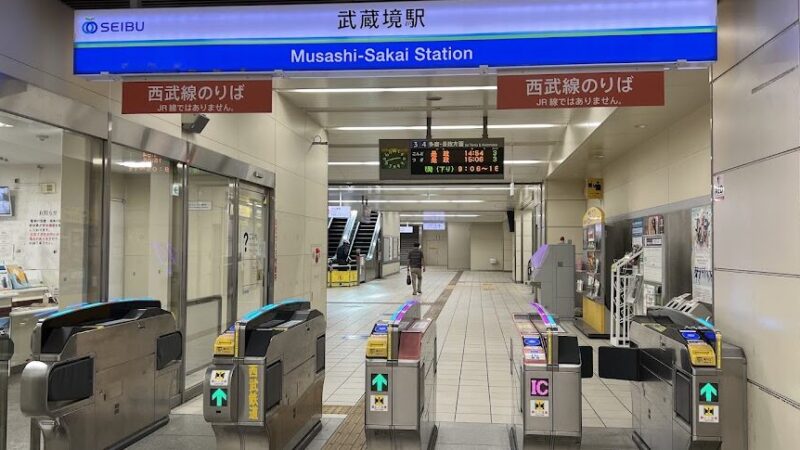
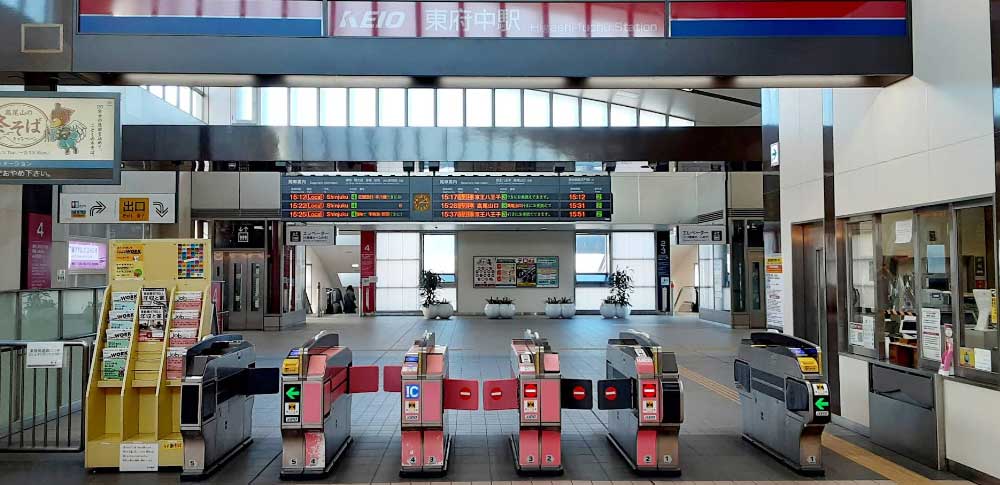
The most impressive scene at Higashi-Fuchu Station is the ticket barrier scene. Special Week doesn’t know how to insert her ticket into the machine and crashes into the gate as she tries to pass through. This scene is depicted as an important moment symbolizing her innocent country upbringing and pure-hearted nature.
The image of her being worried over by station staff expresses her unfamiliarity with the city and innocent charm, capturing the hearts of many viewers. The actual ticket barrier at Higashi-Fuchu Station has nearly the same structure as depicted in the anime, making it possible to take photos from the same angle during pilgrimages.
Station Map Scene
The anime also depicts a scene where Special Week looks at a map inside the station. However, there is actually no map installed at Higashi-Fuchu Station in the location depicted in the anime. This appears to be an element added as an anime production technique.
The cuts filmed inside the station carefully depict the station’s clock and information boards, faithfully reproducing the atmosphere of the actual station.
Detailed Photography Spots for Sacred Site Pilgrimage
Ticket Barrier Area
Photography Point: In front of the ticket barrier
The ticket barrier at Higashi-Fuchu Station is where the most important anime scene takes place. The automatic ticket gate where Special Week crashed is still installed in the same location, allowing photography from the same angle as in the anime.
Precautions When Photographing:
- An entrance ticket is required for photography inside the barrier
- Avoid busy commute and school hours
- Be considerate of other users’ experience
- Refrain from flash photography
Photography is possible from outside the barrier as well, but to get the same angle as the anime, you need to enter the barrier. Entrance tickets can be purchased from the station’s ticket machine.
Platform Area
Photography Point: Keio Line downbound platform
The scene where Special Week gets off the train can be photographed at the actual Higashi-Fuchu Station platform. Photography with a similar composition to the anime is possible from the platform heading toward Fuchu Racecourse Main Gate.
Recommended Photography Times:
- Weekday mornings (relatively less crowded)
- Non-racing event weekends
When photographing on the platform, be careful not to interfere with train operations and to avoid inconveniencing other passengers. Photograph within the yellow line and absolutely never step onto the tracks.
Exterior of Station Building
Photography Point: Station exterior as seen from the front plaza
The anime also features the station’s exterior. Higashi-Fuchu Station has a relatively compact design, allowing for full photography from the front plaza. The station building appears in the background of the scene where Special Week walks toward the Tokyo Racecourse.
Walking Route to Tokyo Racecourse
Route as Depicted in Anime
Special Week walks from Higashi-Fuchu Station to the Tokyo Racecourse. Since she was supposed to get off at the next station, Fuchu Racecourse Main Gate, she ends up taking this route.
Estimated Time: About 15-20 minutes on foot
Distance: Approximately 1.2 km
Detailed Walking Route
- Exit Higashi-Fuchu Station North Exit
- Turn left toward the North Exit after passing through the barrier
- Head North on Fuchu-kaido
- Continue straight on the main street toward the Tokyo Racecourse
- Tokyo Racecourse Entrance
- Arrive at the racecourse perimeter in about 15 minutes
- The main gate is approximately 5 minutes further
The anime depicts Special Week running toward the destination. Actually walking this route offers a valuable opportunity to experience her feelings.
Points of Interest Along the Route
There are several landscapes along the walking route that appear in the anime. In particular, the streetscape along Fuchu-kaido is used as background in the series and is one of the pleasures of sacred site pilgrimage.
Apart from racing days, the route passes through quiet residential areas where you can enjoy the scenery at a leisurely pace. The streetscape shows different faces depending on the season.
Differences Between Higashi-Fuchu Station and Fuchu Racecourse Main Gate Station
The Station Where She Was Supposed to Get Off
Fuchu Racecourse Main Gate Station is positioned as the nearest station to the Tokyo Racecourse, located at the terminus of the Keio Racecourse Line. It is approximately 2 minutes by train from Higashi-Fuchu Station.
Characteristics of Fuchu Racecourse Main Gate Station:
- About 2 minutes walk to the Tokyo Racecourse
- Very crowded on horse racing event days
- May be closed on non-racing days
Why Did Special Week Get Off at Higashi-Fuchu Station?
In the story setting, Special Week mistakenly gets off at Higashi-Fuchu Station, one stop before the intended station nearest to Tracen Academy. This “mistake” becomes an important production technique expressing her character, effectively impressing viewers with her setting as an unsophisticated country girl.
In reality, the locations that served as models for Tracen Academy appear to be combinations of multiple facilities within Fuchu City, and no definite “nearest station” has been established.
How to Enjoy Sacred Site Pilgrimage and Etiquette
Basic Etiquette for Photography
Sacred site pilgrimage is an enjoyable experience, but when visiting actual locations, consideration for local residents and other users is essential.
Etiquette to Follow:
- Do not trespass on private property without permission
- Do not make loud noise
- Always take trash with you
- Do not interfere with station operations
- Be considerate of other users’ experience
- Check surroundings before using tripods
- Avoid occupying locations for extended periods
In particular, Higashi-Fuchu Station is an actively operated station used daily by many people. There have been cases where photography has been prohibited due to violations of sacred site pilgrimage etiquette, so careful attention is necessary.
Recommended Times to Visit
Weekday Mornings:
- Around 10:00-12:00, avoiding morning rush hour
- Relatively uncrowded and easy to photograph
Non-racing Event Weekends:
- Quiet station surroundings, closer to the anime atmosphere
- Able to enjoy sacred site pilgrimage leisurely
Times to Avoid:
- Horse racing event days (especially major G1 races)
- Weekday rush hours (7-9 AM, 5-7 PM)
On racing event days, the station becomes extremely crowded, making photography impossible. It is recommended to check the JRA official website for the racing schedule before visiting.
Sacred Site Pilgrimage Kit
Items useful to bring when visiting Higashi-Fuchu Station:
- Smartphone/Camera: For comparative photography
- Anime Screenshots: For confirming composition
- Small change for ticket purchase: For barrier entrance tickets
- Comfortable walking shoes: If walking to the Tokyo Racecourse
- Beverages: Essential, especially in summer
- Sacred site pilgrimage notebook: For recording
Related Sacred Site Spots in the Surrounding Area
Tokyo Racecourse
Address: 1-1 Hiyoshi-cho, Fuchu City, Tokyo
The Tokyo Racecourse is the most important stage in the Uma Musume world. Many race scenes in the anime are depicted based on this racecourse.
Points of Interest:
- Turf Vision (large video display)
- Paddock
- Winner’s Circle
- Stadium exterior
Admission is required on racing days, and weekday viewing tours are also available. However, the facility is generally closed on non-racing days, so advance confirmation is necessary.
Other Spots in Fuchu City
Around Fuchu Station:
In the game version of Uma Musume, Fuchu Station is likely the model for Tracen Academy’s nearest station. The scenery around the station and the atmosphere of the shopping street are reported to resemble backgrounds in the game.
Tamagawa Riverbed:
The riverbed appears as a background in training scenes. The actual Tamagawa riverbed is busy with people enjoying running and cycling.
Other Sacred Sites in Tokyo
Harajuku and Omotesando Area:
Urban scenery appearing in shopping scenes. Aspects of the Uma Musume characters’ daily lives are depicted.
Kichijoji Area:
There are shopping streets and parks used as backgrounds in some scenes.
Voices from Fans Who Actually Visited
Sacred Site Pilgrimage Experience Stories
Many Uma Musume fans have visited Higashi-Fuchu Station and shared their experiences on SNS and blogs.
Common Impressions:
- “I was moved to see the landscape from the anime exactly as it was”
- “Seeing the ticket barrier helped me understand Special-chan’s feelings”
- “Actually walking to the Tokyo Racecourse made me understand the distance”
- “The quiet atmosphere of the station on a weekday matched the anime’s worldview”
Photography Tips
Advice from fans who have actually done sacred site pilgrimage:
- Preparation for Comparative Photography:
- Prepare anime screenshots in advance
- Take time finding the same angles
- Selection of Time of Day:
- Morning with natural light is recommended
- Evening tends to create backlighting
- Multiple Visits:
- Don’t try to photograph everything in one visit
- Revisit at different seasons and times of day for new discoveries
History and Present of Higashi-Fuchu Station
Station History
Higashi-Fuchu Station opened in 1916 (Taisho 5th year), making it a historic station. It was originally named “Racecourse Front Station” but was renamed to the current “Higashi-Fuchu Station” in 1955.
As the starting point of the Keio Racecourse Line, it has long served as an access hub to the Tokyo Racecourse. Temporary ticket barriers are installed on racing event days, reflecting the station’s deep relationship with the racecourse.
Station Structure
Platform Configuration:
- Island-type platform with 2 platforms and 4 lines
- Keio Line (toward Shinjuku/toward Hashimoto)
- Keio Racecourse Line (toward Fuchu Racecourse Main Gate)
Station Facilities:
- One ticket barrier (North Exit only)
- Elevators and escalators complete
- Barrier-free accessible
Changes Since Uma Musume
Since the broadcast of the anime “Uma Musume Pretty Derby,” Higashi-Fuchu Station has been visited by sacred site pilgrimage fans. Especially on weekends and holidays, fans with cameras can be seen.
While the station itself has no special decorations or collaboration projects, it has come to be recognized among local residents as a sacred site for Uma Musume, and there is a warm atmosphere of acceptance toward fans.
Nearby Restaurants and Rest Spots
Cafes and Restaurants Around the Station
We introduce some restaurants where you can stop by during sacred site pilgrimage.
Chain Stores Near the Station:
- Fast food restaurants
- Cafe chains
- Convenience stores
Since the area around Higashi-Fuchu Station is a residential neighborhood, there are few large commercial facilities, but basic dining options are available. Moving to Fuchu Station provides more options.
Places to Rest
Station Front Plaza:
Though small, benches are installed allowing for brief rest.
Tokyo Racecourse (Racing Days Only):
There are numerous restaurants and rest areas inside the racecourse. However, admission is required.
Camera Equipment and Photography Settings Advice
Recommended Camera Settings
Smartphone Photography:
- Turn on HDR mode
- Display grid to confirm composition
- Use burst mode to take multiple shots
SLR/Mirrorless Camera:
- Wide-angle lens (24mm-35mm approximately) is convenient
- ISO sensitivity: 400-800 (indoors), 100-200 (outdoors)
- Aperture: F8-F11 for full focus on entire subject
Composition Tips
Tips for photographing with the same composition as the anime:
- Match Height: Special Week’s eye level (approximately 150cm)
- Adjust Distance: Try multiple distances from the subject
- Check Background: Be careful to avoid unwanted objects in the frame
- Keep Level: Be mindful of horizontal and vertical lines
Seasonal Attractions
Spring (March-May)
During cherry blossom season, the street trees around the station bloom beautifully. You can enjoy cherry blossom lined streets on the way to the Tokyo Racecourse.
Recommended Points:
- Collaboration of cherry blossoms and station building
- Spring G1 season brings racecourse activity
Summer (June-August)
Summer requires heat protection measures, but the blue sky and station building contrast is beautiful during this season.
Precautions:
- Prepare thoroughly for heat stroke prevention
- Strong sunlight makes hats and sunscreen necessary
Autumn (September-November)
Autumn is also G1 season for horse racing, making the Tokyo Racecourse area most bustling. Autumn leaves are also beautiful, making it an ideal season for photography.
Recommended Points:
- Combination of autumn foliage and station building
- Clear autumn days are optimal for photography
Winter (December-February)
Winter has clear air, allowing for crisp photography. However, cold weather protection is essential.
Recommended Points:
- Clear, transparent air of winter
- Night views during illumination season
Use of Transportation IC Cards and Entrance Tickets
Entrance Tickets for Photography Inside Barriers
To photograph inside the barrier from the same angle as the anime, an entrance ticket must be purchased.
How to Purchase Entrance Ticket:
- Select “Entrance Ticket” at the station ticket machine
- Pay the 140 yen fee (as of 2024)
- Pass through the barrier to photograph
- Exit within 2 hours (additional charges apply for exceeding time)
Notes:
- Entrance tickets cannot be used to board trains
- Valid time is 2 hours
- Entry and exit must be at the same station
Use of Transportation IC Cards
Transportation IC cards such as Suica and PASMO can also be used as entrance ticket substitutes. Touch the card when entering the barrier and touch again when exiting, and the entrance fee will be calculated.
Uma Musume Related Event Information
Regular Events
The Tokyo Racecourse occasionally holds collaboration events with Uma Musume.
Examples of Past Events:
- Uma Musume Collaboration Races
- Voice Actor Talk Shows
- Full-size Panel Exhibitions
- Original Merchandise Sales
How to Get Event Information
Official Information Sources:
- Uma Musume Official Twitter
- JRA Official Website
- Keio Electric Railway Official Website
- Fuchu City Tourism Information Website
When events are held, the area becomes more crowded than usual, so it is recommended to plan with extra time.
Conclusion: The Appeal of Higashi-Fuchu Station Sacred Site Pilgrimage
Higashi-Fuchu Station holds special significance for many fans as the symbolic place where the story of Uma Musume Pretty Derby begins. The scene where Special Week sets foot in Tokyo for the first time and crashes into the ticket barrier is an important moment that leaves an impression of her character, condensing the appeal of the work.
By visiting the actual location, you can more deeply understand the anime’s world and empathize with the characters’ feelings. By tracing the walking route to the Tokyo Racecourse, you can also experience Special Week’s footsteps.
When engaging in sacred site pilgrimage, it is important to remember consideration for local residents and other users, and to enjoy the experience while following etiquette. By choosing appropriate times and following photography rules, the environment for sacred site pilgrimage can be maintained for years to come.
Higashi-Fuchu Station, where you can feel the Uma Musume world in an actual location. Please visit once and see the anime’s famous scenes with your own eyes. It will surely deepen your love for the work even more.