![[Demon Slayer] Demon Stone Steps, Oita Prefecture](https://anime-place.site/cms/wp-content/uploads/2026/06/places-3848-【鬼滅の刃】鬼の石段大分県完全ガイド八幡竈門神社の伝説と聖地巡礼の魅力.jpg)
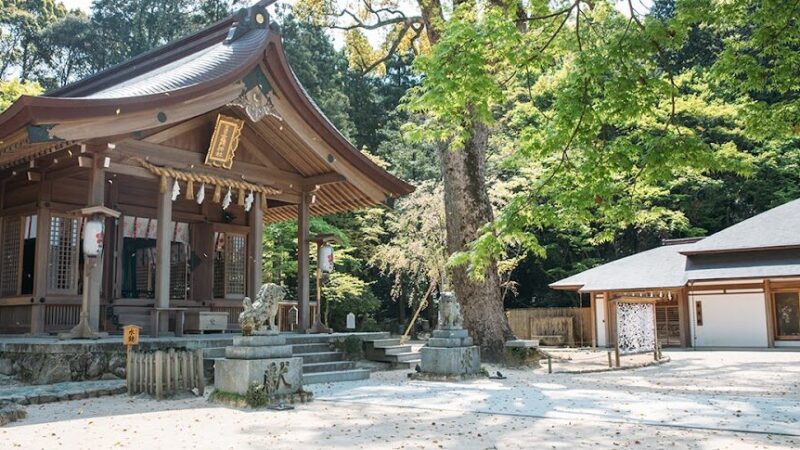
Yawata Kamado Shrine, located in Beppu City, Oita Prefecture, has attracted attention from fans nationwide as a sacred site for the popular anime “Demon Slayer: Kimetsu no Yaiba.” Among its features, the “Demon’s Stone Stairs” that form the shrine’s approach path have become particularly popular. These stairs are associated with an ancient demon legend that bears a striking resemblance to the world of the work, making them a central spot for pilgrimage to sacred sites.
This article presents the charm of this sacred site, representative of Oita Prefecture, covering the historical background of the Demon’s Stone Stairs, their connection to Demon Slayer, practical visiting methods, and attractions in the surrounding area.
What are the Demon’s Stone Stairs? Ancient Legend Remaining at Yawata Kamado Shrine
History and Origins of Yawata Kamado Shrine
Yawata Kamado Shrine is a historic shrine located in the Uchikamado district of Beppu City, Oita Prefecture. While the exact date of its founding is unclear, it is said to have a history spanning several hundred years or more and has been cherished by local residents as “Kamado-sama.”
The word “Kamado” (cooking stove) in the shrine’s name originates from an old place name in this region. Beppu has long been known as a hot spring resort, and the theory suggests the name comes from the numerous cooking stoves that used geothermal heat. The principal deity enshrined is Emperor Ojin, and the shrine has been revered as a guardian deity of the community.
The Legend of Demon-Built Ninety-Nine Stone Stairs Constructed in One Night
The most famous legend associated with Yawata Kamado Shrine is the story of the “Demon’s Stone Stairs.” This legend has been passed down through the region for generations and goes as follows:
Long ago, a fearsome demon lived in the village of Kamado. Each night, this demon would appear in the village, attacking and devouring people, repeating these evil deeds. The villagers, terrified and desperate, appealed to Yahata-sama (the shrine’s deity) for help.
Yahata-sama offered the demon a deal instead of slaying it: “If you can build one hundred stone stairs in a single night, I will offer human sacrifices to you every year. However, if you cannot complete them, you must never again show your face in this village.”
The demon accepted the promise and began transporting enormous stones from valleys and rivers throughout the night. With the demon’s superhuman strength, the stairs were built at a remarkable pace. When the ninety-ninth step was completed, Yahata-sama called out, “Is it not yet done?” The demon answered, “Just one more step,” when suddenly a rooster crowed, announcing dawn.
Unable to meet the promised deadline, the demon hastily fled and never appeared in the village again. Thus, peace came to the village of Kamado.
Traces of the Demon Remaining on the Stairs
The stone stairs that remain today as the shrine’s approach path are precious historical relics that tell this legend. When one actually climbs the stairs, certain features give credence to the legend.
The lower portions of the stairs are relatively carefully stacked with stones, forming an orderly structure. However, as one progresses upward, the arrangement of stones becomes rougher, revealing signs of hasty construction. This is said to be evidence that the demon rushed the work out of fear of daybreak.
The total number of stairs is said to be ninety-nine, though the exact count may vary slightly depending on how they are counted. This number of “one short of one hundred” holds important significance as a core element of the legend.
Astonishing Commonalities with “Demon Slayer: Kimetsu no Yaiba”
Why Yawata Kamado Shrine Became a Sacred Site
“Demon Slayer: Kimetsu no Yaiba” is a manga work by Gotouge Koyoharu that was serialized in Weekly Shonen Jump from 2016 to 2020, becoming a social phenomenon. The story follows protagonist Tanjiro Kamado as he fights demons to turn his sister Nezuko, who has been turned into a demon, back into a human.
Yawata Kamado Shrine gained attention as a sacred site due to several remarkable coincidences.
The most striking is the name “Kamado” (stove). The protagonist’s surname is “Kamado,” which perfectly matches the shrine’s name. While the author has not officially stated whether she drew inspiration from this shrine, fans strongly believe there is a connection.
Similarities Between the Demon Legend and the Work’s World
There are remarkably many common points between the demon legend of Yawata Kamado Shrine and the world of “Demon Slayer: Kimetsu no Yaiba.”
The Relationship Between Demons and Daybreak
The most important commonality is the relationship between demons and sunlight. In the Yawata Kamado Shrine legend, the demon hears a rooster’s crow at daybreak and flees in panic. In “Demon Slayer: Kimetsu no Yaiba,” demons turn to ash and disappear when exposed to sunlight, so they must complete their activities before dawn. This alignment in the setting is too perfect to be coincidental.
Demons Attacking Humans
The depiction of the legend’s demon attacking and eating people also perfectly aligns with the nature of demons in the work. The demons in “Demon Slayer: Kimetsu no Yaiba” gain power by consuming humans, and in this respect, the legend and the work are in harmony.
The Number “Ninety-Nine”
The fact that the stairs end at ninety-nine steps is also symbolic. This number, one short of the perfect number one hundred, symbolizes the demon’s incomplete defeat. In “Demon Slayer: Kimetsu no Yaiba,” demons are portrayed as imperfect beings who cannot return to humanity, and this theme of “incompleteness” runs through both narratives.
The Significance of the Place Name Beppu
The city of Beppu, where Yawata Kamado Shrine is located, also holds interesting elements related to the work. Beppu is one of Japan’s premier hot spring resorts and home to a famous tourist attraction called “Hell Tour.” The word “Hell” itself evokes associations with demons and the underworld, overlapping with the work’s atmosphere.
In particular, a hot spring spot called “Kamado Hell” is located near the shrine, and here too the word “Kamado” appears. The various hells created by Beppu’s geothermal activity could be said to be a fitting environment for demons to inhabit.
Visiting Guide to the Demon’s Stone Stairs
How to Access
Using Public Transportation
JR Beppu Station is the nearest major station to Yawata Kamado Shrine. From Beppu Station, you can access the shrine via the following methods:
- Local Bus: Board the Kamenoi Bus “Kannawa/Jigoku-hara” line from the east exit of Beppu Station and get off at the “Uchikamado” bus stop. Travel time is approximately 20 minutes, with about a 5-minute walk from the bus stop to the shrine.
- Taxi: Approximately 15 minutes by taxi from Beppu Station. The fare is around 2,000 yen. For multiple visitors, a taxi may be more efficient.
Using a Private Vehicle
The shrine is approximately 10 minutes from “Beppu IC” on the Oita Expressway. While the shrine has a small parking area, it may become congested during weekends and peak tourist seasons. Consider using nearby paid parking facilities.
If using a car navigation system, search for “Yawata Kamado Shrine” or the address “1900 Uchikamado, Beppu City, Oita Prefecture.”
Time Required for a Visit and Precautions
Visiting the shrine itself takes approximately 30 minutes to 1 hour, but allowing time to climb the stairs slowly, take photographs, and explore the surrounding area, you should plan for 1.5 to 2 hours.
Precautions When Climbing the Stairs
- The ninety-nine stone stairs are historical structures. Some stones may have become unstable over time, so watch your footing carefully.
- The stairs become slippery in rainy weather or after rain. Shoes with good grip are recommended.
- Some sections of the stairs lack handrails. Those without confidence in their physical fitness should climb slowly and take breaks as needed.
- In summer, the sun is intense and there is glare from the stones. Remember to bring a hat, parasol, and water.
Respectful Conduct During a Visit
Yawata Kamado Shrine is both a tourist attraction and a sacred place of worship for the local community. Please observe the following etiquette:
- Keep conversations and noise to a minimum
- Avoid eating and drinking on the stairs or in the shrine grounds
- Always take your trash with you
- Be considerate when taking photographs so as not to disturb other visitors
- Perform shrine worship using proper etiquette (two bows, two claps, one bow)
Best Times to Visit
Seasonal Appeal
Yawata Kamado Shrine displays different charms in each season.
- Spring (March–May): Fresh green foliage and pleasant weather. The area becomes vibrant during cherry blossom season.
- Summer (June–August): Dense greenery and a sense of vitality. However, due to high temperatures, early morning or evening visits are recommended.
- Autumn (September–November): Beautiful autumn leaves and the most popular season. Mid-to-late November offers spectacular scenery.
- Winter (December–February): Fewer visitors allow for a quiet atmosphere. The New Year period becomes crowded.
Choosing the Right Time of Day
Early morning (7 a.m.–9 a.m.) has few visitors, allowing for a peaceful climb up the stairs. Worship in the fresh morning air is particularly special. Late afternoon (4 p.m.–6 p.m.) is ideal for photography, with the stairs beautifully illuminated by the setting sun.
Attractions Beyond the Demon’s Stone Stairs
The Demon’s Stone Sandals
Yawata Kamado Shrine is home to another relic of demon legend comparable to the stone stairs: the “Demon’s Stone Sandals.”
Within the shrine grounds stands a large stone structure shaped like sandals. According to legend, these are the sandals that the demon wore while building the stairs. Their size is several times larger than ordinary sandals, evoking the image of the demon’s massive form.
According to the legend, the demon forgot these sandals while fleeing hastily at daybreak. The stone sandals have been carefully preserved by local residents as physical proof of the demon’s existence.
Visitors can touch these stone sandals and photograph themselves with them, making them a popular spot for commemorative pictures. One can observe visitors placing their hands together before the sandals, hoping to receive the demon’s power.
The Main Hall and Shrine Grounds Appeal
After climbing the ninety-nine stone stairs, one reaches the main hall of Yawata Kamado Shrine. While relatively modest in size, the main hall has a character that speaks to its history.
The view from the main hall is also noteworthy. It offers a panoramic view of Beppu Bay, and on clear days, one can see as far as Shikoku. The effort of climbing the stairs is rewarded with this wonderful vista.
Various small shrines and stone monuments are scattered throughout the grounds, each bearing inscriptions of the region’s history and beliefs. Leisurely exploring the grounds allows one to appreciate the cultural depth of this area.
Votive Tablets and Shrine Seals
Since Yawata Kamado Shrine gained attention as a “Demon Slayer” sacred site, more and more visitors have been leaving votive tablets (ema) inspired by the work. The tablet stands in the grounds display numerous tablets decorated with illustrations of Tanjiro and Nezuko.
The shrine also issues shrine seals (goshuin). Following the “Demon Slayer” boom, the number of visitors seeking seals has increased, with lines forming on weekends and holidays. Shrine seals serve as precious mementos of history and the pilgrimage experience.
During certain periods, limited-edition seal designs and special offerings may be available, so it is recommended to check the shrine’s official information before your visit.
Nearby “Demon Slayer” Related Spots
Kamado Hell
“Kamado Hell,” located within walking distance of Yawata Kamado Shrine, is a famous tourist spot among Beppu’s “Hell Tour” attractions. Here too, the name “Kamado” is used, making it a must-see for “Demon Slayer” fans.
Kamado Hell is known for its mysterious landscape of hot springs in various colors. True to its name, the billowing steam and high-temperature hot springs create an otherworldly atmosphere.
The facility also offers foot baths and cooking experiences using the heat from the hot springs, allowing visitors to enjoy both tourism and hot spring culture simultaneously. The admission fee is approximately 400 yen for adults, with a visit taking 30 minutes to 1 hour.
Limited Merchandise in the Beppu Hot Spring District
Throughout Beppu’s hot spring district, limited merchandise collaborating “Demon Slayer” with Beppu hot springs is available for purchase.
Particularly popular are hot spring resort-exclusive keychains and straps. Designs include characters like Tanjiro and Nezuko bathing in hot springs, as well as designs collaborating with Beppu’s Hell Tour—items you can only find here.
These items can be purchased at souvenir shops around Beppu Station and tourism information centers in the hot spring district. They make excellent commemorative items for pilgrimage visits and souvenirs for friends.
The Beppu Hell Tour
If time permits, experiencing Beppu’s signature tourism course, the “Hell Tour,” is recommended. You can visit eight different hells, including Kamado Hell—the Beppu Hells (Sea Hell, Demon Stone Monk Hell, Mountain Hell, White Pond Hell, Blood Pond Hell, Tornado Hell, and more).
Each hell has its own unique colors and characteristics, offering a sense of nature’s wonders. Visiting all the hells requires approximately half a day, but it allows you to fully experience Beppu’s attractions.
A combined admission ticket allows you to efficiently visit all eight hells. Using a rental car or bus tour is convenient.
Beppu City Tourism and Accommodation Information
Enjoying an Overnight Stay at Beppu Hot Springs
When visiting Yawata Kamado Shrine, consider staying at a Beppu hot spring resort. Beppu City boasts Japan’s largest number of hot spring sources and highest volume of hot spring water, with a variety of accommodation options available.
Luxury Inns: Enjoy spectacular open-air baths overlooking Beppu Bay and kaiseki cuisine featuring fresh local seafood.
Business Hotels: Many facilities offer reasonable rates with hot spring-equipped rooms.
Guest Houses: Popular with young travelers and solo visitors, offering opportunities to interact with other guests.
Many accommodations also offer day-trip hot spring bathing, so you can enjoy Beppu’s hot springs even without staying overnight.
Beppu Cuisine
When visiting Beppu, be sure to enjoy local cuisine.
Tori Tenjin: A specialty of Oita Prefecture—deep-fried chicken. The crispy batter and juicy chicken are superb.
Hell Steamed Dishes: Food steamed using geothermal heat. The umami of vegetables and seafood is concentrated.
Sekiaji (Japanese Horse Mackerel) and Sekisaba (Japanese Mackerel): High-grade fish caught in Beppu Bay, enjoyed fresh as sashimi or sushi.
Dango Jiru: A miso soup containing flat noodle-like dumplings. A warming local dish.
Numerous restaurants around Beppu Station and in the hot spring district serve these dishes.
Tips for Maximizing Your Sacred Site Pilgrimage
Preparation
To make your pilgrimage to Yawata Kamado Shrine fulfilling, the following preparations are helpful:
Review the Work: Revisiting the “Demon Slayer” manga or anime beforehand will intensify your emotional response at the site. In particular, review episodes related to the Kamado family and demons.
Camera Preparation: The stairs and grounds have many photogenic spots. In addition to your smartphone, consider bringing a professional camera.
Appropriate Clothing: Wear comfortable, loose-fitting clothes and non-slip shoes for climbing the stairs.
Allow Plenty of Time: If you plan to visit multiple surrounding spots, reserve at least a half day.
SNS-Worthy Photography Spots
Yawata Kamado Shrine offers numerous Instagram-friendly photography opportunities.
Looking up at the Stairs from Below: Viewing the ninety-nine stone stairs from below conveys their impressive scale.
From Midway Up the Stairs: Turning around while climbing offers a beautiful view of Beppu’s cityscape and sea.
With the Demon’s Stone Sandals: Photographing yourself alongside the giant sandals creates an amusing image showing scale.
From the Main Hall: The view overlooking Beppu Bay makes for a stunning photograph.
When photographing, be considerate of other visitors and remember to yield during crowded periods.
Practicing Courteous Sacred Site Pilgrimage
Sacred site pilgrimage should be enjoyable, but consideration for local residents and other visitors is equally important.
- Never trespass on private property
- Avoid making noise or creating disturbances
- Always take your trash with you
- Do not damage shrine facilities or nature
- Respect local rules and customs
By observing this etiquette, the sacred site is preserved for future generations of visitors.
Historical and Cultural Value of Yawata Kamado Shrine
The Shrine’s Role in the Community
Before gaining attention as a “Demon Slayer” sacred site, Yawata Kamado Shrine had long been a central part of the local community.
It has served as a venue for regional festivals and annual events and as a spiritual anchor for residents. The demon legend is not merely a tale but carries educational significance in transmitting the region’s history and culture to future generations.
Today, the shrine remains an integral place of faith, with local residents visiting for important life milestones such as New Year prayers, children’s blessing ceremonies, and exorcism rites.
The Demon Legend from a Folklore Studies Perspective
The demon legend of Yawata Kamado Shrine is, as one of Japan’s demon legends, of considerable interest from a folklore studies perspective.
The story of a demon building stone stairs may actually represent the mythologized memory of ancient civil engineering and stone-masonry techniques. The number ninety-nine also holds special significance in Japanese traditional numerology.
Furthermore, the element of the demon fleeing at the rooster’s crow reflects Japanese culture’s reverence for the rooster as a sacred herald of dawn.
Through analyzing such legends, one can glimpse the worldviews and values of ancient peoples.
The Impact of “Demon Slayer” on Tourism
The massive success of “Demon Slayer” has led to a dramatic increase in visitors to Yawata Kamado Shrine. The increase in young visitors in particular has heightened interest in the shrine, which is significant from the perspective of preserving traditional culture.
Conversely, the sudden surge in tourism has brought various challenges to the region—parking shortages, noise pollution, and dealing with discourteous visitors. The community now seeks to balance tourism promotion with environmental preservation, exploring sustainable approaches to sacred site pilgrimage.
For each individual visitor to respect local customs and courtesy is essential to preserving this sacred site for the future.
Conclusion: The Story Told by the Demon’s Stone Stairs
The “Demon’s Stone Stairs” at Yawata Kamado Shrine in Beppu City, Oita Prefecture, are the setting for an ancient demon legend passed down through generations and now captivate many fans as a sacred site for “Demon Slayer: Kimetsu no Yaiba.”
The ninety-nine stone stairs represent a historical treasure that preserves to the present day the legend of their construction by a demon in a single night. That legend bears such a striking resemblance to the world of “Demon Slayer” that it holds special significance for fans of the work.
Climbing the stairs one by one while contemplating the ancient tale of the demon and experiencing the world of the work provides a uniquely special experience that transcends that of an ordinary tourist attraction.
Located in Beppu, one of Japan’s premier tourist destinations, the site allows for a fulfilling trip combining sacred site pilgrimage with hot spring tourism. The surrounding area offers abundant attractions, including Kamado Hell and the Beppu Hell Tour.
When visiting Yawata Kamado Shrine, pay respect to the region’s history and culture and maintain courteous conduct during your visit. Doing so will ensure this wonderful sacred site is preserved for future generations.
Whether you are a fan of “Demon Slayer,” interested in Japanese legends and history, or simply wish to enjoy hot springs and nature, Yawata Kamado Shrine and the Demon’s Stone Stairs are special places worthy of a visit. Should you have the opportunity to visit Beppu City in Oita Prefecture, be sure to climb these mystical stairs and experience firsthand the tale of demons and deities.