Zatsu Tabi – That’s Journey – Aomori Prefecture Complete Sacred Site Pilgrimage Guide
Introduction: The Charm of the Aomori Edition of “Zatsu Tabi”
“Zatsu Tabi – That’s Journey -” is a popular manga series by manga artist aspirant Suzugamori Chika, a female college student who travels freely around various parts of Japan. In the 10th journey (first half of the 9th journey in the anime), the setting is Aomori Prefecture, a region rich in natural beauty and history.
In the work, Chika, whose pen doesn’t move forward on anthology work, visits Aomori for a change of pace, is surprised by the weather changes on Hakkōda Mountain, and experiences a melting sensation at Yachi Hot Spring. Furthermore, at the sacred site of Osorezan, she encounters its unique atmosphere and is depicted trying to incorporate the sensations gained from her travels into her manga.
This article provides detailed introductions to all the sacred sites featured in the “Zatsu Tabi” Aomori edition, and comprehensively explains points to consider when actually making the pilgrimage, comparisons with the work, and access methods. It’s packed with useful information not only for fans but also for those planning to visit Aomori.
“Zatsu Tabi – That’s Journey -” Work Overview
Basic Information about the Work
“Zatsu Tabi – That’s Journey -” is a travel manga by Kenta Ishizaka, featuring Chika Suzugamori, a female college student and manga artist aspirant, as the protagonist. After all the name manuscripts she submitted to the editorial department are rejected and she’s on the verge of despair, she impulsively feels the urge to “go on a trip,” visiting various places throughout Japan. This journey is depicted in the work.
A TV anime aired from April to June 2025, gaining many fans. The appeal of the work lies not only in the beautiful scenery of tourist destinations but in the careful depiction of Chika’s emotional changes and small discoveries made during her travels.
The Story of the Aomori Edition
In the Aomori edition, Chika, stuck on anthology work, visits Aomori Prefecture to change her mood. The majestic nature of Hakkōda Mountain, the historic secret hot spring of Yachi, and the sacred site of Osorezan create a journey where Chika experiences the diverse attractions of Aomori.
The work depicts a visit from October to November, with the shifting weather on Hakkōda Mountain impressively portrayed during a period when temperatures become harsh. Healing body and mind at the hot spring and touching Japanese spiritual culture at Osorezan create a uniquely Aomori experience that is a highlight of the work.
Hakkōda Mountain Area Sacred Sites
Basic Information about Hakkōda Mountain
Hakkōda Mountain is a collective name for volcanic peaks located in the central part of Aomori Prefecture, in the southeastern part of Aomori City, with the main peak being Daidake at an elevation of 1,584 meters. This mountainous region consisting of multiple peaks is a treasure trove of nature representative of Tōhoku and is also known as one of the world’s heaviest snowfall areas.
From spring to autumn, the alpine resort area is busy with hikers and trekkers, while winter sees snowboarders and skiers enjoying the slopes. The region has attractions in all four seasons, with autumn foliage particularly drawing many tourists. The October-November period depicted in the work features weather conditions as the fall colors end and cold spells become harsh, with dramatic weather changes being a characteristic feature.
Hakkōda Ropeway
Depiction in the Work
The Hakkōda Ropeway, which becomes an important stage in “Zatsu Tabi’s” Aomori edition, is a facility that Chika uses to experience the nature of Hakkōda Mountain. In the work, the magnificent scenery visible from the ropeway and the dramatic weather changes are impressively portrayed.
The roughly 10-minute aerial journey from the base station to the mountain-top park station allows visitors to experience the beauty of the natural world spreading below and the constantly changing weather conditions. The “weather transitions” that surprised Chika vividly represent the characteristics of Hakkōda Mountain’s climate.
Actual Facility Information
The Hakkōda Ropeway connects the base station at approximately 650 meters elevation to the mountain-top park station at approximately 1,300 meters elevation. The ropeway is approximately 2,459 meters long with a travel time of about 10 minutes. A 360-degree panoramic view can be enjoyed from the gondola, with different spectacular scenery depending on the season: new green in spring, alpine plants in summer, autumn foliage in fall, and frost-covered trees in winter.
Footpaths are developed around the mountain-top park station, allowing for casual exploration. However, as depicted in the work, weather changes are dramatic, so protective clothing and rain gear are essential. Particularly from fall to winter, temperatures can drop suddenly, requiring caution.
Access Methods
By Public Transportation:
- From JR Aomori Station, take the JR Bus “Mizuumi-go” for approximately 60 minutes to “Hakkōda Ropeway Station” and exit immediately
- Service operates from approximately April to November (winter closure)
- Depending on the time of day, services may be limited, making advance confirmation of the timetable important
By Personal Vehicle:
- Approximately 40 minutes from Aomori City center via National Route 103
- Free parking available (capacity of approximately 300 vehicles)
- Winter requires caution due to road icing and snowfall
Business Hours and Fares
- Business Hours: 9:00 AM to 4:20 PM (subject to seasonal variations)
- Fares: Adults round-trip 2,000 yen, one-way 1,250 yen (as of 2024)
- Closed Days: Maintenance closure period in early November
Kaya Teahouse (Closed)
The “Kaya Teahouse” featured in the work is, unfortunately, currently closed. It was a rest facility at the base of Hakkōda Mountain where visitors could enjoy menus made with local ingredients. Those planning sacred site pilgrimages should be aware that this facility is not currently in operation.
There are other dining and rest facilities in the surrounding area, so it is recommended to use the facilities at the base of the Hakkōda Ropeway station.
Yachi Hot Spring: One of Japan’s Three Secret Hot Springs
History and Characteristics of Yachi Hot Spring
Yachi Hot Spring is a secret hot spring located at approximately 1,100 meters elevation at the base of Hakkōda Mountain and has a history of approximately 400 years. It is counted as one of Japan’s three secret hot springs and is also known as Japan’s highest-elevation secret hot spring.
It is depicted in “Zatsu Tabi” as the place where Chika experienced a “melting sensation,” becoming a crucial highlight of the Aomori edition. It is characterized by its simple mountain lodge-like appearance and milky-white sulfur-rich spring water, continuing to heal the hearts of visitors.
About the Famous “Lower Bath”
The greatest characteristic of Yachi Hot Spring is the rare “foot self-erupting” hot spring called the “Lower Bath.” In this bathing format, hot spring water erupts directly from the bottom of the bathing pool, allowing visitors to continuously enjoy fresh source water.
The milky-white sulfur-rich spring is gentle on the skin, and the skin becomes smooth after bathing, earning a good reputation. In a bathing room filled with the scent of sulfur, bathing surrounded by the nature of Hakkōda is truly a luxurious experience unique to a secret hot spring. As the place where Chika felt a “melting sensation” in the work, it is popular among sacred site pilgrims.
Lodging and Day-Trip Bathing
Yachi Hot Spring Inn offers both lodging and day-trip bathing options.
Lodging:
- One night with two meals from around 10,000 yen (varies by season)
- Simple mountain lodge-style guest rooms
- Regional cuisine using local ingredients can be enjoyed
- Reservations available by phone or website
Day-Trip Bathing:
- Business Hours: Around 9:00 AM to 3:00 PM (varies by season)
- Charge: Approximately 600 yen for adults
- Bathing may be restricted depending on congestion
- Advance phone confirmation is recommended
Access and Precautions
Access:
- From JR Aomori Station, take JR Bus “Mizuumi-go” for approximately 70 minutes to “Yachi Hot Spring” and exit
- Approximately 15 minutes by car from Hakkōda Ropeway
- Road closure during winter (from late November to late April) makes access impossible
Precautions:
- Operating period is approximately late April to early November (varies depending on snowfall conditions)
- Mobile phone signals are difficult to receive in this location
- No convenience stores or shops in the surrounding area, so prepare necessities in advance
- Weather changes dramatically, making protective clothing essential
Shimokita Peninsula Area Sacred Sites
Shimokita Station
JR Shimokita Station, the gateway to the Shimokita Peninsula, is also a sacred site featured in the work. As a station where the Aomori Railway and JR Ōminato Line connect, it serves as an important hub for those heading toward Osorezan.
Station Characteristics
Shimokita Station is a relatively small station building but is also a place where information about Shimokita Peninsula tourism can be obtained. There are restaurants and convenience stores near the station, making it convenient for preparation before heading to Osorezan.
In the work, the scenes of Chika’s movement when visiting the Shimokita Peninsula are depicted, allowing one to feel the atmosphere of a local rural station.
Access
- From Aomori Station via Aomori Railway for approximately 2 hours
- From Hachinohe Station via Aomori Railway for approximately 1.5 hours
- With limited service numbers, advance confirmation of the timetable is important
Osorezan: Appeal as a Sacred Site
History and Culture of Osorezan
Osorezan is counted as one of Japan’s three major sacred sites, representing the Shimokita Peninsula. According to legend, it was founded in 862 (Jōgan 4) by Great Monk Jikaku Daishi Ennin and has a history of over 1,200 years.
Due to the volcanic activity of Osorezan, an active volcano, the smell of sulfur drifts through the air, and a desolate landscape spreads out. This unique atmosphere created the belief that “the spirits of the deceased gather in this place,” attracting many pilgrims to this sacred site.
In the “Zatsu Tabi” work, scenes are depicted where Chika touches this unique atmosphere and contemplates Japanese spiritual culture and perspectives on death and life.
Highlights Within the Temple Grounds
Main Hall:
In the main hall of Osorezan Bodaiji, Jizō Bosatsu is enshrined. Visitors come to pay respects and offer prayers for the deceased.
Sai no Kawara:
An area with a unique landscape where stones are piled up. There is a custom of stacking small stones to offer prayers for deceased children. Combined with sulfur steam vents, the atmosphere is truly otherworldly.
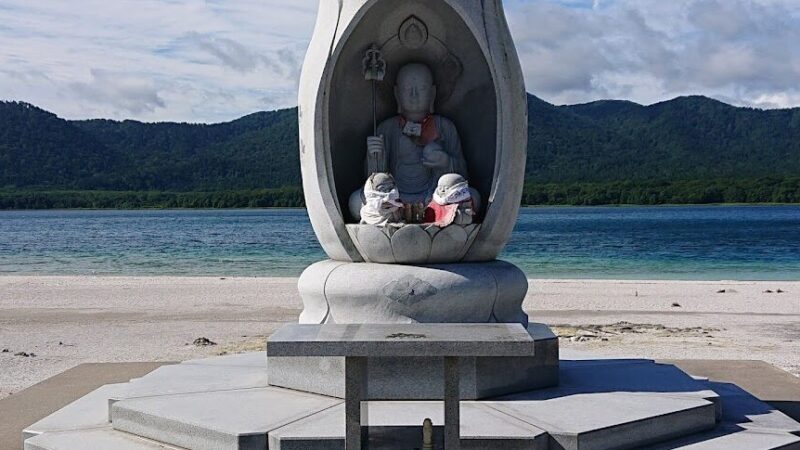
Usori Lake:
A caldera lake on Osorezan with beautifully emerald-green water. A beautiful lake appearing in the midst of desolate scenery, together with a sandy beach called “Paradise Beach,” symbolizes Osorezan’s “Hell and Paradise” landscape.
Hot Springs:
There are four hot spring huts within the temple grounds where pilgrims can bathe for free. They contain sulfur-rich hot spring water with different temperatures.
Osorezan Cold Water
The “Osorezan Cold Water” within the temple grounds is known as a pure spring water of the sacred site. As a place where pilgrims refresh themselves or take water to take home, it appears in the work.
In Osorezan where the smell of sulfur drifts through the air, this cold, pure water provides visitors with a place to take a breath.
Access to Osorezan
By Public Transportation:
- From JR Shimokita Station, take Shimokita Transportation Bus heading to “Osorezan” for approximately 40 minutes to the terminal
- Only several buses operate daily (particularly closed during winter)
- Always confirm the timetable in advance
By Personal Vehicle:
- Approximately 30 minutes from Shimokita Station via National Route 279
- Free parking available
Business Information:
- Opening Season: May 1 to October 31 (closed in winter)
- Pilgrimage Hours: 6:00 AM to 6:00 PM (varies by season)
- Entrance Fee: 500 yen for adults
Model Courses for Sacred Site Pilgrimage
1-Night, 2-Day Course
Day 1:
- Morning: Arrive at Aomori Station → Take JR Bus to Hakkōda Ropeway (approximately 60 minutes)
- Noon: Take Hakkōda Ropeway to the summit, explore surrounding area (2-3 hours)
- Afternoon: Day-trip bathing at Yachi Hot Spring or check in
- Evening: Overnight at Yachi Hot Spring (or overnight in Aomori City)
Day 2:
- Morning: Move from Aomori Station to Shimokita Station (approximately 2 hours)
- Noon: Take bus from Shimokita Station to Osorezan (approximately 40 minutes), make pilgrimage (2-3 hours)
- Afternoon: Return to Aomori Station or Hachinohe Station via Shimokita Station
Day-Trip Course (Hakkōda Mountain Center)
- Morning: Aomori Station → Hakkōda Ropeway
- Noon: Take ropeway to summit, explore
- Afternoon: Day-trip bathing at Yachi Hot Spring
- Evening: Return to Aomori Station
Day-Trip Course (Osorezan Center)
- Morning: Aomori Station or Hachinohe Station → Shimokita Station
- Noon: Shimokita Station → Osorezan, make pilgrimage
- Afternoon: Osorezan → Shimokita Station → Aomori Station or Hachinohe Station
Preparation and Points for Sacred Site Pilgrimage
Clothing and Belongings
Clothing:
- Comfortable walking shoes (trekking shoes recommended)
- Layered clothing (to adapt to temperature changes)
- Protective clothing (especially essential October-November)
- Rain gear (both folding umbrella and rain wear)
Belongings:
- Work (manga or anime screenshots)
- Camera
- Drinking water and light snacks
- Mobile battery
- Cash (some facilities don’t accept cards)
- Hot spring kit (towels, change of clothes)
Best Season
Same Period as Work (October-November):
- Can most feel the work’s atmosphere
- Landscape with autumn foliage ending
- Harsh cold requiring protective clothing precautions
- Yachi Hot Spring may close by early November
Summer Season (July-September):
- Milder climate making visits easier
- Alpine plants can be enjoyed
- Busiest tourist season
Autumn Foliage Season (Late September-Mid-October):
- Hakkōda Mountain’s autumn foliage at its best
- Most crowded period
- Lodging facilities should be booked early
Precautions
Transportation:
- Limited bus numbers requiring advance timetable confirmation
- Missing a bus may result in waiting several hours for the next one
- Many routes closed during winter
Weather:
- Hakkōda Mountain experiences dramatic weather changes
- Visibility may become poor due to fog or rain
- Large temperature differences require layered clothing
Facility Operations:
- Yachi Hot Spring closed in winter (late November-late April)
- Osorezan closed in winter (November-April)
- Always confirm operational status before visiting
Communication Environment:
- Mobile phone signals are weak or non-existent in mountainous areas
- Recommend downloading maps and timetables in advance
Nearby Tourist Spots
Within Aomori City
Nebuta House Wa-Rasse:
A facility where the appeal of the Aomori Nebuta Festival can be experienced year-round. The impressive nebuta display is a must-see.
Aomori Prefectural Museum of Art:
Features collections of Chagall and works by Yoshitomo Nara, among other substantial exhibitions.
A-FACTORY:
A complex facility in front of Aomori Station featuring local specialties and a cider workshop. Ideal for souvenir purchases.
Shimokita Peninsula
Hotoke-ga-Ura:
A scenic spot with unusual rock formations accessible by boat.
Ōma Cape:
Located in Ōma Town in Ōma Cape, the northernmost point of Honshu, famous for tuna.
Yakken Hot Spring:
A hot spring area on the Shimokita Peninsula, convenient to visit after pilgrimages to Osorezan.
Deepening Understanding of the Work’s World
The Essence of Travel as Depicted in “Zatsu Tabi”
The appeal of “Zatsu Tabi” lies not merely in visiting tourist destinations, but in the process through which protagonist Chika encounters herself through travel and gains hints for her creative work. In the Aomori edition, the shifting weather on Hakkōda Mountain, the healing at Yachi Hot Spring, and the unique atmosphere of Osorezan each leave something in Chika’s heart.
When engaging in sacred site pilgrimage, rather than simply visiting places featured in the work, experiencing the air and atmosphere of each location and making one’s own discoveries represents the “Zatsu Tabi” style of traveling.
Rediscovering the Appeal of Aomori
Aomori Prefecture possesses diverse attractions including abundant nature, historically significant hot springs, and unique spiritual culture. The “Zatsu Tabi” Aomori edition presents a route through which these attractions can be experienced compactly.
The majestic nature of Hakkōda Mountain, the character of Yachi Hot Spring as a secret spa, the solemnity of Osorezan as a sacred site. All of these are uniquely Aomori experiences, and rediscovering Aomori’s appeal through the work is the joy of sacred site pilgrimage.
Sacred Site Pilgrimage Map and Records
Utilizing Digital Maps
On the fan site “VisitSuzugamori ~Tracing Zatsu Tabi~,” locations featured in the work can be confirmed on a map. This will be helpful when planning sacred site pilgrimages.
Additionally, searching “Zatsu Tabi Aomori” and similar keywords on Google Maps will reveal maps created by other pilgrims. Using these as references while planning one’s own route is also part of the enjoyment.
Sharing on SNS
When sharing sacred site pilgrimage records on SNS, using hashtags like “#ZatsuTabi,” “#ZatsuTabiSacredSitePilgrimage,” and “#Aomori” allows connection with fans of the same work.
Viewing posts by other pilgrims can lead to new discoveries and hints for visiting. However, some facilities prohibit photography, so enjoy while respecting etiquette.
How to Choose Lodging Facilities
Yachi Hot Spring Inn
Staying at the Yachi Hot Spring Inn featured in the work is the choice that most fully immerses one in the work’s world view. However, the operating season is limited (late April to early November), and given its popularity, early reservations are necessary.
At this simple mountain lodge-style inn, modern amenities should not be expected, but this is precisely what makes the secret hot spring charming. In an environment where mobile phone signals are difficult to receive, it’s ideal for digital detox.
Hotels in Aomori City
For those prioritizing transportation convenience, hotels in Aomori City are recommended. Various types of hotels are available near Aomori Station, allowing selection based on budget.
Staying in the city offers the advantage of enjoying Aomori regional cuisine in the evening and the flexibility to change the next day’s schedule.
Lodging Facilities in Shimokita Peninsula
When centering pilgrimage on Osorezan, staying in Mutsu City or Ōma Town on the Shimokita Peninsula is also an option. The appeal lies in enjoying seafood specialties of the peninsula.
However, access to Aomori City and Hakkōda Mountain areas becomes less convenient, requiring careful consideration of one’s itinerary.
Enjoying Local Cuisine
Aomori Regional Dishes
Senbei Soup:
A Hachinohe regional dish where Nanbu senbei crackers are broken and added to soup. Available at izakayas throughout Aomori City.
Nok-don:
A specialty of Aomori Fish and Vegetable Center (commonly called Furukawa Market) where diners select favorite seafood to place on rice. Fresh ocean delicacies can be enjoyed.
Miso Curry Milk Ramen:
Aomori City’s local ramen with a unique flavor worth trying at least once.
Shimokita Peninsula Cuisine
Ōma Tuna:
Ōma Town at the northernmost point of Honshu is famous for the finest quality bluefin tuna. Those with sufficient budget should try it at its source.
Shimokita Seafood:
Surrounded by sea, the Shimokita Peninsula offers abundant fresh seafood. Scallops, squid, sea urchin, and other seasonal ocean delicacies can be enjoyed.
Comparison with Other “Zatsu Tabi” Sacred Sites
In the “Zatsu Tabi” series, various locations throughout Japan serve as settings, including Fukushima, Miyagi, Toyama, Kagawa, Kyoto, Tochigi, Niigata, Tokyo, Mie, Hiroshima, Wakayama, Iwate, and Shimane prefectures.
The characteristic feature of the Aomori edition is the ability to simultaneously experience both the grandeur of nature and the depth of spiritual culture. The combination of Hakkōda Mountain’s nature, the secret hot spring of Yachi, and the sacred site of Osorezan offers a unique appeal not found in other journeys.
In particular, Osorezan, as a place where one can touch Japanese perspectives on death and life and spiritual culture, becomes an especially memorable episode in the work.
Conclusion: The Appeal of “Zatsu Tabi” Aomori Edition Sacred Site Pilgrimage
The “Zatsu Tabi – That’s Journey -” Aomori edition sacred site pilgrimage becomes not only an experience of the work’s world view but also a journey of discovering Aomori Prefecture’s diverse appeal.
The majestic nature of Hakkōda Mountain, the character of Yachi Hot Spring as a secret spa, the unique atmosphere of Osorezan as a sacred site. All of these will likely bring different feelings and discoveries to each visitor, just as protagonist Chika gained something through her travels.
While public transportation access has limitations, this too is part of the “Zatsu Tabi” style travel experience. Confirming timetables and paying attention to weather while traveling at one’s own pace through Aomori’s sacred sites is what is important.
The October-November period depicted in the work features harsh cold, but this season allows one to most strongly feel the work’s atmosphere. With thorough cold weather preparations, why not experience the journey of Aomori that Chika undertook?
I hope that through sacred site pilgrimage, your understanding of the work deepens and you discover new appeal in Aomori Prefecture. Have a good trip!

完全ガイド|童磨の氷瀑景観と聖地巡礼の魅力-800x450.jpg)