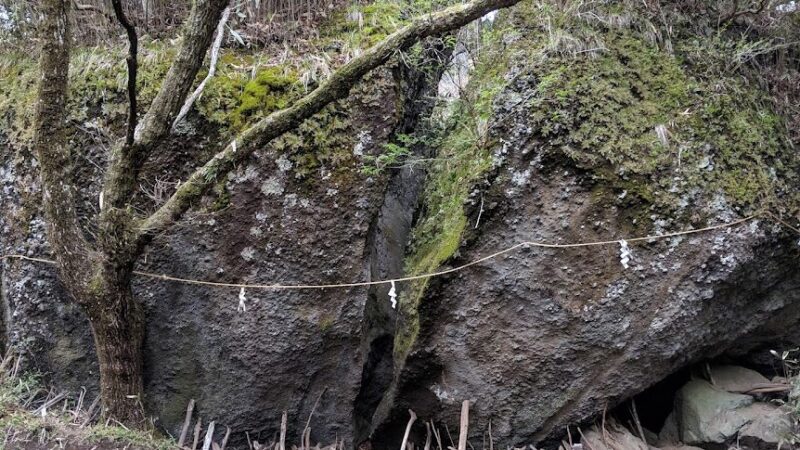
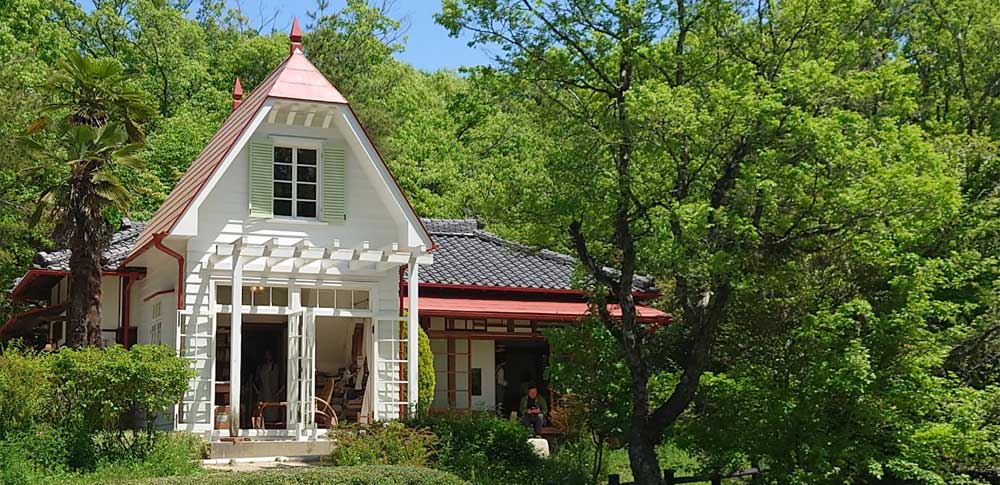
The Kamo Shrine located in Toyohashi City, Aichi Prefecture, is an ancient shrine said to have been founded in the first year of Tenpyo (729), and in recent years has attracted attention from fans nationwide as a sacred site of the popular work “Demon Slayer.” While it is a venerable shrine with roots traced to the Kamominakaishi Shrine in Kyoto, its mysterious precincts enveloped by deep forest evoke the worldview of the work.
This article provides information from a local perspective that will be useful for those planning a pilgrimage to the sacred site, covering not only the connection with Demon Slayer, but also the history of Kamo Shrine, highlights of the precincts, information about commemorative seals, and access methods.
Why Kamo Shrine Became a Topic as a Sacred Site for Demon Slayer
The Mysterious Atmosphere of the Precincts
The primary reason Kamo Shrine is recognized as a sacred site among Demon Slayer fans lies in the unique atmosphere the precincts exude. The approach path surrounded by a densely overgrown forest possesses a mystical quality like the entrance to another world, evoking scenes of deep mountains depicted in the work.
Particularly at dusk, the precincts spread with silence as dappled sunlight filters through the trees, and many visitors feel this overlaps with the landscape of mountains where the Demon Slayer Corps’ warriors trained. During the new greenery season, visitors are enveloped in nature overflowing with vitality, and in autumn, autumn leaves color the precincts, with the changing faces of the four seasons captivating all who visit.
Positioning Among Sacred Sites Related to Demon Slayer Nationwide
Many locations throughout Japan are said to be related to Demon Slayer, and Kamo Shrine is recognized as one of the representative sacred sites within Aichi Prefecture. While it has not been officially designated as a model location for the work, its historic appearance and environment surrounded by nature are evaluated as having high affinity with the work’s world.
Particularly in the pilgrimage route covering the Tokai region, Toyohashi City’s Kamo Shrine has become an important stop, and with relatively good access from the Kanto and Kansai regions, many fans visit.
History and Origins of Kamo Shrine
An Ancient Shrine Founded in the First Year of Tenpyo
Kamo Shrine is said to have been founded in the first year of Tenpyo (729), making it an ancient shrine with nearly 1,300 years of history. Regarding the circumstances of its founding, it is said to have begun with the transfer of divine spirit from the Kamowakeikazuchi Shrine (Kamominakaishi Shrine) in Yamashiro Province (present-day Kyoto Prefecture).
It is said that people who moved to this area at that time discovered a sacred mountain and the banks of a sacred river resembling the Kamo landscape of their homeland in Kyoto, and thus began enshrining the god of their former home. From this origin, the tradition of Kamo belief from Kyoto remains strongly preserved in the precincts of Kamo Shrine.
The Deep Relationship with Tokugawa Ieyasu
A relationship that cannot be omitted when discussing the history of Kamo Shrine is its deep connection with Tokugawa Ieyasu. In 1543 (Tenmon 12), Imagawa Ujichika donated 298 kanmon as sacred land, and in 1603 (Keichou 8), Tokugawa Ieyasu presented 100 koku in vermillion seal letters to the shrine.
It is said that Ieyasu visited Kamo Shrine when entering Enshu and during the Battle of Nagashino, praying for military fortune and offering a large flag, with this anecdote remaining. This large flag is currently preserved as a treasure of the shrine, and the traditional event known as “Daihata Shinji” is conducted annually.
The Relationship with Kamowakeikazuchi Shrine
The deity enshrined at Kamo Shrine, like the Kamowikakazuchi Shrine in Kyoto, is Kamowakeikazuchi-no-Okami. This deity is a god of thunder and has long been revered as a god of warding off misfortune and evil. Additionally, it is venerated as a god of agriculture and of matchmaking.
The relationship with Kyoto’s Kamominakaishi Shrine continues to the present day, and the traditions of Kyoto’s Kamo belief are inherited in the forms of religious rites and festivals. This historical connection supports the prestige and authority of Kamo Shrine.
Highlights and Characteristics of the Precincts
The Mysterious Approach Path
The approach path that runs straight from the red arched bridge of Kamo Shobu Garden to the torii gate of Kamo Shrine is one of the most impressive experiences when visiting. This path, which proceeds while climbing a gentle slope, is surrounded on both sides by tall trees, spreading a serene space that makes one forget the hustle and bustle of the city.
The dappled sunlight filtering through the approach path reveals different expressions depending on the season and time of day. The fresh approach in morning air, the approach enveloped in vigorous green during daytime, the approach illuminated by fantastical light at dusk—each provides a special experience to visitors.
Architecture of the Main Hall and Inner Sanctuary
The main hall that appears beyond the densely wooded forest maintains the architectural style of traditional shrine design. Its simple yet solemn appearance conveys the dignity of a place of faith preserved through long history.
The inner sanctuary is located beyond the main hall, preserving the sacredness of the sacred space. The overall layout of the precincts is designed while taking advantage of natural topography, resulting in a space composition where the artificial and natural are harmonized.
The Natural Environment Enveloping the Precincts
One of the major characteristics of Kamo Shrine is the abundant natural environment enveloping the precincts. The forest surrounding the shrine has been protected since ancient times as a “tutelary forest,” with diverse trees flourishing. The unique atmosphere created by this forest brings visitors the strange sensation of having wandered into another world.
Plants bloom with the seasons within the precincts, with new greenery in spring, deep green in summer, autumn leaves in fall, and serene silence in winter, allowing visitors to enjoy landscapes of each season. Particularly during the rainy season, the greenery within the precincts deepens further, intensifying the mysterious atmosphere.
Shrine Treasures and Cultural Properties
Kamo Shrine possesses numerous precious shrine treasures preserved and passed down through its long history. Most famous is the large flag said to have been offered by Tokugawa Ieyasu, but other culturally valuable properties such as Sarutahiko masks are also preserved.
These shrine treasures are important evidence of the shrine’s history and hold significant value as regional cultural heritage. While not generally open to the public, there are opportunities for viewing during special events.
Annual Events and Religious Rites at Kamo Shrine
The Daihata Shinji
The most important annual event at Kamo Shrine is the “Daihata Shinji.” This religious rite, conducted annually in honor of the large flag offered by Tokugawa Ieyasu, has become an important religious event for the area’s people.
In the Daihata Shinji, prayers are offered for military fortune, family safety, and abundant harvests. This religious rite serves as a valuable cultural event transmitting the history and tradition of Kamo Shrine to the present day, taking root in regional society.
Other Annual Events
Throughout the year, Kamo Shrine conducts various religious rites and festivals beyond the Daihata Shinji. Traditional shrine events are upheld, such as New Year’s visits, Setsubun Festival, Spring Grand Festival, and Autumn Grand Festival.
These events also serve to strengthen community bonds, demonstrating the deep connection between people long residing in this area and the shrine.
Information About Commemorative Seals
Regarding the Bestowal of Commemorative Seals
Commemorative seals can be obtained at Kamo Shrine. With the recent commemorative seal boom and popularity of Demon Slayer, the number of visitors seeking Kamo Shrine’s seal has increased.
Commemorative seals are typically bestowed as pre-printed copies, and in some cases they may not be available depending on visiting hours or the presence of shrine priests. If you wish to reliably obtain a seal, it is recommended to contact the shrine in advance.
The Design and Characteristics of the Commemorative Seal
Kamo Shrine’s commemorative seal is inscribed with the shrine’s name and the date of visit, with the shrine’s seal impressed upon it. While simple, it is characterized by powerful calligraphy, conveying the prestige of an ancient shrine with 1,300 years of history.
While you may bring your own seal book, as bestowal is primarily in pre-printed form, the common practice is to preserve them by pasting them into a seal book.
Access Methods and Information About Visits
Location
Address: Kamo-cho, Kamiyama, Toyohashi City, Aichi Prefecture
Kamo Shrine is located in the northeastern part of Toyohashi City in Kamo-cho, surrounded by a natural environment.
Access by Car
Access by car is the most convenient. It can be reached in approximately 20 minutes from “Toyokawa IC” on the Tomei Expressway, or via prefectural roads from National Route 1. While there is parking space for visitors around the shrine, spaces are limited, requiring caution during congested times.
When using a car navigation system, it can be directed by entering “Kamo Shrine Toyohashi City” or the address. Using Kamo Shobu Garden as a landmark makes it easier to find.
Access by Public Transportation
For those using public transportation, buses from Toyohashi Station are necessary, though service is limited, making it advisable to check schedules in advance. Walking is required from the nearest bus stop to the shrine.
If time permits, using a taxi from Toyohashi Station is another option. Travel time varies with traffic conditions but is approximately 20 to 30 minutes.
Visiting Hours and Notes
Kamo Shrine is generally open for free visits, but if you wish to obtain a commemorative seal or receive prayers, you need to visit during hours when shrine priests are present. Generally, 9 a.m. to around 4 p.m. serves as a guide, though this may change due to events or priest availability.
There are no specific dress codes for visiting, but modest clothing befitting awareness of the sacred nature of the location is preferable. Also, as the precincts are rich in nature, insect repellent measures and walking in comfortable shoes are recommended.
Nearby Tourist Attractions
Kamo Shobu Garden
Located immediately near Kamo Shrine, Kamo Shobu Garden is a notable spot where beautiful irises bloom in early summer. This garden, distinguished by its red arched bridge, is a spot worth visiting together with worship at Kamo Shrine.
The irises typically bloom from late May to mid-June, with many tourists visiting during this period. Walking paths are maintained throughout the garden, allowing leisurely strolls.
Other Tourist Attractions in Toyohashi City
Toyohashi City has many other attractions beyond Kamo Shrine. There are several locations to experience history and culture, such as Yoshida Castle ruins, Toyohashi Park, and Toyohashi City Art Museum.
Additionally, Toyohashi is known as the birthplace of “tesshoku fireworks,” and impressive hand-held fireworks can be seen during summer. In cuisine, “Toyohashi curry udon” is a popular local specialty.
Points for Demon Slayer Sacred Site Pilgrimage
Photo Spots
The recommended spot for commemorative photos during Demon Slayer sacred site pilgrimage at Kamo Shrine is naturally the approach path enveloped by forest. Photographing with light filtering through trees as a backdrop captures photos that evoke the work’s worldview.
The area in front of the main hall and near the torii gate are standard photo spots. However, care should be taken not to interfere with other visitors, and remembering that this is a sacred place, photography should be conducted while respecting proper etiquette.
Etiquette When Visiting
Even when visiting on a sacred site pilgrimage, one must not forget that a shrine is ultimately a place of faith. Refraining from loud conversations or running about is important, and quiet worship is essential.
Additionally, eating and drinking within the precincts and littering are strictly prohibited. In order to preserve the natural environment, care should be taken to leave places visited in clean condition.
Combining With Other Sacred Sites
Multiple locations in the Tokai region are said to be related to Demon Slayer. Planning a route visiting multiple sacred sites with Kamo Shrine as a starting point is one way to enjoy it.
When visiting multiple locations in a single day, it is important to research opening times and required time at each location in advance and plan a schedule without excess strain.
To Deepen Understanding of Kamo Shrine’s Charm
Connection With Regional History
Kamo Shrine is not merely a tourist attraction but has existed as the center of faith for this region over 1,300 years. It is deeply connected with the lives of the region’s people, and understanding its history deepens the significance of worship.
Learning about the history and culture of Toyohashi City enables better understanding of the role and importance Kamo Shrine has played. Researching related materials at local libraries and regional archives is also recommended.
Changing Expressions Throughout the Seasons
Kamo Shrine possesses different charms with each season. The new greenery of spring, deep green of summer, autumn leaves of fall, and silence of winter—visiting during each season allows discovery of the shrine’s multifaceted beauty.
Particularly for Demon Slayer fans, as the scenery changes with seasons, evoking various scenes from the work, each visit should bring new discoveries.
Inheritance of Belief and Culture
At Kamo Shrine, ancient religious rites and festivals continue to be carefully preserved. Participating in or observing these traditional events enables deeper understanding of Japanese shrine culture and regional traditions.
Coming into contact with the faith and culture that people have passed down across generations transcends mere sacred site pilgrimage, becoming a valuable experience.
Conclusion: The Special Experience Gained at Kamo Shrine
Kamo Shrine in Toyohashi City, Aichi Prefecture, is a venerable shrine with the long history of being founded in the first year of Tenpyo, while in modern times attracting new attention as a sacred site for Demon Slayer. Its mysterious precincts enveloped by deep forest harmonize wonderfully with the work’s worldview, providing special experiences to all who visit.
The deep relationship with Tokugawa Ieyasu, the tradition of belief inherited from Kyoto’s Kamominakaishi Shrine, and the annual events preserved by the region’s people—Kamo Shrine pulses with 1,300 years of history. When visiting as a sacred site pilgrimage, knowing this historical background makes for a more fulfilling worship experience.
The time spent walking the approach path, joining hands before the main hall, and being enveloped by nature within the precincts becomes a special moment apart from daily life. Obtaining a commemorative seal and also visiting nearby Kamo Shobu Garden allows deeper appreciation of Toyohashi’s appeal.
Whether you are a Demon Slayer fan, interested in history or shrines, or seeking quiet time in nature, Kamo Shrine offers different charms to each visitor. Please definitely visit in person and experience this special space.
When visiting, it is important to remember the sacred nature of the place and visit while respecting proper etiquette. Respecting the place of faith carefully preserved by the region’s people, savor to your heart’s content the atmosphere and history unique to Kamo Shrine.