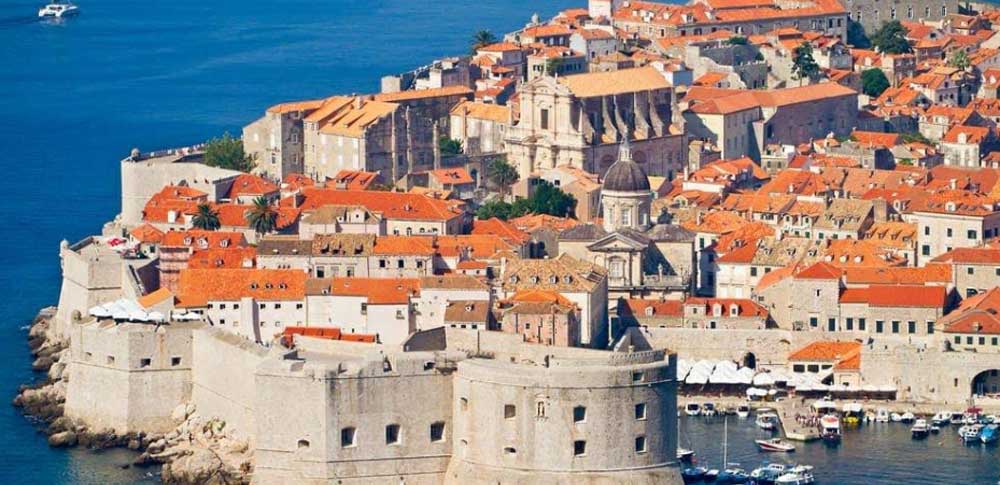
“Kiki’s Delivery Service,” a timeless masterpiece by director Hayao Miyazaki. Dubrovnik Old Town, located on the Adriatic coast of Croatia, is known as the model for “Koriko,” the beautiful seaside city that the protagonist Kiki visits for her apprenticeship. The contrast between the medieval streetscape with its continuous orange-tiled roofs and the shimmering blue Adriatic Sea is precisely like the world of the film. This article provides a thorough introduction to the charm and tourist information of this sacred destination that Studio Ghibli fans should visit at least once.
The Relationship Between Kiki’s Delivery Service and Dubrovnik
The Cityscape That Inspired Studio Ghibli
In creating “Kiki’s Delivery Service,” director Hayao Miyazaki and the staff of Studio Ghibli conducted research trips throughout various parts of Europe. Among these, the old town of Dubrovnik in Croatia left a particularly strong impression. While the city of Koriko that appears in the film was inspired by multiple European cities, Dubrovnik is considered one of its core models.
Particularly striking are the orange roof tiles of the old town surrounded by city walls. When viewed from a high vantage point, the scene unfolds like an orange carpet laid out. This distinctive landscape evokes scenes of Kiki flying around the city on her broomstick.
Relationship with Other Model Cities
Besides Dubrovnik, there are several other cities that are said to have inspired “Kiki’s Delivery Service.” Stockholm and Visby in Sweden, and Lisbon in Portugal are among the candidates. In fact, the city of Koriko in the film could be described as a fictional city that combines the beautiful elements of these multiple cities.
However, Dubrovnik is given special status for its Mediterranean atmosphere and the high degree of completeness as a walled city. The overwhelming beauty and exotic atmosphere when Kiki first descends into Koriko in the film overlaps significantly with the first impression of Dubrovnik.
Basic Information About Dubrovnik Old Town
History and Cultural Background
Dubrovnik is a beautiful city also known as the “Pearl of the Adriatic.” Built around the 7th century, it flourished as the capital of the Republic of Ragusa during the Middle Ages, thriving through maritime trade. Its historical significance was recognized when it was registered as a UNESCO World Heritage Site in 1979.
The city walls surrounding the old town were constructed in stages from the 13th to the 17th centuries, stretching approximately 2 kilometers in total length. Thanks to these sturdy walls, Dubrovnik was able to overcome numerous invasions and sieges, maintaining its independence.
During the Croatian War of the 1990s, the old town also suffered bombardment and significant damage, but with support from the international community, it made a remarkable recovery. Today, having regained its beautiful appearance, it has become a popular tourist destination visited by people from around the world.
Geographic Features
Dubrovnik is located at the southernmost tip of Croatia, facing the Adriatic Sea. It has a Mediterranean climate, with hot, dry summers and relatively mild, rainy winters. The old town was built on limestone bedrock, and the contrast between the white stone buildings and orange roof tiles creates a beautiful landscape.
Mount Srđ, standing 412 meters tall, rises on the eastern side of the city, and you can reach the summit by cable car. The view from here is spectacular, overlooking the entire old town and the Adriatic Sea. This scenery is precisely what Kiki would have seen while flying through the sky on her broomstick.
Must-See Spots for Studio Ghibli Fans: Experiencing Kiki’s Delivery Service
Srđ Mountain Viewpoint: Experience Kiki’s Perspective
If you visit Dubrovnik, the first place you should go is the viewpoint on Mount Srđ. After a roughly 4-minute cable car ride, you arrive at the summit where the old town with its continuous orange roofs and the deep blue Adriatic Sea spread out below.
This view is reminiscent of when Kiki first looked down upon the city of Koriko from her broomstick. Especially at sunset, the setting sun turns the Adriatic Sea golden, enveloping everything in a magical atmosphere. It’s also an ideal time for photography.
The viewpoint also has a café and restaurant where you can enjoy a leisurely meal while taking in the spectacular view. The cable car operates from 9 a.m. until late night, so it’s recommended to visit at different times of day.
City Wall Walk: Flying Around the City
The city walls surrounding Dubrovnik Old Town can actually be walked all the way around. The total length is approximately 2 kilometers, and it takes about 1.5 to 2 hours. From atop the walls, you can look down at the streetscape with continuous orange roofs, feeling just like Kiki as she surveys the city.
It’s customary to walk the city wall walk counterclockwise. Along the way, there are several fortresses and watchtowers, each offering different angles to view the streetscape and sea. In particular, the view from Minceta Fortress is spectacular, allowing you to grasp the full scope of the old town.
In summer, it becomes extremely hot, and there’s almost no shade atop the walls, so a hat, sunscreen, and hydration are essential. It’s recommended to visit during the relatively cooler early morning or evening hours.
Plača Street: The Main Street of Koriko
Plača Street (Stradun), running east-west through the center of the old town, is Dubrovnik’s main street. The polished limestone pavement is beautiful, and historic buildings line both sides. Walking down this street inevitably brings to mind scenes of Kiki walking through the city making deliveries.
Along the street are cafés, restaurants, and souvenir shops, bustling with tourists. This is particularly an area where attractions such as Onofrio’s Great Fountain, Sponza Palace, and the Clock Tower are concentrated.
Visiting early in the morning allows you to experience the city’s beauty more deeply with fewer tourists around. At night, it’s illuminated, offering a magical atmosphere different from daytime.
Old Port: Seaside Scenery
Located on the eastern side of the old town, the old port is a place that conveys the history of Dubrovnik, which once flourished through maritime trade. Small fishing boats and vessels are moored, creating a peaceful seaside landscape.
The atmosphere of this port evokes scenes from the film where Kiki gazes at the sea or meets Tombo by the seaside. Along the port are seafood restaurants where you can enjoy dishes made with fresh fish and seafood.
From the old port, boat tours to Lokrum Island also depart. Reaching the island takes about 10 minutes by boat, and it’s a popular spot where you can enjoy beautiful nature and tranquility.
Luža Square: The City Center
Located at the eastern end of Plača Street, Luža Square was the political and cultural center of Dubrovnik. Important buildings such as the Church of St. Blaise, Sponza Palace, and the Rector’s Palace surround the square.
In the center of the square stands the Roland’s Column topped with a statue of St. Blaise, the patron saint of Dubrovnik. This column was once a symbol of freedom and independence for the Republic of Ragusa.
Café and restaurant terraces line the area around the square, creating a vibrant atmosphere as locals and tourists move about. The film depicts the bustling scene in the central part of the city, and this image aligns perfectly with the reality.
How to Get to Dubrovnik
Access from Japan
There are no direct flights from Japan to Dubrovnik. Generally, the route involves connecting through a major European city. Common transit points include Istanbul, Vienna, Frankfurt, Munich, and Zurich.
The most common route is via Istanbul. It’s about 12 hours from Narita or Haneda by Turkish Airlines to Istanbul, then about 2 hours to Dubrovnik. Including connection time, the total journey takes approximately 18 to 24 hours.
There’s also a route via Zagreb, Croatia’s capital. You can fly to Zagreb and then either take a domestic flight to Dubrovnik or travel by bus. By bus, it takes about 10 hours, but you get to enjoy Croatia’s beautiful scenery during the journey.
Access from the Airport to the Old Town
Dubrovnik Airport (Čilipi Airport) is located approximately 20 kilometers southeast of the old town. There are three main ways to access the old town from the airport.
Airport Shuttle Bus: This is the most economical method. It runs in coordination with arriving flights, takes about 30 minutes, and costs around 50 kuna (approximately 900 yen) one way. The final stop is near Pile Gate at the bus terminal.
Taxi: The journey takes about 25 minutes, and the fare is around 250 to 300 kuna (approximately 4,500 to 5,400 yen). It’s convenient if you have a lot of luggage or are traveling with multiple people.
Transfer Service: Some hotels offer paid or complimentary transfer services. It’s reassuring to confirm and book in advance.
Best Seasons to Visit Dubrovnik
Spring (April–June): The Most Recommended Time
Spring is the ideal season to visit Dubrovnik. Temperatures range from about 15 to 25 degrees Celsius, making it comfortable for tourism. Particularly from May to June, flowers bloom profusely, and the entire city becomes colorful.
This period is before the peak tourist season, so it’s not as crowded as summer. Hotel rates are also relatively reasonable, and you can leisurely explore the city. While it’s a bit early for swimming, it’s the best season for sightseeing.
Summer (July–August): The Busiest Period
Summer is high season for tourism in Dubrovnik. Temperatures often exceed 30 degrees Celsius, making it very hot. However, it’s also an excellent time to enjoy swimming in the Adriatic Sea.
From July to August, the Dubrovnik Summer Festival is held, with music and theater performances taking place throughout the old town. For those who want to enjoy cultural events, this is the ideal time.
However, this period sees tourists flooding in from around the world, resulting in extreme crowding. Particularly on days when cruise ships dock, the old town becomes packed with people. Hotel rates are at their highest, so you need to budget accordingly.
Fall (September–October): A Hidden Gem
Autumn is also a recommended season, on par with spring. September still has lingering heat, and you can still enjoy swimming in the sea. By October, temperatures drop, but it remains comfortable at around 15 to 20 degrees Celsius for tourism.
As the summer peak season passes, the number of tourists decreases. Hotel rates begin to drop, making it possible to travel with good value for money. Additionally, the old town appears even more beautiful in the soft autumn light.
Winter (November–March): Enjoying a Quiet City
Winter in Dubrovnik is when there are the fewest tourists. Temperatures range from about 5 to 15 degrees Celsius, and rainy days are more frequent. However, you can explore the city in a quiet and peaceful atmosphere.
Hotel rates are at their lowest, making it suitable for extended stays. During the Christmas season, the old town is decorated with illuminations, enveloped in a romantic atmosphere.
However, some restaurants and shops may be closed for winter, so advance confirmation is necessary. Also, tourist facilities such as the cable car may close during bad weather.
Accommodation Information in Dubrovnik
Hotels in the Old Town
The main advantage of staying in the old town is that major tourist attractions are within walking distance. You can enjoy the nighttime illuminated streetscape or explore the quiet city early in the morning.
However, hotels in the old town are limited in number and expensive. Also, since vehicles aren’t allowed, moving luggage is difficult. With many stone-paved alleyways and stairs, having large luggage can be a challenge.
Representative hotels include “Hotel Stari Grad” and “Puća Palace.” Both are luxury hotels in historic buildings offering special stays.
Hotels Around the Old Town
There are many hotels near the old town, close to Pile Gate or Ploče Gate. They’re within a short walk of the old town while offering relatively affordable rates.
Hotels in this area usually allow vehicle access and often have parking. Supermarkets and other conveniences are also nearby, making it convenient for longer stays.
“Hotel Lero” and “Hotel Bellevue Dubrovnik” are popular hotels. “Hotel Bellevue” in particular is a 5-star hotel perched on a cliff, offering spectacular views of the Adriatic Sea.
Apartments and Guesthouses
If you want to save money or stay for an extended period, renting apartments or staying in guesthouses is also recommended. If the room has a kitchenette, you can cook your own meals and save on food expenses.
In Dubrovnik, “Sobe” (homestays) where locals rent out parts of their homes to tourists are common. You can easily book through Airbnb, Booking.com, and similar platforms.
One of the attractions of homestays is the opportunity to interact with hosts and experience local culture and lifestyle. You might even get recommendations for restaurants and hidden gems.
Dining Information in Dubrovnik
Characteristics of Croatian Cuisine
Croatian cuisine is diverse, influenced by Mediterranean, Central European, and Balkan cooking. In the Dalmatia region where Dubrovnik is located, dishes using fresh seafood are particularly abundant.
The cuisine is characterized by the generous use of olive oil and flavoring with herbs and spices. There are many simple dishes that bring out the taste of ingredients, and they’re said to suit the Japanese palate well.
Recommended Local Dishes
Brudet: A fish and seafood stew with tomatoes, a representative dish of the Dalmatia region. White fish, shrimp, and mussels are stewed in tomato sauce and eaten with polenta (cornmeal paste).
Black Risotto (Crni Rižot): A pitch-black risotto made with squid ink. While visually striking, the taste is actually quite mild and delicious. It’s the concentrated essence of fresh squid.
Pašticada: A beef red wine stew, a traditional dish eaten on special occasions. Long cooking makes the meat tender, melding with the rich sauce. It’s usually served with gnocchi.
Octopus Salad (Salata od hobotnice): Boiled octopus dressed with olive oil, lemon, and parsley—a simple appetizer that’s popular.
Peka: A traditional cooking method where meat and vegetables are covered with an iron lid and slow-cooked over charcoal. Lamb, veal, or octopus are used. Since it takes over 2 hours from order to serving, advance booking is necessary.
Recommended Restaurants
Nautika Restaurant: A luxury restaurant near Pile Gate in the old town. It has a terrace with a view of the Adriatic Sea and offers a romantic dining atmosphere. It’s also listed in the Michelin Guide.
Proto: A historic restaurant opened in 1886, famous for its fresh seafood dishes. Beloved by locals, it offers authentic Dalmatian cuisine.
Konoba Dalmatino: A casual restaurant in the old town. It offers generous portions of regional dishes at affordable prices.
Lady Pi-Pi: Located on a high platform above the city walls, accessed by climbing stairs. Famous for charcoal-grilled meat dishes, it offers casual dining with a spectacular view overlooking the old town.
Croatian Wine
Croatia is also known as a wine-producing country. In the Dalmatia region, red wines like “Dingač” and “Postup,” and white wines like “Pošip” and “Grk” are famous.
At restaurants, local wines can be ordered by the glass or bottle. They pair well with the food, enhancing the dining experience. Wine shops are abundant, and purchasing wine as a souvenir is also recommended.
Nearby Tourist Attractions
Lokrum Island
About 10 minutes by boat from the old port is Lokrum Island, a nature-rich uninhabited island. The entire island is designated as a nature reserve, home to beautiful flora and wild peacocks.
The island contains ruins of a Benedictine monastery built in the 11th century and Ottoman-era fortress remnants. You can also swim in the “Dead Sea,” a saltwater lake.
It’s recommended for those wanting to escape Dubrovnik’s bustle and relax in quiet nature. Boats depart every 15 to 30 minutes, and round-trip tickets cost around 150 kuna (approximately 2,700 yen).
Elaphiti Islands
The Elaphiti Islands floating off Dubrovnik’s coast comprise three inhabited islands—Koločep, Lopud, and Šipan—plus several uninhabited ones. Each offers beautiful beaches and quiet villages, ideal for day trips.
Regular ferries depart from the old port, and tours visiting all three islands are popular. On the islands, you can enjoy cycling, hiking, and swimming. Šipan Island is particularly charming with its pastoral landscape of olive groves and vineyards.
Kotor (Montenegro)
About 100 kilometers south of Dubrovnik lies Kotor in neighboring Montenegro, a UNESCO-listed beautiful bay town. A fjord-like bay perfectly harmonizes with the medieval cityscape.
From Dubrovnik, many day tours are offered. It’s about 2.5 hours by bus, and you enjoy beautiful Adriatic scenery en route. Kotor’s old town, though smaller than Dubrovnik’s, is equally charming, enclosed by city walls.
Mostar (Bosnia and Herzegovina)
About 140 kilometers north of Dubrovnik is Mostar in Bosnia and Herzegovina, another popular day-trip destination. The Stari Most (Old Bridge), built in the 16th century, is famous and UNESCO-listed.
The beautiful arched bridge spanning the emerald-green Neretva River is a masterpiece of Ottoman architecture. The old town features mosques and bazaars, heavily influenced by Islamic culture.
It’s about 3 hours by bus from Dubrovnik. Many day tours are available, offering the valuable opportunity to experience different culture from Croatia.
Travel Precautions and Advice
Currency and Payment Methods
Croatia’s currency became the Euro (EUR) from January 2023. Previously, the Croatian Kuna (HRK) was used, but now the Euro is standardized.
Credit cards are accepted at major hotels, restaurants, and shops, but cash may be necessary at smaller stores and markets. ATMs are plentiful throughout and around the old town, making it easy to withdraw cash.
While tipping customs aren’t strictly enforced, it’s standard to give about 10% of the bill for good service.
Language and Communication
The official language is Croatian, but English is widely spoken in tourist areas. Particularly young people and those in tourism industries speak fluent English.
Learning basic Croatian greetings is appreciated by locals. “Hello” is “Dobar dan,” “thank you” is “Hvala,” and “goodbye” is “Doviđenja.”
Restaurant menus often include English translations, but small local establishments may only have Croatian. A translation app is useful to have prepared.
Clothing and Essentials
The old town has many stone-paved alleyways and stairs, making comfortable walking shoes essential. Especially for city wall walks, sneakers or athletic shoes are recommended.
In summer, it gets extremely hot, making hats, sunglasses, and sunscreen essential. Also carry a water bottle for hydration. Meanwhile, restaurants and hotels often have strong air conditioning, so a light outer garment is handy.
When visiting churches or monasteries, modest dress covering shoulders and knees is required. Especially in summer, bring long pants and sleeved shirts in addition to shorts and tank tops.
Safety and Security
Dubrovnik is relatively safe, but caution is needed against pickpocketing and theft targeting tourists, particularly in crowded areas. Be mindful of valuables management.
Leave passports and large amounts of cash in hotel safes, carrying only necessities when going out. Hold bags in front of you and keep zippers closed.
Nighttime solo walks within the old town are relatively safe, though avoiding poorly lit alleyways is wise.
Photography Etiquette
While every corner of Dubrovnik is photogenic, photography has its etiquette. Photography is often prohibited inside churches, so always check first.
Always ask permission before photographing local people. Especially when photographing at markets, briefly acknowledging the shopkeeper shows respect.
Drone use is prohibited in the old town. Violations can result in fines, so be careful.
A Travel Plan to Experience the World of Kiki’s Delivery Service
One-Day Model Itinerary
Morning: Enter the old town via Pile Gate early and explore Plača Street while few tourists are about. After seeing Onofrio’s Fountain and the Franciscan Monastery, begin the city wall walk. Spend about 2 hours leisurely walking the walls, experiencing Kiki’s perspective overlooking orange roofs.
Lunch: After completing the wall walk, enjoy lunch at a restaurant in the old town. Try fresh seafood dishes and Croatian wine.
Afternoon: Take the cable car to Srđ Mountain’s viewpoint. Enjoy the spectacular view and photography. Rest at the viewpoint café before descending.
Evening: Explore the old port area and enjoy the seaside atmosphere. If time allows, take a boat tour to Lokrum Island.
Night: Ascend Srđ again at sunset to watch the sun set, or dine at a restaurant in the old town while enjoying illuminated streetscapes.
2-3 Day Stay Plan
Base day one on the above itinerary, thoroughly exploring the old town. Day two, enjoy a day trip to Lokrum Island or the Elaphiti Islands. Day three, take a day tour to nearby UNESCO heritage cities like Kotor or Mostar.
If you have extra time, visit the cable car viewpoint at different times—morning, afternoon, and evening—to enjoy scenery in different light.
Special Ways for Studio Ghibli Fans to Enjoy
Download the “Kiki’s Delivery Service” soundtrack to your smartphone and listen while exploring. With the film’s music accompanying you as you look down over orange roofs, you’ll feel transported into the movie.
Imagining Kiki flying through scenes while viewing from the walls or Srđ Mountain deepens the emotional experience. Recreating favorite film scenes in photographs is also fun.
Buying fresh bread from a local bakery and eating by the sea echoes the memorable scene of Kiki meeting Osono at the bakery, a scene cherished by many fans.
Conclusion: Experience the World of Kiki’s Delivery Service in Reality
Dubrovnik Old Town in Croatia is truly a dreamlike place for fans of “Kiki’s Delivery Service.” The beautiful streetscape with continuous orange roofs, the sparkling blue Adriatic Sea, the medieval atmosphere preserved in stone-paved alleys—all evoke the city of Koriko from the film.
Walking atop the walls allows you to see the city from Kiki’s perspective flying on her broomstick. From Srđ Mountain’s viewpoint spreads a view just like the film’s opening scene. Walking through the old town’s alleys brings visions of Kiki running on deliveries.
Dubrovnik isn’t merely a beautiful tourist destination. It’s a gateway to the magical world we dreamed of in childhood. Visiting allows you to deepen your love for “Kiki’s Delivery Service” and discover new wonders.
Why not experience the world of Kiki’s Delivery Service in Dubrovnik, called the “Pearl of the Adriatic”? It’s sure to become an unforgettable memory.