The snow-covered mountain village where the main character Tanjiro Kamado of the blockbuster anime “Demon Slayer” lived with his family in Episode 1 has attracted attention from many fans as a beautiful and poignant original landscape. The model that has garnered the most focus from fans is “Shirakawa-go,” a UNESCO World Heritage site in Gifu Prefecture.
The Shirakawa-go settlement, with its rows of gassho-zukuri farmhouses, overlaps remarkably with the scenes of Tanjiro living peacefully with his family. This article thoroughly explains why Shirakawa-go has become recognized as a sacred site for “Demon Slayer,” actual pilgrimage spots, access methods, and nearby attractions.
Why Shirakawa-go is Considered a Sacred Site for Demon Slayer
Common Points with Tanjiro’s Hometown in Episode 1
The mountain village where the Kamado family lives, as depicted in “Demon Slayer” Episode 1, is located in a deep snowy mountainous region with wooden houses scattered throughout—the very embodiment of Japan’s original landscape. The reason Shirakawa-go is considered the most likely model is that the following characteristics align with the world depicted in the work.
Environment as a Heavy Snowfall Area
Shirakawa Village in Ono District, Gifu Prefecture, where Shirakawa-go is located, is known as one of Japan’s heaviest snowfall regions. During winter, snowfall exceeds 2 meters, and the sight of the entire settlement covered in deep snow closely resembles the scenes in Episode 1 where Tanjiro walks through the snow.
Traditional Gassho-zukuri Farmhouses
The gassho-zukuri farmhouses that symbolize Shirakawa-go are characterized by steeply pitched thatched roofs. This structure developed to withstand heavy snowfall, and overlaps with the image of the mountain cottage-style wooden house where Tanjiro lived. It retains the strong characteristics of Japanese mountain village landscapes from the Meiji to early Showa periods, and has high affinity with the Taisho-era setting of the work.
Quiet Settlement in Mountainous Terrain
Shirakawa-go is located in mountainous terrain at approximately 500 meters elevation, surrounded by mountains in a basin-like formation. This isolated environment aligns with the setting where Tanjiro walked long distances to sell charcoal in town. The atmosphere of a remote, quiet mountain village perfectly recreates the world of the work.
No Official Announcement, but Established Among Fans
It’s important to note that there has been no official announcement from the production committee or original author Koyoharu Gotouge that Shirakawa-go is an official model location. However, due to the striking similarity between the background art in anime Episode 1 and the Shirakawa-go landscape, it has become widely recognized among fans as “the model for Tanjiro’s hometown.”
Numerous posts comparing photos of snowy Shirakawa-go with anime scenes are seen on social media, establishing it as a standard pilgrimage spot. Particularly during the winter nighttime illumination events, the fantastical atmosphere further evokes the world of the work.
Basic Information and History of Shirakawa-go
Gassho-zukuri Settlement Registered as a World Heritage Site
Shirakawa-go was registered as a UNESCO World Cultural Heritage site in 1995, along with Gokayama in Toyama Prefecture, as “Gassho-zukuri Villages of Shirakawa-go and Gokayama.” Currently, 114 gassho-zukuri farmhouses remain, with many still serving as actual residences—a “living world heritage.”
Gassho-zukuri refers to a traditional architectural style featuring steeply pitched thatched roofs, named for their resemblance to hands joined in prayer. This structure is the crystallization of knowledge unique to heavy snowfall regions, designed so snow naturally slides off. Additionally, the spacious attic was utilized for sericulture.
Charm of Ogimachi Settlement
The center of Shirakawa-go is Ogimachi settlement. Gassho-zukuri farmhouses are densely concentrated within approximately 60 hectares, offering beautiful scenery that changes with the seasons. The settlement includes minshuku lodges, dining establishments, and souvenir shops, with infrastructure in place to welcome tourists.
Rice paddies extend along the Shogawa River that flows through the settlement, displaying different faces with each season—spring greenery, summer deep green, autumn golden color, and winter snow. This contrast between the rural landscape and gassho-zukuri farmhouses captivates many as Japan’s original landscape.
Village Retaining Taisho-Era Character
While “Demon Slayer” is set in the Taisho era (1912-1926), Shirakawa-go retains strong vestiges of that time. Through underground placement of power lines and landscape preservation efforts, modern structures have been largely eliminated, maintaining a streetscape that feels like stepping back in time. The snowy winter landscape in particular represents pre-electrification Japanese mountain villages. This is a precious place where one can feel the atmosphere of the era in which Tanjiro lived.
Must-See Pilgrimage Spots for Demon Slayer Fans in Shirakawa-go
Ogimachi Castle Ruins Observation Deck: Spectacular Viewpoint Overlooking the Entire Settlement
When visiting Shirakawa-go, the Ogimachi Castle Ruins observation deck is an absolute must-visit. Located on a highland at approximately 550 meters elevation on the south side of the settlement, this deck provides a panoramic view of the entire gassho-zukuri settlement.
The view from here perfectly evokes the overhead scenes in “Demon Slayer” Episode 1. The sight of gassho-zukuri houses scattered amid snow-covered landscape is precisely the peaceful mountain village where Tanjiro lived. Especially on winter mornings, the settlement floating in mist is fantastical, attracting many photographers and anime fans.
Access to the observation deck is about a 20-minute walk from the settlement or by paid shuttle bus (200 yen one-way). The road is uphill, so comfortable shoes are recommended. In winter, shoe traction is essential due to potential icy road surfaces.
Wada House: Largest Gassho-zukuri Residence
The Wada House is the largest gassho-zukuri residence in Shirakawa-go. Built in the mid-Edo period, this structure is designated as a National Important Cultural Property and can be visited (admission 300 yen).
Visitors can view from the first floor through the second floor to the attic, gaining detailed knowledge about gassho-zukuri structure and historical living conditions. The thick beams and pillars, traditional joinery without nails—all demonstrate the high level of Japanese architectural technique. While Tanjiro’s home was a small mountain cottage, understanding the structure of this wooden building deepens appreciation of the work’s world.
The living room with its hearth allows one to imagine the family gatherings of that era, evoking memories of the peaceful days Tanjiro spent with his family.
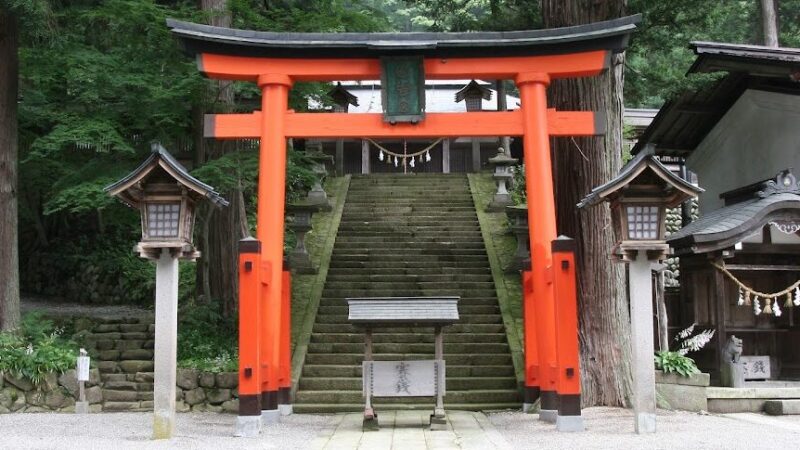
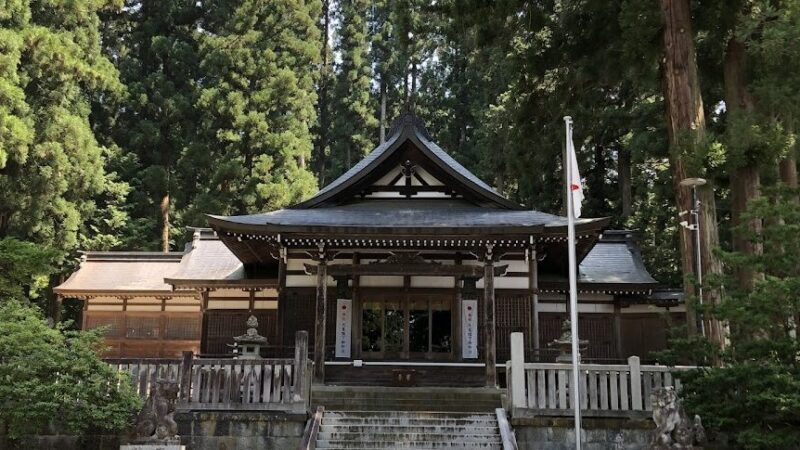
Shirakawa Hachiman Shrine: Guardian Deity of the Settlement
Located at the center of Ogimachi settlement, Shirakawa Hachiman Shrine has long been worshipped as the village’s guardian deity. It’s also known as the venue for the “Doburoku Festival” held annually in October.
The shrine grounds are wrapped in a tranquil atmosphere, and walking along the shrine path lined with large trees allows one to experience the traditional Japanese place of faith. Since “Demon Slayer” incorporates Shinto and Buddhist elements into its narrative, visiting such shrines deepens one’s understanding of the work.
The settlement can also be viewed from the shrine grounds, making it a popular photography spot. Particularly during autumn foliage season, the contrast between trees turning red and yellow and the gassho-zukuri structures is beautiful, attracting many tourists.
Meizenji Kyodo-kan: Gassho-zukuri Temple Architecture
Meizenji is a rare example of gassho-zukuri temple architecture in Shirakawa-go. The main hall, storehouse, and bell tower gate are all built in gassho-zukuri style, with the interior open to the public as a regional museum (admission 300 yen).
The museum features exhibits on the history and culture of Shirakawa-go, the evolution of gassho-zukuri architecture, and Buddhist artworks and folk implements, serving as valuable resources for understanding life in Taisho-era mountain villages.
The temple’s quiet atmosphere evokes scenes of temples and shrines in the work. The gassho-zukuri temple standing amid winter snow is particularly impressive.
Aiikura and Suganuma Settlements: Gassho-zukuri Villages of Gokayama
Located approximately one hour by car from Shirakawa-go in Toyama Prefecture, Gokayama contains two gassho-zukuri settlements: Aiikura and Suganuma. Both are registered as World Heritage sites alongside Shirakawa-go and offer a quieter, more serene atmosphere.
Aiikura in particular has 20 surviving gassho-zukuri houses, and with fewer tourists than Shirakawa-go, one can walk at leisure. Being a small mountain settlement, it may more closely match the image of Tanjiro’s hometown.
Suganuma is even smaller with 9 gassho-zukuri houses, and has a charming, intimate atmosphere. Both have observation decks providing views of the entire settlement.
Access Methods to Shirakawa-go
Public Transportation Access
From Nagoya Area
- Highway bus “Shirakawa-go Line” from JR Nagoya Station, approximately 2 hours 50 minutes (one-way 3,900 yen)
- Highway buses from Meitetsu Bus Center operated by Nohi Bus, 4-5 buses daily
From Kanazawa Area
- Highway bus from JR Kanazawa Station via Nohi Bus/Hokuriku Railroad, approximately 1 hour 15 minutes (one-way 2,000 yen)
- 8-10 buses daily—the most accessible route
From Takayama Area
- Nohi Bus from JR Takayama Station, approximately 50 minutes (one-way 2,600 yen)
- 8-9 buses daily; recommended to combine with Takayama sightseeing
From Toyama Area
- From JR Toyama Station via Takaoka Station using Kaetsu Noh Bus, approximately 1 hour 40 minutes (one-way 1,800 yen)
- Via Gokayama route, allowing stops at Aiikura and Suganuma settlements
Bus reservations are recommended. Particularly on weekends, during tourist season, and nighttime illumination events, buses often sell out, making early reservations essential.
Automobile Access
From Nagoya Area
- Tokai-Hokuriku Expressway “Shirakawa-go IC” exit, approximately 5 minutes (approximately 200 km, approximately 2 hours 30 minutes)
From Kanazawa Area
- From “Kanazawa-nishi IC” on Hokuriku Expressway via National Routes 304 and 156, approximately 1 hour 30 minutes (approximately 80 km)
From Takayama Area
- Via National Routes 158 and 156, approximately 50 minutes (approximately 50 km)
Shirakawa-go has multiple parking areas, though tourist season brings congestion. Main parking areas are as follows:
- Seseragi Park Parking (200 cars, 1,000 yen/day)
- Terao Parking (180 cars, 1,000 yen/day)
- Midashima Park Parking (40 cars, 1,000 yen/day)
Winter brings snowfall and icing; studless tires or chains are essential equipment. January-February have particularly heavy snowfall, so those unfamiliar with winter driving are advised to use public transportation.
Best Seasons to Visit Shirakawa-go
Winter (December-February): Most Recommended for Demon Slayer Fans
For experiencing the snow landscape from “Demon Slayer” Episode 1, winter visits are optimal. Particularly from late January through mid-February, when snowfall is heaviest, one can enjoy the fantastical sight of gassho-zukuri settlements buried in deep snow.
The “Shirakawa-go Illumination” event runs annually from late January to early February (reservation-only). The nighttime illumination of gassho-zukuri houses creates otherworldly beauty. However, this event is extremely popular, often fully booked immediately upon reservation opening, requiring advance planning months ahead.
Winter visit precautions require thorough cold preparation. Temperatures often drop below freezing, with wind chill making it feel even colder. Snow traction shoes and waterproof clothing are essential.
Spring (March-May): Snowmelt and Fresh Greenery Season
March is a unique period blending lingering snow with spring’s arrival. April-May showcase beautiful new foliage, and water-filled paddies during rice planting create spectacular mirror reflections of gassho-zukuri structures.
Spring brings relatively fewer tourists, allowing leisurely exploration during this hidden-gem season. Cherry blossoms bloom mid-to-late April, offering beautiful gassho-zukuri and sakura combinations.
Summer (June-August): Verdant Mountain Village Landscape
Summer Shirakawa-go is enveloped in deep green, displaying landscapes full of vitality. Rice field growth and surrounding mountain greenery showcase Japan’s original landscape beautifully.
July-August bring higher temperatures, but the elevated location provides cooler conditions than urban areas. However, this is the peak tourist season, with unavoidable crowds; early morning visits are recommended.
Autumn (September-November): Foliage and Golden Rice Stalks
Late September to early October is harvest time, when golden glowing rice stalks and gassho-zukuri create beautiful scenery. Mid-October through early November brings peak foliage with trees turning red and yellow, creating spectacular mountain-and-settlement contrasts.
October hosts the “Doburoku Festival” at Shirakawa Hachiman Shrine, enabling traditional culture experience. Autumn offers mild weather ideal for walking tours.
Demon Slayer-Related Spots Around Shirakawa-go
Oni Iwa Park and Oni no Ittogiri (Onitake Town, Gifu Prefecture)
Located approximately 2 hours by car from Shirakawa-go, Oni Iwa Park features a massive rock called “Oni no Ittogiri” (demon’s single stroke). This rock is split in two, closely resembling the giant boulder Tanjiro slashed before the final selection exam, generating significant social media buzz.
The rock features a 7-meter vertical fissure, with impressive scale. Located a 20-minute walk from the park entrance, it’s developed as a hiking course. With scattered megaliths throughout, the park truly embodies the “Demon Slayer world.”
This location evoking Tanjiro’s training scenes is worth visiting alongside Shirakawa-go. Essential for training arc fans.
“Stone the Demon Dropped” in Seki City
Seki City in Gifu Prefecture features a legendary boulder called “Stone the Demon Dropped.” Interestingly, LiSA, who sings “Demon Slayer’s” theme song, is from Seki City, drawing fan attention.
The stone’s location, “Tatara,” has a sword-related place name, seemingly too coincidental. Seki City is famous as a Japanese sword production center, allowing one to sense the connection to the work’s “sword” theme.
Historic Townscape of Takayama City
Takayama City, approximately 50 minutes by car from Shirakawa-go, preserves Edo period townscapes. Streets retaining Taisho-era atmosphere perfectly match “Demon Slayer’s” worldview.
Particularly “Sanmachi Street,” a historic preservation district, features traditional merchant houses creating a time-travel experience reminiscent of the town where Tanjiro sold charcoal.
Lodging and Dining in Shirakawa-go
Lodging Experience in Gassho-zukuri Minshuku
Shirakawa-go offers multiple minshuku lodges in actual gassho-zukuri structures. Dining around hearths and sleeping on tatami enable experiencing traditional Japanese lifestyle.
Winter lodging amid snow-surrounded gassho-zukuri recreates Tanjiro’s world, with early morning walks through misty settlements representing pilgrimage’s finest moments.
Popular minshuku book quickly, requiring several months’ advance reservation particularly for weekends and illumination events.
Shirakawa-go Local Cuisine
Shirakawa-go offers distinctive mountain village dishes.
Hoba-Miso
Traditional cooking involving grilled miso, vegetables, and mushrooms on magnolia leaves, cooked over hearths.
Hida Beef
Gifu’s representative branded beef, typically served as steak or hoba-miso grilled, featuring tenderness and rich flavor.
Soba
The region produces handmade soba noodles as specialties, with mountain vegetable and duck soba variations using local ingredients.
Doburoku
Murky sake famous from Shirakawa Hachiman Shrine’s festival, featuring concentrated, sweet flavor, popular as souvenirs.
Precautions and Etiquette for Shirakawa-go Tourism
Remember This is a Living Settlement
Shirakawa-go, while a tourist destination, is an actual settlement where residents live. Most gassho-zukuri houses serve as current residences requiring privacy consideration.
- Never enter private property without permission
- Don’t peer into house windows or doors
- Avoid loud conversations and noise
- Don’t photograph in designated no-photography areas
Early morning and evening residential activities require particular caution. Respecting local residents represents the most important pilgrimage etiquette.
Drone Photography Generally Prohibited
Shirakawa-go prohibits drone use for landscape protection and safety. Unauthorized flight risks legal violation; absolutely avoid.
Take Trash With You
To preserve the World Heritage landscape, take all trash. No garbage bins are provided in the settlement. Environmental cooperation preserves this precious cultural heritage for future generations.
Smoking Only in Designated Areas
Since gassho-zukuri construction uses wood and is fire-sensitive, smoke only in designated places. Walking while smoking and discarding cigarettes are strictly prohibited.
Shirakawa-go and Other Anime Sacred Sites
Also a Sacred Site for “Higurashi: When They Cry”
Interestingly, Shirakawa-go was already known as a sacred site for another popular anime before “Demon Slayer.” That work is “Higurashi: When They Cry.”
The fictional village “Hinami-zawa” in the work is considered to model Shirakawa-go, with many fans making pilgrimage visits. Ogimachi Castle Ruins observation deck is beloved as “Rika-chan’s Secret Place,” while the connecting slope is known as “It’s a Lie! School Route.”
With two popular anime sharing sacred site status, Shirakawa-go holds special significance for anime fans.
Takayama City—Sacred Site of “Hyouka”
Takayama City near Shirakawa-go is famous as the sacred site for anime “Hyouka.” The fictional “Kamiyama City” in the work models Takayama, with various locations appearing in the series.
Combining Shirakawa-go and Takayama allows a fulfilling trip visiting multiple anime sacred sites.
Conclusion: Experience the Demon Slayer World in Shirakawa-go
Gifu Prefecture’s Shirakawa-go, as the model for Tanjiro’s hometown in “Demon Slayer” Episode 1, attracts attention from many fans as a sacred site. While official announcement is absent, the heavy snowfall region’s gassho-zukuri settlement environment aligns surprisingly perfectly with the work’s world, establishing it as a pilgrimage standard.
Ogimachi Castle Ruins observation deck’s settlement panorama, gassho-zukuri architecture like Wada House and Meizenji, and Shirakawa Hachiman Shrine’s tranquility provide numerous opportunities to experience “Demon Slayer’s” world. Winter snow particularly evokes the peaceful days Tanjiro spent with family—a deeply moving sight.
A World Heritage site preserving Japan’s original landscape, Shirakawa-go appeals to “Demon Slayer” fans and all interested in traditional Japanese culture and beautiful scenery.
Understanding access methods and tourism tips while maintaining resident consideration, fully enjoy Shirakawa-go pilgrimage. In this beautiful mountain village, you’ll rediscover the family bonds Tanjiro cherished and the value of peaceful daily life.