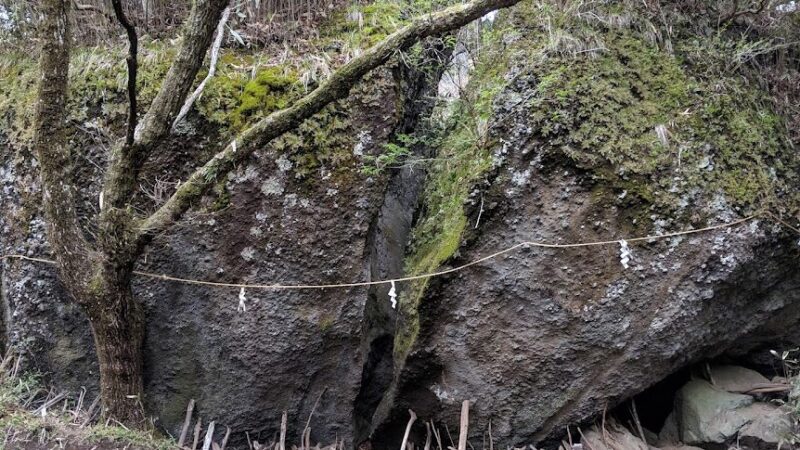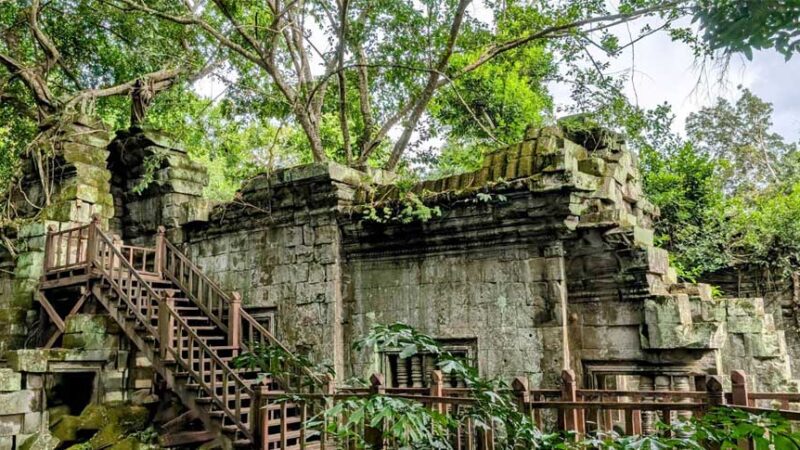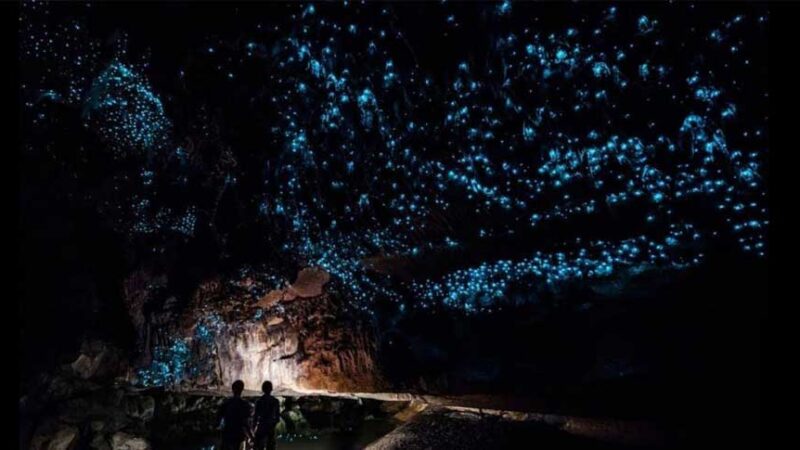
Sarushima, an uninhabited island floating in Tokyo Bay, has recently attracted significant attention primarily on social media as a mystical spot where visitors can experience the world of Studio Ghibli’s masterpiece “Castle in the Sky” (Laputa). Despite being just a 10-minute ferry ride from Yokosuka Port, the moss-covered fortress ruins and fantastical tunnels create a surreal landscape that feels like stepping into the movie itself.
In this article, we will convey the full charm of Sarushima while providing thorough explanations of access methods, highlights, history, ways to enjoy it, and nearby tourist attractions—everything you should know before visiting Sarushima.
What is Sarushima? The Appeal of Tokyo Bay’s Only Natural Island
Tokyo Bay’s Largest Natural Uninhabited Island
Sarushima is an uninhabited island belonging to Yokosuka City, Kanagawa Prefecture, with a circumference of approximately 1.6 km and an area of about 0.055 square kilometers. While Tokyo Bay contains multiple artificial islands, Sarushima is a precious existence as Tokyo Bay’s only natural island.
With an elevation of approximately 40 meters, it is not particularly high, but the entire island is covered in rich nature, maintaining such a primordial atmosphere that one would not believe it is less than an hour’s drive from central Tokyo. The spreading evergreen broadleaf forest with abundant growth of trees such as Machilus thunbergii, Castanopsis sieboldii, and Torchwood creates an environment worthy of being called a treasure trove of nature.
Why Is It Called “Laputa”?
The reason Sarushima is compared to the world of “Castle in the Sky” lies in the ruins of the former Japanese military fortress remaining on the island from the Meiji era through the early Showa period.
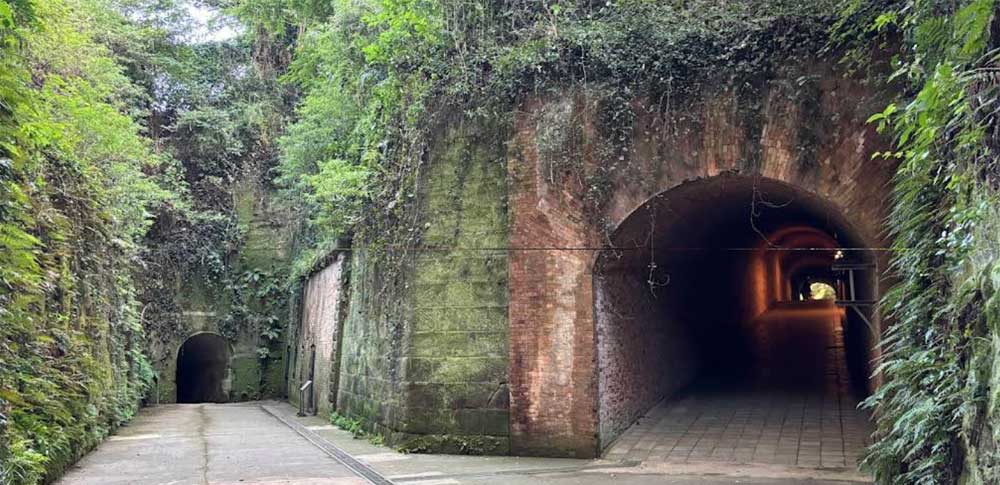
Due to the passage of years, brick structures and stone walls are thickly covered with green moss, with tree roots and vines entangling them as nature reclaims the space—a scene that overlaps with the ruins aesthetic of Ghibli works. In particular, the cuts and tunnels in the central part of the island form a fantastical space with dappled sunlight filtering through, inviting visitors into the world of the movie.
Photos posted with hashtags such as “#SarushimaLaputa” and “#SarushimaGhibli” on social media became hot topics, and today Sarushima has become a popular tourist attraction visited by over 150,000 people annually.
History of Sarushima: From a Fortress Island to a Tourist Destination
Military Outpost Role Beginning in the Edo Period
The military use of Sarushima dates back to the late Edo period. In 1847 (Kaoka 4), the Edo Shogunate installed a battery (cannon platform) on Sarushima to protect Edo from the threat of foreign ships. This marked the first step in Sarushima’s fortification.
Full-Scale Fortification in the Meiji Era
Entering the Meiji era, the military importance of Sarushima increased further. Starting in 1881 (Meiji 14), full-scale fortress construction began, and under the guidance of French engineers, a state-of-the-art Western-style fortress was built.
Brick barracks, ammunition magazines, cannon bases, power plant ruins, and more were constructed one after another, functioning as Tokyo Bay’s defense point. Cuts and tunnels spanning approximately 1 km were excavated across the island, and these remain in their original state today.
Pacific War and Postwar Period
During the Pacific War, Sarushima played an important role as part of the Tokyo Bay fortress. However, with the war’s end in 1945, it ceased functioning as a military facility and was placed under U.S. military administration for a time.
After being returned to Japan in 1961, Yokosuka City carried out improvements in 1993, and public opening began the following year in 1995. Now, as “Sarushima Park,” it has become a valuable tourist spot where visitors can enjoy both historical heritage and natural environment.
Origin of the Island’s Name
There are several theories about the origin of the name Sarushima. The most famous theory is based on a legend that once when High Priest Nichiren was traveling from Boso to Kamakura and encountered a storm, he was guided by a white monkey to take refuge on this island. Another theory suggests the island’s shape resembles a monkey, but the definitive origin remains unclear.
Access to Sarushima: 10 Minutes by Ferry from Yokosuka
Access to the Ferry Terminal
Sarushima is reached by ferry from Yokosuka City’s “Mikasa Pier.” Here are the access methods to Mikasa Pier:
Access by Train:
- About 15 minutes walk from Keikyu Line “Yokosuka Chuo Station”
- About 20 minutes walk from JR Yokosuka Line “Yokosuka Station,” or about 5 minutes by bus
Access by Car:
- About 10 minutes from the “Yokosuka IC” exit of the Yokohama-Yokosuka Expressway
- Parking: Paid parking available around Mikasa Park (public transportation recommended on holidays due to congestion)
Ferry Operating Information
Operating Company: Triangle Corporation
Travel Time: Approximately 10 minutes
Operating Season: March–November (closed for winter December–February)
Operating Hours:
- March–November: Around 8:30–17:00 (varies by season)
- Operates at 30-minute to 1-hour intervals
- Final departure varies by period—please confirm
Fares (as of 2024):
- Adults (middle school and above): 2,000 yen round trip
- Elementary school children: 1,000 yen round trip
- Preschool children: Free
- Includes park admission
Reservations: Generally no reservation required (same-day tickets only). However, early arrival is recommended during peak seasons.
Precautions:
- Service may be suspended due to weather
- Expect congestion during summer and Golden Week
- Always check the official website for the latest operating information
Length of Stay on the Island
After purchasing round-trip ferry tickets, you can return on any ferry of your choice. Allow at least 1.5 to 2 hours for island exploration. If enjoying barbecue or swimming, a half-day to full-day stay is recommended.
Highlights of Sarushima: Experiencing the World of Laputa
1. Cuts and Brick Tunnels (Main Highlight)
The highlight of Sarushima is undoubtedly the cuts and brick tunnels remaining in the island’s central area.
This tunnel, excavated during the Meiji era, extends approximately 90 meters and is characterized by a beautiful brick-laying method called French bond. The interior is dimly lit even during daytime, with a cool breeze flowing through.
Upon exiting the tunnel, high stone walls loom on both sides. These stone walls are completely covered with green moss, with tree roots and vines intricately tangled, creating a landscape that evokes the ruins scenes from “Castle in the Sky.”
The way dappled sunlight filters through changes with the time of day, and the soft morning light is particularly fantastical and ideal for photography.
2. Fortress Ruins Groups
Multiple fortress ruins are scattered across the island.
Ammunition Magazine Ruins: A sturdy brick structure testifying to the robustness of the former military facilities. While the interior is off-limits, you can sense its scale from the exterior.
Barracks Ruins: Remains of buildings where soldiers lived. Portions of stone walls remain, suggesting how life was at that time.
Cannon Platform Ruins: Where large cannons were positioned. Only foundations remain today, but it’s clear how strategically positioned it was overlooking Tokyo Bay.
Power Plant Ruins: The facility that supplied power to the fortress. The brick building still stands.
These ruins are freely viewable, but some areas are deteriorating, so absolutely do not enter any off-limits zones.
3. Views from the Observation Point
Near the island’s highest point, a viewing area offers wonderful views of Tokyo Bay. On clear days, you can see Yokosuka’s streetscape, the Boso Peninsula, and even Mount Fuji in the distance.
A seascape unique to a maritime city unfolds, with ships traveling the sea and the distant naval port of Yokosuka.
4. Sarushima’s Nature: Plants and Animals
Sarushima is also a treasure trove of nature. Over 200 species of plants grow naturally on the island, presenting different faces with each season.
Spring: Violets and camellias bloom, and fresh green is beautiful
Summer: Lush evergreen broadleaf forest thickly overgrows, the period of deepest greenery
Autumn: Trees begin to change color, creating a calm atmosphere
The island is also home to observable wildlife such as lizards and birds. Enjoying nature observation while exploring is also recommended.
5. Beach Area
On the island’s east side lies a sandy beach where visitors can enjoy swimming and barbecues during summer. The transparent seawater and white sand possess a beauty unimaginable for an area so close to the urban center.
During summer, beach houses also open, providing showers, toilets, and food services.
Ways to Enjoy Sarushima and Activities
Island Exploration and Guided Tours
Free Exploration: The island has maintained hiking trails for free exploration. Exploration takes approximately 1 to 1.5 hours.
Professional Guide Tours: Paid guide tours led by “Sarushima Park specialists” are available (advance reservation required). You can gain deeper understanding of Sarushima while hearing detailed explanations about its history and nature. The fee is around 500 yen for adults.
Photography’s Best Spots
Sarushima is packed with photogenic locations.
- Inside the brick tunnel: The beautiful light effect from darkness to the tunnel’s opening
- Moss-covered walls of cuts: The quintessential Laputa-feeling photo spot
- Stone walls with vines: An artistic fusion of nature and artifice
- Backlit tunnel exit: Dramatic silhouette photography possible
- Sea views from the observation point: Beautiful contrast between blue sea and sky
Photography Tips:
- Soft morning light is recommended
- Inside tunnels are dark, so use night mode on smartphone cameras
- Avoid using tripods during crowded times
Barbecue (Summer Only)
During summer, barbecue can be enjoyed in the beach area.
Usage Period: July–August
Reservation: Advance reservation required (through official website)
Fee: Starting at 3,000 yen per person for equipment rental and food sets
Precautions: Fire use only in designated areas, must take all trash with you
Swimming and Fishing
Swimming: Summer only. Swimming areas are designated with lifeguards on duty for safety.
Fishing: Fishing is possible around the island (some areas prohibited). Horse mackerel, rockfish, and scorpionfish can be caught. However, fishing equipment must be brought with you.
Precautions and What to Bring When Visiting Sarushima
Must-Have Items
- Beverages: While vending machines are on the island, they may sell out during summer
- Sunscreen and hat: Though there are shaded areas, the observation point and beach have strong sunlight
- Insect repellent spray: Essential during summer due to abundant nature
- Comfortable walking shoes: Tunnels and trails have slippery sections
- Garbage bags: Taking trash with you is mandatory
- Camera/smartphone charger: Pay attention to battery remaining due to numerous photo spots
Clothing Advice
- Comfortable, flexible clothing: Many stairs and slopes
- Long sleeves and pants recommended: To prevent insect bites, sunburn, and protect skin from vines and branches
- Well-worn shoes: Avoid sandals or heels; sneakers are best
Island Facilities and Precautions
Restrooms: Located near the pier and beach area. Given limited numbers, it’s recommended to use restrooms before arriving.
Meals: No restaurants on the island except summer beach houses. Bring food or eat in Yokosuka.
Trash: No garbage bins provided. Everything must be taken with you.
Cell Reception: Mobile phone signals are weak in some areas.
Safety:
- Never enter off-limits zones
- Do not touch or climb on ruins as they are deteriorating
- Watch your footing on slippery areas
- Take heat stroke precautions seriously in summer
Combining Sarushima with Yokosuka Tourism
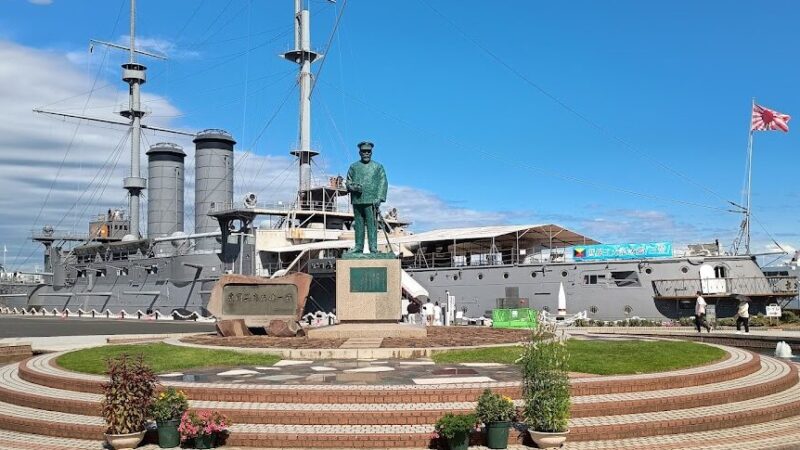
Mikasa Park and Battleship Mikasa
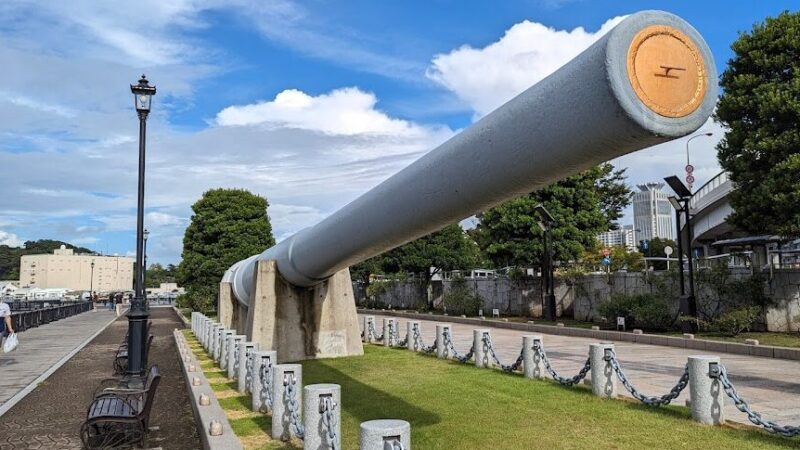
Right next to the ferry terminal is Mikasa Park, which displays the battleship Mikasa, which served in the Russo-Japanese War. It’s an ideal stop before or after visiting Sarushima.
Admission: 600 yen for adults
Time Required: Approximately 40 minutes to 1 hour
Yokosuka Naval Port Cruise
This cruise tour around Yokosuka Port offers close-up views of Japan Self-Defense Force and U.S. Navy vessels. You can experience Yokosuka’s charm from a different angle than Sarushima.
Time Required: Approximately 45 minutes
Fee: 2,000 yen for adults
Departures: 2–4 times daily
Dobita Street
A shopping street near the U.S. military base with a unique American atmosphere. Many restaurants serve Yokosuka specialties like “Navy Burgers” and “Naval Curry.”
Verny Park
A beautifully manicured French garden known as a rose garden. It offers an excellent vantage point overlooking Yokosuka’s naval port across the strait.
Kannon Cape Park and Kannon Cape Lighthouse
Located about 20 minutes by car from Sarushima, Kannon Cape is situated at the entrance to Tokyo Bay. You can enjoy Japan’s first Western-style lighthouse, the Kannon Cape Lighthouse, and beautiful coastlines.
Sarushima’s Charm by Season
Spring (March–May)
- Characteristics: Beautiful fresh green, pleasant weather
- Highlights: Spring flowers, budding trees
- Crowding: Relatively uncrowded
- Recommendations: Nature observation, photography
Summer (June–August)
- Characteristics: Most popular season, swimming is possible
- Highlights: Lush green, transparent sea
- Crowding: Very crowded (especially weekends)
- Recommendations: Swimming, barbecue
- Precautions: Heat stroke prevention essential, early arrival recommended
Autumn (September–November)
- Characteristics: Cool and comfortable, autumn foliage begins
- Highlights: Autumn plants, calm atmosphere
- Crowding: Moderate
- Recommendations: Exploration, historical exploration
Winter (December–February)
- Characteristics: Ferry is closed
- Visitation Impossible: Cannot land during this period
Frequently Asked Questions (FAQ)
Q: Is Sarushima really a model for Laputa?
A: While it’s not officially designated as a model, the atmosphere of moss-covered fortress ruins resembles “Castle in the Sky,” which has made it a hot topic among fans as “like Laputa.”
Q: Can it be enjoyed on rainy days?
A: You can visit if operations continue, but be careful as the ground becomes slippery. Ferry service suspends during severe weather.
Q: Is it okay to visit with children?
A: While trails are maintained, there are many stairs and slopes requiring attention with small children. Stroller movement is difficult.
Q: Can pets come?
A: Pets are allowed but must be kept on a leash. Some areas may have access restrictions.
Q: Is accommodation available?
A: As Sarushima is uninhabited, there are no lodging facilities. Day trips only.
Q: Can wheelchairs access it?
A: Many stairs and unpaved roads make wheelchair movement extremely difficult. No accessibility features are provided.
Conclusion: Adventure in the Non-Ordinary at Sarushima
Sarushima, an uninhabited island in Yokosuka City, Kanagawa Prefecture, is a precious spot where visitors can experience the world of “Castle in the Sky” with access from the city center in just about an hour.
The fortress ruins from the Meiji era, moss-covered brick tunnels, and stone walls consumed by nature invite visitors into the movie’s world. With historical romance, natural beauty, photogenic landscapes, and convenient accessibility, Sarushima suits couples’ dates, family outings, and solo travel equally well.
Combined with exploring Yokosuka’s streets and naval port tours, you can enjoy a fulfilling day. Sarushima is recommended not only to Ghibli fans but to all who love ruins, history, and nature. Why not venture this coming weekend to this mystical uninhabited island floating in Tokyo Bay for an extraordinary adventure?
Sarushima, where time seems to have stopped and where you can feel nature’s strength, will surely create special memories for you.