The Aso region in Kumamoto Prefecture is drawing attention from fans across the country as a sacred pilgrimage site where you can experience the world of the blockbuster work “Demon Slayer.” The majestic natural scenery of Mount Aso overlaps with scenes from the work, creating a place where it feels as though you’ve stepped into the story itself. This article provides detailed guidance on “Demon Slayer” related spots around Mount Aso and comprehensively delivers useful information for those planning a sacred pilgrimage.
Why Mount Aso is Receiving Attention as a Sacred Site for Demon Slayer
Aso’s Natural Landscape Overlapping with the Work’s World View
Mount Aso is an active volcano with one of the world’s largest calderas, boasting vast terrain of approximately 17km east to west, 25km north to south, and 350km² in area. The unique landscape surrounded by the Aso Five Peaks (Takadake, Nakadake, Eboshidake, Kisshimadake, and Negodake) and the outer rim mountains evokes the primordial Japanese landscape of the Taisho era, which serves as the stage for “Demon Slayer.”
In particular, the view of the caldera from the outer rim mountains overlaps with the atmosphere of the mountains where the protagonist Tanjiro Kamado trained, which is why many fans feel “this is the world of Demon Slayer itself.” The early morning Aso shrouded in mist and the grassland landscape bathed in the setting sun recall the fantastical scenes appearing in the work.
Connection with the Shrine Named “Kamado”
Several shrines with the name “Kamado” exist around the Aso region. Because they use the same kanji as the protagonist’s surname “Kamado (竈門),” fans recognize these places as having special significance. Locations such as Hachiman Kamado Shrine in Beppu City, Oita Prefecture, and Kamado Hell, also in Beppu City, are scattered throughout Kyushu, establishing the Kyushu region, including Aso, as an established Demon Slayer sacred pilgrimage route.
South Aso Holiday Park | A Facility Where You Can Experience Tanjiro’s Rock Cutting
Location and Access Information
South Aso Holiday Park is a leisure facility located in Minami Aso Village, Aso District, Kumamoto Prefecture. It can be accessed by car in approximately 40 minutes from Aso Kumamoto Airport and approximately 1 hour from central Kumamoto. When using public transportation, the Nakamutsu Station on the Minami Aso Railway is the nearest station, but it is approximately 10 minutes by car from the station, making rental cars or taxis convenient.
The facility has a spacious parking lot capable of accommodating tour buses, making it accessible for group sacred pilgrimages. The vast natural beauty of Aso surrounds the facility, and the facility itself is designed in harmony with nature, making it an ideal environment for experiencing the world of Demon Slayer.
Rock Cutting Experience Content Featuring Tanjiro’s Cut “Rock”
The most talked-about spot at South Aso Holiday Park is an experiential facility recreating the “rock” that Tanjiro cut in half as the final selection test given by Sakonji Urokodaki in the early part of the work. Visitors can actually experience cutting a rock (replica) using a wooden sword, truly becoming Tanjiro and recreating the training scene.
The rock is also ideal for photography and has become an Instagram-worthy spot that many tourists visit. The vast natural beauty of Aso spreads in the background, allowing visitors to experience the realism of truly being in a training ground. The experience can be attempted multiple times, and visitors can have their moment of cutting the rock with a clean stance photographed.
The Snake Pillar Experience as Iguro Obanai
In addition to Tanjiro’s rock cutting experience, South Aso Holiday Park also offers experiential content inspired by the Snake Pillar, Iguro Obanai (伊黒小芭内). Various decorations modeled after Obanai’s characteristic serpent companion Kaburamaru and photography spots where visitors can take on the character’s poses offer opportunities to enjoy the world view of various characters.
The facility staff are knowledgeable about Demon Slayer and can provide shooting advice and engage in discussion about the work. Cosplay visits are welcomed, making it an ideal environment for those who want to immerse themselves more deeply in the work’s world.
Facility Hours and Admission Fees
South Aso Holiday Park’s operating hours vary by season but typically operate from 9:00 AM to 5:00 PM. The admission fees for experiential content are relatively reasonable, with the rock cutting experience available from around 500 yen per attempt (fees may change, so checking official information before your visit is recommended).
The facility includes dining areas and a gift shop selling Aso specialty products and Demon Slayer related merchandise. With its all-day entertainment design, it is ideal for family and group visits.
Kamiashiki Kumano Imasu Shrine | Experiencing the Fantastical World of Demon Slayer
Mysterious Approach and Over 100 Stone Lanterns
Kamiashiki Kumano Imasu Shrine (上色見熊野座神社), located in Takamori Town, Aso District, Kumamoto Prefecture, is known among Demon Slayer fans as “the place most resembling the work’s atmosphere.” The approach is lined with over 100 stone lanterns, and the fantastical landscape surrounded by moss-covered lanterns and trees creates a mysterious atmosphere as if demons might emerge.
Particularly at dawn or dusk, or when mist rises, the landscape resembles an otherworldly scene from the work. The approach with dappled sunlight recalls scenes of Tanjiro fighting demons in the forest, with many tourists expressing their emotion that “it truly feels as though I’ve stepped into the Demon Slayer world.”
The Mystique of Ugeto Rock (穿戸岩)
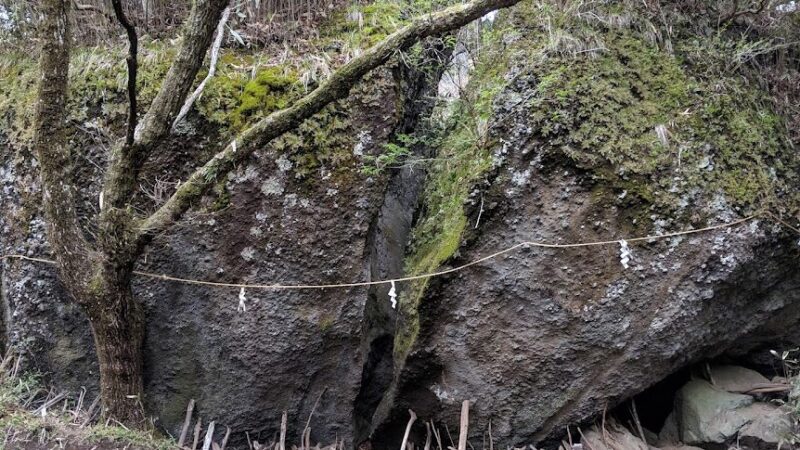
At the end of the approach stands “Ugeto Rock,” a power spot featuring a naturally formed opening in a massive boulder. The hole in this rock is approximately 10 meters in diameter, and the view of the sky and forest visible beyond creates an extraordinarily fantastical sight, as if framed.
The mystical atmosphere of this Ugeto Rock is also noted as an element resonating with Demon Slayer’s world view. Many tourists photograph themselves in front of the rock, and it frequently appears on social media as a “Demon Slayer sacred site.”
Access and Notes When Visiting
Kamiashiki Kumano Imasu Shrine can be accessed by car in approximately 10 minutes from Takamori Station on the Minami Aso Railway, or approximately 1.5 hours by car from central Kumamoto. There is parking space for several vehicles near the shrine entrance, but expect crowding during holidays and peak tourist seasons, so visiting during earlier hours is recommended.
The approach features approximately 200 stone steps with a steep slope, making sturdy footwear essential. During rainy weather or after rain, the stone steps become slippery, requiring special caution. Additionally, as the shrine is a place of worship for local residents, visitors should show consideration to other worshippers during photography and approach with quiet reverence.
Sightseeing Spots on Mount Aso Itself
Nakadake Crater | A Living Active Volcano
Nakadake Crater, the heart of Mount Aso, continues to emit volcanic smoke and is an active volcano. The sulfurous aroma rising from the crater and the emerald green crater lake create a mystical sight. Depending on the volcanic alert level, crater viewing may be restricted, but when conditions are safe, the crater observation point allows close observation of volcanic activity.
On July 25, 2025, the volcanic alert level was lowered from 2 to 1, and restrictions on the Takadake and Nakadake climbing routes (Crater East Observation Point Route and portions of the Sunsenri Route) were lifted. Before visiting, be sure to check the Kumamoto Prefecture official website and Aso Crater Shuttle operation information to understand the latest volcanic activity status.
Kusasenri Gahamaama | Aso’s Signature Scenic Spot
Kusasenri Gahamaama is a grassland directly approximately 1km in diameter spreading at the foot of Mount Eboshi, and is one of Aso’s representative tourist spots. The sight of horses and cattle peacefully grazing in the vast green meadow is the essence of Japan’s natural landscape. As a place where the rustic atmosphere of the Taisho era, the setting for Demon Slayer, can be felt, it is worth visiting during a sacred pilgrimage.
From spring through autumn, a sea of green grass spreads across the landscape, and winter offers beautiful snowy scenery. Kusasenri Gahamaama offers excellent facilities including parking, shops, and restaurants, making it convenient as a tourism hub.
The View of the Aso Five Peaks | The Reclining Buddha
From Taikanbo (altitude 936m), the highest peak of the Aso outer rim mountains, all five Aso peaks can be viewed at once. This vista is also compared to “the Buddha’s Nirvana,” as the line of mountains resembles a reclining Buddha. Particularly the sight of the Aso Five Peaks floating in the early morning sea of clouds is spectacular, making it a renowned spot visited by many photographers and tourists.
The view from Taikanbo is a grand natural landscape where Demon Slayer’s world view can be felt, making it a must-visit spot during a sacred pilgrimage. The observation platform has shops and cafes where visitors can enjoy Aso specialty products while taking in the spectacular view.
Other Demon Slayer Related Spots Near Aso
Aoi Aso Shrine (Hitoyoshi City)
Located in Hitoyoshi City, Kumamoto Prefecture, Aoi Aso Shrine enshrines the deities of Aso and is characterized by its thatched-roof main hall designated as a National Treasure. It is known among Demon Slayer sacred pilgrimage fans, with the shrine’s solemn atmosphere and historical structures harmonizing with the work’s world view.
Hitoyoshi City suffered significant damage from the 2020 heavy rains, but reconstruction is progressing, and Aoi Aso Shrine is open to visitors. It is approximately 1.5 hours by car from Mount Aso and can be incorporated into a sacred pilgrimage route.
Hachiman Kamado Shrine and Kamado Hell (Beppu City, Oita Prefecture)
Though slightly distant from Kumamoto Prefecture, neighboring Oita Prefecture’s Beppu City is home to Hachiman Kamado Shrine, which bears the name “Kamado.” Because it uses the same kanji as the protagonist’s surname, it is one of the must-visit locations in Kyushu’s Demon Slayer sacred pilgrimage routes.
“Kamado Hell,” also in Beppu City, similarly attracts Demon Slayer fans because of its name. As one of the Beppu Hot Spring “Hell Tours,” the spectacle of high-temperature steam erupting certainly lives up to its “hell” designation. As Aso to Beppu is approximately 2 hours by car, consider visiting if your schedule allows.
Sacred Pilgrimage Planning in the Aso Region
One Day Course Model Plan
Morning:
- 9:00 Rock cutting experience at South Aso Holiday Park
- 10:30 Worship and photography at Kamiashiki Kumano Imasu Shrine
- 12:00 Lunch in Takamori Town or Minami Aso Village
Afternoon:
- 13:30 Exploration of Kusasenri Gahamaama
- 15:00 Nakadake Crater viewing (depending on volcanic activity)
- 16:30 Enjoy the view of the Aso Five Peaks from Taikanbo
- 18:00 Relax in hot springs in Aso City or Minami Aso Village
This course allows efficient coverage of major Demon Slayer related spots and representative Aso tourist destinations. Consider travel times and adjust duration at each spot accordingly.
Recommended Two Day Route
For those with more time, a two-day plan allowing leisurely exploration of the Aso region is recommended.
Day 1:
- Aso Shrine worship
- Kusasenri Gahamaama exploration
- Nakadake Crater viewing
- Sunset viewing from Taikanbo
- Stay at a hot spring inn in Aso City or Minami Aso Village
Day 2:
- Early morning sea of clouds viewing (seasonal and weather dependent)
- Experience at South Aso Holiday Park
- Worship at Kamiashiki Kumano Imasu Shrine
- Visit Takamori Springwater Tunnel Park
- Travel to Aoi Aso Shrine in Hitoyoshi City (optional)
With two days, you can more deeply enjoy Aso’s nature and Demon Slayer’s world view, with ample time for photography.
Recommended Seasons
Spring (March to May):
The season when beef cattle are released to pasture, with beautiful fresh greenery in the grasslands. The sight of new green sprouting from the blackened earth after the burning season conveys a sense of vitality.
Summer (June to August):
A sea of green grassland spreads, offering the most characteristic Aso scenery. However, intense sunlight requires heat stroke precautions.
Autumn (September to November):
A fantastical landscape of swaying pampas grass spreads across the land. Fall foliage is also beautiful, and this season is ideal for photography. Temperatures become comfortable.
Winter (December to February):
Snow-covered Aso Five Peaks are spectacular, but snow and ice can close roads. Winter visits require especially thorough advance information gathering.
Access Methods and Transportation
Access by Airplane
The nearest airport for the Aso region is Aso Kumamoto Airport (formerly Kumamoto Airport). Direct flights operate from Tokyo (Haneda/Narita), Osaka (Itami/Kansai), and Nagoya (Chubu), with flight times of approximately 1.5 to 2 hours.
From the airport to central Aso is approximately 40 minutes to 1 hour by car. Renting a car is most convenient, though airport limousine buses and taxis are also available. However, public transportation limits access to various spots, so rental car use is strongly recommended.
Access by Train
Using the JR Hōhi Main Line, you can reach Aso Station from Kumamoto Station in approximately 1.5 hours. The limited express “Asobōi!” is popular as a sightseeing train, allowing enjoyment of Aso scenery from the window during your journey.
The Minami Aso Railway connects Tateno Station to Takamori Station as a local sightseeing line running through Minami Aso’s rural landscape. A section was closed following the 2016 Kumamoto earthquake, but restoration work is progressing. Check the official website for the latest operating status.
Access by Car
From the Fukuoka area:
Using the Kyushu Expressway, exit at Kumamoto IC or Mashiki Kumamoto Airport IC and head east on Route 57. Travel time is approximately 2.5 to 3 hours.
From the Oita area:
Using Route 57 or Route 442. Approximately 2 hours from Beppu, approximately 2.5 hours from Oita City.
From the Miyazaki area:
Head north on Route 265 via Takamori Town to reach Aso. Travel time is approximately 2.5 to 3 hours.
Use car navigation or smartphone map apps to confirm advance information about volcanic activity and construction-related road closures.
Rental Car Usage
Rental cars are the most convenient transportation for sacred pilgrimages in the Aso region. Rental car company offices are located around Aso Kumamoto Airport, Kumamoto Station, and Aso Station. Vehicle availability may be limited during peak seasons, so advance reservations are recommended.
Aso’s roads feature the curves and grades characteristic of mountainous terrain, requiring caution for those lacking confidence in their driving. Additionally, as wild animals may dart across the road, exercise particular care when driving in early morning or evening hours.
Precautions and Safety Information for Aso Sightseeing
Gathering Information on Volcanic Activity
Mount Aso is an active volcano with constant eruption potential. Before visiting, definitely confirm the JMA’s volcanic alert level and check crater vicinity access restrictions. When the volcanic alert level is 2 or higher, access to the crater area is restricted and climbing routes are closed.
The Kumamoto Prefecture official website and the Aso Volcanic Disaster Prevention Council’s site provide real-time volcanic activity status and restriction information. Additionally, Aso Crater Shuttle operations change in response to volcanic activity, so check the official site for the latest information.
Weather and Clothing Preparation
The Aso region has high elevation, with temperatures lower than lowlands. Particularly in early morning, evening, and winter, cold can be severe, so prepare seasonal clothing accordingly. Even in summer, mornings and evenings can be chilly, so bringing a layer to put on is reassuring.
Weather in Aso changes rapidly and sudden rain is possible. Carry a raincoat or umbrella, and choose shoes that are slip-resistant and comfortable for walking. Particular care regarding foot safety is necessary when climbing stone steps such as those at Kamiashiki Kumano Imasu Shrine.
Protection Against Mountain Sickness
Aso’s elevation reaches 1592m at its highest (Takadake). Those normally living in lowlands may experience mild altitude sickness symptoms (headache, dizziness, shortness of breath) when ascending to high elevation suddenly. Practice frequent water breaks and rest, and if you experience physical changes, do not push yourself and move to lower elevation.
Encounters with Wildlife
The Aso region is home to wild boar, deer, monkeys, and other wildlife. Encounters are particularly likely in early morning and evening, and drivers must watch for animals darting into the roadway. If you see wildlife, maintain distance without approaching or feeding, remaining quiet.
Lodging and Dining Information in Aso
Recommended Accommodation Areas
Central Aso:
Hot spring inns and hotels cluster around Aso Station, making it convenient as a sightseeing base. Uchimaki Hot Spring represents Aso’s leading hot spring area with numerous lodging facilities.
Minami Aso Village:
Close to South Aso Holiday Park and Kamiashiki Kumano Imasu Shrine, it is ideal as a sacred pilgrimage base. Visitors can also enjoy secret hot springs such as Tarumizu Hot Spring and Tochigi Hot Spring.
Kurokawa Hot Spring (Minami-Oguni Town):
Positioned somewhat north of the Aso region, this is a nationally renowned hot spring area. With charming hot spring streets and quality accommodations, it is worth extending your trip.
Aso’s Specialty Cuisine
Akagyu (Aso Red Beef) Dishes:
“Akagyu” raised in Aso’s great nature is a lean, flavorful branded beef. Enjoy it as steak, yakiniku, or in a rice bowl.
Takana Meshi:
Fried rice or mixed rice using Aso takana greens is a regional Aso specialty. Characterized by a slight spicy bite and crisp texture.
Dago Soup:
A Kumamoto regional specialty soup containing dumplings made of kneaded wheat flour. Packed with vegetables and warming.
Basashi (Horse Meat):
Horse meat dishes enjoyed throughout Kumamoto Prefecture. Fresh basashi is a delicacy not to be missed in Aso.
Photography Tips and Instagram-Worthy Spots
Photography Points at Kamiashiki Kumano Imasu Shrine
The lantern-lined approach is best photographed in portrait orientation to emphasize depth, conveying the mystical atmosphere. Early morning light and misty days yield particularly ethereal photographs. The Ugeto Rock is best framed with the rock’s opening as a picture frame, capturing the landscape beyond.
Photography Points at South Aso Holiday Park
During rock cutting experience, continuous shooting mode captures dynamic photos of the sword-swinging moment. Including Aso’s mountains in the background creates photos with a sense of scale. When visiting with multiple people, photographing each other yields images from various angles.
Photography Points at Kusasenri Gahamaama and Taikanbo
Wide angle lenses are recommended at Kusasenri Gahamaama to emphasize the expansive grassland. Including grazing horses and cattle conveys a pastoral atmosphere. From Taikanbo, early morning sea of clouds creates the most fantastical Aso Five Peaks photos, and sunrise timing produces moving imagery.
Photography Etiquette
At shrines and temples, avoid disrupting other worshippers and always respect no-photography areas. Do not enter private property or restricted areas, and maintain awareness of protecting natural environments. When posting to social media, exercise caution with location information and show consideration to avoid prompting congestion.
Conclusion: Experience the World of Demon Slayer in Aso
Kumamoto Prefecture’s Aso region has drawn nationwide attention from Demon Slayer fans as a sacred pilgrimage site where you can fully experience the work’s world view. The rock cutting experience as Tanjiro at South Aso Holiday Park, the mysterious approach of Kamiashiki Kumano Imasu Shrine, and the magnificent natural scenery of Mount Aso itself offer the emotional impact of stepping into the work’s world.
When planning a sacred pilgrimage, confirming volcanic activity status, preparing season-appropriate clothing, and establishing an efficient travel route are essential. Using a rental car allows you to visit major spots within one to two days while also enjoying Aso’s hot springs and cuisine.
The special experience where Aso’s great nature and Demon Slayer’s world view merge will remain memorable even for non-fans. Using this article as a reference, create your own sacred pilgrimage plan and fully enjoy Aso’s charm. Sharing your photographs and experiences on social media allows you to connect with other fans. Prioritize safety and enjoy a wonderful journey to Aso.