![[Demon Slayer] Oni Stone Straw Sandals Oita Prefecture](https://anime-place.site/cms/wp-content/uploads/2026/06/places-3857-【鬼滅の刃】鬼の石草履大分県完全ガイド八幡竈門神社の伝説と聖地巡礼の魅力.jpg)
Hachiman Kamado Shrine located in Beppu City, Oita Prefecture is a tourist destination that attracts many fans from across the country as a sacred site for the hugely popular manga and anime “Demon Slayer.” Among them, the “Demon’s Stone Sandals” draws attention as an important relic symbolizing the demon legend passed down through this shrine. This article provides a thorough explanation of the details of the legend surrounding the demon’s stone sandals, the reasons why Hachiman Kamado Shrine is called a sacred site for Demon Slayer, and tips for actually visiting.
What are the Demon’s Stone Sandals? A Legendary Relic Remaining at Hachiman Kamado Shrine
Origin and Legend of the Stone Sandals
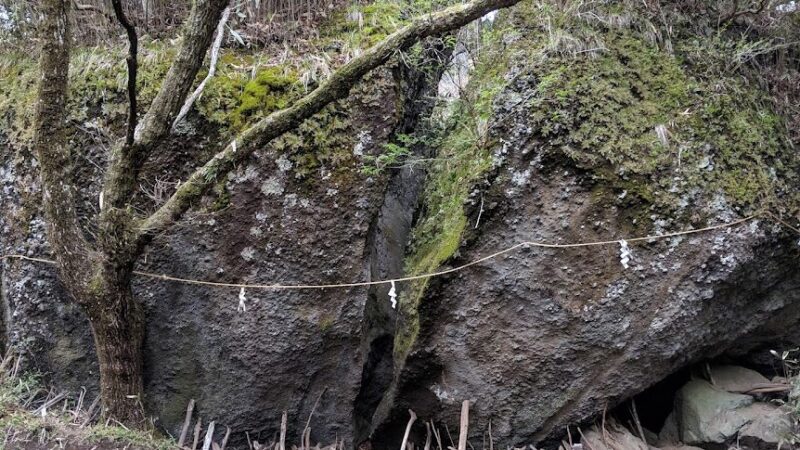
The demon’s stone sandals are stone-made sandals that actually remain in the grounds of Hachiman Kamado Shrine. These sandals have long been accompanied by an intriguing legend passed down in the region.
Long ago, to defeat a demon that was wreaking havoc in this area, Yamato-no-Orochi made a promise to the demon: “If you can build a hundred stone steps in one night, I will offer humans as sacrifices every year. However, if you cannot complete it, you must never return to the village again.” The demon desperately continued building the stone steps and completed ninety-nine steps, but dawn broke just as it was about to complete the final step. Unable to fulfill the promise, the demon was startled and fled, but is said to have forgotten one of the stone sandals it was wearing in the process.
These stone sandals are currently preserved in the grounds of Hachiman Kamado Shrine, and have become a valuable cultural property that visitors can actually see and touch.
The Power and Legends Residing in the Stone Sandals
It is said that mysterious power resides in the demon’s stone sandals. There is a legend that when a villager placed their feet into these stone sandals, power suddenly surged forth, allowing them to perform heavy work several times more than normal. There is also a story remaining that a person who was in poor health regained their vigor after touching these sandals.
In modern times, many visitors touch these stone sandals and visit to pray for health and receive power. Particularly among Demon Slayer fans, this is a popular spot as an important location where they can feel a synchronization with the demons that appear in the work.
The Meaning of the Demon Having Three Toes
The demon’s stone sandals passed down at Hachiman Kamado Shrine have an interesting characteristic. It is that the toes are only three in number. These three toes carry deep meaning.
In Buddhist teachings, the demon’s three toes are said to represent three afflictions: “greed (musaborii),” “envy (netami),” and “foolishness (orokasa).” The interpretation is that humans have five toes, but because “wisdom” and “compassion” are lacking—two toes—demons have three toes instead.
This interpretation shares common ground with the worldview of Demon Slayer, in which demons are depicted as beings that have lost their humanity. For this reason, these three-toed stone sandals have become a symbolic presence for Demon Slayer fans through which they can feel the deep themes of the work.
Why Hachiman Kamado Shrine is Called a Sacred Site for Demon Slayer
The Coincidence in Names with Protagonist “Tanjiro Kamado”
The primary reason Hachiman Kamado Shrine is noted as a sacred site for Demon Slayer is the name “Kamado (かまど)” contained in the shrine’s name. The protagonist of Demon Slayer is Tanjiro Kamado, and his family name matches the shrine’s name perfectly.
This coincidental match became a topic of discussion among fans, and as information spread through SNS and other platforms, many Demon Slayer fans from across the nation began visiting Beppu City. Oita Prefecture and Beppu City have actively leveraged this sacralization as an opportunity for tourism promotion.
While the name Kamado appears in shrines throughout Japan, Hachiman Kamado Shrine particularly resonates with Demon Slayer’s worldview due to its abundance of legends related to demons.
The History of a Shrine Rich in Demon Legends
Hachiman Kamado Shrine preserves numerous demon legends besides the demon’s stone sandals. The aforementioned legend of “the demon building ninety-nine steps” is one of the shrine’s most famous tales.
When visiting the shrine, visitors can actually experience the legend with their own feet, as there are ninety-nine stone steps continuing from the main hall to the torii gate. As worshippers climb the steps one by one, which the demon is said to have built in a single night, they can reflect on the ancient legend.
Additionally, the shrine’s grounds contain many elements that overlap with Demon Slayer’s worldview, such as the sacred tree called “Tamagoi no Ki” and the image of a dragon water deity painted on the ceiling inside the main hall. These elements work in combination, and Hachiman Kamado Shrine has come to be recognized as a genuine sacred site beyond mere coincidence of names.
Synchronization Points with Demon Slayer’s Worldview
There are numerous points where Hachiman Kamado Shrine and Demon Slayer’s worldview overlap.
History of Battles with Demons: The legends remaining in the shrine tell a history of battles and coexistence between humans and demons. This aligns with the core theme of Demon Slayer’s story.
Elements of Water and Fire: The dragon water deity painted inside the main hall evokes Tanjiro’s “Water Breathing.” Additionally, the name “Kamado” itself conjures associations with “fire,” connecting to Tanjiro’s family profession of charcoal burning and his later mastery of “Hinokami Kagura.”
Shrine as a Stage Setting: Demon Slayer frequently features shrines and temples as important settings, and the solemn atmosphere of Hachiman Kamado Shrine becomes a space where one can experience the work’s worldview.
Through the combined effect of these elements, Hachiman Kamado Shrine has become a special place where Demon Slayer fans can feel that “this truly is a sacred site.”
Complete Guide to the Highlights of Hachiman Kamado Shrine
The Ninety-Nine Stone Steps Built by a Demon
When visiting Hachiman Kamado Shrine, one must experience the legendary ninety-nine stone steps. These steps, continuing from the main hall to the torii gate, are said to be the ninety-nine completed steps out of the hundred steps the demon attempted to build in one night.
By actually counting the steps as you descend, you can realistically experience the ancient demon legend. Standing at the ninety-nine step, you can feel the poignancy of the legend—that the demon’s wish was merely one step away from fulfillment.
The stone steps are surrounded by trees, and you can enjoy beautiful scenery particularly during the season of new leaves or autumn foliage. It is also a popular spot for photography, and many visitors take commemorative photos.
The Dragon Water Deity Inside the Main Hall
Inside the main hall of Hachiman Kamado Shrine, there is a magnificent image of a dragon painted on the ceiling. This dragon is said to serve as a water deity protecting the shrine from fire.
The dragon painting is rendered in fine detail, and its imposing appearance overwhelms visitors. For Demon Slayer fans, this is an important point where they can feel the connection to the “Water Breathing” that Tanjiro uses.
The interior of the main hall is typically open to the public, but it may not be accessible when religious ceremonies are being held, so it is recommended to confirm beforehand. Carefully appreciate the dragon painting and feel its artistry and history of faith.
The Sacred Tree (Tamagoi no Ki)
In the shrine’s grounds stands a sacred tree called “Tamagoi no Ki.” This tree is said to be inhabited by souls and has long been an object of faith for local people.
Standing before the sacred tree with its wide-spreading branches, you can feel the power of nature and a sacred atmosphere. Many visitors place their hands together before this tree, make wishes, or receive power.
In Demon Slayer, the value of nature and life is depicted as a theme, and this sacred tree is one of the spots where one can feel the work’s worldview.
The Kagura Hall and Votive Tablets
Hachiman Kamado Shrine has a kagura hall where traditional sacred dances are sometimes performed. Around the kagura hall, many votive tablets have been offered, and numerous tablets inscribed with wishes related to Demon Slayer can be seen.
Tablets with wishes such as “I hope to become as strong as Tanjiro” or “I hope to see the continuation of Demon Slayer” are part of the pleasure of pilgrimage to this sacred site.
Why not offer a votive tablet yourself and deliver your thoughts about Demon Slayer and your own wishes to the deity? Votive tablets can be purchased at the shrine office.
Giant Iron Sphere (Naval Mine)
In the grounds of Hachiman Kamado Shrine, a giant iron sphere (naval mine) is displayed. This is a relic from World War II, a mine that was set in Beppu Bay and later recovered.
While it may seem unrelated to Demon Slayer at first glance, this giant iron sphere is an important exhibit conveying the history of war and is preserved with prayers for peace. It is one of the spots where one can feel the historical depth of the entire shrine.
Practical Guide to Visiting the Demon’s Stone Sandals
Access Methods (Train, Bus, Car)
Access by Train: It is about a 20-minute walk from JR Beppu Station. Beppu Station can be reached by limited express from Oita Station in about 15 minutes, and from Hakata Station by limited express Sonic in about 2 hours. The route from the station to the shrine is a gentle uphill walk, so it is recommended to allow sufficient time.
Access by Bus: Take the Kamenoi Bus from Beppu Station and get off at the “Uchikamado” bus stop, then walk about 5 minutes. Bus services are limited, so it is good to check the schedule in advance.
Access by Car: About 10 minutes from Beppu IC on the Oita Expressway. Enter “Hachiman Kamado Shrine” or the address “1900 Uchikamado, Beppu City, Oita Prefecture” into your car navigation.
Parking Information and Congestion Status
Hachiman Kamado Shrine has a free parking lot for visitors. Normally about 10 cars can park, but it may become congested on weekends and holidays, particularly during periods related to Demon Slayer events.
The following periods are especially congested:
- The first three days of the new year
- Golden Week
- Obon holiday
- Periods when Demon Slayer movies are released or anime is airing
During peak times, it is recommended to use nearby paid parking or consider using public transportation. Weekday mornings are relatively quiet, so visiting on a weekday is best if you want to worship at your leisure.
Manners and Precautions When Visiting
Hachiman Kamado Shrine is an actively worshipped shrine and an important place for local people. When visiting for sacred site pilgrimage, please follow these manners.
Basic Worship Manners:
- Bow once before passing through the torii gate
- The center of the pathway is the way of the deity, so walk along the edges
- Cleanse your hands and mouth at the water purification basin
- At the main hall, worship with the formal ritual of two bows, two claps, and one bow
Notes on Photography:
- Be mindful not to disturb other worshippers
- Only photograph the interior of the main hall if permitted
- Do not speak loudly
- Refrain from using tripods during busy times
How to Handle the Demon’s Stone Sandals:
- Handle carefully and gently
- Do not monopolize; give other worshippers a turn
- Remove your shoes when stepping on the stone sandals
Nearby Tourist Spots and Gourmet Information
When visiting Hachiman Kamado Shrine, you can also enjoy other tourist spots in Beppu City.
Beppu Hot Springs: Beppu City is known as one of Japan’s premier hot spring destinations. There are numerous hot spring facilities within a 10-minute drive from Hachiman Kamado Shrine, and it is recommended to relax in a hot spring after your visit. In particular, the eight hot spring areas called “Beppu Hasshutsu” each offer unique mineral compositions and atmospheres.
Hell Tour: The representative Beppu tourist attraction “Hell Tour” is about 15 minutes by car from Hachiman Kamado Shrine. You can visit seven distinctive hells including Hell of the Sea and Hell of Blood Pond.
Beppu Cuisine: In Beppu City, you can enjoy Oita regional cuisine such as “tori tenjin,” “Beppu cold noodles,” and “Seki horse mackerel and Seki sea bream.” There are also local restaurants and cafes near the shrine, convenient for meals before and after your visit.
Beppu Tower: Beppu Tower, a landmark of Beppu, offers a panoramic view of Beppu Bay and the city. It is also a popular nighttime viewing spot.
Sacred Site Pilgrimage Plan for Demon Slayer Fans
Other Demon Slayer Spots in Oita Prefecture
There are other spots in Oita Prefecture that Demon Slayer fans visit besides Hachiman Kamado Shrine.
Jion Falls in Hita City: A beautiful waterfall that evokes training scenes in Demon Slayer. In this environment rich with negative ions, you can feel the work’s worldview.
Kusu Town: While also known as a sacred site for “Attack on Titan,” this nature-rich environment relates to the setting of Demon Slayer.
Usa Shrine: One of Oita Prefecture’s representative shrines, its solemn atmosphere aligns with Demon Slayer’s worldview.
Planning a sacred site pilgrimage tour combining these spots throughout Oita Prefecture would be enjoyable.
Recommended Stay Plans and Time Required
Half-Day Plan (3-4 hours):
- Hachiman Kamado Shrine worship (1 hour)
- Beppu hot spring bathing (1-2 hours)
- Beppu gourmet lunch (1 hour)
One-Day Plan (6-8 hours):
- Hachiman Kamado Shrine worship (1.5 hours)
- Hell Tour (2-3 hours)
- Beppu hot spring bathing (1-2 hours)
- Beppu City sightseeing and gourmet (2 hours)
One Night, Two Days Plan:
- Day 1: Hachiman Kamado Shrine, Beppu City sightseeing, overnight at hot spring inn
- Day 2: Sightseeing in surrounding areas such as Hita City or Yufuin
While the shrine visit itself can be completed in about 30 minutes, it is recommended to allow an hour or more to slowly explore the grounds, take photos, and offer votive tablets.
SNS-Worthy Photography Spots
Hachiman Kamado Shrine has many photography spots.
Demon’s Stone Sandals: A must-photograph spot as proof of sacred site pilgrimage. Many people photograph themselves with their feet inside the stone sandals.
Ninety-Nine Stone Steps: An upward-looking angle of the steps or a photo looking back from the middle of the steps conveys the shrine’s atmosphere.
Main Hall and Torii Gate: Photographs capturing the beauty of shrine architecture are popular on SNS. The time of day when morning light shines through creates a particularly mysterious atmosphere.
Sacred Tree: A photograph with the large tree as a background conveys the power of nature.
Votive Tablet Rack: The sight of colorful votive tablets lined up is a sight unique to sacred sites.
When photographing, be considerate of other worshippers and remember that this is a sacred place.
Cultural and Historical Value of the Demon’s Stone Sandals
The Lineage of Demon Legends Remaining in the Region
Hachiman Kamado Shrine’s demon legend is, as one of Japan’s various demon legends, a cultural heritage of value to folklore studies. Japanese demon legends are thought to reflect various historical backgrounds including natural disasters, epidemics, and interactions with different peoples.
The demon legend of the Beppu region may be related to volcanic activity and geothermal phenomena unique to hot spring areas. In Beppu, where there are many hot spring outflows called “hells,” ancient people may have attributed volcanic activity to the work of demons.
The fact that concrete relics like the demon’s stone sandals remain makes the legend feel more tangible and serves a role in transmitting the region’s history and culture to future generations.
Stone Sandals as Folk Belief
Stone sandals are objects of folk belief found in shrines and temples throughout Japan. Large stone sandals in particular have been believed to be symbols of strength and objects of prayer for healthy feet.
The stone sandals at Hachiman Kamado Shrine are positioned not merely as symbols of power but as important cultural properties that tell of promises between humans and demons and the relationship between them. The legend that villagers gained strength by placing their feet in the demon’s stone sandals shows an interesting form of folk belief in which humans utilize the power of demons.
Such folk beliefs continue to serve as sources of spiritual support in modern society and function as power spots.
Re-evaluation of Cultural Heritage through Demon Slayer
The huge hit of Demon Slayer has brought nationwide attention to Hachiman Kamado Shrine and the demon’s stone sandals. This is a prime example of pop culture casting new light on traditional cultural heritage.
Particularly, young people have become interested in shrines and traditional culture, and opportunities to learn about regional history and culture have increased. By actually visiting the site through sacred site pilgrimage, people can gain sensations and emotions that cannot be obtained through virtual experiences alone.
Oita Prefecture and Beppu City have utilized this opportunity to promote the region’s appeal and connect it to tourism promotion. The fusion of anime and manga with regional culture may serve as a new model case for the protection and utilization of cultural heritage in the future.
Conclusion: Feeling the World of Demon Slayer through the Demon’s Stone Sandals
The “demon’s stone sandals” remaining at Hachiman Kamado Shrine in Beppu City, Oita Prefecture, are a valuable cultural heritage that conveys a demon legend passed down in the region since ancient times. The legend of a demon that attempted to build stone steps in one night, failed, and forgot the stone sandals when fleeing, synchronizes perfectly with Demon Slayer’s worldview and captivates many fans.
The legend that placing one’s feet in the stone sandals releases surging power continues to give hope and strength to many worshippers in modern times. With meanings behind the three toes, the ninety-nine stone steps, and the dragon painting in the main hall, the entire shrine has become a sacred site where one can experience the world of Demon Slayer.
When visiting for sacred site pilgrimage, it is important to approach it not merely as a tourist destination but with a respect for the shrine as a place of regional history, culture, and faith. Guarding proper manners while touching the legendary world conveyed by the demon’s stone sandals, experience the Demon Slayer worldview more deeply.
Beppu City has many other attractions including hot springs and cuisine. Starting your pilgrimage with a visit to Hachiman Kamado Shrine, why not plan a trip to fully enjoy the rich nature and culture of Oita Prefecture? May the demon’s stone sandals grant you strength and become a wonderful memory of your journey.