“5 Centimeters per Second” and Iwafune Station: A Complete Guide to Anime Pilgrimage
Director Makoto Shinkai’s masterpiece “5 Centimeters per Second.” The Iwafune Station in Iwafune City, Tochigi Prefecture, is the crucial setting that adorns the climax of the first episode, “Cherry Blossom.” This article provides comprehensive guidance for those planning a pilgrimage to this sacred site, including detailed access methods to Iwafune Station, filming locations, the background of the work, and precautions for visiting, all explained through local information.
What is “5 Centimeters per Second”?
“5 Centimeters per Second” is a feature-length anime film directed by Makoto Shinkai, released in 2007. As symbolized by its title, which represents the speed at which cherry blossoms fall, it depicts with delicacy the changing distance between people as time progresses, capturing the hearts of many fans.
Structure and Story of the Work
This work consists of three short stories, depicting the life of the protagonist Takaki Toono across different timelines.
Episode One: “Cherry Blossom” tells the story of Takaki, now in his first year of middle school, traveling from Tokyo to meet Akari Shinohara, who transferred to Tochigi Prefecture while they were both in elementary school and shared a special bond. The climax of this chapter is the reunion scene at Iwafune Station, making Tochigi Prefecture an important setting.
Episode Two: “Cosmonaut” depicts the story from the perspectives of high school-aged Takaki and Kanae Sumita, who harbors feelings for him, with Tanegashima Island in Kagoshima Prefecture as the setting.
Episode Three: “5 Centimeters per Second” portrays adult Takaki, with Tokyo serving as the setting once again.
Director Makoto Shinkai and Landscape Depiction
The characteristic of director Makoto Shinkai’s works lies in their overwhelmingly beautiful landscape depiction. By meticulously rendering real locations, he creates a world that feels realistic despite being animation. In “5 Centimeters per Second,” real locations such as Tokyo’s Sangenjaya Station, Oyama Station, and Iwafune Station are faithfully recreated, providing the joy of pilgrimage.
Why Iwafune Station, Tochigi Prefecture, Appears in the Work
The Role of Iwafune Station in “Cherry Blossom”
Episode One, “Cherry Blossom,” depicts a single day in which Takaki travels from Tokyo to Tochigi Prefecture to meet Akari. The story is set in the mid-1990s, an era before mobile phones and smartphones became widespread. Relying only on a letter, Takaki crosses the heavy snow, transferring between trains to reach Iwafune Station.
According to the schedule, he was supposed to arrive at 7 PM, but due to train delays caused by heavy snow, he actually arrived at Iwafune Station at 11:15 PM—more than four hours late. Yet, Akari remained waiting in the waiting room. This reunion scene has made Iwafune Station the sacred site of “5 Centimeters per Second.”
Why Iwafune Station Was Chosen
It is believed that director Makoto Shinkai chose Iwafune Station for its serene atmosphere and its appropriate distance from Tokyo. Far enough for a first-year middle school boy to visit alone, yet realistically attainable—this exquisite setting adds depth to the story.
Detailed Access Methods to Iwafune Station
Route from Tokyo
If you wish to retrace the route Takaki took in the work, the following path would be followed:
1. From Sangenjaya Station via the Odakyu Line to Shinjuku
- This is the station where Takaki departs at the beginning of the work
- It retains its appearance from that era
2. From Shinjuku via the Saikyo Line and Shonan-Shinjuku Line toward Omiya
- The work utilizes the Saikyo Line, but the Shonan-Shinjuku Line is also an option today
3. From Omiya via the Utsunomiya Line to Oyama Station
- Travel time is approximately 1 hour
- Oyama Station is an important location featured in the work
4. From Oyama Station via JR Ryōmoesen Line to Iwafune Station
- Travel time is approximately 20 minutes
- Only about 6 trains per day in each direction, so checking the schedule in advance is essential
Modern Efficient Access Methods
When visiting for pilgrimage purposes, the following route is typical:
By Train
- From Tokyo or Ueno Station via the Tohoku Shinkansen to Oyama Station (approximately 40 minutes)
- From Oyama Station via JR Ryōmoesen Line to Iwafune Station (approximately 20 minutes)
- Total travel time: approximately 1 to 1.5 hours
By Car
- Approximately 15 minutes from the Sano-Fujioka IC on the Tohoku Expressway
- Free parking spaces available near the station (limited capacity)
Ryōmoesen Line Operations and Precautions
The JR Ryōmoesen Line is a regional route with limited train service. As of 2024, the schedule for Iwafune Station shows the following trends:
- Weekdays: Concentrated during commute and school hours (6–7 trains in each direction daily)
- Weekends and Holidays: Even fewer trains
- Last Train: Usually around 8 PM
Please check the latest schedule on the JR East official website before visiting. It is particularly important to know the time of the return train.
Detailed Sacred Site Pilgrimage Spots at Iwafune Station
Station Building Exterior and Station Frontage
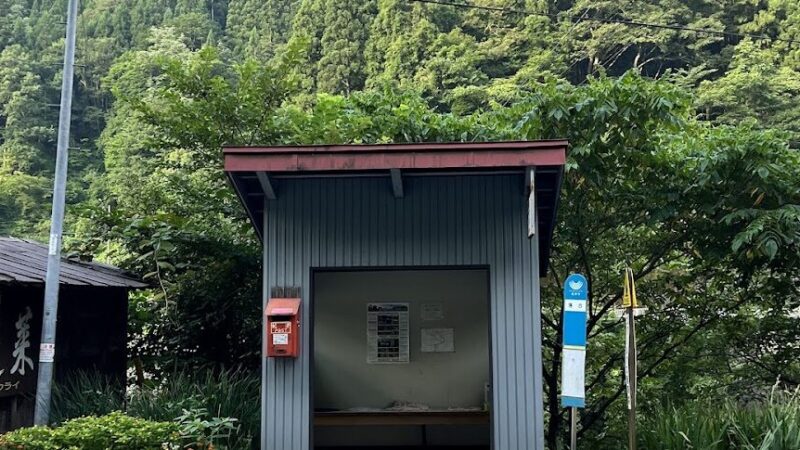
Iwafune Station is a typical unmanned rural station. Its small but charming station building remains virtually unchanged from its appearance in the work.
Photography Points
- Station frontage from the connecting bridge: You can recreate angles featured in the work
- Front of the station building: Best photographed at dusk or night
- The cluttered scenery in front of the station evokes the atmosphere of the work
Ticket Gate and Platform
Iwafune Station is now completely unmanned, with no station attendants. Although the work depicts a station attendant, this is considered a fictional element for the narrative.
Platform Characteristics
- Simple structure with opposite-facing tracks (two platforms, two tracks)
- Benches on the platform are in the same positions as those in the work
- Limited lighting at night allows you to feel the work’s atmosphere
Waiting Room (Most Important Location)
The waiting room at Iwafune Station is the most significant sacred site of “5 Centimeters per Second.” It is where Akari waited for Takaki for more than four hours, and where the two reunited.
Current Condition of the Waiting Room
- Located immediately after passing through the ticket gate
- Benches are installed in the same arrangement as in the work
- While the work depicts a stove and tourism pamphlets, currently only benches are present
- Winter conditions make the room extremely cold, requiring adequate protection against the cold
Photography Precautions
- The waiting room is a public space actively used by visitors
- Local students use it, so consideration for their convenience is necessary
- Avoid occupying the space for extended periods
- Judge the use of tripods based on surrounding circumstances
Scenery from the Platform
The scenery visible from the platform is also depicted as important scenes in the work.
Recreating the Snow Scene
- The work depicts heavy snow on March 4th
- Heavy snow on March is actually rare in Tochigi Prefecture, though it is possible during winter (January–February)
- Visiting on a snowy day requires attention to disruptions in transportation
The Platform at Night
- Important scenes in the work are set at night
- Night visits offer great atmosphere but require careful safety considerations
- Solo nighttime visits by women are not recommended
Sacred Site Pilgrimage Points at Oyama Station
Along with Iwafune Station, Oyama Station is worth visiting. In the work, Takaki uses it to transfer to the Ryōmoesen Line, and scenes such as him rereading his letter to Akari are depicted.
Highlights of Oyama Station
Platform and Pedestrian Bridge
- A scene of Takaki waiting for a train is depicted
- It retains much of its appearance from the work’s era
Station Interior
- A relatively large station with restaurants and shops
- Convenient for meals and shopping before visiting Iwafune Station
Photography Tips
- Avoid commute and school hours when it’s crowded
- Exercise safety caution when photographing on platforms
Nearby Tourist Spots and Combination Plans
Mount Iwafune (Iwafuneyama)
A 173-meter-high mountain within walking distance of Iwafune Station. It is also known as a filming location for special effects productions, featuring unique landscapes of abandoned quarries.
Access
- Approximately 30 minutes on foot from Iwafune Station
- Approximately 5 minutes by car
Highlights
- Kōshōji Temple: An ancient temple near the mountaintop
- Views from the observation deck
- A sacred site for special effects enthusiasts
Tochigi City Center
The area around Tochigi Station, approximately 15 minutes by train from Iwafune Station, is a tourist area known as the “Town of Storehouses.”
Main Tourist Attractions
- Strolling through the warehouse district
- Pleasure boat rides on the Uzuma River
- Tochigi City Folklore Reference Museum
- Adachi Kōkogukan
Sano City (Sano Ramen)
Sano City, adjacent to Iwafune, is famous for Sano Ramen. It is perfect as a culinary experience after a pilgrimage.
Access
- Approximately 10 minutes by train from Iwafune Station to Sano Station
- Numerous ramen shops available in the area around the station
Recommended Pilgrimage Plans
Day Trip Plan
- Travel from Tokyo to Oyama Station via Shinkansen (morning)
- Pilgrimage at Oyama Station (30 minutes)
- Transfer to Iwafune Station via Ryōmoesen Line
- Pilgrimage at Iwafune Station (1–2 hours)
- Visit Mount Iwafune (optional)
- Enjoy Sano Ramen at Sano Station
- Return
Overnight Plan
- Lodging in Tochigi City or Sano City
- Visit Iwafune Station at night (recreate the work’s atmosphere)
- Next day: tourism in Tochigi City or Nikkō area
Precautions and Etiquette for Pilgrimage Visits
Consideration for Local Residents
Iwafune Station is not a tourist destination but a station integral to the lives of local residents. Especially during morning and evening commute and school hours, many students and commuters use it.
Etiquette to Follow
- Refrain from loud conversations and rowdy behavior
- Be careful not to obstruct passages
- Understand that the station is unmanned and treat the facilities with care
- Always take your trash with you
- Do not trespass on private property
Photography Precautions
Photography Requiring Permission
- Commercial filming requires permission from JR East
- Personal commemorative photography is generally acceptable but should not inconvenience other users
Privacy Considerations
- Be careful not to include other users in your photographs
- If unavoidable, apply blur processing when posting to social media
Safety Considerations
For Nighttime Visits
- The area around the station has few streetlights and becomes dark at night
- Visit with companions when possible
- Always confirm the time of the last train
- Be aware of possible road icing during winter
Prohibition on Track Access
- Accessing tracks and platform edges is extremely dangerous
- Do not perform dangerous acts, even for recreating scenes from the work
Seasonal Enjoyment
Spring (March–May)
Spring, including March when the work is set, is an ideal season for pilgrimage.
Visiting in March
- You can experience the same period as the work
- Cherry blossom season (late March–early April) is especially recommended
- Temperatures are still low, requiring cold protection
Cherry Blossom Viewing Spots
- Cherry blossom locations exist around Mount Iwafune
- The area along the Uzuma River in Tochigi City is also a famous cherry blossom spot
Summer (June–August)
Summer is a season of beautiful greenery but requires heat protection measures.
Precautions
- The waiting room has no air conditioning
- Remember to stay hydrated to prevent heatstroke
- Insect repellent is also recommended
Autumn (September–November)
This pleasant season is ideal for pilgrimage.
Autumn Foliage Season
- Foliage around Mount Iwafune is beautiful (early to mid-November)
- The contrast between autumn leaves and the warehouse district in Tochigi City is remarkable
Winter (December–February)
This season allows you to potentially recreate the snow scenes in the work but is also the harshest period.
Visiting on Snowy Days
- You can feel the work’s atmosphere most strongly
- Attention to disruptions in transportation is necessary
- Prepare thoroughly for cold weather (the waiting room is extremely cold)
- Snow is most likely from January to February, but heavy March snow is rare
Understanding the Work More Deeply
Understanding the Historical Context
The setting of “Cherry Blossom” is the mid-1990s. Understanding this historical context allows the work to be enjoyed more deeply.
Characteristics of the 1990s
- Before widespread mobile phone adoption (communication methods were public phones and letters)
- Internet was not yet commonplace
- No real-time access to train delay information
- Because of this, Takaki’s adventure becomes more difficult, and Akari’s continued waiting becomes more poignant
The Meaning of Distance and Time
The work’s title, “5 Centimeters per Second,” represents the speed at which cherry blossoms fall. It symbolizes not just physical distance but emotional distance and change brought about by the passage of time.
Distance and Time from Tokyo to Iwafune Station
- Straight-line distance: approximately 80 km
- Train travel time: over 2 hours even under normal conditions
- For a first-year middle school student, this is a great adventure
Comparison with Other Makoto Shinkai Works
“5 Centimeters per Second” is an early masterpiece by director Makoto Shinkai, and comparison with his later works is interesting.
Commonalities with “Your Name”
- Feelings transcending distance
- Beautiful landscape depiction
- Themes of misunderstanding and reunion
Commonalities with “Weathering with You”
- Coming-of-age story set in Tokyo
- Weather plays an important role in the narrative
- Highly detailed background art
Voices and Experiences of Pilgrimage Visitors
Selected as “Anime Sacred Sites of Japan 88” for 7 Consecutive Years Since 2018
Tochigi City has been selected for the “Anime Sacred Sites of Japan 88” seven years in a row since 2018. This demonstrates that Iwafune Station continues to be cherished by many fans as a sacred site of “5 Centimeters per Second.”
Common Impressions from Visitors
Many pilgrimage visitors express similar thoughts:
Accuracy of the Work’s World
- “I was moved to see the landscapes from the anime still remain unchanged”
- “Sitting in the waiting room, I felt I understood Akari’s feelings a little”
- “The quiet night atmosphere was exactly like the work”
Difficulty of Access
- “With so few trains, I realized how important planning is”
- “I came to understand Takaki’s struggle firsthand”
- “Because of this, I felt visiting this place was worthwhile”
Preparation to Enjoy Pilgrimage More Fully
Items to Prepare Beforehand
Essential Items
- Viewing the work (preferably watching it again just before visiting)
- JR East timetable app or printed schedule
- Camera or smartphone
- Charger or mobile battery
- Cash (some places near unmanned stations may not accept cashless payment)
Seasonal Items
- Winter: warm clothing, hand warmers, gloves
- Summer: sunscreen, hat, beverages
- Rainy season: umbrella, raincoat
- Snowy days: non-slip shoes, warm clothing
Work Preview Points
When reviewing the work before visiting, pay attention to the following scenes:
Iwafune Station-Related Scenes
- Scene of Takaki arriving at Iwafune Station
- Scene of Akari waiting in the waiting room
- Scene of the two reuniting
- Conversation scene on the platform
Oyama Station-Related Scenes
- Scene of Takaki reading his letter
- Scene of Takaki waiting for the Ryōmoesen Line
Frequently Asked Questions
Q: Is there a parking lot at Iwafune Station?
A: There are a few free parking spaces in front of the station, but capacity is limited. Use of public transportation is recommended.
Q: Can I enter the station at night?
A: As an unmanned station, 24-hour access is possible, but the surroundings become extremely dark after the last train. For safety, daytime visits are recommended.
Q: Is the stove shown in the work still there?
A: The waiting room no longer has a stove installed. Only benches remain.
Q: I want to visit on a snowy day. When is best?
A: Snow is most likely in southern Tochigi Prefecture from January to February. However, heavy snow like in the work is rare, and transportation disruptions must be considered.
Q: Is it okay to visit alone?
A: Solo visits during the day are fine, but nighttime solo visits, especially for women, are not recommended.
Q: Are there places to eat nearby?
A: There are almost no restaurants near Iwafune Station. Dining is recommended in the areas around Oyama or Sano stations.
Q: How much time should I plan?
A: Plan 1–2 hours at Iwafune Station for photography and atmosphere, and about half a day including Oyama Station to have a comfortable experience.
Conclusion: Understanding the Meaning of “Distance” Through Pilgrimage
A pilgrimage to the sacred site of “5 Centimeters per Second,” Iwafune Station, is different from a typical sightseeing visit. Taking trains from Tokyo, transferring multiple times, waiting for a Ryōmoesen Line train with limited service, and finally arriving at a small unmanned station—this entire process becomes a recreation of the work.
The distance and time Takaki overcame to meet Akari. In an era when we can easily contact others and instantly know train delays, we can now understand the weight of “going to meet someone” in the 1990s.
Sitting quietly in Iwafune Station’s waiting room and gazing at the scenery from the platform, the meaning of “distance” depicted in the work seeps into your heart. It is not merely physical distance but emotional distance, distance created by time. Like cherry blossoms falling at 5 centimeters per second, human relationships change slowly but surely.
Through pilgrimage, you can understand the work’s worldview more deeply and touch the feelings director Makoto Shinkai sought to convey. Iwafune Station in Tochigi Prefecture is a place where such special experiences are possible.
With careful planning, adherence to etiquette, and safety in mind, please enjoy the pilgrimage to the sacred sites of “5 Centimeters per Second.” For all fans who cherish this work, it will become an unforgettable memory.