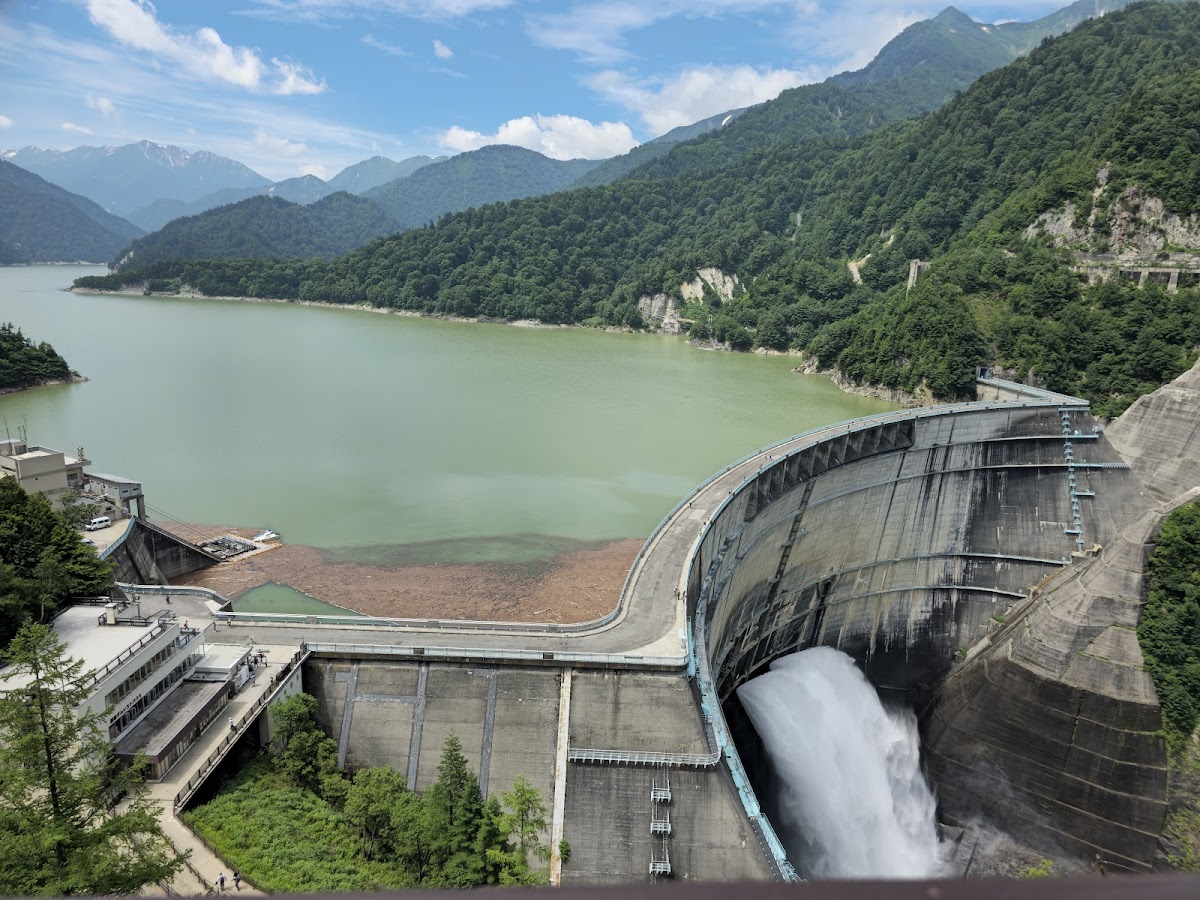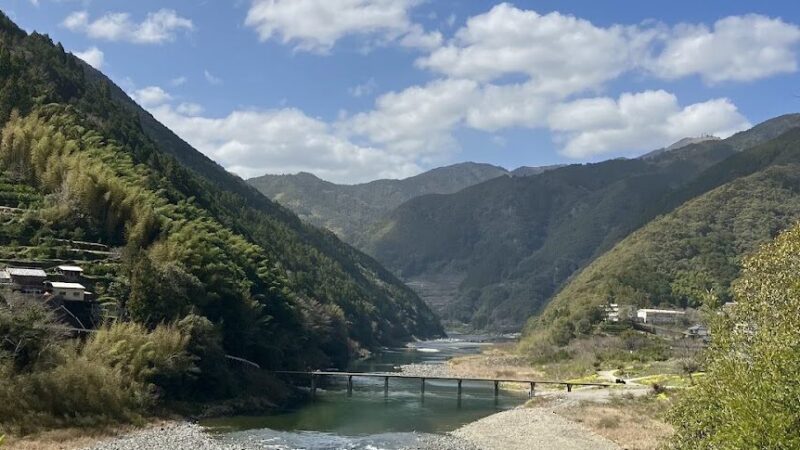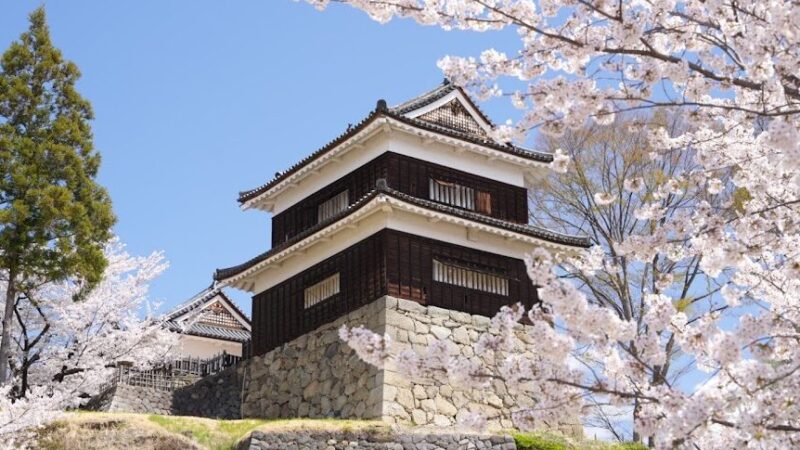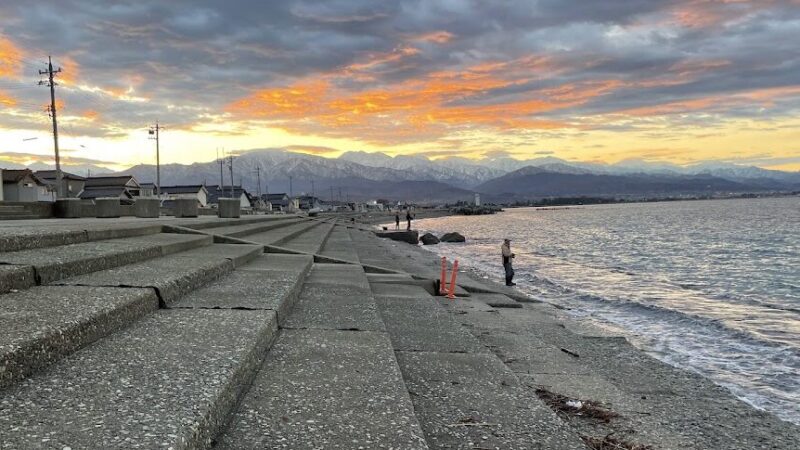
Released in 2012 and achieving massive success both domestically and internationally, director Mamoru Hosoda’s animated film “The Wolf Children Ame & Yuki.” The primary setting for this moving work was Toyama Prefecture, the director’s hometown. The beautiful nature, traditional houses, and heartwarming scenes of daily life that appear in the film are all modeled after real locations in Toyama Prefecture.
This article provides a thorough introduction to the sacred pilgrimage sites in Toyama Prefecture that anime fans should visit at least once. It comprehensively covers all necessary information for pilgrimage visits, including access methods, highlights, and precautions when actually visiting.
The Deep Connection Between “The Wolf Children Ame & Yuki” and Toyama Prefecture
Director Mamoru Hosoda is from Kanichi Town in Toyama Prefecture and spent his childhood there. This film is a work that deeply reflects the director’s own original experiences and feelings toward his hometown. The satoyama landscape of Toyama Prefecture, selected as the setting where the protagonist Hana raises her children, is depicted with a beauty that could be called Japan’s archetypal scenery.
After the film’s release, Toyama Prefecture became a popular tourist destination visited by many fans from across Japan and around the world as a sacred pilgrimage site for “The Wolf Children Ame & Yuki.” Local municipalities and tourism associations actively support pilgrimage visits, creating an environment that is easy for fans to access.
Hana’s House (Kanichi Town) | The Most Important Sacred Site
Basic Information and Charm of Hana’s House
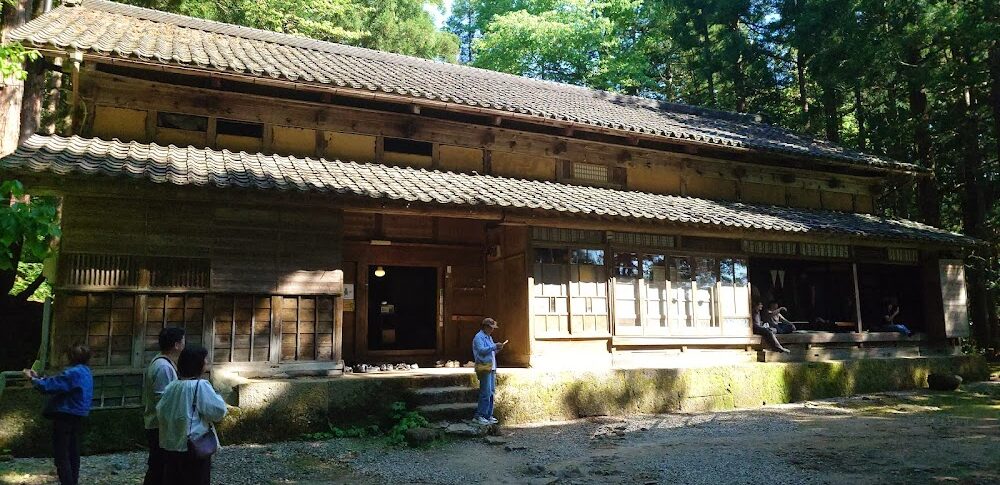
“Hana’s House” in Kanichi Town, Naka-Niikawa District, Toyama Prefecture, is a traditional house that served as the model for the home where the film’s protagonist Hana and her children Ame and Yuki lived. This three-story wooden structure was built in Meiji 20 (1887) and has a history of over 130 years.
This traditional house was actually visited by director Hosoda during film production, where he conducted detailed research. The exterior of the house, interior layout, and views from the veranda as they appear in the film are recreated almost exactly as they are. Visitors can experience the moving sensation of seeing scenes from the film spread out before their eyes.
What You Can Experience at Hana’s House
Hana’s House is open to the public, and visitors can actually enter the building. You can sit on the veranda and spend time at a leisurely pace, making it a popular healing spot where you can immerse yourself in the film’s world.
Inside the building, there are displays of film materials and photographs, where you can read about production behind-the-scenes stories and comments from director Hosoda. Additionally, the melon soda that appears in the film is also sold, allowing fans to experience the same thing as the movie, which is a delightful point.
Sights Around Hana’s House
The signage on the road in front of the house and the surrounding farmland scenery also appear in the film. The landscape at dusk is particularly spectacular, with the sunset-illuminated traditional house and surrounding mountains creating a scene that looks just like a movie scene.
The area around Hana’s House displays different seasonal features—spring brings fresh greenery, summer brings deep green, autumn brings autumn leaves, and winter brings snowy landscapes. While the film mainly depicts scenery from spring through autumn, Hana’s House covered in winter snow is also highly regarded as fantastical and beautiful.
Access and Precautions for Visiting
Location: Toyama Prefecture, Naka-Niikawa District, Kanichi Town, Asao
Access:
- Approximately 15 minutes by car from Kanichi Station on the Toyama Chiho Railway
- Approximately 20 minutes by car from Tateyama IC on the Hokuriku Expressway
- For public transportation, taxi use from Kanichi Station is convenient
Hours: Generally open only on weekends and holidays (check official website for details)
Admission: Free (donations welcome)
Important Notes:
- This is currently a privately-owned building where residents live
- Please view quietly and be considerate of residents’ privacy
- Photography is permitted, but remember to be considerate of nearby residents
- In winter, accumulated snow may worsen road conditions
Shomyoji Falls (Tateyama Town) | The Waterfall Where Ame Howled
A Famous Waterfall Boasting Japan’s Highest Drop
Shomyoji Falls in Tateyama Town, Toyama Prefecture, is a famous waterfall with a drop of 350 meters, the highest in Japan. In the film, it appears as the important setting where Ame first howls in wolf form.
The sight of snowmelt water from the Tateyama Mountain Range flowing down all at once is spectacular and allows you to feel the grandeur and power of nature. In the film, it is depicted as a place where Ame confronts her identity, making it an emotional sacred site for fans.
Highlights of Shomyoji Falls and Best Time to Visit
Shomyoji Falls can be visited from spring through autumn. Particularly from late April through June when snowmelt water is abundant, Hanno-ki Falls appears next to Shomyoji Falls, creating the spectacular sight of a “V-shaped waterfall” with a drop of 500 meters.
A hiking trail is maintained near the waterfall pool, allowing you to enjoy nature while bathing in negative ions. While recalling scenes from the film, try to experience the greatness of nature that Ame felt.
Access and Visit Information
Location: Toyama Prefecture, Naka-Niikawa District, Tateyama Town, Ashikuraji
Access:
- Approximately 20 minutes by the Shomyoji Falls Exploration Bus from Tateyama Station on the Toyama Chiho Railway
- Approximately 40 minutes by car from Tateyama IC on the Hokuriku Expressway
- Approximately 30 minutes on foot from the Shomyoji Falls Rest House parking lot
Open Period: Late April through mid-November (closed in winter)
Fee: Free
Important Notes:
- While the hiking trail is maintained, walking shoes are recommended
- Water volume of the waterfall varies significantly depending on weather conditions
- Completely closed in winter, so visits are not possible
Tanaka Elementary School (Nameikawa City) | The School Where Ame and Yuki Attended
A Nostalgic Wooden School Building from the Showa Era
Tanaka Elementary School in Nameikawa City, Toyama Prefecture, served as the model for the elementary school that Ame and Yuki attend in the film. The wooden school building, constructed in Showa 11 (1936), is a historic structure that has been in use as an active school building for over 76 years.
In the film, the school appears as an important setting where Ame and Yuki experience school life for the first time and learn about their relationship with human society. The retro wooden school building’s atmosphere symbolizes one of the places that embodies the film’s warm worldview.
Precautions When Visiting
Tanaka Elementary School is currently in use as an educational facility, so general access is restricted. External viewing is possible, but care must be taken not to interfere with classes.
Location: Toyama Prefecture, Nameikawa City, Tanaka Shinmachi
Access:
- Approximately 15 minutes on foot from Nameikawa Station on the Ainokaze Toyama Railway
- Approximately 10 minutes by car from Nameikawa IC on the Hokuriku Expressway
Important Notes:
- As an active school facility, entry into the grounds is generally prohibited
- External viewing is possible, but visiting outside class hours is recommended
- Maximum consideration for student safety and privacy is essential
Taiwakuyama Nisshiji Temple (Kanichi Town) | Sacred Sites in Surrounding Areas
An Ancient Temple Near Film Location Research Sites
Located about 10 minutes by car from Hana’s House, Taiwakuyama Nisshiji Temple is known as a place the director visited during location research for the film. While it doesn’t directly appear in the movie, it’s a spot worth visiting during a pilgrimage.
This is a Shingon Mikkyo temple known for the nationally designated Important Cultural Property “Taiwakuyama Nisshiji Magaibutsu” (cliff Buddha) and the Roppon Falls where you can undergo waterfall asceticism. The specialty “Taiwakuyama Somen” noodles are popular as a summer tradition.
Taiwakuyama Somen and Surrounding Cuisine
Many somen noodle shops line the area around Taiwakuyama Nisshiji Temple, and Taiwakuyama somen chilled in clean spring water is delicious. It’s perfect for refreshing your tired body during pilgrimage and allows you to enjoy local flavors.
Location: Toyama Prefecture, Naka-Niikawa District, Kanichi Town, Taiwakuyama 163
Access: Approximately 15 minutes by car from Kanichi Station on the Toyama Chiho Railway
Other Sacred Sites in Toyama Prefecture
Kengamine Peak and the Tateyama Mountain Range
The majestic mountains that appear repeatedly in the film’s background are modeled after the Tateyama Mountain Range. In particular, the rugged mountain form of Kengamine Peak is depicted impressively in important scenes of the film.
By using the Tateyama Kurobe Alpine Route, you can easily access the Murodo plateau at an elevation of 2,450 meters and see the mountains featured in the film up close.
Rural Scenery of Kanichi Town
The rural landscape spreading around Hana’s House is an important setting in the film. From rice planting season to summer when rice grows verdantly to autumn when it glows golden, it displays different expressions with the seasons.
You can stroll leisurely and feel the atmosphere of the satoyama where Hana and her family lived.
Toyama City (Where Hana Met Him)
While the early scenes where Hana meets him and falls in love are set in Tokyo, some of their subsequent life is also modeled after Toyama City. The scenery around Toyama Station and the city streets are points that film fans should pay attention to.
Model Courses for Sacred Pilgrimage
One-Day Course: Centered on Hana’s House
Morning:
- Arrival at Kanichi Station on the Toyama Chiho Railway
- Travel to Hana’s House by taxi or rental car (approximately 15 minutes)
- Visit Hana’s House (1-2 hours)
- Scenic walks through surrounding farmland
Lunch:
- Taiwakuyama Somen around Taiwakuyama Nisshiji Temple
Afternoon:
- Visit Taiwakuyama Nisshiji Temple
- External viewing of Tanaka Elementary School in Nameikawa City (if time permits)
- Return to Kanichi Station
Two-Day Course: Complete Control of Toyama Prefecture’s Sacred Sites
Day 1:
- Arrival at Toyama Station, rent a car
- Travel to Tateyama area
- Visit Shomyoji Falls (2-3 hours)
- Travel to Kanichi Town, visit Hana’s House
- Overnight stay in Kanichi Town
Day 2:
- Visit Taiwakuyama Nisshiji Temple and enjoy Taiwakuyama somen
- External viewing of Tanaka Elementary School
- Visit scenic spots with views of the Tateyama Mountain Range
- Return to Toyama Station
Tips for Enjoying Your Sacred Pilgrimage
Best Seasons to Visit
While the film’s setting is mainly from spring through autumn, each season has different charm:
Spring (April-May): Fresh greenery is beautiful, and Shomyoji Falls has abundant water. Most closely resembles the film’s atmosphere
Summer (June-August): Lush green and delicious Taiwakuyama somen season. Heat precautions needed
Autumn (September-November): Beautiful autumn foliage and post-harvest farmland scenery with charm
Winter (December-March): Snowy landscape is fantastical, but Shomyoji Falls is closed. Be careful on roads to Hana’s House
What to Bring and Wear
- Comfortable walking shoes (essential especially if visiting Shomyoji Falls)
- Camera (smartphone is fine too)
- Film scene photos (for comparative photography)
- Seasonal appropriate clothing (large temperature differences in mountainous areas)
- Rain gear (weather changes frequently)
Etiquette and Important Notes
Consideration for area residents is essential to enjoying a sacred pilgrimage:
- Never trespass on private property without permission
- Avoid loud conversations and noise
- Always take your trash with you
- Obey traffic rules (no parking on roads)
- Be considerate of people’s privacy when taking photos
- Extra consideration needed at active facilities such as schools
Access to Toyama Prefecture
From Tokyo Area
Shinkansen: Approximately 2 hours 10 minutes from Tokyo Station to Toyama Station on the Hokuriku Shinkansen
Airplane: Approximately 1 hour from Haneda Airport to Toyama Kito Airport
Car: Approximately 6 hours via the Kanetsu, Joshinetsu, and Hokuriku Expressways
From Osaka/Nagoya Area
From Osaka: Approximately 3 hours on the JR Limited Express Thunderbird, or approximately 4 hours on the Hokuriku Expressway
From Nagoya: Approximately 4 hours on the JR Limited Express Hida, or approximately 3 hours 30 minutes via the Tokai-Hokuriku and Hokuriku Expressways
Local Transportation
A car is convenient for pilgrimage. There are many car rental shops around Toyama Station. Public transportation is also available, but since the number of buses is limited, it’s necessary to check schedules in advance.
Nearby Tourist Spots and Accommodation
Tourist Spots Close to This Location
Tateyama Kurobe Alpine Route: A mountain tourism route with an elevation difference of 2,000 meters
Toyama Glass Art Museum: A showcase of contemporary glass art
Kurobé Gorge Railway: Enjoy gorge scenery by trolley train
Toyama Bay Sushi: Savor fresh seafood
Accommodation Facilities
Around Kanichi Town: Traditional inns and hot spring hotels are scattered throughout
Toyama City: Wide selection from business hotels to luxury hotels
Tateyama Hot Spring Resort: Enjoy hot springs along with Tateyama tourism
To Enjoy the Film More Deeply
Watch the Film Again Beforehand
Watching the film again before your pilgrimage allows you to enjoy the locations more deeply. Taking notes on scenes you particularly want to focus on will multiply the emotional impact at the actual locations.
Related Books and Merchandise
The film’s pamphlet and art books contain detailed information about filming locations. Additionally, merchandise related to the film is sold at Hana’s House, and purchasing as a souvenir is recommended.
Sharing on Social Media
By sharing your impressions and photos on social media, you can connect with other fans. Share your experience using hashtags like “#おおかみこどもの雨と雪” “#花の家” “#聖地巡礼.”
Toward Coexistence with the Community
The sacred pilgrimage of “The Wolf Children Ame & Yuki” is not merely tourism, but also an opportunity to experience the themes the film depicted: “coexistence with nature” and “the importance of community.”
In Kanichi Town, Toyama Prefecture, initiatives for regional revitalization inspired by the film are progressing. A supporter system for maintaining Hana’s House and holding community events are being carried out with fans and the community working together.
As a visitor, it is important to respect the region’s culture and nature and practice sustainable sacred pilgrimage. With the film’s message in your heart, enjoy the beautiful scenery of Toyama Prefecture and meetings with warm people.
Summary
Toyama Prefecture, the setting for “The Wolf Children Ame & Yuki,” is a precious sacred site where you can experience the film’s worldview firsthand. Real filming locations including Hana’s House, Shomyoji Falls, and Tanaka Elementary School are places that any film fan should visit at least once.
The charm of Toyama Prefecture, woven together by abundant nature, beautiful scenery, and warm people of the region, has been transmitted to the world through the film. Through pilgrimage, you can reexperience the emotions of the film and anew appreciate the importance of “family bonds,” “coexistence with nature,” and “living as yourself” that the film depicted.
With respect for etiquette and gratitude toward the community, please enjoy a wonderful pilgrimage journey. In Toyama Prefecture, wonderful discoveries and encounters await as you pursue the film’s emotional impact.