
“The Apothecary Diaries” Comprehensive Explanation of the Chinese-Style Imperial Court World|All about Historical Background, Harem System, and Historical Accuracy
What is “The Apothecary Diaries”? Overview of the Work
“The Apothecary Diaries” is a court mystery work based on a light novel by Natsu Hyuuga, set in a fictional Chinese-style empire called “Li (リー).” A young pharmacist girl named Maomao (猫猫), who grew up in a flower district, becomes a maid in the imperial harem and uses her specialized knowledge of pharmacology and keen observational skills to solve various incidents and mysteries that occur within the court.
The serialization of this work began on “Shōsetsuka ni Narō” in 2011, and was subsequently published in book form by Hero Bunko and Shufu no Tomo. It was further adapted into manga by two different publishers, both becoming major hits. In 2023, it was also adapted into an anime and has received high praise not only in Japan but throughout Asia, including China.
With its skillful combination of mystery, fantasy, and romantic comedy elements, this work’s appeal lies greatly in its meticulously constructed Chinese-style imperial court worldview.
World Setting of the Fictional Chinese-Style Empire “Li (リー)”
Skillful Setting Without Specifying a Particular Era
The stage of “The Apothecary Diaries,” the empire of “Li (リー),” is set as a fictional empire rather than a real Chinese dynasty. The author deliberately refrains from specifying a particular era, which allows for the free incorporation of elements from various time periods.
In fact, the work contains characteristics from multiple dynasties—the Tang, Song, Ming, and Qing periods—blended together, creating a unique atmosphere. This fictional setting enables the story to unfold without the constraints of historical accuracy, while allowing readers and viewers to immerse themselves in the rich world of Chinese culture.
Cultural Background Based on the Tang Dynasty
As many history enthusiasts and scholars have pointed out, the worldview of “The Apothecary Diaries” is considered to be based particularly on the Tang Dynasty (618–907) of China. The Tang Dynasty was one of the most prosperous periods in Chinese history, with active international exchange and significant development in culture, arts, and science.
Elements of the Tang Dynasty visible in the work include the following:
Fashion Culture: The costumes worn by the characters are designed to evoke Tang Dynasty clothing styles, particularly the hanfu. The colorful ruqun (襦裙) worn by women and the yuanlingpao (円領袍) worn by men reflect Tang Dynasty dress.
Internationalism: The presence of merchant caravans from the Western Regions and envoys from foreign nations reflects the atmosphere of the Tang Dynasty, when international exchange through the Silk Road was vigorous.
Existence of the Hequ Princess: The political marriages and relationships with other ethnicities mentioned in the work evoke the hequ policy (harmony policy with other ethnic groups) actually practiced during the Tang Dynasty.
Mix of Elements from the Ming and Qing Periods
On the other hand, the work also shows elements from the Ming (1368–1644) and Qing (1644–1912) periods. In particular, architectural styles, court furnishings, and certain institutional descriptions are presented in a manner closer to the Ming and Qing eras.
The layout and decoration of the harem buildings and court rituals closely resemble the image of the Forbidden City, suggesting that Ming and Qing court culture was used as a reference. The eunuch system depicted also has similarities to the Ming and Qing institutional framework.
By combining elements from multiple time periods in this way, the work constructs a fascinating Chinese-style court world without being bound by historical accuracy.
Detailed Explanation of the Harem System
What is the Harem
The harem is the private space of the emperor, where the empress and concubines (known as fei bin/妃嬪) and the court ladies (gong nü/宮女) who serve them reside. In Chinese history, the harem was not merely a living space but had complex political and social functions, constituting a unique world.
In “The Apothecary Diaries,” this harem becomes the primary stage of the story, and its closed and hierarchical social structure serves as the breeding ground for various incidents and intrigues.
Harem Class System
A strict class system existed in the harem. In “The Apothecary Diaries,” this hierarchical structure plays an important role.
Empress: The highest position in the harem. The emperor’s legitimate wife, responsible for overseeing the entire harem.
Four Consorts: High-ranking concubines next to the empress. They hold titles such as Guifei, Shufei, Xiánfei, and Defei.
Nine Concubines: Intermediate-ranking concubines. Each holds a different title.
Other Concubines: Lower-ranking concubines. Positions include Cairen, Meiren, and Xuanshi.
Court Ladies (Palace Maids): Women who serve the concubines. The protagonist Maomao initially holds this position.
These ranks are based on the Tang Dynasty harem system, though names and hierarchies varied across eras. In the work, these class differences significantly impact the actions and relationships of the characters.
Power Struggles in the Harem
The harem, though appearing elegant and peaceful on the surface, was actually a place of fierce power struggle. Concubines sought to gain the emperor’s favor in order to elevate their own status and strengthen their families’ political positions.
“The Apothecary Diaries” skillfully depicts this unique political dynamic of the harem. Poison attempts, curses, slander, and various other intrigues swirl in this world, as Maomao uses her pharmaceutical knowledge as a weapon to uncover the truth.
For concubines, bearing the emperor’s son was the greatest goal, and its achievement would greatly elevate their status. Conversely, losing the emperor’s favor could rapidly worsen a concubine’s position within the harem. Such instability makes the harem a place filled with tension.
Eunuch System and the Mechanics of Court Society
The Role and Position of Eunuchs
In the harem, a female-centered space, men’s access was severely restricted. Within these constraints, the eunuchs (kan gan/宦官) managed and administered the harem.
Eunuchs were castrated men permitted to enter the harem, the only adult males allowed in this space. They handled a wide range of duties, from attending to the emperor and concubines, to palace administrative work and security.
In “The Apothecary Diaries,” eunuchs play important roles, and one of the main characters, Jinshi (壬氏), appears as a eunuch managing the harem (his true identity is one of the work’s important mysteries).
The Social Status of Eunuchs
The social status of eunuchs was complex. While they were often despised by society at large, eunuchs positioned close to the emperor could wield tremendous power. Particularly in the Tang and Ming dynasties, some eunuchs were deeply involved in politics and could influence national affairs.
Within the harem, eunuchs also had their own hierarchy, with high-ranking eunuchs wielding authority over numerous subordinates. Lower-ranking eunuchs worked as menial laborers in harsh conditions.
Civil Service Examination System and Bureaucratic Structure
In the world of “The Apothecary Diaries,” it is mentioned that a civil service examination system exists. The examination system, which began in the Sui Dynasty and was particularly established from the Tang Dynasty onward, opened a path for those with learning and talent to become officials regardless of social status.
This system is important for understanding the social structure within the work. Some characters become officials through the examinations, and their education, knowledge, and social positions influence the story’s development.
The existence of the civil service examination system indicates that the world of “The Apothecary Diaries” is a civilized society that values learning and culture rather than mere military domination.
Pharmacological Knowledge and Medical Systems
The Tradition of Materia Medica Studies
One of the greatest features of “The Apothecary Diaries” is the pharmacological knowledge possessed by the protagonist, Maomao. The pharmacy depicted in the work is based on China’s traditional materia medica studies (honzō gaku/本草学).
Materia medica is the study of the medicinal properties of natural materials such as plants, animals, and minerals. In China, this field developed from ancient times, and systematic pharmaceutical texts such as the Song Dynasty’s “Proof and Extended Materia Medica” (證類本草) and the Ming Dynasty’s “Compendium of Materia Medica” (本草綱目) were compiled, exerting great influence on East Asian medicine.
The pharmaceutical knowledge Maomao displays in the work—her knowledge of medicinal herbs, poison identification, and antidote methods—reflect this tradition of materia medica. Her practical, experience-based knowledge is depicted as having been cultivated through her unusual upbringing in the flower district and the education she received from her adoptive father.
The Fine Line Between Poison and Medicine
One of the work’s important themes is the concept that “poison and medicine are separated by only a thin line,” which is also a fundamental idea in Chinese medicine. Many substances become either medicine or poison depending on dosage or preparation method.
Using this knowledge, Maomao solves mysteries surrounding poison attempts and unexplained illnesses in the harem. By unraveling cases of aphrodisiacs, abortifacients, and poisons, the mechanisms and historical backgrounds of various pharmaceutical substances are carefully described.
The Reality of Court Medicine
Historic Chinese courts had medical institutions to manage the health of the emperor and concubines. An organization called the Imperial Medical Bureau (Taiyiyuan/太医院) handled court medicine, staffed by excellent physicians.
In “The Apothecary Diaries,” court physicians appear, and differences in specialized knowledge and conflicts arising from different positions with Maomao are depicted. The contrast between Maomao’s practical and sometimes unconventional approach and orthodox court medicine is also one of the work’s attractions.
Major Characters and Their Social Positions
Maomao (猫猫): Pharmacist Girl
The protagonist Maomao is a seventeen-year-old girl raised in the flower district. She learned pharmacy from her adoptive father and worked as a pharmacist, but after being kidnapped and sold into the imperial harem, she becomes a maid.
Maomao’s greatest characteristic is her abnormal level of interest in and knowledge of pharmaceuticals and poisons. She has minimal emotional expression and is uninterested in human relationships, but her eyes light up when the topic turns to drugs and poisons. This unique character trait gives the work its distinctive appeal.
Her upbringing in the flower district greatly influences her worldview. She harbors no illusions about the court’s glamor and maintains a realistic and composed perspective, allowing her to observe the harem’s intrigues objectively and solve mysteries logically.
Jinshi (壬氏): Mysterious Beautiful Eunuch
Jinshi appears as a beautiful eunuch managing the harem. His beauty captivates both men and women, but Maomao is unmoved by his handsomeness and actually tries to avoid him as a nuisance.
Jinshi’s true identity is one of the work’s important mysteries, and the evolution of his relationship with Maomao is a major appeal of the series. While appearing to be a eunuch on the surface, it gradually becomes clear that he is actually of noble birth, which is one of the work’s significant secrets.
He recognizes Maomao’s talent and asks her to investigate various incidents. This relationship between the two, while hierarchical, gradually develops into something with special emotional undertones.
The Concubines: Gyokuyō Concubine and Rika Concubine
Multiple concubines appear in the harem, but particularly important are Gyokuyō Concubine and Rika Concubine.
Gyokuyō Concubine is a high-ranking concubine who receives the emperor’s favor and is depicted as an intelligent and thoughtful woman. Maomao initially becomes her lady-in-waiting and gains her trust through her pharmaceutical knowledge.
Rika Concubine is also a high-ranking concubine, described as beautiful and elegant. In an early incident in the story, both she and Gyokuyō Concubine become involved, and Maomao finds the key to its resolution.
These concubines, each with different backgrounds and personalities, express the diversity of women living in the unique environment of the harem.
Other Important Characters
The work features many other diverse characters. Maomao’s adoptive father who is a pharmacist, courtesans from the flower district, palace officials, and people involved in various incidents. Each possesses a unique position and objective, and their complexly intertwined relationships add depth to the narrative.
Incidents and Mystery Elements Within the Court
Poison Attempt Incidents
The story of “The Apothecary Diaries” begins with a series of infant deaths occurring in the harem. The children of two high-ranking concubines fall ill in succession, and one dies.
The imperial physicians cannot identify the cause, but Maomao’s keen observation allows her to see the truth: not a poisoning, but lead poisoning from the white powder (oshiroi) contained in cosmetics. This episode demonstrates Maomao’s abilities and highlights the dangers of the harem.
Curses and Superstition
Within the court, scientific knowledge exists alongside belief in magic and superstition. Incidents involving curse dolls, events regarded as ill omens, and other phenomena difficult to explain scientifically occur.
Maomao approaches these “supernatural” incidents with scientific and logical methods to uncover the truth. In most cases, phenomena attributed to curses or divine retribution have rational explanations based on human intervention or natural phenomena.
Political Intrigue
Most incidents occurring in the harem have complex political backgrounds rather than simple personal grudges. Power struggles between concubines’ families, machinations surrounding imperial succession, and conspiracies involving diplomatic matters are depicted.
Initially indifferent to politics, Maomao inevitably becomes entangled in the court’s power structure through solving incidents. Her position gradually becomes more important, transforming her from a mere maid into a trusted collaborator of Jinshi.
Attention to Detail in Chinese Culture
Food Culture and Court Cuisine
In “The Apothecary Diaries,” Chinese cuisine and the court’s food culture are also depicted as important elements. The concept of medicinal food therapy (yao shan/薬膳), selection of ingredients, and cooking methods appear throughout the work in relation to food and health.
Maomao herself enjoys eating and shows strong interest in rare ingredients and dishes with medicinal effects. Various food cultures are depicted, from the luxurious meals of the harem to the simple cuisine of commoners, adding color to the work.
Annual Events and Festivals
Traditional annual events of the Chinese sphere appear in the work. Festivals such as Spring Festival (Lunar New Year), Mid-Autumn Festival, and Dragon Boat Festival are celebrated grandly in the court and sometimes become important stages in the story.
These events function not merely as background settings but as important elements involved in the occurrence and resolution of incidents. Special events occurring on festival days or customs related to celebrations sometimes provide clues essential to solving mysteries.
Architecture and Spatial Composition
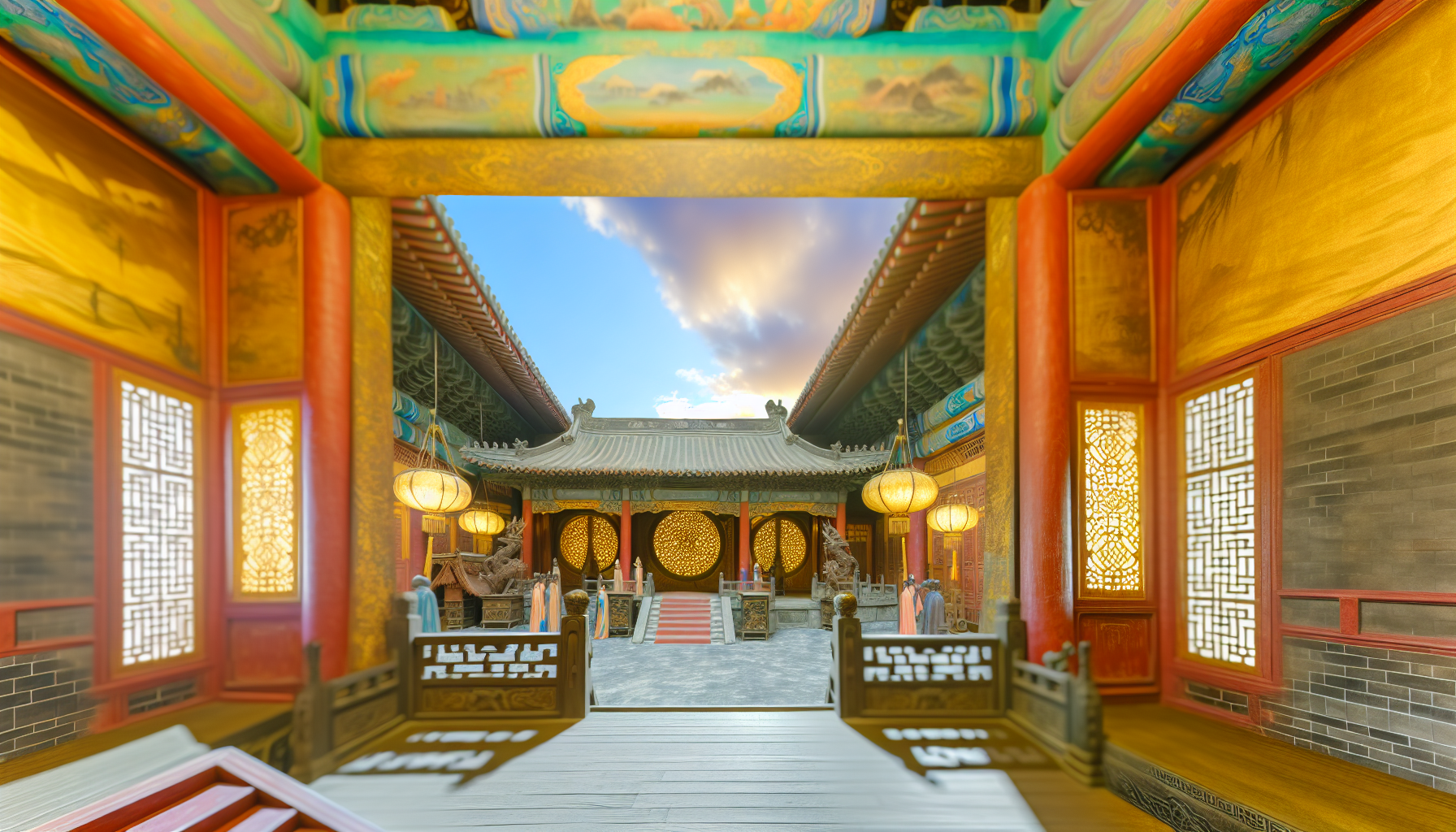
The architectural style of the harem is also a crucial element forming the work’s worldview. The vast grounds containing palaces, gardens, and corridors are arranged according to references from traditional Chinese imperial architecture.
The palaces where concubines reside each possess different characteristics, with their decoration and arrangement holding meaning. As Maomao moves through these spaces, she sometimes discovers clues to incidents from the buildings’ structure and layout.
Media Mix Development and Reception
Success of the Manga Version
“The Apothecary Diaries” underwent a rare development, being adapted into manga simultaneously by two different publishers. The version published by Square Enix with art by Kurashina Sannosuke and the version published by Shogakukan with art by Neko Kurage.
Both works bring out the appeal of the original while taking different approaches to depicting the story, and both have received high acclaim. Particularly, the Neko Kurage version became a massive hit, surpassing cumulative sales of 30 million copies.
Response to Anime Adaptation
The anime adaptation that began airing in October 2023 became a topic of discussion for its beautiful artwork and all-star voice cast. Featuring Aoi Yuki as Maomao and Takao Osawa as Jinshi, among other talented voice actors, their performances further enhance the work’s appeal.
The anime successfully expresses the Chinese-style worldview in visual form, with meticulous depiction of every detail including costumes, architecture, and props. The music, incorporating Chinese instruments, creates a unique atmosphere.
International Popularity
“The Apothecary Diaries” has gained high popularity not only domestically in Japan but throughout Asia, including China, Taiwan, and South Korea. Particularly in China, it has attracted attention as a Japanese work with domestic historical culture as its subject matter, sparking various discussions.
Chinese viewers praise “the unique charm of the Chinese-style world as depicted by Japanese creators,” “the careful historical accuracy,” and “the completeness as entertainment,” while also pointing out “aspects that differ from actual Chinese history.” Overall, however, it has been received favorably, becoming an interesting example of cultural exchange.
Future sequels and media adaptations are anticipated, and this work, which continues to increase its value as a work contributing to cultural exchange among Japan, China, and all of Asia, is expected to develop further.
The Appeal and Uniqueness of the Work
A New Form of Female Protagonist
The character Maomao stands apart from conventional heroines in shoujo manga and light novels. She has no interest in beauty, is passive toward romance, and simply possesses pure curiosity about drugs and poisons.
The setting of this “eccentric” protagonist being active in the harem, a space where femininity is emphasized, offers freshness in overturning existing gender perspectives. Maomao overcomes difficulties not through “cuteness” or “femininity” but through knowledge and logic as her weapons.
Completeness as a Mystery
“The Apothecary Diaries” is highly regarded not merely as a fantasy work but as a fully realized mystery. Each incident has a rational solution, allowing readers to enjoy mystery-solving alongside Maomao.
The placement of foreshadowing, the method of information presentation, and the unexpected resolution of mysteries demonstrate skillful mystery writing. Additionally, the multilayered structure where each incident’s resolution hints at a greater conspiracy hidden beneath keeps readers engaged.
Exquisite Balance Between History and Fantasy
A major appeal of the work lies in the exquisite balance between historical realism and fantasy freedom. While referencing actual Chinese history, the fictional setting ensures creative liberty for the narrative.
This approach allows readers familiar with history to enjoy searching for source material, while those without historical knowledge can enjoy the story purely for its narrative. Furthermore, by not being bound by historical constraints, the work can incorporate contemporary themes and messages.
Learning Chinese Imperial Court Culture from “The Apothecary Diaries”
Historical Significance of the Harem System
Through “The Apothecary Diaries,” many readers have become interested in China’s harem system. The harem was not merely a harem but a system with complex political and social functions.
As a place where the emperor’s heirs were born and raised, and as a means of strengthening political ties with powerful noble families, the harem played an important role in maintaining imperial stability. Simultaneously, it was a stage for power struggles, and many tragedies arose from it.
Development of Pharmacology and Medicine
Through the work, readers can touch upon the rich history of traditional Chinese medicine and pharmacology. Pharmaceutical knowledge, diagnostic techniques, and treatment methods accumulated over thousands of years continue to influence modern medicine.
Many of the herbs and poisons Maomao uses are actually documented in Chinese materia medica texts. By reading the work, readers can learn aspects of Chinese pharmacology while being entertained.
Class Hierarchies and Human Relationships
“The Apothecary Diaries” also depicts the complexity of human relationships in a strictly hierarchical society. In a world where social standing severely constrains people’s actions and options, it is shown that people can still be evaluated based on their humanity and abilities.
Maomao begins as a low-status maid but gradually becomes recognized for her abilities and takes on important roles. This narrative depicts both the severity of the class system and the possibility that individual talent can be appreciated, a theme with which contemporary readers can empathize.
Conclusion: The Appeal of “The Apothecary Diaries” Worldview
The Chinese-style imperial court world of “The Apothecary Diaries” possesses a unique charm where meticulous historical research and creative freedom are wonderfully fused. The fictional empire “Li” successfully achieves both historical realism and narrative appeal by incorporating elements from multiple eras while centering on the Tang Dynasty.
The closed and hierarchical society of the harem, the eunuch system, the bureaucratic system through civil service examinations, and knowledge of pharmacology and medicine form the foundation of the work. To this is added the activities of the distinctive protagonist Maomao, the enjoyment of mystery-solving, and the human drama involving the characters, constructing a multilayered and deeply engaging narrative world.
Through anime and manga, readers and viewers can touch this Chinese-style court world, enjoying entertainment while learning about Chinese history and culture. “The Apothecary Diaries” is a work in which entertainment and cultural education are fused—an excellent contemporary work.
With expectations for future sequels and media developments, this work, which continues to increase its value as contributing to cultural exchange among Japan, China, and Asia as a whole, will further expand its significance.