
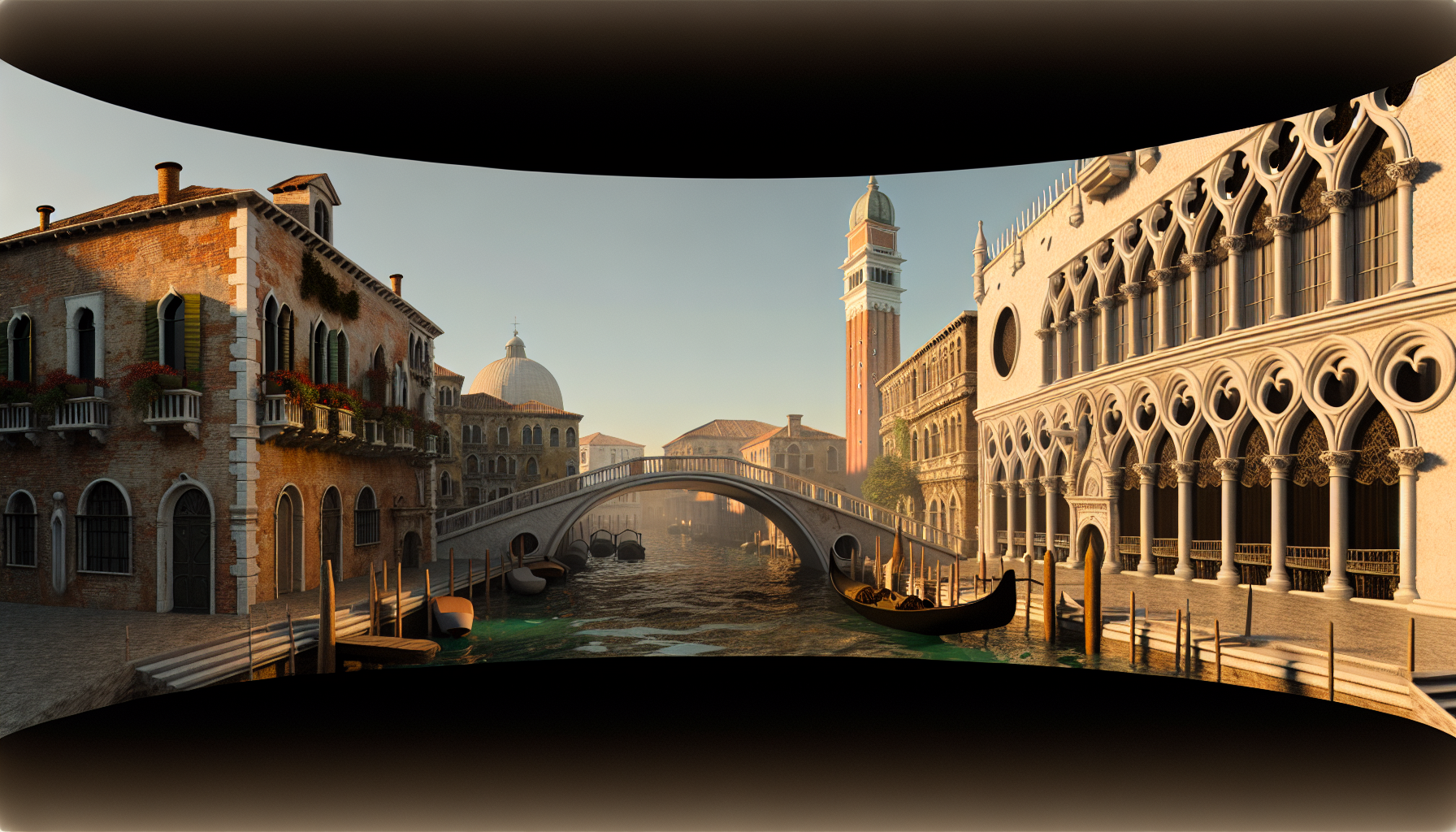
The Charm of Italian-Style Venice Depicted in ARIA THE ANIMATION: A Thorough Explanation of the Worldview of the Future Water City Neo-Venice
“ARIA THE ANIMATION” is an anime adaptation of a manga by Kozue Amano, set in Neo-Venice, a city that recreates Venice, Italy, on terraformed Mars. This work skillfully weaves the beauty and culture of real Venice into a futuristic setting, captivating many fans.
In this article, we will provide a detailed explanation of the charm of Italian-style Venice as depicted in ARIA THE ANIMATION, comparing it with the real Venice.
The Setting of ARIA THE ANIMATION: What is Neo-Venice?
A Water City Recreated on the Future Mars
The stage of ARIA THE ANIMATION is Neo-Venice, a city built on Mars (called “Aqua” in the work), which has become a water planet through terraforming. This city is a faithful recreation of Venice in Italy, with canals running throughout and gondolas serving as the primary means of transportation.
Neo-Venice was established on Mars as a setting to preserve the streetscapes and culture of Venice after Venice on Earth faced the threat of submersion. This setting reflects the author’s thoughts on the rising sea level problem that real Venice is facing.
The World of Gondolas and Water Guide Escorts (Undines)
The protagonist, Akari Mizunashi, is depicted growing up as a water guide escort “Undine” who operates gondolas. While “Undine” is a word meaning water spirit in Italian, in the work it is used to refer to the profession of operating gondolas.
This setting follows the tradition of gondolieri (gondola rowers) in real Venice while adding fantasy elements to create a unique occupational perspective.
Comparison with Real Venice: Faithfully Recreated Architecture and Culture
Saint Mark’s Basilica and Its Surroundings
Many locations appearing in ARIA THE ANIMATION are based on famous sites in real Venice. Particularly impressive is Saint Mark’s Basilica (Piazza San Marco).
The actual Saint Mark’s Basilica is located in the center of Venice and is even called “the most beautiful square in the world.” In the work as well, this square appears multiple times as an important location, with its beautiful architectural style carefully depicted.
Depiction of Saint Mark’s Basilica
Saint Mark’s Basilica (Basilica di San Marco) is known as a masterpiece of Byzantine architecture, characterized by its ornate exterior and internal mosaic decorations. In ARIA THE ANIMATION, the characteristic domes and front façade of this basilica are faithfully depicted, skillfully recreating the atmosphere of the actual structure.
The Presence of the Bell Tower (Campanile)
The bell tower standing in Saint Mark’s Square at a height of 98.6 meters also appears as an important landmark in the work. This bell tower is a popular spot for tourists as an observation deck from which one can view the entire city of Venice, and in the work it is effectively used in scenes where characters look out over the city.
The Rialto Bridge and the Surrounding Canals
The Rialto Bridge (Ponte di Rialto) is the oldest bridge in Venice spanning the Grand Canal (Canal Grande), characterized by its beautiful arch structure and the shops on the bridge.
In ARIA THE ANIMATION, there are multiple scenes featuring this bridge, with particularly impressive depictions of gondolas passing under the bridge. The actual Rialto Bridge is also a popular spot on gondola tours, and the work’s depiction faithfully reflects the real tourist experience.
The Maze-like Streetscape of Narrow Canals and Alleys
One of the charms of Venice is the maze-like streetscape created by intricate canals and alleys (calle). ARIA THE ANIMATION carefully depicts this complex urban structure, showing the protagonists making various discoveries as they travel through the canals.
In real Venice, it is not uncommon to get lost even with a map. The work also includes episodes where Akari becomes lost, realistically expressing the complexity of Venice’s streets.
Elements of Italian Culture: Authentic Culture Woven into the Work
Language and Greetings
ARIA THE ANIMATION uses Italian words and phrases throughout.
- “Aria”: This word, which is also the title of the work, means “air” or “melody” in Italian.
- “Buongiorno”: Good morning, good afternoon
- “Grazie”: Thank you
- “Prego”: You’re welcome
These words are naturally woven into conversations, creating an Italian atmosphere throughout the work.
Italian Cuisine and Food Culture
The work frequently includes scenes of enjoying Italian cuisine. Pasta, pizza, gelato, espresso, and other foods representative of Italy are depicted, giving realism to the characters’ daily lives.
Seafood cuisine known as a specialty of Venice and the bar culture called “bacaro” are also subtly incorporated into the backdrop of the work.
Carnival and Mask Culture
Venice is famous for its lavish Carnival (Carnevale). ARIA THE ANIMATION includes episodes themed around Carnival, where traditional Venetian masks appear.
The actual Venice Carnival is a traditional event continuing from the Middle Ages, where people dressed in elaborate masks and splendid costumes brighten the streets. By incorporating this cultural element, the work expresses respect for Venice’s history and traditions.
Venetian Architecture and Its Recreation
Gothic-Byzantine Style Palaces
Venetian architecture is characterized by a unique fusion of Gothic and Byzantine styles. In particular, the palaces lining the Grand Canal are known for their ornate appearance.
Many buildings appearing in ARIA THE ANIMATION faithfully recreate this distinctly Venetian architectural style, with careful depiction of details such as pointed arches, delicate stonework, and balconies.
Luxurious Architecture like Ca’ d’Oro (House of Gold)
Ca’ d’Oro is known as the “House of Gold,” a masterpiece of Venetian Gothic architecture. It got its name from the fact that the exterior walls were once covered in gold leaf.
Among the luxurious buildings appearing in the work, some evoke the design of Ca’ d’Oro, functioning as an element symbolizing Venice’s wealth and artistic nature.
Characteristics of Architecture Built on Water
Venetian buildings are constructed by driving wooden pilings into soft ground. This unique construction technique creates a landscape where buildings appear to rise directly from the water’s surface.
In ARIA THE ANIMATION, this characteristic of Venice as a “water city” is emphasized, with the relationship between buildings and water beautifully depicted.
The Beauty of Everyday Life Depicted in the Work: A World Where “Embarrassing Lines Are Forbidden”
Expression of Light and Shadow in Venice
One of the major charms of ARIA THE ANIMATION is its beautiful depiction of light and shadow in Venice. The light reflected on water, sunlight streaming through buildings, streetscapes bathed in orange hues at dusk—these changes in expression according to time of day and weather are rendered with delicate detail.
Real Venice is known as “the City of Light” and has captivated many painters and photographers. The work successfully recreates this distinctive Venetian light through the medium of animation.
Expression of Water Sounds and Silence
A characteristic of the work is its quiet and peaceful atmosphere. The sound of a gondola cutting through water, the sound of a bell heard from afar, the sound of ripples—Venetian soundscapes are effectively used.
Since no automobiles can enter Venice, the city is very quiet compared to other cities. This unique sense of silence is a crucial element creating the work’s healing atmosphere.
Finding “Wonderful Things” in Daily Life
One of the main themes of ARIA THE ANIMATION is finding small “wonderful things” in everyday life. The beautiful setting of Venice is an ideal place to express this theme.
A small flower in a back alley, an encounter with a cat, a building illuminated by sunset, interactions with chance-met people—the work carefully depicts the beauty of ordinary moments in daily life. This is shared with the “joy of discovery” experienced by tourists visiting real Venice.
Original Elements of Neo-Venice: Charm Unique to the Futuristic Setting
The Significance of Mars as a Setting
ARIA THE ANIMATION goes beyond a mere recreation of Venice because of its futuristic setting on Mars. This setting allowed the work to have the following unique elements:
- Difference in Gravity: The lower gravity of Mars makes possible movements and phenomena impossible on Earth’s Venice.
- Two Moons: Mars has two satellites (Phobos and Deimos), adding fantastical elements to depictions of the night sky.
- History of Terraforming: The grand background setting of humanity’s modification of Mars gives depth to the story.
The Relationship Between Aqua and Manhome
In the work, Mars is called “Aqua” and Earth is called “Manhome.” The relationship between these two worlds, particularly the setting that Neo-Venice was built on Mars to preserve Earth’s Venice from submergence, can be read as a warning about environmental issues.
Coexistence of Future Technology and Tradition
In Neo-Venice, gondolas serve as the primary means of transportation while representing a traditional method, yet future technology also exists in the background. This theme of “coexistence of tradition and innovation” overlaps with challenges real Venice faces (preserving traditional streetscapes while accommodating modern life).
The Influence of ARIA THE ANIMATION on Venice Tourism
As a Destination for Sacred Site Pilgrimages
Due to the popularity of ARIA THE ANIMATION, more fans have visited real Venice. “Sacred site pilgrimages” visiting places featured in the work have become a popular travel style among anime fans.
By actually visiting places that appeared in the work such as Saint Mark’s Square, the Rialto Bridge, and the scenery along the Grand Canal, fans can experience the world of the work more deeply.
Increased Interest in Venice
Through the work, people who previously knew little about Venice developed an interest in the city’s history and culture. ARIA THE ANIMATION has served as a cultural bridge transmitting the charm of Venice to the world.
As a Gateway to Italian Culture
Italian phrases appearing in the work, food culture, and lifestyle habits have become a gateway to Italian culture for many viewers. Not a few people began learning Italian or became interested in Italian cuisine because of the work.
Explanation of Specific Locations Appearing in the Work
Bridge of Sighs (Ponte dei Sospiri)
The Bridge of Sighs is a bridge connecting the Doge’s Palace and a prison. It gets its name from a legend that prisoners passing through this bridge would sigh as they saw the beautiful scenery of Venice for the last time.
In ARIA THE ANIMATION, a romantic episode about this bridge is narrated, and it becomes the setting for moving scenes in the work. The actual Bridge of Sighs has also become a popular spot for couples to visit.
The Colors of Burano Island
Burano Island, about 40 minutes by boat from central Venice, is characterized by brightly painted houses. In ARIA THE ANIMATION, colorful streetscapes that appear to be modeled on this island appear.
The houses on Burano Island are painted in bright colors for the practical reason that fishermen could easily find their own homes in the fog, but today it has become a popular tourist destination.
Glass Craftsmanship of Murano Island
Murano Island is world-famous as a production center for Venetian glass. In the work, there are scenes where glass crafts appear, expressing respect for Venice’s traditional craftsmanship.
On the actual Murano Island, glass craftsmanship techniques with over 700 years of history are still being passed down, and visitors can enjoy workshop tours and purchase works.
Seasons in Venice and Depiction in the Work
Expression of Acqua Alta (High Tide)
Venice experiences “Acqua Alta,” a high tide phenomenon, from autumn to winter. This phenomenon causes low-lying areas such as Saint Mark’s Square to become flooded.
In ARIA THE ANIMATION, there is an episode depicting this phenomenon, serving as a reference to environmental issues that Venice faces. In real Venice, the “Moses Project,” a movable flood barrier, has been developed as a countermeasure for Acqua Alta.
Beauty Throughout the Four Seasons
In the work, the four seasons of Neo-Venice are depicted beautifully. Spring flowers, summer’s blue sky and sea, autumn foliage, winter snow scenery—the changes in expression across seasons are carefully rendered.
Real Venice also presents completely different appearances depending on the season. Particularly, winter Venice with fewer tourists is appreciated by discerning travelers for its quiet and peaceful atmosphere.
A Deep Dive into Gondola Culture
History and Structure of Gondolas
Gondolas are traditional boats used in Venice since around the 11th century. Their unique asymmetrical structure is designed to enable efficient operation by a single rower.
In ARIA THE ANIMATION, there are scenes depicting the structure and operation techniques of gondolas in detail, reflecting deep understanding and affection for this traditional vessel.
The Profession of Gondoliere
In real Venice, one must pass a rigorous examination to become a gondoliere (gondola rower). Knowledge of Venetian geography, history, and foreign language ability are tested, and the pass rate is said to be very low.
In ARIA THE ANIMATION, the training to become a full-fledged Undine is depicted, expressing the professionalism and pride of this occupation.
The Setting of Gondola Companies in the Work
Three major gondola companies appear in the work: “ARIA Company,” “Hime-ya,” and “Orange Planet.” Each has its own characteristics, and their relationship of competition and cooperation is depicted.
This setting is thought to reflect the existence of gondolier associations in real Venice and the professional community of gondolieri.
The Relationship Between Music and Venice
Venice as a City of Baroque Music
Venice is also a city of music that produced great composers such as Antonio Vivaldi. During the Baroque period, Venice was one of the centers of musical culture.
The soundtrack to ARIA THE ANIMATION seems to be conscious of this history, featuring elegant and beautiful music. In particular, the music by Choro Club featuring Senoo skillfully expresses the atmosphere of Venice.
The Atmosphere Created by the Work’s Music
The work’s music is a crucial element creating the healing atmosphere of the story. Guitars, mandolins, accordions, and other instruments are used, incorporating elements of Italian folk music.
This combination of music and visuals allows viewers to feel as if they are actually visiting Venice.
Messages Conveyed by ARIA THE ANIMATION
Preservation and Transmission of Cultural Heritage
At the foundation of ARIA THE ANIMATION lies the desire to preserve beautiful culture and traditions for the future. The setting where Venice on Earth faces the threat of submersion and is rebuilt on Mars symbolically expresses the importance of preserving cultural heritage.
Real Venice also faces an existential crisis due to rising sea levels from global warming and land subsidence. The work is also a warning about such real-world problems.
The Value of Slow Life
In contrast to the busyness of modern society, ARIA THE ANIMATION depicts the value of “slowly flowing time.” The life of leisurely traveling down canals on gondolas and finding small discoveries in daily routines has become a subject of longing for many viewers.
This philosophy of “slow life” shares common ground with the lifestyle of real Venice. Life in a quiet city without automobiles, traveling on foot or by boat, has become a precious experience in modern times.
Human Connection
The work repeatedly depicts warm interactions between people. The mentor-disciple relationships among Undines, friendship, encounters with customers—human connections are at the center of the story.
Venice is an ideal setting for expressing this “connection.” The environment where people naturally meet in narrow alleys and canals, the strong community bonds of island culture—characteristics of Venice support the work’s themes.
Points to Keep in Mind When Actually Visiting Venice
A Guide to ARIA Sacred Site Pilgrimages
Here are the must-see locations for ARIA THE ANIMATION fans visiting Venice.
- Saint Mark’s Square: The location most frequently appearing in the work. Visiting early morning or at dusk is recommended.
- The Rialto Bridge: Enjoy both the view from the bridge and the experience of passing under it by gondola.
- Stroll Along the Grand Canal: Taking a water bus (vaporetto) along the canal to view the buildings is also a good option.
- Exploration of Back Alleys: Walking with a map and deliberately getting lost allows you to experience the work’s atmosphere.
Tips for a Gondola Experience
Points to remember when taking a gondola in Venice:
- Cost: Official rates are approximately 80 euros for 30 minutes (daytime) and 100 euros (nighttime). Confirm before boarding.
- Time of Day: Dusk is particularly beautiful, but the quiet early morning hours are also recommended.
- Route: Routes through small canals are closer to the work’s atmosphere than the Grand Canal alone.
- Shared Rides: Sharing a gondola with other tourists can reduce costs.
Best Seasons to Visit
Different seasons offer different charms for visiting Venice.
- Spring (April-June): Pleasant weather with beautiful flowers. Relatively fewer tourists.
- Summer (July-August): Hot and the busiest tourist season. Expect crowds.
- Autumn (September-November): Good weather with many cultural festivals. Possibility of Acqua Alta.
- Winter (December-March): Cold, but the Carnival period (around February) offers a special experience. Fewer tourists and quiet atmosphere.
Conclusion: The Eternal Charm of ARIA THE ANIMATION and Venice
By recreating Venice, an actual city in Italy, on Mars in a futuristic setting, ARIA THE ANIMATION created a unique world. The work faithfully depicts Venice’s architecture, culture, and lifestyle while adding unique fantasy elements and messages.
The work expresses the environmental issues and cultural preservation challenges that real Venice faces through the setting that “Venice on Earth faces the threat of submersion and is rebuilt on Mars.” This goes beyond mere entertainment and conveys a message appealing to the value and importance of preserving cultural heritage.
The theme of “finding wonderful things in daily life” depicted through the work, the leisurely flow of time, and the warm connections between people resonate with many people living in modern society. And Venice (Neo-Venice) as its stage was an absolutely perfect choice.
Many people who watch ARIA THE ANIMATION want to visit real Venice, and those who visit Venice recall the work. This mutual interaction is an ideal relationship between a work and the real city that serves as its stage, and is one of the great achievements of ARIA THE ANIMATION.
The story of Italian-style Venice recreated on future Mars continues to convey the charm of this beautiful water city to many people across time. And at the same time, it gently but surely appeals to us about the importance of protecting and passing down irreplaceable cultural heritage to the future.