Introduction: Porco Rosso and the Charm of the Adriatic Sea
“Porco Rosso,” released by Studio Ghibli in 1992, is a romantic adventure tale for adults created by director Hayao Miyazaki. This work depicts the activities of Porco Rosso, a flying boat pilot transformed into a pig, and beautifully visualizes the landscapes of 1920s Italy and Croatia against the backdrop of the beautiful Adriatic Sea.
This article provides detailed information about the Adriatic coast that served as the setting for the film, particularly focusing on Dubrovnik in Croatia, actual filming locations, places that served as models, and methods for pilgrimage to sacred sites. It is packed with useful information not only for Studio Ghibli fans but also for those planning to visit Croatia.
The Setting of Porco Rosso and the Adriatic Sea
Historical Background of the Story
The setting of “Porco Rosso” is the Adriatic Sea in the late 1920s after World War I, a time when Italian Fascism was rising. The protagonist Marco Pagotto (Porco Rosso) was once an ace pilot in the Italian Air Force, but cast a spell on himself to become a pig, and now lives as a bounty-hunting flying boat pilot.
The Adriatic coast of this era was an international region where diverse cultures such as Italy, Yugoslavia (now Croatia, Slovenia, etc.), and Greece intersected. The beautiful coastlines, intricate islands, and historic port towns depicted in the film faithfully recreate the actual scenery of the Adriatic Sea.
What is the Adriatic Sea
The Adriatic Sea is part of the Mediterranean, a narrow body of water sandwiched between the Italian Peninsula and the Balkan Peninsula. It spans approximately 800 kilometers in length, with a width of only 93 kilometers at its narrowest point. It is known as a picturesque location featuring transparent blue waters, beautiful coastlines, and over 1,000 scattered islands.
Croatia, positioned on the eastern shore, is particularly known for its complex coastline and numerous islands, and many places that served as models for the scenery depicted in “Porco Rosso” exist there. The secluded coves, stone port towns, and contrast between blue sea and white buildings that appear in the film are the very embodiment of Croatia’s landscape.
Dubrovnik: An Important Setting for Porco Rosso
History and Characteristics of Dubrovnik
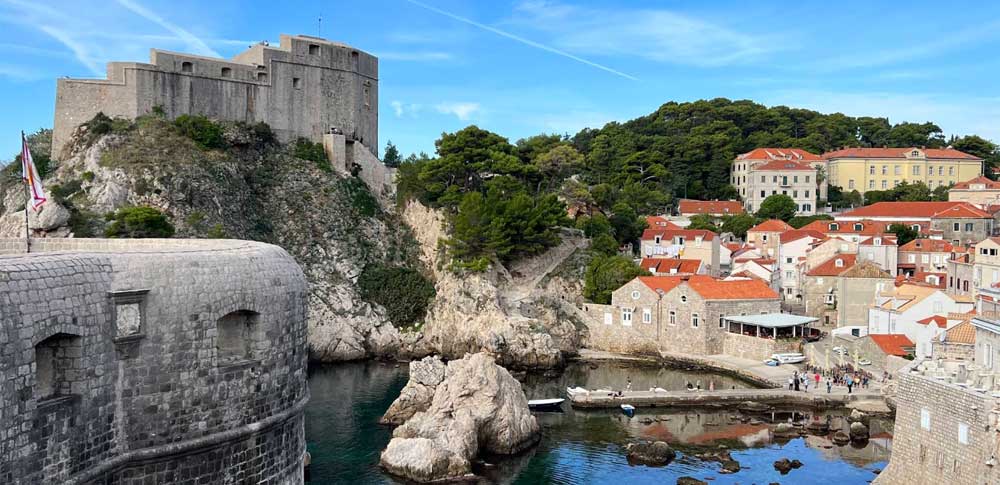
Dubrovnik is a historic port city located on the Adriatic coast in southern Croatia. This town, known as the “Pearl of the Adriatic,” prospered as an independent maritime republic from the Middle Ages, and its beautifully preserved old town is currently registered as a UNESCO World Heritage Site.
The distinctive orange tile roofs of stone buildings, the perfectly preserved city walls, and the contrast with the blue Adriatic Sea embody the very atmosphere of the port town depicted in “Porco Rosso.” It is known that director Hayao Miyazaki visited Croatia in 1989 and conducted research on Dubrovnik and surrounding areas.
Relationship to the Film
The port town scenery appearing in “Porco Rosso” is thought to be modeled after the old town of Dubrovnik. In particular, the following elements are reflected in the film:
Old Town Surrounded by City Walls
The port town in the film is surrounded by stone walls, which aligns with Dubrovnik’s distinctive landscape. The walls, approximately 2 kilometers long, were constructed from the 13th to the 17th centuries and remain in perfect condition today.
Orange-Colored Roofs
The orange terracotta roofs that characterize Dubrovnik’s old town are also depicted in the port town scenes of the film. This unified landscape is the fruit of urban planning developed over a long history.
Stone-Paved Alleys
The narrow stone-paved alleys, staircases, and arched passages of the old town are important elements that shape the atmosphere of the town depicted in the film.
Harbor and Sea
Dubrovnik’s old harbor is thought to be one of the image sources for the harbor where flying boats are moored in the film. The contrast between the blue Adriatic Sea and stone buildings evokes the beautiful scenes depicted in the film.
The Model for Porco’s Hideaway: The Dalmatian Islands
Islands and Inlets of the Dalmatian Coast
One of the most impressive places in the film is Porco Rosso’s hideaway. The scene of a flying boat and small cabin floating in a quiet cove surrounded by rocky mountains remains etched in the hearts of many fans. It is said that the model for this hideaway is the countless islands and inlets scattered along the Dalmatian coast of Croatia.
The Dalmatian coast spans approximately 400 kilometers from central to southern Croatia, with over 1,000 islands scattered throughout. Many of these islands are either uninhabited or have only small fishing villages, and numerous locations ideal for a hideaway as depicted in the film exist there.
Specific Model Candidates
Vis Island
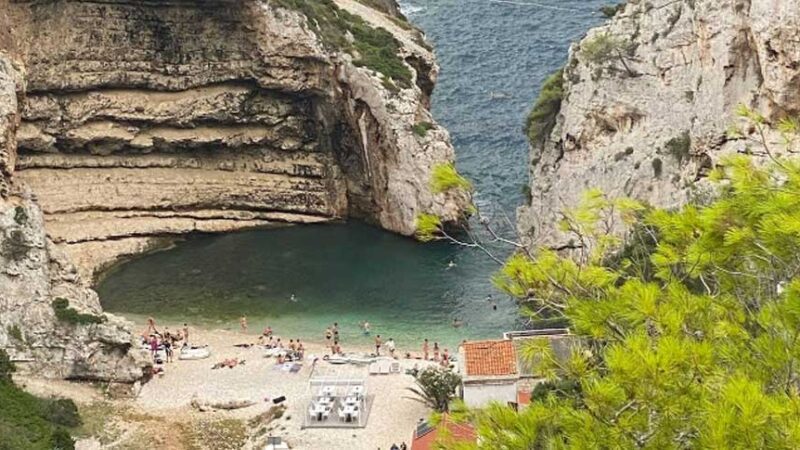
Located offshore in the Adriatic Sea, Vis Island long served as a military base with restricted public access, preserving pristine nature. Its complex coastline and numerous inlets are said to resemble the image of Porco’s hideaway.
Kornati Islands
Comprising approximately 140 islands, the Kornati Islands are largely designated as a national park. Their rugged rocky landscapes and transparent sea, untouched by human hands, are the very embodiment of the film’s world.
Mljet Island
Located northwest of Dubrovnik, Mljet Island has about one-third of its area designated as a national park, characterized by lush nature and beautiful inlets. The island contains two saltwater lakes, creating a mystical atmosphere.
The Model for Hotel Adriano
The Hotel in the Film
Hotel Adriano, managed by Gina, is one of the important settings in the film. It is depicted as an elegant establishment with a terrace overlooking the Adriatic, serving as a social gathering place for flying boat pilots. While there are various theories about the model for this hotel, several candidate locations have been suggested.
Verification of Candidates
Opatija
Located at the base of the Istrian Peninsula in northern Croatia, Opatija developed as a resort destination for Austro-Hungarian aristocracy and the wealthy from the late 19th century. The elegant hotels and villas built along the sea have a quality similar to the atmosphere of Hotel Adriano.
Rovinj
The beautiful port town of Rovinj on the west coast of the Istrian Peninsula is also considered as one of the candidates. Its Venetian architectural style, seaside cafes and restaurants, and artistic atmosphere overlap with the image of the film’s hotel.
Resorts Around Dubrovnik
Historic hotels that have existed since the 1920s in the Dubrovnik area may also have served as references.
Flying Boat Scenes and Adriatic Seascapes
The Beauty of the Flight Scenes in the Film
One of the greatest charms of “Porco Rosso” is the beautiful imagery of the flying boat soaring over the Adriatic Sea. The contrast between the blue sea, white clouds, scattered islands, and the red flying boat represents the pinnacle of director Miyazaki’s visual aesthetics.
These scenes are based on the scenery director Miyazaki witnessed during his actual visit to Croatia. The following elements are particularly impressive:
- Highly transparent blue sea: The distinctive turquoise blue unique to the Adriatic Sea
- Complex coastline: The varied landscape created by intricate inlets and capes
- Scattered islands: The sight of islands of various sizes floating on the sea
- Mediterranean light: Strong sunlight and bright skies
Comparison with Actual Scenery
Visiting the Adriatic coast of Croatia reveals how faithfully the film’s scenes reproduce the actual landscape. In particular, the coastline from Dubrovnik toward Split, or the scenery visible from a ferry traveling among the islands, is the world of the film itself.
Today, sightseeing flights by Cessna and small aircraft are available, making it possible to view the Adriatic from the sky like Porco. There are companies offering such services around Dubrovnik and Split airports.
Pilgrimage Guide: How to Actually Visit
Access to Dubrovnik
Air Travel
Dubrovnik International Airport (DBV) is located approximately 20 kilometers south of the old town. While there are no direct flights from Japan, access is possible through major European cities (Vienna, Frankfurt, Istanbul, etc.).
From the airport to the city, you can use a shuttle bus, taxi, or a pre-arranged transfer service. Travel time is approximately 30 to 40 minutes.
Overland
Long-distance buses operate from other Croatian cities (Zagreb, Split, etc.). In particular, there are over 10 buses daily from Split, with a travel time of approximately 4 hours.
Recommended Sightseeing Routes
Day 1: Dubrovnik Old Town
- City Walls Walk (2 to 3 hours): Walk atop the walls surrounding the old town and enjoy panoramic views reminiscent of scenes in the film
- Placa Street: Stroll through the main street of the old town
- Old Harbor: Experience the atmosphere of a harbor where flying boats might be moored
- Lovrijenac Fortress: View the old town from this fortress jutting out into the sea
Day 2: Dalmatian Islands Cruise
- Elaphiti Islands Tour: Islands accessible as a day trip from Dubrovnik (Kolocep, Lopud, Sipan)
- Mljet Island Tour: Visit the national park and experience scenery reminiscent of Porco’s hideaway
Day 3: Surrounding Areas
- Kotor (Montenegro): A beautiful bay town accessible as a day trip from Dubrovnik
- Ston: A small medieval walled town, famous for oysters
Best Seasons
May to June, September to October
During these months, the climate is mild, and there are relatively few tourists, allowing for leisurely sightseeing. The sea’s transparency is high, and you can enjoy beautiful scenery like that depicted in flight scenes.
July to August
The summer peak season offers perfect weather but brings very large numbers of tourists and high accommodation prices. Early reservations are essential.
November to March
The off-season is quiet with fewer tourists, but some attractions and restaurants may be closed. However, on mild winter days, there is a different kind of charm.
Photography Spots and Photogenic Locations
Views from the City Walls
Dubrovnik’s city walls are the place where you can most strongly feel the world of the film. Particularly recommended spots:
Fort Minceta
The highest point of the walls, offering panoramic views of the entire old town and the Adriatic Sea. Early morning hours see fewer tourists, allowing for peaceful enjoyment of the scenery.
Fort Bokar
A fortress jutting out into the sea, where you can capture beautiful photographs of the contrast between the blue sea and the walls.
Near Ploce Gate
Positioned to overlook the old harbor, where you can photograph the harbor with the atmosphere of a place where flying boats might be moored.
Sunset Spots
Buza Bar
A unique bar built on a cliff outside the walls. You can savor the atmosphere of a film scene while watching the sunset over the sea, as if in the company of Gina.
Mount Srd
From the summit, accessible by cable car, you can enjoy panoramic views of all of Dubrovnik and the Adriatic Sea dyed by the sunset. A magnificent scenery like the film’s opening unfolds.
Photography on the Islands
Lokrum Island
An uninhabited island ten minutes by boat from Dubrovnik. Lush nature and transparent sea evoke the atmosphere of Porco’s hideaway.
Elaphiti Islands
Quiet, secluded inlets where you can capture photographs of scenery like that in the film. The area on the north side of Sipan Island is particularly recommended.
Director Hayao Miyazaki and Croatia
The 1989 Research Trip
Director Hayao Miyazaki visited Croatia in 1989 in preparation for producing “Porco Rosso.” Though it was still part of the Yugoslav Federation at the time, he was deeply moved by its beautiful scenery and historic townscape.
During this trip, the director visited major cities including Dubrovnik, Split, and Rovinj, and created many sketches. He also visited Italian aviation museums for research materials on flying boats.
Relation to the Yugoslav Conflict
Interestingly, just before the film’s release (1992), Croatia was in the midst of conflict over independence from Yugoslavia. Dubrovnik was besieged from 1991 to 1992, and its old town came under artillery fire.
Director Miyazaki was deeply troubled by this beautiful town being subjected to warfare, and expressed his desire through the film to preserve the peaceful scenery of the Adriatic Sea. The film’s anti-war message is not merely background to the narrative but also represented the director’s earnest wishes.
Impact After the Film’s Release
Following the release of “Porco Rosso,” the number of tourists visiting Croatia from Japan increased notably. The city of Dubrovnik recognized the role the film played in tourism promotion and welcomes Studio Ghibli fans.
Tourist information offices in the area provide information related to “Porco Rosso,” and if you mention your fandom, they may share special information.
Croatian Culture and the World of Porco Rosso
Food Culture
The dining scenes in the film are also impressive, and Croatian food culture is actually quite rich.
Seafood
Fresh seafood is abundant along the Adriatic coast. Octopus, squid, mussels, and oysters are particularly famous. You can enjoy Mediterranean cuisine in seaside restaurants like those depicted in the film.
Wine
Croatia is a little-known wine-producing region. In the Dalmatian region, local wine varieties such as Plavac Mali and Posip are produced. You can taste high-quality wines that Gina might have enjoyed.
Italian Influence
With Italy across the Adriatic, Croatian cuisine shows strong Italian influences. Pasta, risotto, and pizza are common, aligning with the film’s time period setting.
Architecture
Venetian Style
Many towns on the Dalmatian coast were once under Venetian rule, so Venetian Gothic architecture is widely seen. Elegant stone buildings form part of the film’s aesthetic world.
Mediterranean Architecture
Typical Mediterranean architecture featuring white limestone, orange tile roofs, and green shutters served as models for the buildings depicted in the film.
Music and Atmosphere
Croatia has a traditional a cappella singing style called “klapa,” particularly popular in the Dalmatian region. While different from the jazz and tango in the film, the shared culture of loving the sea and music is evident.
Practical Information: Travel Preparation
Visa and Entry
For Japanese nationals, no visa is required for tourism stays of up to 90 days. Your passport must have at least 3 months validity remaining upon departure from Croatia.
As of January 2023, Croatia joined the Schengen Area, making entry from other Schengen member countries easier.
Currency and Prices
As of January 2023, Croatia’s currency is the Euro (EUR). Previously the currency was the Kuna (HRK), but it has now fully transitioned to the Euro.
Prices are somewhat lower than Western Europe, though tourist destinations like Dubrovnik are relatively expensive. Meals cost approximately 10 to 30 euros, and mid-range hotels approximately 80 to 150 euros per night.
Language
The official language is Croatian, but English is widely spoken in tourist areas. Particularly young people and tourism workers often speak English.
Basic greetings:
- Hello: Dobar dan
- Thank you: Hvala
- Goodbye: Doviđenja
Safety and Precautions
Croatia is a relatively safe country, but watch for pickpockets and theft in tourist areas. Particularly during the summer peak season when crowds are large, be careful with valuables.
Summer sun is extremely strong, so sunscreen, hats, and sunglasses are essential. When walking for long periods, such as on the city walls walk, remember to stay hydrated.
Recommended Accommodation Areas
Within the Old Town
The atmosphere is superb, but prices are high, and walking cobblestone alleys with luggage is challenging. Noise from nightlife can also be a concern.
Near Ploce Gate
Close to the old town, relatively quiet, and more affordable. Many restaurants and cafes are nearby, making it a convenient area.
Lapad Peninsula
While somewhat removed from the old town, it has a beach resort atmosphere and is recommended for families. It’s 15 to 20 minutes by bus to the old town.
Related Nearby Attractions
Split
Located approximately 230 kilometers north of Dubrovnik, Croatia’s second-largest city. The Palace of Roman Emperor Diocletian stands at the heart of the old town and is registered as a UNESCO World Heritage Site.
Split’s harbor is also thought to be one of the image sources for the port town depicted in the film. A lively market, stone buildings, and blue sea make this a beautiful town.
Zadar
A port city in the northern Dalmatian region. Particularly famous is the “Sea Organ,” a contemporary art installation that creates music through wave movement. It is also known as a town with beautiful sunsets.
The Istrian Peninsula
A peninsula in northwestern Croatia with beautiful towns including Rovinj, Pula, and Porec. Close to the border with Italy, the region shows strong Italian cultural influence.
Rovinj, one of the candidate models for Hotel Adriano, is a beautiful port town populated by artists.
Kotor in Montenegro
Located approximately 60 kilometers south of Dubrovnik across the border in Montenegro, Kotor sits at the head of a fjord-like bay. Like Dubrovnik, it has a walled medieval old town and is registered as a UNESCO World Heritage Site.
Day tours are widely available, and visiting both Dubrovnik and Kotor together is recommended.
Special Experiences for Studio Ghibli Fans
Flying Experience
You can experience viewing the Adriatic Sea from above like Porco.
Panorama Flights
Companies around Dubrovnik Airport offer scenic flights by Cessna or helicopter. With courses ranging from 15 minutes to 1 hour, you can enjoy the Adriatic from the perspective of the film.
Paragliding
Paragliding experiences from Mount Srd are also available. Tandem flights with instructors are safe even for beginners.
Boat Tours
Private Boat Charter
You can charter a small boat to explore secluded inlets. There’s the pleasure of discovering hideaway-like locations yourself, as Porco might have.
Kayak Tours
Sea kayak tours are popular around Dubrovnik. You can view the walls from the sea side or explore caves.
Sunset Cruise
Evening cruise tours allow you to watch the Adriatic sunset from the boat. You can spend an elegant time like Gina, sipping champagne or wine.
Background Knowledge for Deeper Film Understanding
The Era of Flying Boats
The 1920s to 1930s are called the “golden age of flying boats,” when flying boats were active in long-distance flights and maritime transport. The aircraft in the film, Porco’s beloved “Savoia S.21,” is modeled on an actual Italian flying boat.
The Adriatic Sea, with its calm waters and numerous ports, was ideal for flying boat operations. Companies like Italy’s Savoia-Marchetti manufactured and operated flying boats in this region.
Post-World War I Europe
The late 1920s, when the film is set, was an era when the scars of World War I (1914-1918) remained. The setting of Porco suffering from war memories and transforming himself into a pig symbolizes the “lost generation” of that era.
Additionally, in Italy, Mussolini’s Fascist regime was rising to power, with secret police depicted in the film. This political tension serves as an important background to the narrative.
History of the Adriatic Sea
The Adriatic coast has seen various civilizations intersect from ancient times. Under the rule of the Roman Empire, Byzantine Empire, Venetian Republic, and Austro-Hungarian Empire, unique cultures developed.
Dubrovnik (then the Republic of Ragusa) prospered as an independent maritime republic from the 14th century to the early 19th century, playing an important role in Mediterranean trade. This international and free atmosphere is one reason the location was chosen as the film’s setting.
Conclusion: The Charm of Porco Rosso and Croatia
“Porco Rosso” is not merely an animated film but a work into which director Hayao Miyazaki poured his appreciation for the beauty and history of the Adriatic Sea and his wishes for peace. The scenery depicted in the film faithfully recreates the actual landscapes of Dubrovnik in Croatia and its surrounding regions, and visiting the location allows one to experience the film’s world realistically.
The old town of Dubrovnik surrounded by city walls, the highly transparent blue Adriatic Sea, scattered islands and inlets, and the bright Mediterranean light—all of these served as sources for the film’s beautiful scenes.
When visiting Croatia, rather than treating it simply as a tourist destination, a deeper experience can be gained by traveling while feeling the landscapes that director Miyazaki loved and the wishes for peace embedded in the film.
The sky and sea of the Adriatic that Porco Rosso loved remain beautiful to this day, continuing to captivate all who visit. For Studio Ghibli fans, Croatia is a sacred site worth visiting once in a lifetime.
Along with Porco’s famous line, “A pig that doesn’t fly is just a pig,” why not set out on a journey to feel the winds of the Adriatic Sea?