“Porco Rosso” and Navagio Beach Relationship
Porco’s Hidden Base in the Film
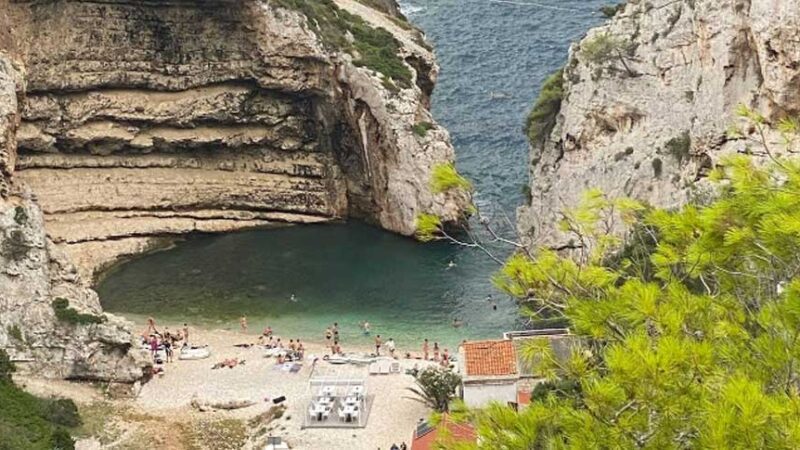
At the beginning of “Porco Rosso,” the protagonist Porco Rosso’s secret base where he moors his beloved Savoia S.21 seaplane. Surrounded on three sides by steep white cliffs and with a transparent blue sea spreading before it, this hidden base is depicted as a particularly striking location in the film. The scene of Porco lounging on a deck chair, relaxing leisurely, is surely etched in the memory of many fans.
Because this hidden base landscape bears a striking resemblance to the real-world Greek Navagio Beach, it has become a sacred site visited by Studio Ghibli fans from around the world as “the model location for Porco Rosso.”
Reasons Why Navagio Beach Is Considered the Model
Navagio Beach is considered the model for “Porco Rosso” because of its unique topography.
- A landform surrounded on three sides by cliffs 200-300 meters high
- An isolated environment accessible only by boat
- Striking contrast between pure white sandy beach and emerald green sea
- The presence of a shipwreck lying on the beach
These features perfectly match the setting of Porco’s hidden base depicted in the film. While there is no official record that Director Hayao Miyazaki actually visited this location, it is highly likely that photographs and information about this place were referenced during the film’s production research.
What Is Navagio Beach? Basic Information
Official Name and Alternate Names
Navagio Beach (Navagio Beach) gets its name from the Greek word for “shipwreck.” In English, it is also called “Shipwreck Beach,” and this name is more widely known internationally.
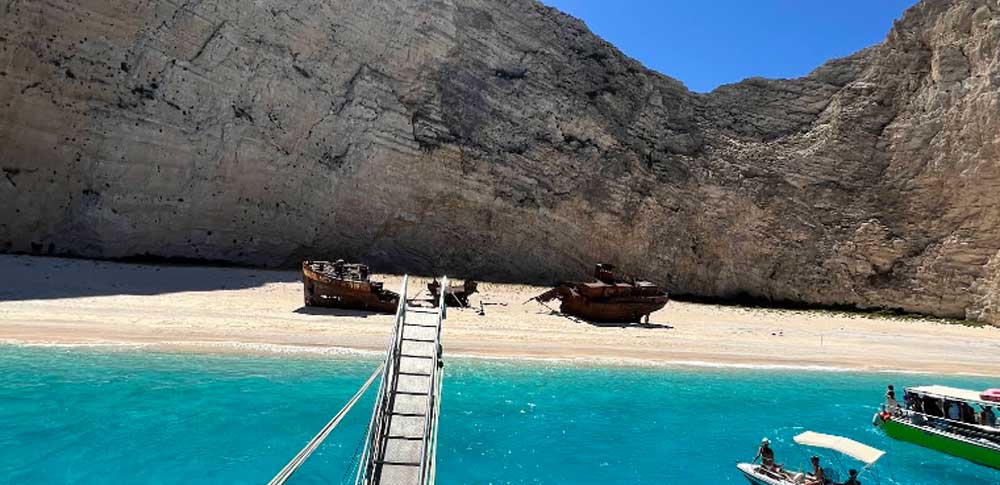
The origin of this name comes from 1980, when the smuggling vessel “Panagiotis” ran aground on this beach and was left abandoned. To this day, the rusty hull of the ship lies on the sandy beach, creating a unique landscape through its contrast with the white sand and blue sea.
Geography and Characteristics of Zakynthos Island
Zakynthos Island (Zakynthos Island), where Navagio Beach is located, is an island floating in the Ionian Sea off the west coast of Greece. It is one of the seven main islands that make up the Ionian Islands, with an area of approximately 406 square kilometers. The island’s central city is also called Zakynthos, and is home to about 40,000 people.
Zakynthos Island has been inhabited since ancient Greek times and possesses a rich history and culture. Blessed with a warm Mediterranean climate, it is characterized by beautiful beaches and blue sea, as well as verdant inland areas. Besides Navagio Beach, it is also known as a nesting ground for the endangered loggerhead sea turtle.
Position Within the Ionian Islands
The Ionian Islands are a collective term for islands scattered in the Ionian Sea, off the west side of mainland Greece. The seven main islands are as follows:
- Corfu Island (Kerkira Island)
- Paxos Island
- Lefkada Island
- Ithaca Island
- Cephalonia Island
- Zakynthos Island
- Kythira Island
Zakynthos Island is the third largest of these islands and is a highly popular tourist destination. In particular, Navagio Beach is one of the most famous tourist attractions when viewing the Ionian Islands as a whole.
Stunning Spots at Navagio Beach
The 300-Meter Cliff Face
The greatest feature of Navagio Beach is the white limestone cliff that surrounds the beach on three sides. The height varies depending on location, but the highest point reaches approximately 300 meters.
This cliff stands nearly vertically, creating an imposing sensation like a giant fortress. The white rock surface reflects the intense Mediterranean sunlight, radiating a dazzling brightness. It is precisely because of this cliff that Navagio Beach becomes a “hidden paradise” accessible only by boat.
The Secret of the Emerald Green Sea
The sea at Navagio Beach has a distinctive color often described as “emerald green” or “turquoise blue.” The secret behind this beautiful color is a combination of several factors.
High Transparency: The Ionian Sea is known as a sea area with particularly high transparency among Mediterranean waters. With minimal pollution and an appropriate amount of plankton, the water’s transparency is extremely high.
Reflection of White Sandy Beach: The sandy beach at Navagio Beach is made of fine, crushed white limestone. This white sand reflects sunlight, creating a distinctive bright color as it passes through the seawater.
Water Depth and Light Refraction: The area around the beach gradually deepens from relatively shallow water depth. The changing water depth causes light refraction to differ, creating subtle gradations of blue and green depending on location.
Light Reflection from Surrounding Cliffs: The white cliffs reflect sunlight, and as that light falls on the sea surface, it creates brighter, more vivid colors.
The History of the Shipwreck Panagiotis
The rusted hull lying on the sandy beach is the “Panagiotis,” a smuggling vessel that ran aground in 1980. The history surrounding this ship has several different versions.
According to the most widely believed account, the ship was engaged in smuggling operations and was being pursued by Greek authorities. In bad weather, the ship attempting to escape pursuit became lost in this cove and ran aground. While the crew managed to escape, the ship remained abandoned.
According to another account, a ship engaged in smuggling tobacco and alcohol encountered a storm and was washed ashore on this beach.
Regardless of the true story, this shipwreck has now become a symbol of Navagio Beach, with its rusted brown hull creating a unique presence amid the white sand and blue sea. Many tourists take commemorative photos against the backdrop of this shipwreck, making it the beach’s greatest photo spot.
How to Get to Navagio Beach
Access from Japan to Zakynthos Island
To visit Navagio Beach, you must first arrive at Zakynthos Island. There are no direct flights from Japan to Zakynthos Island, so multiple transfers are necessary.
Common Route:
- Japan → Athens: From major Japanese airports (Narita, Haneda, Kansai, etc.) to Athens via major European cities (Istanbul, Dubai, Paris, Frankfurt, etc.). Total travel time including transfers is approximately 15–20 hours.
- Athens → Zakynthos: From Athens to Zakynthos Island by domestic flight in approximately 1 hour. Airlines such as Aegean Airlines, Olympic Air, and Sky Express operate regular flights. Flight frequency increases particularly during summer (May–October).
Alternative Routes:
- Ferry: You can also cross to Zakynthos Island by ferry from Kyllini Port near Athens. Travel time is approximately 1 hour 30 minutes. Since you can board vehicles, this is convenient if you want to tour the island by rental car.
- Via Cephalonia Island: You can also cross from nearby Cephalonia Island by ship.
From Zakynthos Island to Navagio Beach
Once you arrive on Zakynthos Island, there are two main ways to reach Navagio Beach.
1. Viewing from the Observation Point (Land Route)
You can access the observation point that overlooks Navagio Beach from above by car or bus.
Observation Point Location: Approximately 32 kilometers northwest of Zakynthos city center, about 50 minutes to 1 hour by car. There are multiple observation points, but the most famous is the “Navagio Beach Viewpoint.”
Access Methods:
- Rental Car: The most flexible option. There are many rental car companies on the island. Roads are relatively well-maintained, but mountain roads require careful driving.
- Taxi: You can charter a taxi from Zakynthos city center. Negotiating round-trip fares is recommended.
- Tour Bus: Join a half-day or full-day tour offered by travel agencies on the island. Tours combining other tourist attractions are typical.
- Public Bus: During summer, buses may operate from Zakynthos city center toward the observation point area. However, due to limited frequency, prior confirmation is necessary.
Observation Point Features: From the observation point, you can enjoy a panoramic view overlooking all of Navagio Beach. The view from above the cliffs is precisely the world of “Porco Rosso.” Morning light is particularly good, when the sea color is most beautiful.
As a precaution, some tourists venture beyond the railings for photos, but this is extremely dangerous due to the risk of cliff collapse. In fact, fall accidents have occurred. Always view from inside the railings.
2. Landing on the Beach (Sea Route)
To actually set foot on Navagio Beach, you must use a boat.
Departure Ports: Boat tours depart primarily from the following ports:
- Zakynthos Port: Located in the island’s center, most convenient.
- Porto Vromi: The small port closest to Navagio Beach. Shorter travel time.
- Agios Nikolaos: A port in the north.
Tour Types:
- Regular Boats: Depart at set times and remain on the beach for a certain period (typically 30 minutes to 1 hour) before returning. Most common and budget-friendly.
- Private Boats: Charter for small groups or families. You can adjust stay times freely.
- Circling Tours: Explore not only Navagio Beach but also other spots like the Blue Caves.
Travel Time and Fares:
- From Zakynthos Port: Round trip approximately 2–3 hours, fares around 20–40 euros
- From Porto Vromi: Round trip approximately 30 minutes to 1 hour, fares around 15–25 euros
Booking Methods: During peak summer season (July–August), it gets extremely crowded, so advance reservation is recommended. You can book at hotel front desks, travel agencies on the island, or online.
Important Notes:
- Tours may be canceled due to weather. Particularly on windy days, waves become high and landing on the beach becomes difficult.
- The beach has almost no shade, so sunscreen, hats, and plenty of water are essential.
- There are absolutely no restroom or shop facilities.
- The boat landing area is rocky, so marine shoes are recommended over sandals.
Best Season and Visiting Periods
The best season to visit Navagio Beach is late May through September. During this period, weather is stable and sea transparency is at its highest.
Characteristics by Month:
April–May: Beginning of tourist season. Tourist numbers are still low, allowing leisurely enjoyment. Temperatures around 20–25 degrees Celsius are pleasant, but seawater may still be cold.
June: Temperatures begin rising, and seawater becomes more comfortable. Tourist numbers increase but not as much as July–August. A well-balanced period.
July–August: Peak season. Temperatures exceed 30 degrees Celsius, and seawater is warmest. However, tourist crowds are greatest, and boat tours are congested. Prices tend to be set higher.
September: Summer heat begins to ease, but seawater remains warm and ideal for swimming. Tourist numbers begin decreasing, allowing more relaxed enjoyment. Personally, this is the most recommended time.
October: End of season. Weather becomes unstable, and boat tour operations decrease.
November–March: Off-season. Many hotels and restaurants close, and boat tours hardly operate.
Recommended Time of Day: When viewing from the observation point, 10 AM to noon is most recommended. The sun angle is optimal, and the sea color appears most beautiful. By afternoon, backlighting becomes likely, making it unsuitable for photography.
When landing on the beach, early morning hours are relatively less crowded. Around midday, many tour boats concentrate, causing congestion.
Other Locations and Model Sites for Porco Rosso
“Porco Rosso” is modeled not only on Navagio Beach but on various locations around the Adriatic Sea.
Italian Adriatic Coast
The film’s primary setting is the Adriatic coast of Italy. The following regions are particularly important as film locations.
Milan: The setting where Porco requests seaplane repairs from the Piccolo company is near Milan. In reality, Milan was one of Italy’s aviation industry centers.
Trieste and Surrounding Areas: A city in northeastern Italy facing the Adriatic Sea. The harbor towns appearing in the film are modeled on this area’s image.
Croatia: Dubrovnik
Dubrovnik Old Town: The model for Gina’s Hotel Adriano. Called the Pearl of the Adriatic, this beautiful port town features striking contrast between orange-tiled roofs and blue sea.
The harbor town scenery in the film strongly reflects the atmosphere of Dubrovnik’s old town and harbor. The medieval streets enclosed by city walls are precisely the world of “Porco Rosso.”
Adriatic Islands: Croatia’s coast has over 1,000 islands, believed to have served as models for various islands appearing in the film.
Other Model Locations
Montenegro: Located south of Croatia, also facing the Adriatic Sea. Beautiful inlets like Kotor Bay may have influenced the film’s scenery.
Slovenia: A country with a small coastline facing the Adriatic. Harbor towns like Piran also share the film’s atmosphere.
Practical Advice for Navagio Beach Tourism
Packing Checklist
Here is a summary of necessary items when visiting Navagio Beach.
Essential Items:
- Sunscreen (SPF50+ recommended): Greek sunlight is extremely intense
- Hat and sunglasses: For UV protection
- Water (1+ liter per person): No shops on the beach
- Towel: If entering the sea
- Camera/Smartphone: To record the stunning scenery
- Waterproof case: During boat travel or entering the sea
- Cash (Euros): For boat tickets. Cards may not be accepted
Convenient to Have:
- Marine shoes: Many rocks present
- Snorkel set: To enjoy the transparent sea
- Light snacks: For extended sightseeing
- Lightweight long sleeves: For sunburn protection on boats
- Beach mat: If relaxing on the beach
- Drone: For aerial photography (check regulations first)
Best Photography Spots
Photography from Observation Point:
- Standard Angle: Photograph from the center of the observation point with the entire beach and shipwreck in frame
- Morning Light: Around 10 AM is when sea color is most beautiful
- Telephoto Lens: Effective for close-up shots of the shipwreck
- Panorama Shooting: Use smartphone panorama mode to capture vast scenery in one shot
Photography on the Beach:
- With the Shipwreck: The most popular photo spot
- Sea Transparency: Shallow water showing visible sand beneath
- Looking Up at Cliffs: The dramatic view of cliffs from below
- Underwater Photography: Waterproof camera to document sea transparency
Photography from the Boat:
- During Approach: Record the approach to the beach in video
- Overall Vista: Full view from a slight distance
Safety Precautions
Observation Point Precautions:
- Do not venture beyond railings (cliff collapse risk)
- Don’t back up while taking selfies
- Extra caution on windy days
- Don’t let small children out of sight
Beach Precautions:
- Don’t approach directly beneath cliffs (falling rocks risk)
- Ocean currents can be strong; don’t swim too far
- Don’t climb on the shipwreck (risk of injury or tetanus)
- Don’t neglect heatstroke prevention
Boat Precautions:
- Wear life jackets
- Follow boat instructions
- Motion-sickness-prone individuals should take seasickness medication
- Keep valuables in waterproof bags
Other Tourist Spots on Zakynthos Island
Besides Navagio Beach, Zakynthos Island has many attractions.
Blue Caves: Sea caves at the island’s northern tip. Glowing blue seawater is mystical. Tours combining Navagio Beach are popular.
Zakynthos Old Town: Medieval streets with Venetian architecture. Ideal for shopping and dining.
Turtle Nesting Ground (Laganas Beach): Endangered loggerhead sea turtles visit to nest. A protected area where you may encounter sea turtles with luck.
Bohali Village: A hilltop village overlooking Zakynthos city. Known as a sunset spot.
Venetian Castle: Remains of a fortress from the Venetian era. Recommended for history enthusiasts.
Navagio Beach and Ghibli Sacred Site Pilgrimage
Why Fans from Around the World Visit
“Porco Rosso” is a Studio Ghibli work with particularly many adult fans. The setting of seaplanes, the Adriatic Sea, and 1920s Europe is filled with adventure and romance.
Navagio Beach is one of the few places where you can actually experience the world of “Porco Rosso.” The scene at the film’s opening where Porco relaxes at his hidden base remains vividly in many fans’ hearts, inspiring the thought “I’d like to visit there someday.”
Those who have actually visited this place consistently say “I’m glad I came.” They share their experiences on social media, etc. This brings new fans, making Navagio Beach a standard Ghibli sacred site pilgrimage destination.
Comparison of Film Scenes and Actual Scenery
Comparing the film to actual scenery reveals both similarities and differences.
Similarities:
- Landform surrounded on three sides by cliffs
- Emerald green sea
- White cliff faces
- Atmosphere of a secret, isolated base
Differences:
- While the film depicts small houses and docks on the beach, actual Navagio Beach has none (though the shipwreck is there)
- The film’s hidden base has a more complex topography, while the actual beach is more open
- The film is set in the Adriatic Sea, while Navagio Beach is in the Ionian Sea
Despite these differences, the overall atmosphere and beauty are remarkably similar, allowing visitors to truly sense “this is Porco’s hidden base.”
Comparison with Other Ghibli Model Locations
Many Studio Ghibli works feature settings modeled on real locations.
Spirited Away: Jiufen in Taiwan, Dogo Onsen in Ehime Prefecture, etc.
Kiki’s Delivery Service: Stockholm and Visby in Sweden, Dubrovnik in Croatia, etc.
Howl’s Moving Castle: Alsace region and Colmar in France, etc.
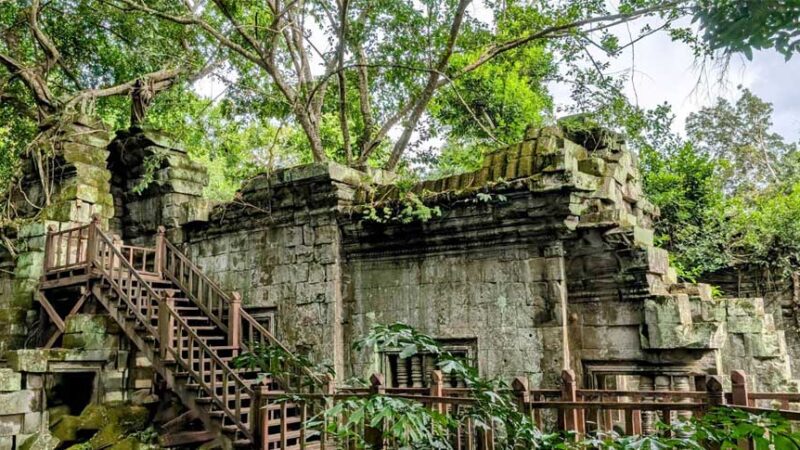
Castle in the Sky: Civita di Bagnoregio in Italy, Beng Mealea ruins in Cambodia, etc.
Compared to these sacred sites, Navagio Beach particularly gives the sense that “the film’s world exists as it is.” Combined with the difficulty of access, the impact of visiting is all the more profound.
Accommodation and Dining Information
Recommended Hotel Areas on Zakynthos Island
Zakynthos Island offers various types of accommodations.
Zakynthos City Center: Most convenient area. Good access to restaurants, shops, and ports. Many Navagio Beach tours depart from the city center.
Tsilivi: A beach resort area approximately 5 kilometers north of the city center. Many family-oriented hotels, and beach enjoyment is possible.
Laganas: An entertainment district in the south. Abundant nightlife but noisy, unsuitable for those preferring quiet.
Vassilikos Peninsula: A quiet peninsula with beautiful scattered beaches. Ideal for relaxed resort stays.
Alykes: A quiet resort area in the north. Relatively good access to Navagio Beach.
Greek Cuisine and Zakynthos Island Specialties
Zakynthos Island offers fresh seafood and traditional Greek cuisine.
Recommended Dishes:
- Moussaka: Layered baked eggplant and ground meat. A representative Greek home-cooked dish
- Souvlaki: Meat skewers. Typically wrapped in pita bread
- Greek Salad: Tomato, cucumber, olives, and feta cheese salad
- Grilled Octopus: Fresh octopus charcoal-grilled. A Zakynthos specialty
- Fried Squid: Calamari. Perfect with beer
- Tzatziki: Yogurt-based dip. Use with bread
- Baklava: Nutted honey pastry. Dessert
Local Wine: Zakynthos Island is also known as a wine-producing region. White wine is particularly famous and pairs well with fish dishes.
Recommended Restaurant Areas: Along the harbor in Zakynthos city center, tavernas (bars) line up offering meals with sea views. Dining at dusk is particularly romantic.
Conclusion: Experience the World of Porco Rosso at Navagio Beach
Navagio Beach on Zakynthos Island, Greece continues to captivate Studio Ghibli fans worldwide as the model location for the masterpiece “Porco Rosso.”
The stunning landscape surrounded by cliff faces, with emerald green sea spreading before it, is exactly like a scene that has stepped out of the film. The setting where it is accessible only by boat is precisely Porco’s hidden base.
While access from Japan is certainly not easy, visitors consistently say “I’m glad I came.” The view overlooking the landscape from the observation point, the emotion of landing on the beach, swimming in the highly transparent sea—all become special experiences.
For those who love “Porco Rosso,” and indeed for travelers seeking beautiful beaches and stunning scenery, Navagio Beach is a place to visit once in a lifetime. Please visit this Mediterranean paradise during the best season from May through September.
Why not spend a special time immersed in the world of the film at the hidden base Porco Rosso loved? While there is no seaplane, the stunning landscape created by blue sky, sea, and white cliffs truly exists there.