
“Demon Slayer” Holy Site: Kamado Jigoku in Beppu – Complete Guide
The popular manga and anime “Demon Slayer” has brought new attention to “Kamado Jigoku,” located in Beppu City, Oita Prefecture, as a holy site among fans. This location, long cherished as a famous spot on the Beppu Hell Tour, has recently become a topic of discussion as a “Demon Slayer” holy site. But why?
This article provides comprehensive information useful for fans considering a pilgrimage to holy sites, thoroughly explaining the deep connection between Kamado Jigoku and Demon Slayer, its ties to Yahata Kamado Shrine, actual highlights, and access information.
What is Kamado Jigoku? A Popular Spot on the Beppu Hell Tour
History and Characteristics of the Beppu Hell Tour
Kamado Jigoku is one of eight hells that make up the “Beppu Hell Tour” located in the Tetsuwa Onsen district of Beppu City, Oita Prefecture. The Beppu Hell Tour is a tourism attraction featuring natural hot springs that have existed for approximately 1,300 years, and as one of Japan’s leading hot spring destinations, it attracts many tourists from both domestically and internationally.
The name “hell” derives from the way high-temperature steam and hot mud spray forth, evoking images of hellfire. While Beppu features various hells such as Umi Jigoku (Sea Hell), Chi no Ike Jigoku (Blood Pond Hell), and Shiraike Jigoku (White Pool Hell), Kamado Jigoku is particularly popular for its high entertainment value and its ability to experience diverse hot spring phenomena in one location.
The Origin of Kamado Jigoku’s Name
The name “Kamado Jigoku” originates from an ancient custom in which, during the grand festival of Yahata Kamado Shrine, the tutelary deity, the hot spring’s steam was used to cook offerings. This name “kamado” (cooking stove) becomes an important connection point with “Demon Slayer,” as discussed later.
Why Kamado Jigoku is Called a “Demon Slayer” Holy Site
Name Match with Protagonist Tanjiro Kamado
The protagonist of “Demon Slayer” is named “Tanjiro Kamado” (竈門炭治郎). The “Kamado” in Kamado Jigoku matches perfectly with the protagonist’s surname—a major point of connection. Furthermore, Yahata Kamado Shrine, which has deep ties to Kamado Jigoku, also bears the name “Kamado,” and this seemingly impossible coincidence has become a hot topic among fans.
Deep Connection with Yahata Kamado Shrine
Yahata Kamado Shrine is located in the Kamado district of Beppu City, near Kamado Jigoku. This shrine contains numerous elements that surprisingly align with the world of “Demon Slayer.”
The shrine’s name “Kamado”: Perfectly matches the protagonist’s surname
The dragon water deity: A dragon god enshrined at the shrine overlaps with the “Water Breathing” technique used by Tanjiro and the blue dragon imagery in the work
The demon legend: The shrine preserves a legend of a man-eating demon who, after repenting, became the gate guardian of Kamado Jigoku
Ninety-nine stone steps: Stone steps supposedly built by a demon in a single night actually exist and evoke scenes of training in the work
Kamado Kagura: “Kamado Kagura” is performed from New Year’s Eve into New Year’s Day, with its similarity to the work’s “Hinokami Kagura” being noted
From these commonalities, fans speculate that author Kohime Asakura may have visited this region and gained inspiration for her work.
Elements Within the Grounds Evoking “Demon Slayer”
Multiple points within Kamado Jigoku catch the attention of “Demon Slayer” fans.
The statue of a red demon: A large red demon statue stands above the cauldron in Kamado Jigoku’s second block. This demon appears in the legend of Yahata Kamado Shrine as a man-eating demon who, after repenting, became the gate guardian of Kamado Jigoku. Standing on an elevated platform, this demon figure is cherished as a symbol of the grounds.
The blue water dragon: The grounds contain a blue-colored hot spring whose hue evokes the blue water dragon depicted in Tanjiro’s “Water Breathing” technique. This mystical blue color is naturally produced by the hot spring’s mineral composition.
Steam and heat: The steam and heat rising from the hell seem to recreate the atmosphere of battle scenes and training scenes in the work.
Complete Guide to Kamado Jigoku’s Highlights
Diverse Hell Experiences from Block One Through Six
The greatest feature of Kamado Jigoku is the ability to observe various types of hot spring phenomena in one location. The grounds are divided into “blocks one” through “six,” with different types of hells positioned in each.
Block one: Mud hell. You can observe gray hot mud bubbling and boiling. With temperatures around 90 degrees Celsius, you can feel the primitive atmosphere of hell.
Block two: The hell guarded by the red demon. The location of the red demon statue mentioned earlier, a popular spot for commemorative photos.
Block three: Mountain hell. An impressive sight of steam spouting from a rocky mountain is visible.
Block four: Kamado Jigoku’s main attraction. Large white steam shoots up vigorously from a great stove.
Block five: The blue pond. A beautifully colored cobalt blue hot spring that evokes the blue water dragon and is the most popular spot. The compound sulfate of copper gives it a mystical blue hue.
Block six: The red pond. A reddish-brown hot spring containing iron oxide, offering colors in contrast with the blue of block five.
Enriched Experience-Type Attractions
Kamado Jigoku offers not just viewing but various attractions where visitors can physically experience hot springs.
Hot spring steam inhalation: Using a dedicated inhalation device, visitors can inhale hot spring steam, experiencing effects said to be beneficial to the throat and respiratory system. Staff members provide thorough explanations, so beginners can feel at ease.
Hand bath and foot bath: There are spaces for hand baths and foot baths where visitors can actually touch hot springs, soothing travel fatigue.
Hot spring water drinking: Visitors can taste drinkable hot spring water. The unique flavor is an experience unique to hot spring destinations.
Hot spring steaming: Visitors can purchase hot spring eggs and puddings steamed in hot spring vapor. The “hot spring century egg” in particular is popular as an unusual product.
Thorough Explanations by Staff Members
Kamado Jigoku has staff members permanently stationed who can explain the mechanisms and history of hot springs in detail. Demonstrations and explanations are conducted regularly, allowing visitors to learn about the formation of hells from a scientific perspective.
Particularly popular is the “smoke experiment.” When cold water is poured on hot spring steam, a tremendous column of white smoke rises—a spectacular sight. From children to adults, everyone can enjoy this production, which makes for Instagram-worthy photography.
Gift Shop and Food Spots
The gift shop in the grounds sells souvenirs related to Beppu hot springs and “Demon Slayer.” Products range from cosmetics utilizing hot spring minerals to hot spring cakes and hell-steamed puddings.
Recently, responding to the “Demon Slayer” boom, original merchandise inspired by the work is also being sold. “Demon Slayer” goods exclusive to Beppu hot springs are ideal as commemorative items from a pilgrimage to holy sites.
The dining facilities offer dishes prepared with vegetables and eggs steamed in hot spring vapor. Menus featuring local ingredients are one of the pleasures of sightseeing.
“Demon Slayer” Fans’ Holy Site Pilgrimage Guide
It’s Recommended to Visit Yahata Kamado Shrine As a Package
If you visit Kamado Jigoku, you must also visit Yahata Kamado Shrine. The two are approximately ten minutes apart by car, and visiting both together allows you to experience the world of “Demon Slayer” more deeply.
Highlights of Yahata Kamado Shrine:
- The ninety-nine stone steps built by a demon: According to legend, a man-eating demon built these steps in a single night. A tale remains that the demon failed to build the hundredth step before dawn broke, leaving ninety-nine steps.
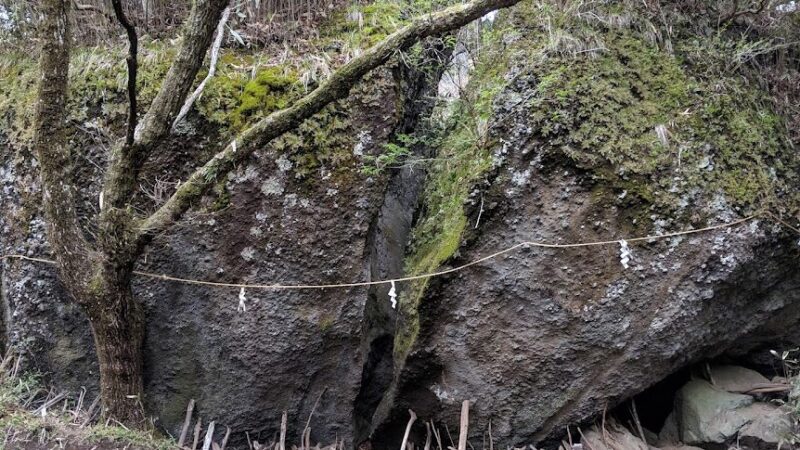
- The stone sandals forgotten by the demon: Giant stone sandals exist that the demon supposedly left behind when fleeing in haste.
- The tree of soul dependence: The shrine grounds feature a sacred tree believed to possess special power.
- The kagura hall: The place where Kamado Kagura is performed, with connections to the work’s Hinokami Kagura being noted.
- The dragon water deity: The grounds contain a shrine dedicated to a dragon god, where you can feel the connection to Water Breathing.
Recommended Pilgrimage Route
Morning: Visit Yahata Kamado Shrine and leisurely view each spot in its grounds (time required: 1 hour)
Lunch: Enjoy local cuisine in Beppu City
Afternoon: Explore Kamado Jigoku and the Beppu Hell Tour (time required: 2-3 hours)
Evening: Day-trip hot spring bathing or stay overnight in Beppu hot springs
With this route, you can efficiently visit “Demon Slayer” holy sites while also enjoying Beppu sightseeing.
Best Spots for Photography
In front of the red demon statue: A commemorative photo with Kamado Jigoku’s symbol, the red demon. Essential for “Demon Slayer” fans.
Block five’s blue pond: The mystical color evoking a blue water dragon is sure to look great on social media. Clear mornings are especially beautiful for photography.
The moment steam rises: The moment steam shoots powerfully from hell becomes a dramatic photo that lets you feel the work’s world.
Stone steps at Yahata Kamado Shrine: Viewing the ninety-nine stone steps from below evokes training scenes.
Precautions When Making a Pilgrimage
Respect etiquette: Shrines are sacred places. Be careful not to shout loudly or enter restricted areas.
Safety considerations: The hot springs at Kamado Jigoku are extremely hot. Never venture inside barriers or touch anything.
Photography rules: Be considerate of other tourists and avoid obstructing them while photographing.
Weather preparation: Beppu receives considerable rainfall. Bringing rain gear is advisable.
Kamado Jigoku Basic Information and Access
Operating Hours and Admission
Operating hours: 8:00 AM–5:00 PM (open year-round)
Admission fees:
- Adults: 400 yen
- High school students: 300 yen
- Junior high school students: 250 yen
- Elementary school students: 200 yen
Hell Tour combined viewing ticket: 2,000 yen (adults) allows you to visit all eight hells. If you plan to visit not just Kamado Jigoku but also Umi Jigoku, Oni-yama Jigoku (crocodile park), and Shiraike Jigoku, purchasing a combined ticket offers better value.
Access Methods
By train and bus:
- From JR Beppu Station, take Kame no i Bus heading to “Tetsuwa” for approximately 20 minutes, get off at “Tetsuwa” bus stop, then walk about 3 minutes
- From JR Beppu Station, Kame no i Bus also operates a “Hell Tour” course
By car:
- Approximately 5 km from Beppu IC, about 10 minutes by car
- Parking available (free)
By taxi: From JR Beppu Station by taxi takes approximately 15 minutes, fare is approximately 2,000 yen
Nearby Tourist Spots
When visiting Kamado Jigoku, also enjoy nearby attractions.
Umi Jigoku (Sea Hell): The most famous hell on the Beppu Hell Tour. The main attraction is a beautifully colored cobalt blue pond.
Oni-yama Jigoku: One of only two crocodile parks in Japan. With approximately 80 crocodiles kept here, it has also garnered attention as a holy site since the work’s author uses an alligator as her avatar.
Tetsuwa Hot Spring District: An area retaining the atmosphere of a traditional hot spring town. Day-trip bathing facilities and foot baths are scattered throughout.
Beppu Tower: An observation tower with views of the entire Beppu cityscape. Also popular as a night-view spot.
Why Beppu is Said to Be the Inspiration for “Demon Slayer”
Connection with Author Kohime Asakura
Author Kohime Asakura is said to be from Fukuoka Prefecture, but no official statement has been made regarding her connection to Oita Prefecture. However, the presence of numerous elements in Beppu that overlap with the world of “Demon Slayer” suggests the possibility that she visited for research or travel.
Connection with Oni-yama Jigoku’s Crocodile Park
The author’s avatar (self-portrait) is a bespectacled crocodile. Just near Kamado Jigoku lies Oni-yama Jigoku, home to one of only two crocodile parks in Japan. This coincidental alignment further strengthens speculation that Beppu is the inspiration.
A Land with Hot Springs and Demon Legends
Beppu has long preserved numerous legends related to hot springs and demons. The very name “hell” evokes demons and the otherworldly. It is entirely conceivable that this region’s unique culture and traditions influenced the formation of “Demon Slayer’s” world.
“Demon Slayer” Fans’ Reviews and Experiences
Impressions from Fans Who Actually Visited
“After visiting Yahata Kamado Shrine and Kamado Jigoku, I gained a deeper understanding of the work’s world. Especially the blue pond was truly beautiful, and it reminded me of Tanjiro’s techniques.”
“I took photos in front of the red demon statue, but it was more impressive than I imagined. The steam rising from hell is also mystical, and I felt as though I had stepped into the world of the work.”
“I purchased a Hell Tour combined ticket and spent a day enjoying Beppu. The staff at Kamado Jigoku were kind, and they taught me in detail about how hot springs work.”
Discussion on Social Media
On Twitter and Instagram, many posts can be seen with hashtags such as “#KamadoJigoku” and “#DemonSlayerHolySitePilgrimage.” Photos of the blue pond and commemorative photos with the red demon are particularly popular, garnering many likes.
Summary: Kamado Jigoku is a Must-See Holy Site for “Demon Slayer” Fans
Kamado Jigoku is a must-see holy site for “Demon Slayer” fans, featuring a surprising number of parallels with the work’s world. The match with protagonist Tanjiro Kamado’s name, deep connections with Yahata Kamado Shrine, and elements throughout the grounds—such as the blue water dragon and red demon statue—evoke the work at every turn.
As a Beppu Hell Tour attraction, it also holds high value, offering the appeal of experiencing diverse hot spring phenomena in one location. The high entertainment value is evident in experience-type attractions, thorough staff explanations, and well-stocked gift shops that offer fun for children and adults alike.
Visiting together with Yahata Kamado Shrine will deepen your experience of the “Demon Slayer” world. Numerous elements connecting to the work exist at the shrine, including the ninety-nine stone steps, demon legends, and Kamado Kagura.
As a hot spring destination, Beppu is one of Japan’s leading tourist areas. Combining holy site pilgrimages with hot spring tourism ensures an enriching trip. For “Demon Slayer” fans, Kamado Jigoku and Yahata Kamado Shrine in Beppu, Oita Prefecture, are must-see destinations. Why not experience the special feeling of stepping into the world of the work?
While Kamado Jigoku has recently drawn attention as a trending holy site, its true nature is the very essence of Beppu’s hot spring culture spanning 1,300 years of history. If visiting this location through the lens of the manga and anime “Demon Slayer” becomes an opportunity to encounter Japan’s traditional hot spring culture and regional legends, then it represents a wonderful meeting of work and tourist destination.