
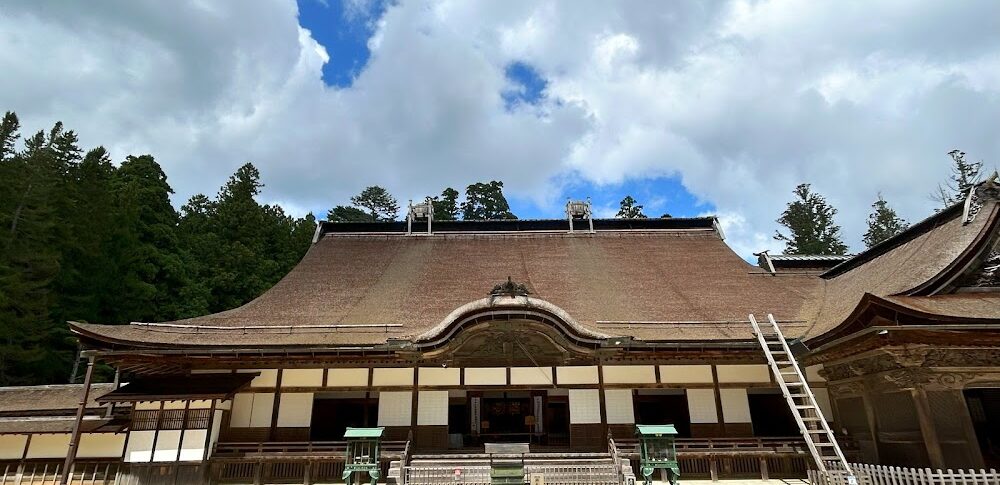
The Deep Connection Between Demon Slayer and Koyasan
“Demon Slayer,” which sparked a social phenomenon. Many fans have noted that Mount Koya, a sacred mountain in Wakayama Prefecture, plays an important role in constructing the world of the series.
Mount Koya is a sacred site of Shingon Esoteric Buddhism founded by Kobo Daishi Kukai, a religious city spread across a mountainous area at an altitude of approximately 900 meters. The mystical atmosphere surrounded by deep forests, the history of this place as a training ground continuing from ancient times, and the unique spirituality where life and death intersect share many points in common with the world of Demon Slayer.
While author Gotouge Gotoge has not officially stated that Mount Koya is the model for the work, the influence of Mount Koya is distinctly visible in the temple architecture, depictions of training, and spiritual elements appearing in the series, leading many fans to visit it as a pilgrimage site.
The Influence of Mount Koya on Demon Slayer
Commonality as a Place of Training
In Demon Slayer, the protagonist Tanjiro Kamado undergoes rigorous training under Sakonji Urokodaki. The harsh discipline in deep mountains, training under waterfalls, and the final trial of cutting through a massive boulder overlap with traditional Japanese ascetic training practices.
Mount Koya is also a place where monks have engaged in rigorous training for over 1,200 years. The tradition of climbing steep mountain paths and training body and mind in unity with nature has deep affinity with the process of mastering “Breathing Techniques” in Demon Slayer.
The Boundary Between Life and Death
In the Okuin Cemetery of Mount Koya, there is the “Eternal Meditation Belief” that Kobo Daishi continues to live and meditate there. The spiritual domain lined with over 200,000 tombstones and memorial pagodas forms a special space where the living and the dead coexist.
Demon Slayer is likewise a story depicting the boundary between humans and demons, the living and the dead. Themes of the sorrow of those who have become demons, longing for lost family members, and the salvation of souls deeply resonate with Mount Koya’s aspect as a “sacred site for honoring the deceased.”
Architectural Style and Artistic Elements
The depiction of temples and structures appearing in the series shows the influence of Mount Koya’s traditional architectural style. In particular, the vermillion-painted buildings such as the Konpon Daito (Root Original Pagoda) and the Golden Hall of the Danjo Garan complex, as well as the avenue of Japanese cedar trees in the Okuin Cemetery path, may have contributed to forming the visual image of the world depicted in the work.
Detailed Sacred Pilgrimage Spots at Mount Koya
Okuin Cemetery Path
Appeal as a Sacred Site
The Okuin Cemetery path, extending approximately 2 kilometers, is the most mystical location on Mount Koya. Giant cedar trees with ages of several hundred years stand in rows, and the unique dim atmosphere even in daytime is exactly like the deep forest scenes depicted in Demon Slayer.
Along the path are the burial sites of people from all social classes, from feudal warlords to commoners, making it truly “a place where life and death intersect.” Early morning when morning mist hangs over the area, and twilight when lanterns are lit, are particularly fantastical, allowing visitors to feel as though they have entered the world of the work.
Points of Interest
- Stone-paved path continuing from the First Bridge to the Mausoleum
- Moss-covered ancient tombstones and memorial pagodas
- Sacred area beyond the Mausoleum Bridge
- Countless lights in the Lantern Hall
Danjo Garan Complex
Konpon Daito (Root Original Pagoda)
This vermillion-painted two-tiered pagoda standing 48.5 meters tall is an iconic symbol of Mount Koya. The vivid vermillion and golden decorations evoke the brilliance of the “Flame Breathing” of Kyojuro Rengoku, the Flame Pillar from Demon Slayer.
Three-dimensional mandalas are arranged within, expressing the universe of Esoteric Buddhism. This mystical spatial composition parallels the visualization of transcendent realms such as the “Demon Slayer Mark” and the “Transparent World” depicted in the work.
Golden Hall (Kondo)
The Golden Hall, the main temple of Mount Koya, hosts important Buddhist ceremonies. Its solemn atmosphere and serene air evoke scenes of the Demon Slayer Corps members preparing their hearts before missions.
Kongobuji Temple
Kongobuji Temple, the head temple of Shingon Buddhism, possesses “Banryu-tei,” one of Japan’s largest stone gardens. The image of a dragon rising from a sea of clouds expressed in white sand recalls the dragon of the water breathing technique “Flowing Dance of Life and Death” in Demon Slayer.
Beautiful Japanese paintings depicting nature and animals are drawn on the sliding doors and ceilings within the building, allowing one to sense common ground with the refined artistic expression of the work.
Women’s Hall
Women’s Hall is the only place where women could make pilgrimage to Mount Koya when the mountain was restricted to men. This concept of “boundaries” overlaps with the themes of Demon Slayer, which depicts the boundary between humans and demons and the boundary between life and death.
Though anyone can visit today, understanding its historical background allows for deeper comprehension of the work’s themes of “walls that cannot be crossed” and “the will to move forward nonetheless.”
Access to Mount Koya
Access by Train
From the Osaka Area
- Board the “Koya Line” limited express Koyago train from Nankai Namba Station (approximately 90 minutes)
- Disembark at Gokurakubashi Station
- Transfer to the Mount Koya Cable Car (approximately 5 minutes)
- Arrival at Mount Koya Station
Some Koyago limited express trains have observation decks, allowing you to enjoy mountainous scenery during your journey. The deep mountains visible from the train windows are truly like the world of Demon Slayer.
From the Kyoto Area
The convenient route is to take the JR limited express Kuroshio from Kyoto Station to Hashimoto Station (approximately 90 minutes), then transfer to the Nankai Koya Line toward Gokurakubashi Station.
Access by Car
From the Osaka Area
Via the Hanwa Expressway → Kina Expressway → National Route 370, approximately 2 hours. Roads within Mount Koya are narrow, and traffic congestion occurs during peak tourist seasons, so use of public transportation is recommended.
Parking Information
Multiple paid parking lots exist within Mount Koya, though those staying at temple lodgings can typically use dedicated parking facilities.
Transportation Within the Mountain
From Mount Koya Station, Nankai Rinkan Bus operates service to major spots. Purchasing a one-day unlimited bus pass (830 yen for adults) allows efficient pilgrimage.
Recommended Sacred Pilgrimage Courses
Same-Day Course (Approximately 6 hours)
9:00 AM Arrival at Mount Koya Station
After arriving by cable car, transfer to Sendoin Bridge bus stop by bus.
9:30 AM – 11:00 AM Okuin Cemetery Path Stroll
Slowly walk from the First Bridge to the Mausoleum, savoring the mystical atmosphere. The quiet early morning hours are particularly recommended.
11:30 AM – 12:30 PM Lunch
Experience vegetarian cuisine of Mount Koya. Dishes using sesame tofu and mountain vegetables evoke simple, nourishing meals the Demon Slayer Corps members might have eaten.
1:00 PM – 2:30 PM Danjo Garan Complex
Pay respects at the Konpon Daito, Golden Hall, and Hall of Great Teachers. Photograph the harmony between vermillion buildings and nature.
2:45 PM – 3:45 PM Kongobuji Temple
Appreciate the Banryu-tei garden and view interior sliding door paintings. Receive tea and refreshments service.
4:00 PM Move to Mount Koya Station
1 Night, 2 Day Course (Including Temple Lodging Experience)
Day 1
- Arrive at Mount Koya in the afternoon
- Explore the Danjo Garan complex
- Check in at a temple lodging in the evening
- Vegetarian dinner
- Participate in evening prayers
Day 2
- Participate in early morning prayers (around 6:00 AM)
- Vegetarian breakfast
- Early morning stroll through Okuin Cemetery path (most mystical time of day)
- Visit Kongobuji Temple and Treasure Hall
- Lunch, then descend
The temple lodging experience provides a precious opportunity to pseudo-experience the training life of the Demon Slayer Corps. Through early morning prayers, meditation, and sutra copying, understanding of the world of the work deepens.
Temple Lodging Experience at Mount Koya
What is a Temple Lodging
Temple lodgings are accommodations traditionally operated by temples for pilgrims. Mount Koya has 52 such lodgings, and general tourists can stay overnight.
Recommended Temple Lodgings
Akamatsuin
Known for its beautiful garden and high-quality vegetarian cuisine. Its relatively accessible location is also appealing.
Egokuin
Offers Ajikan meditation experiences. This provides an experience aligned with Demon Slayer’s emphasis on breathing techniques.
Fugenin
Located near the Okuin Cemetery, convenient for early morning pilgrimage. Recommended for those seeking quiet, ascetic lodging.
How to Spend Time at a Temple Lodging
- Prayer Participation: Participate in morning and evening recitations and experience monastic life
- Vegetarian Cuisine: Savor traditional Buddhist cuisine using no meat or fish
- Sutra Copying and Meditation: Spiritual practice experiences to calm the mind
- Ajikan: Learn Shingon Buddhist meditation techniques
These experiences provide valuable opportunities to actually feel the “concentration,” “breathing,” and “peace of mind” that Tanjiro and others learned in their training.
History and Culture of Mount Koya
Kobo Daishi Kukai and the Founding of Mount Koya
In 816, Kobo Daishi Kukai received Mount Koya from Emperor Saga and founded it as the root training place of Shingon Esoteric Buddhism. Discovering a basin surrounded by eight peaks like lotus petals at an altitude of 900 meters, he envisioned this as the ideal realm of Buddhist practice.
This setting of a “specially chosen place” shares elements with special spaces like “Mount Fujisore of the Final Selection” and the “Infinite Castle” in Demon Slayer.
Over 1,200 Years of Continuous Faith
Mount Koya has functioned as a place of faith continuously for over 1,200 years since its founding, through periods of warfare and strife. This theme of “continuation” overlaps with the history of the Demon Slayer Corps’ generations-long fight against demons.
The history of surviving Oda Nobunaga’s burning attack and developing under the patronage of Toyotomi Hideyoshi and Tokugawa Ieyasu resonates with the work’s theme of carrying out one’s mission by overcoming difficulties.
Value as a World Heritage Site
In 2004, Mount Koya was registered as part of “Sacred Sites and Pilgrimage Routes in the Kii Mountain Range” as a UNESCO World Heritage Site. It has received high international recognition as a cultural landscape where nature and human activity harmonize.
Tourist Attractions Around Mount Koya
Jisoin Temple
Located at the gateway to Mount Koya, Jisoin is known as the temple where the mother of Kobo Daishi lived. Also called the “Women’s Mount Koya,” it has attracted female believers.
The theme of love for one’s mother connects with Tanjiro’s feelings for his family.
Niutsuhime Shrine
This shrine dedicated to the guardian deity of Mount Koya is said to be the deity who granted Mount Koya to Kukai. An important site in the history of shinbutsu-shugo (syncretic practices of Shinto and Buddhism), it is also interesting for understanding Shinto elements in Demon Slayer, such as the “Hinokami Kagura” of Sun Breathing.
Koishi Road
A pilgrimage path extending approximately 24 kilometers from Jisoin to Mount Koya. This path lined with 180 stone markers was once walked by pilgrims as a path of training.
While the full route takes 7-8 hours, walking even part of it allows one to experience the rigors of ascetic practice.
Precautions and Etiquette for Visitors
Clothing
Mount Koya has high altitude, making temperatures approximately 5 degrees lower than lowland areas. Bring something to wear even in summer. Also, as religious facilities are visited, avoid overly revealing clothing.
The Okuin Cemetery path has slippery stone pavement, so walking shoes are essential.
Photography Etiquette
- Photography is prohibited beyond the Mausoleum Bridge in Okuin Cemetery
- Refrain from photographing burial sites excessively
- Photography is prohibited inside many buildings
- Do not forget consideration for other visitors
Even as a pilgrimage site, this is an active religious facility and place of training. Act with respect.
Pilgrimage Etiquette
- Remove hats on the Okuin Cemetery path
- Bow before crossing the Mausoleum Bridge
- Keep voices low in conversation
- Always take away trash
Best Seasons
Spring (April-May)
Cherry blossoms and fresh greenery are beautiful, and the weather is mild. However, Golden Week brings crowds.
Autumn (October-November)
Autumn foliage is spectacular and the most popular season. Mid-November is prime viewing season but extremely crowded.
Winter (December-February)
Snow-covered Mount Koya is fantastical with fewer tourists. However, cold weather precautions are essential.
Summer (June-August)
Cool and comfortable, though rainy season requires rain gear.
Vegetarian Cuisine at Mount Koya
What is Vegetarian Cuisine
Cuisine prepared according to Buddhist precepts using only plant-based ingredients, excluding meat and fish. Vegetarian cuisine at Mount Koya has been refined through 1,200 years of history, reaching an artistic level.
Representative Dishes
Sesame Tofu
Mount Koya’s signature sesame tofu is made from only sesame and arrowroot starch, not soybeans. Its rich, creamy texture is unforgettable once tasted.
Bamboo Leaf Sushi
Pressed sushi with mountain vegetables and shiitake mushrooms wrapped in bamboo leaves. Popular as a takeaway souvenir.
Seasonal Mountain Vegetable Dishes
Dishes made from mountain vegetables harvested around Mount Koya change seasonally. The spirit of valuing nature’s gifts aligns with Demon Slayer’s theme of harmony with nature.
Recommended Eateries
Hamadaya
A long-established establishment over 150 years old. Genuine vegetarian cuisine at reasonable prices.
Gomatofu no Sumoto
A sesame tofu specialty shop. Experience freshly made sesame tofu.
Chuo Shokudo Sanbou
A food hall popular with tourists. Vegetarian cuisine set meals at reasonable prices.
Souvenirs and Merchandise
Traditional Souvenirs of Mount Koya
Prayer Beads
Mount Koya is also famous as a production site for prayer beads. Beads in various materials and colors are available.
Votive Tablets
Wooden votive tablets where wishes are written and offered can also be taken home as talismans.
Incense and Aromatic Products
Incense made at Mount Koya is high quality and popular as gifts.
Sesame Tofu
Vacuum-packed sesame tofu has long shelf life, making it ideal for souvenirs.
Demon Slayer Related Merchandise
Mount Koya’s official shops do not sell Demon Slayer collaboration goods, though related items may be available at surrounding souvenir shops.
However, as Mount Koya itself is a sacred site, remember to respect the work and show consideration for the religious facility, maintaining appropriate conduct.
The Spirituality of Mount Koya and Demon Slayer
Compassion and Salvation
One major theme of Demon Slayer is “compassion” toward demons. Tanjiro stands alongside demons’ sorrow even when defeating them, wishing for their souls’ salvation.
This spirituality embodies the Buddhist concept of “compassion.” The teachings of Shingon Esoteric Buddhism that one can learn at Mount Koya contain the spirit of Mahayana Buddhism seeking to save all beings.
Training and Growth
The story of Tanjiro and others growing through rigorous training parallels 1,200 years of continuous training traditions at Mount Koya.
The process of not only physical conditioning but also elevating one’s spirituality and deepening compassion for others embodies the very essence of Buddhist practice.
Acceptance of Life and Death
While Demon Slayer depicts the deaths of many characters, this is never portrayed as despair but rather as the inheritance of hope to the next generation.
The countless tombstones standing in Mount Koya’s Okuin Cemetery show a worldview where death is not avoided but where the dead and living coexist. This view of life and death deeply resonates with the work’s message.
Conclusion: The Significance of Mount Koya Pilgrimage
Mount Koya is likely an important element in forming the world of Demon Slayer. Deep forests, rigorous training, the boundary between life and death, and the spirituality of compassion and salvation—all of these exist at Mount Koya.
Visiting Mount Koya as a pilgrimage site becomes not merely a tour of locations from the work but a journey to physically experience the deep messages the work sought to convey.
Time spent in a sacred mountain with 1,200 years of history, immersed in nature and surrounded by silence to calm one’s mind, is a precious experience for modern people. Whether or not one is a Demon Slayer fan, Mount Koya is a special place worth visiting.
Through pilgrimage, we hope you will deepen your understanding of the work while gaining opportunities to touch Japan’s traditional culture and spirituality. May your experience at Mount Koya be deeply inscribed in your heart.


完全ガイド|歴史・御利益・アクセス情報-800x450.jpg)