Waki Shrine (和氣神社), located in Waki Town, Waki District, Okayama Prefecture, has recently gained attention from fans across the country as a sacred site for the popular anime “Demon Slayer.” While not officially stated, elements scattered throughout the shrine grounds evoke the anime’s characters and worldview, continuing to captivate visitors.
This article comprehensively covers everything useful for those planning a pilgrimage, from the historical background of Waki Shrine to its connection with Demon Slayer, proper worship etiquette, highlights, goshuin stamp information, and more.
What is Waki Shrine?
Waki Shrine is a shrine that enshrines as its principal deity Waki no Kiyomaro, a politician who was active from the Nara to Heian periods. While the founding year is unclear, it is said that the shrine was relocated to its current location in Tensh 19 (1591).
Waki no Kiyomaro is known as a loyal retainer who prevented the imperial usurpation of Dōkyō during the Usa Hachiman Shrine oracle incident in the late Nara period. He also played an important role in the establishment of the capital at Heian-kyō, leaving a significant mark on Japanese history.
The shrine is located at 1385 Fujino, Waki Town, Waki District, Okayama Prefecture, approximately 10 minutes by car or 30 minutes on foot from JR Waki Station. The surrounding area features the Fuji Park, which boasts Japan’s largest variety of wisteria species. The Fuji Festival, held from late April to early May each year, attracts many tourists.
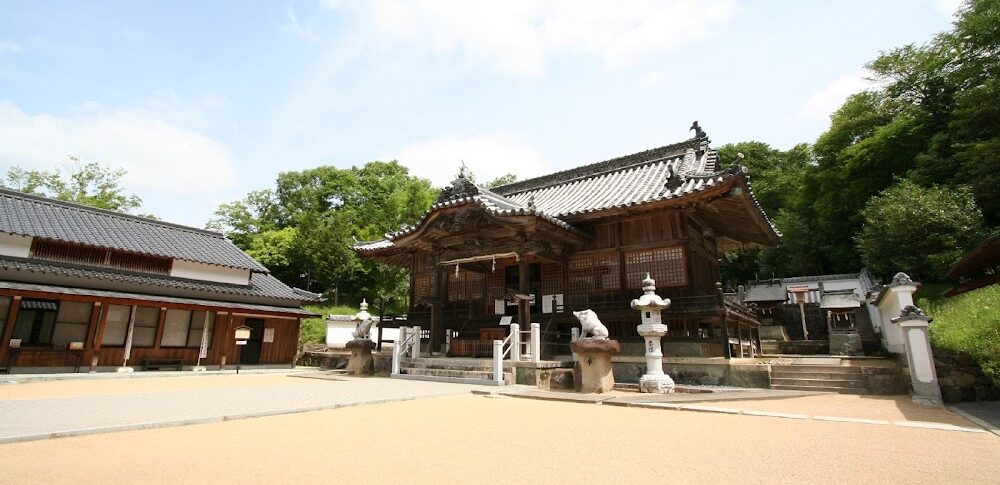
The current shrine buildings, rebuilt in Meiji 18 (1885), were constructed by a master craftsman called the finest carpenter in Kansai. These structures represent the pinnacle of architectural beauty and serve as precious cultural properties combining historical value and artistic merit.
The Enshrined Deities
The principal deity of Waki Shrine is Waki no Kiyomaro (わけのきよまろこう). Kiyomaro was born in Bizen Province (present-day Okayama Prefecture) in Tempyo 5 (733) and served the imperial court as a loyal retainer from the Nara through early Heian periods.
The most famous anecdote is the “Usa Hachiman Shrine Oracle Incident.” When Dōkyō aimed for the imperial throne, Waki no Kiyomaro was dispatched as an imperial envoy to Usa Hachiman Shrine. There he received a divine oracle stating “The imperial throne should be inherited by those of imperial lineage” and reported this truth to the court, preventing Dōkyō’s ambitions. Though temporarily demoted for this loyalty, he was later restored to favor and contributed to the construction of Heian-kyō.
According to legend, when Kiyomaro was attacked by assassins on his return from Usa and could no longer walk, he was suddenly protected by a group of 300 boars, and his foot wounds were healed. From this anecdote, boars are considered the divine messengers of Waki Shrine, and a pair of “komoinoshishi” (guardian boar statues) rather than the typical guardian dog statues stand in the shrine grounds.
Additionally, his sister Waki no Hiroko is also enshrined here. Hiroko is known as a compassionate person who cared for orphans and is said to have established Japan’s first orphanage.
First, Make an Offering! Purifying at the Water Basin
Upon visiting Waki Shrine, first purify your body and spirit at the temizusha (water purification basin) before worshipping. The temizusha is an important place where impurities are cleansed before entering the sacred grounds.
Proper Water Purification Ritual
- Take the ladle with your right hand, scoop water, and rinse your left hand
- Transfer the ladle to your left hand and rinse your right hand
- Hold the ladle in your right hand again, pour water into your left palm, and rinse your mouth (never put your mouth directly on the ladle)
- Rinse your left hand once more
- Finally, hold the ladle upright and run water down the handle to clean it, then place it upside down in its original position
Waki Shrine’s temizusha is kept clean, with care taken so that visitors can purify themselves comfortably. Calm your mind and perform the ritual with care.
Worshipping at the Oratory
After purifying yourself at the temizusha, proceed to the oratory to worship. Waki Shrine’s oratory is a solemn structure rebuilt in Meiji 18, characterized by the precise craftsmanship of the finest carpenter in Kansai.
Proper Worship Ritual
- Bow once in front of the oratory
- Quietly place your offering in the collection box
- Ring the bell if one is present
- Perform the “two bows, two claps, one bow” ritual
- Bow deeply twice
- Clap your hands twice at chest height
- Offer your prayer with sincerity
- Bow deeply once more
- Take a few steps back, bow once, and leave the oratory
Waki Shrine’s blessings are said to be four: healthy feet and legs, safe childbirth and child-rearing, exam success, and protection from bad luck. Due to the legend of Kiyomaro having his foot wounds healed by boars, many visitors come to pray for healthy feet and legs.
Worshipping at the Subsidiary Shrines
After paying respects at the main shrine, visit the subsidiary shrines on the grounds. Waki Shrine’s grounds contain multiple auxiliary shrines, each offering different blessings.
The shrine grounds are dedicated to local guardian deities and gods with connections to Kiyomaro. By respectfully visiting these auxiliary shrines in addition to the main shrine, you can deepen your spiritual connection with the shrine.
Worship at these subsidiary shrines follows the same basic ritual as at the main shrine. However, for smaller shrines, you may simplify the “two bows, two claps, one bow” ritual to a single bow followed by a prayer with clasped hands. What matters most is approaching the worship with respect.
A Spectacular Shrine Structure! The Masterpiece of Kansai’s Finest Carpenter
Waki Shrine’s buildings were rebuilt in Meiji 18 (1885) by a master craftsman renowned as “the finest carpenter in Kansai.” This shrine construction is highly regarded as a masterpiece embodying the finest architectural techniques of the Meiji period.
The shrine buildings feature a traditional irimoya (hip-and-gable) roof design characteristic of proper shrine architecture. The curved lines of the roof, the brackets beneath the eaves, and the sculptural details throughout showcase the craftsman’s exceptional skill.
The architectural style adheres to traditional shrine construction methods while incorporating the distinctive elegance and strength characteristic of the Meiji period. The vermillion-painted pillars and white walls create a beautiful contrast that appears magnificent against the blue sky on clear days.
The layout of the structures is deliberately planned, with the spatial arrangement from oratory to main shrine creating a ceremonial procession into the sacred space. To fully appreciate the architectural beauty, it is recommended to view the buildings from various angles.
Appreciating the Exquisite Sculptures and Architectural Beauty of the Main Shrine Up Close
Waki Shrine’s main shrine is renowned not only for its beautiful exterior but also for the refined sculptures adorning its details. The carvings executed by Kansai’s finest carpenter truly deserve to be called works of art.
Dragons, phoenixes, lions, and floral and avian motifs are carved beneath the eaves and in the curved gable sections of the main shrine, each displaying three-dimensional, lifelike expressions. The dragon carvings in particular are brimming with dynamism, appearing ready to spring to life.
Carved at the wooden ends of pillars are sculptures of elephants and lions, with fine details such as fur and facial expressions carefully chiseled in. These carvings serve not merely as decoration but also hold meanings of warding off evil and protecting the sacred space.
The open-work carvings in the transomed sections are also impressive, displaying various expressions depending on the angle of light. Different shadows emerge with the seasons and times of day, offering new discoveries with each visit.
When viewing the main shrine up close, pay special attention to the sculptural details. You will be able to appreciate the exceptional skill of the craftsman and the artistry imbued with reverence for the deity.
The Reason Demon Slayer is Whispered as a Sacred Site
Waki Shrine has come to be recognized as a sacred site for “Demon Slayer” because the anime’s worldview aligns remarkably with the shrine’s characteristics. While not officially designated as such, it has become a topic of discussion among fans wondering whether it was used as a model.
The main points of correspondence are as follows:
Connection to Boars
One of the main characters, Inosuke Hashibira, constantly wears a boar mask and was raised by a boar in the mountains. Waki Shrine has a nationally rare “komoinoshishi” (guardian boar statue), and legends of Kiyomaro and boars are deeply embedded in the shrine.
Wisteria Flowers
In “Demon Slayer,” wisteria flowers play an important role as a plant that demons despise. Adjacent to Waki Shrine is the Fuji Park, boasting Japan’s largest variety of wisteria species, with approximately 150 wisteria vines in bloom.
Kasumi Bridge
The shrine grounds feature “Kasumi Bridge,” a red bridge that fans associate with Muichiro Tokito, the Mist Pillar. This bridge is said to mark the boundary between the mundane and sacred worlds, creating a mystical atmosphere.
Lightning Anecdotes
The legends surrounding Waki no Kiyomaro include stories related to lightning, and some point out connections to Tanjiro Kamado’s companion Zenitsu Agatsuma, who uses the Breathing Style of Thunder.
Whether these elements are coincidental or actually served as inspiration remains unclear, but for “Demon Slayer” fans, the shrine has become a worthwhile sacred site to visit.
Demon Slayer Point ① Boars
The element at Waki Shrine most associated with “Demon Slayer” is the boar-related symbolism. The character of Inosuke Hashibira and Waki Shrine’s boar faith share remarkably striking commonalities.
The Presence of Guardian Boar Statues
While typical shrines feature guardian dog statues, Waki Shrine has a nationally rare pair of “guardian boar statues” enshrined here. This derives from the legend of Waki no Kiyomaro being saved by boars, making it a symbolic presence of the shrine.
The pair of guardian boar statues placed before the oratory display valiant yet endearing expressions, with many visitors taking photographs of them. These boar statues, reminiscent of Inosuke’s boar mask, have become must-see spots for “Demon Slayer” pilgrims.
The Touching Boar
The grounds also feature a “touching boar” statue. Visitors can rub the parts of this boar statue corresponding to areas of their own body where they have health concerns, praying for wellness.
Due to the legend of Kiyomaro having his foot wounds healed by boars, many people rub the statue’s feet in particular, praying for healthy legs and feet. The feet of the touching boar statue have taken on a glossy sheen from the many hands that have touched it.
Among “Demon Slayer” fans, some rub this touching boar hoping to gain Inosuke’s robust physical strength.
Boar Decorations in the Connecting Structure
Boar decorations and sculptures can also be seen in the watari-dono (connecting structure) joining the oratory and main shrine. These serve to visually express the shrine’s history and the legend of Kiyomaro, becoming important elements in the shrine’s narrative.
The carvings in the connecting structure include representations of the boar herds that protected Kiyomaro, depicted with dynamic vitality. The boars are carved with meticulous detail, demonstrating the high technical skill of the craftsman.
The Boar Shishi Dance
During the shrine’s annual festival, a traditional performing art called “boar shishi dance” is presented. This is a rare Shinto ritual in which a dancer wearing a boar mask performs, conveying the connection between Kiyomaro and boars to the present day.
This boar shishi dance directly overlaps with the image of Inosuke wearing his boar mask, making it an element “Demon Slayer” fans cannot miss. The annual festival occurs only once a year, so it is recommended to check the schedule and plan a visit accordingly.
Demon Slayer Point ② Wisteria
In the world of “Demon Slayer,” wisteria flowers play an important role as a plant that demons loathe. Poison made from wisteria flowers and places where wisteria blooms abundantly are depicted as safe zones where demons cannot approach.
Adjacent to Waki Shrine is “Waki Town Fuji Park,” known as a premier wisteria destination boasting Japan’s largest variety. Approximately 150 wisteria vines representing over 100 varieties are planted here, and from late April through early May each year, spectacular wisteria trellises spread across the grounds.
Highlights of Fuji Park
The park extends approximately 500 meters in total length, with wisteria in purple, white, pink, and various other colors in full bloom. Due to the diversity of varieties from early to late bloomers, visitors can enjoy wisteria flowers for approximately one month.
Particularly spectacular is the trellis tunnel stretching over 100 meters in length. The wisteria flowers overhead hang down like a purple waterfall, creating an fantastical space. This sight brings to mind the Wisteria Palisade Mountain from “Demon Slayer,” offering fans an emotionally moving experience.
Wisteria Festival
The “Wisteria Festival” held from late April through early May each year attracts numerous tourists. Evening illuminations are also provided, allowing visitors to enjoy the wisteria’s beauty in a different light than daytime.
The illuminated wisteria trellises possess an otherworldly beauty, creating the sensation of stepping into the world of “Demon Slayer.” The area is also popular for photography, with visitors praising its photogenic quality for social media.
The Relationship Between Shrine and Wisteria
Waki Shrine and Fuji Park are adjacent, allowing visitors to enjoy both worship and wisteria viewing in one visit. Visiting during peak wisteria bloom enhances the shrine’s solemn atmosphere combined with the flowers’ elegance, deepening one’s sense of the “Demon Slayer” worldview.
Wisteria is also planted within the shrine grounds, offering beautiful photographic opportunities with the contrast between the shrine buildings and wisteria flowers. Particularly on clear days, the harmony of colors among the blue sky, vermillion shrine buildings, and purple wisteria is striking.
Demon Slayer Point ③ The “Kasumi Bridge” and “Lightning” Anecdotes
The shrine grounds feature “Kasumi Bridge,” a small bridge painted in vermillion red. This bridge marks the boundary between the mundane and sacred realms, with crossing it intended to cleanse impurities and enter the sacred space.
Kasumi Bridge and Muichiro Tokito
For “Demon Slayer” fans, the name “Kasumi” (mist) evokes Muichiro Tokito, the Mist Pillar. Muichiro is a user of Mist Breathing and plays an important role in the series.
Kasumi Bridge is a small red bridge spanning a stream, creating a beautiful landscape in harmony with the surrounding greenery. The view of the shrine grounds from the bridge is exceptional and serves as a popular photography spot.
The bridge’s name is said to derive from the appearance of morning mist or the mystical atmosphere of the location. This mysticism resonates with the worldview of “Demon Slayer,” capturing fans’ hearts.
Lightning-Related Anecdotes
The legends surrounding Waki no Kiyomaro also include anecdotes related to lightning. There are accounts of Kiyomaro making important decisions amid thunder and tales of his receiving divine protection from the thunder god.
This lightning element evokes Zenitsu Agatsuma from “Demon Slayer,” who uses Thunder Breathing. Despite his timid nature, Zenitsu is a practitioner of Thunder Breathing who demonstrates formidable power.
Among “Demon Slayer” fans visiting Waki Shrine, Zenitsu enthusiasts often take interest in the lightning anecdotes. Learning the shrine’s history allows fans to appreciate it from a different perspective than the anime.
Other Related Elements
The grounds contain other elements that evoke “Demon Slayer.” For instance, the solemn atmosphere of the shrine and the old trees lining the approach path harmonize well with the Taishō period setting of the anime.
Additionally, Waki no Kiyomaro’s spirit of loyalty parallels the willingness of Demon Slayer Corps members to risk their lives protecting people. Waki Shrine holds special significance as a place where the stories of historical figures and anime worlds intersect.
Adorable Cherry Blossom Lace Charms
Waki Shrine distributes various types of talismans. Particularly popular are the “cherry blossom lace charms.”
These charms feature delicate lace patterns with cherry blossom designs, making them extremely cute. With soft colors featuring pink and white tones, they are especially popular among women.
The blessings of the cherry blossom lace charm include romantic connections, love fulfillment, and good relationships. The delicacy of the lace represents the threads connecting people, and it is recommended for those wishing to deepen bonds with loved ones.
The charm designs change with the seasons, so each visit may bring encounters with new designs. They make wonderful personal keepsakes as well as thoughtful gifts.
Additionally, various other charms are available corresponding to the shrine’s blessings: healthy feet and legs, exam success, and safe childbirth. Each charm carries the sincere devotion of the shrine priest.
Delicate Cut-Paper Goshuin Stamps
Waki Shrine offers beautiful goshuin (shrine visit stamps). Particularly popular are special goshuin stamps featuring intricate cut-paper designs.
Standard goshuin stamps feature calligraphic shrine names, visit dates, and shrine seals in simple ink, but during special occasions or limited periods, artistic goshuin stamps with cut-paper or appliqué designs are distributed.
Cut-paper goshuin stamps are characterized by delicate patterns meticulously cut by craftspeople, often featuring motifs such as wisteria flowers, boars, and Kasumi Bridge. These motifs represent the shrine’s distinctive characteristics while delighting “Demon Slayer” fans with appealing designs.
Goshuin stamps are distributed as proof of worship, so be sure to complete your prayers before requesting one at the shrine office. Bring a goshuin book and request one politely.
Special goshuin stamps are sometimes limited in quantity, so it is recommended to check the shrine’s official information and social media in advance. For collectors of goshuin stamps, Waki Shrine’s stamps become valuable additions to their collections.
Warm Messages from the Shrine Priest
The shrine priest of Waki Shrine is known for welcoming each visitor warmly. The priest demonstrates understanding toward “Demon Slayer” fan pilgrimages and shows a welcoming attitude.
The priest notes that it is wonderful when anime inspires interest in shrines, history, and culture. The priest hopes that visitors to Waki Shrine will not only enjoy the “Demon Slayer” worldview but also learn about Waki no Kiyomaro’s accomplishments and Japanese history.
At shrines, it is important to maintain proper worship etiquette and visit with respect. Photography is permitted, but consideration for other worshippers is essential, and it is important to remember the sacred nature of the location.
The priest states: “A shrine is a place of prayer and a space for purifying the heart. Whether you are an anime fan or not, we wish it to be a place where all visitors can worship in peace.”
Additionally, the upkeep and maintenance of the shrine grounds require considerable effort. As a visitor, you can express gratitude to the shrine by taking away any trash, avoiding damage to vegetation, and maintaining silence during worship.
Access Information and Worship Tips
Basic Information
Address: 1385 Fujino, Waki Town, Waki District, Okayama Prefecture 709-0412
Phone: 0869-93-3910
Worship Hours: Grounds always open (Shrine office typically 9:00-17:00)
Parking: Available (free; may be fee-based during Wisteria Festival)
Access Methods
By Train
Take the JR Sanyo Main Line to Waki Station, then approximately 10 minutes by taxi or 30 minutes on foot
By Car
Approximately 10 minutes from Waki IC on the Sanyo Expressway
Approximately 15 minutes from Bizen IC on the Sanyo Expressway
Best Seasons to Visit
Wisteria Bloom Season (Late April – Early May)
When Fuji Park’s wisteria is in full bloom, this season best captures the “Demon Slayer” worldview. However, crowding is expected during the Wisteria Festival period.
Fresh Greenery Season (May – June)
Following the Wisteria Festival, this quieter period offers beautiful green surroundings and leisurely worship opportunities.
Autumn Foliage Season (November)
The trees on the grounds take on fall colors, allowing visitors to enjoy the autumn atmosphere.
New Year’s Visits (January)
Pray for the year’s safety and blessings during New Year shrine visits.
Nearby Tourist Attractions
When visiting Waki Shrine, it is recommended to also tour nearby attractions:
Waki Town Fuji Park: Adjacent to the shrine, a premier wisteria destination boasting Japan’s largest variety
Waki Town Hot Spring: A hot spring facility offering day-use bathing
Waki Town History and Folk Museum: Learn about Waki no Kiyomaro’s history
Important Notes for Worship
- Remember the sacred nature of the location and approach with respect
- Refrain from loud conversation or disruptive behavior
- Photography is permitted, but maintain consideration for other visitors
- Always take trash with you when leaving
- Avoid touching or damaging shrine vegetation and structures
- If considering cosplay when visiting, it is recommended to confirm with the shrine in advance
Conclusion: Experiencing the Fusion of History and Anime at Waki Shrine
Waki Shrine, nestled in Waki Town, Okayama Prefecture, is a special place where history spanning from the Nara period beautifully fuses with contemporary pop culture.
The legend of Waki no Kiyomaro and boars, wisteria flowers boasting Japan’s largest variety, anecdotes of Kasumi Bridge and lightning—elements scattered throughout evoke the worldview of “Demon Slayer.” Though not officially designated as a sacred site, the number of commonalities seems too great to be mere coincidence.
For “Demon Slayer” fans, the shrine is a sacred site where one can worship while recalling anime characters and storylines. For history enthusiasts, it is a precious place to learn about Waki no Kiyomaro’s accomplishments, which left a significant mark on Japanese history.
Beautiful shrine buildings crafted by Kansai’s finest carpenter, refined sculptures, the nationally rare guardian boar statues, and the warm hospitality of the shrine priest—Waki Shrine offers fresh discoveries and emotional experiences with each visit.
For those who first arrive due to the anime, the worship experience can become an opportunity to reflect on Japanese history, culture, and the significance of shrines. Waki Shrine is a special place where the modern and historical, entertainment and faith, intersect.
When visiting Okayama Prefecture, be sure to stop by Waki Shrine. Whether visiting during peak wisteria season or any other time of year, you will discover unique charm. As a pilgrimage, historical exploration, or spiritual renewal—Waki Shrine welcomes all visitors with warmth.