![[Demon Slayer] Washitaka Shrine Tokyo](https://anime-place.site/cms/wp-content/uploads/2026/06/places-3803-【鬼滅の刃】鷲神社東京都完全ガイド聖地巡礼で訪れるべき理由と見どころ.jpg)
Why Otori Shrine Has Become Noted as a Sacred Site for Demon Slayer
Otori Shrine (鷲神社), located in Senzoku, Taito Ward, Tokyo, has drawn attention among Demon Slayer fans as a pilgrimage site. Among the various locations throughout Japan connected to Demon Slayer, it is popular as a shrine easily accessible within Tokyo.
The connection between Otori Shrine and Demon Slayer is largely due to its location in the Asakusa area of Tokyo during the Taisho period, which serves as the setting for the work. The story’s depiction of Tanjiro and his companions’ activities includes the streetscapes and atmosphere of Asakusa, and Otori Shrine, situated in the surrounding area, has become a precious spot where one can experience the world of the work.
Deep Connection Between Asakusa Area and Demon Slayer
Asakusa is known as a historic entertainment district continuing from the Edo period, and during the Taisho era it was Tokyo’s premier entertainment hub. In Demon Slayer, the bustling streets of Asakusa and the culture of that time are depicted carefully. Otori Shrine, positioned in this Asakusa area, attracts high attention from pilgrims as a precious shrine conveying the atmosphere of the Taisho period to the present day.
Upon entering the precincts, a serene space unfolds away from the hustle and bustle of the city, creating a sensation as if one has time-slipped into the Taisho era beyond the ages. This unique atmosphere becomes the element that creates the “sense of unity with the work’s world” that Demon Slayer fans seek.
History and Origins of Otori Shrine
Faith Continuing from Founding to Modern Times
Otori Shrine has a long history, enshrining Amanotajikarao no Mikoto and Yamato Takeru no Mikoto as its deities. Amanotajikarao no Mikoto, as a deity of good fortune, development, and business prosperity, has been worshipped at this location since ancient times.
According to the shrine’s records, when Yamato Takeru no Mikoto conducted his eastern campaign, he prayed for victory at this location, and after achieving it, hung a kumade (decorative rake) on the pine tree before the shrine to celebrate the victory. This day happened to be the Day of the Rooster in November, and establishing this day as the festival day led to the origins of the annual festival “Tori no Ichi” (Rooster Market) that continues to this day.
Tori no Ichi Tradition Continuing from the Edo Period
Otori Shrine is nationally known as the birthplace of “Tori no Ichi.” During the Edo period, Tori no Ichi was already conducted on a grand scale, and the custom of people gathering to seek kumade in hopes of business prosperity became established. This tradition has been passed down to the present day, with hundreds of thousands of worshippers filling the precincts on the Days of the Rooster each November.
During the Taisho period, Tori no Ichi occupied an important place among Tokyo’s annual events, with aspects that align with Demon Slayer’s historical setting. By visiting the shrine while feeling the world of the work, one can develop a deeper understanding of people’s lives and culture of that era.
Precincts Guide and Highlights of Otori Shrine
Charm of the Main Hall and Worship Hall
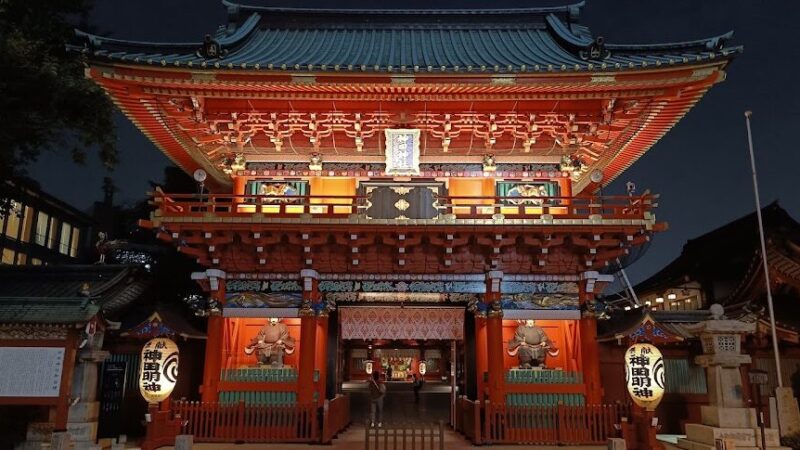
The main hall of Otori Shrine conveys the beauty of traditional shrine architecture to the present day. Upon entering the precincts, the first thing to catch one’s eye is the impressive worship hall. Worshippers clasp their hands before the worship hall and offer prayers with various wishes in mind—good fortune, business prosperity, academic success, and protection from misfortune.
The decorations of the worship hall feature delicate carvings, allowing one to feel the pinnacle of craftsman technique continuing from the Edo period. Of particular note are the designs with the “eagle” motif that gives the shrine its name. One can find eagle designs throughout the precincts, each telling the history and traditions of the shrine.
“Kumade” as Symbol of Tori no Ichi
Visitors to Otori Shrine will surely see the “kumade” (decorative rake), known as an auspicious item for business prosperity. During the Tori no Ichi period, numerous kumade shops line the precincts, selling kumade of various sizes. The kumade carries the meaning of “gathering good fortune,” making it popular not only among merchants but also with general worshippers.
Even during regular visiting periods, one can receive kumade and amulets from the shrine office. As a memento of your Demon Slayer sacred site pilgrimage, taking home a kumade for prosperity and good fortune is a fine choice.
Points of Interest in the Precincts
Beyond the main hall and worship hall, there are several noteworthy spots within the precincts. At the water ablution basin, one can purify mind and body with clean water before worshipping. The small shrine buildings enshrined as subsidiary shrines are also not to be missed.
At the shrine office, one can receive goshuin (shrine stamps). Among Demon Slayer fans, collecting goshuin is popular as proof of sacred site pilgrimage. Otori Shrine’s goshuin is characterized by powerful brushwork, with many visitors treasuring their collection as memorials of their visit.
Connection with Demon Slayer Characters
Link Between the Work’s World and Asakusa
In the story of Demon Slayer, Asakusa appears as one of the important settings. It was in the streets of Asakusa where Tanjiro, the protagonist, first confronted Muzan Kibutsuji. This impressive scene remains deeply etched in the memories of many fans.
Otori Shrine, located in the Asakusa area where the story is set, does not appear directly in the work, but as part of the Asakusa streets where Tanjiro and his companions walked, it has become a precious place where one can experience the world of the work. Walking the precincts while thinking of the Taisho-era Asakusa will deepen one’s understanding of the work.
A Sacred Site Feeling the Taisho-Era Tokyo
Demon Slayer is set during the Taisho period. Tokyo during this era was experiencing rapid modernization while retaining strong traditional culture from the Edo period. Otori Shrine embodies precisely these two aspects, conveying the atmosphere of that time to the present.
Strolling around the shrine’s surroundings reveals a unique landscape where modern buildings mix with older structures. This scenery evokes the Tokyo of the Taisho period where tradition and innovation intersected, with many elements overlapping with the worldview of Demon Slayer.
Goshuin Information and Items Bestowed
Goshuin of Otori Shrine
Otori Shrine offers goshuin throughout the year. The goshuin is bestowed at the shrine office, with an initial offering of approximately 300-500 yen, following general market rates. The goshuin features the calligraphy “Otori Shrine” and the shrine’s stamp, characterized by a simple yet powerful design.
Many people carry goshuin books as a memento of sacred site pilgrimage, collecting stamps from various Demon Slayer-related shrines across the country. Otori Shrine’s goshuin is one entry on the Tokyo metropolitan sacred site pilgrimage course—definitely a piece worth recording.
Special Goshuin Limited to Tori no Ichi Period
During the Tori no Ichi period each November, special goshuin may be bestowed. This period is extremely crowded, so receiving a goshuin may take considerable time, but it represents a once-yearly precious opportunity that many worshippers seek out.
Amulets and Auspicious Items
Otori Shrine offers various amulets and auspicious items. In addition to business prosperity amulets, there are offerings for good fortune, academic success, and protection from misfortune, providing a diverse range of benefits.
Particularly popular are small amulets shaped like kumade, which despite their portable size convey the character of Otori Shrine and are well-received. As a memento of your Demon Slayer sacred site pilgrimage and as a daily good fortune item, please do pick one up.
Access Methods and Basic Information
Access by Train
Train access to Otori Shrine is convenient. Multiple stations serve the area, with the following routes available:
From Tokyo Metro Hibiya Line “Iriya Station”
- Approximately 7 minutes walk from North Exit 3
- The route along Kokusai Street heading north is easy to follow
From Tokyo Metro Hibiya Line “Minowa Station”
- Approximately 8 minutes walk from South Exit
- Route heading south along Showa Street
From Tsukuba Express “Asakusa Station”
- Approximately 10 minutes walk
- Convenient for combining with Asakusa sightseeing
From Asakusa Line, Tobu Skytree Line, Tokyo Metro Ginza Line “Asakusa Station”
- Approximately 15 minutes walk
- Easy to combine with other tourist spots like Senso-ji Temple
Location and Basic Information
Location: 3-18-7 Senzoku, Taito Ward, Tokyo
Shrine Classification: Village shrine
Annual Festival: Day of the Rooster in November (Tori no Ichi)
Visiting Hours: Generally open to worship 24 hours (Shrine office reception hours approximately 9:00-17:00)
Official Website: https://otorisama.or.jp/
Parking Information in Surrounding Area
Otori Shrine has no dedicated parking lot, so visitors arriving by car must use coin parking in the surrounding area. However, the Asakusa area has narrow roads, and especially on weekends or during Tori no Ichi, congestion is severe, making public transportation strongly recommended.
Sacred Site Pilgrimage Spots Around Otori Shrine
Senso-ji Temple and Nakamise Shopping Street
Within walking distance of Otori Shrine is Senso-ji Temple, one of Tokyo’s representative tourist attractions. Senso-ji Temple also serves as an important stage in Demon Slayer, representing the Taisho-era Asakusa, making it recommended to incorporate into your pilgrimage course.
Along Nakamise Street, one can enjoy food sampling and souvenir shopping in a retro atmosphere conveying Taisho romanticism. Walking while imagining the streets of Asakusa where Tanjiro walked heightens the sense of immersion in the work.
History of the Yoshiwara Area
Near Otori Shrine spreads an area that was once the site of the Yoshiwara pleasure district. Yoshiwara, continuing from the Edo period, has drawn attention from some fans as a place where one can feel the atmosphere of the pleasure district arc featured in Demon Slayer.
While little remains of that era today, traces of history can be found in place names and street names. Those interested in history may enjoy exploring the area while learning about Yoshiwara’s history.
Other Demon Slayer Sacred Sites in Tokyo
Several other Demon Slayer-related sacred sites exist within Tokyo besides Otori Shrine.
Kumotori Mountain (Border of Tokyo, Saitama, and Yamanashi Prefectures)
- Said to be modeled after Tanjiro Kamado’s hometown
- Serious mountaineering required; proper preparation necessary
Takinokawa Hachiman Shrine (Kita Ward, Tokyo)
- Known as a shrine connected to Shinobu Kocho
- Goshuin books with butterfly motifs are popular
Combining these spots with Otori Shrine for planning a Tokyo metropolitan pilgrimage route is also recommended.
Visiting Manners and Precautions
Basic Etiquette for Shrine Visiting
When visiting Otori Shrine, observe basic shrine visiting etiquette.
How to Pass Through Torii Gates
- Bow once before passing through the gate
- Walk along the edges of the path, as the center is considered the deity’s passage
Procedure at the Water Ablution Basin
- Take the ladle with the right hand and purify the left hand
- Transfer to the left hand and purify the right hand
- Take with the right hand again, receive water in the left hand, and rinse the mouth
- Purify the left hand once more
- Hold the ladle vertically and purify its handle, returning it to its original place
Worship Procedure at the Worship Hall
- Two bows, two hand claps, one bow (Nihon-rei nihon-hakushu ichirei)
- Place offerings quietly rather than tossing them
- Express wishes silently in your heart
Consideration During Photography
Those taking photographs for sacred site pilgrimage should note the following:
- Interior of the main hall and shrine office are often photography-prohibited
- Be considerate that other worshippers do not appear in shots
- Refrain from using tripods during crowded times
- Avoid flash photography
- Be careful with location information when posting to SNS
Precautions During Tori no Ichi Period
The Tori no Ichi period in November anticipates congestion incomparable to usual times.
- Expect that worship may take considerable time
- Exercise sufficient care with valuables
- Particular caution needed if accompanied by young children
- Think through how to carry purchased kumade in advance
- Prepare adequate cold-weather protection (November nights are chilly)
Benefits of Otori Shrine and Its Appeal as a Power Spot
Business Prosperity and Good Fortune
The main benefit of Otori Shrine is business prosperity. Amanotajikarao no Mikoto, the enshrined deity, as a god of good fortune and development, has long been worshipped by merchants. The kumade bestowed during Tori no Ichi, as an auspicious item for “gathering good fortune,” sees business owners and merchants visiting annually to seek one.
Beyond business prosperity, general worshippers are also said to receive benefits of good fortune. When facing life’s turning points or beginning something new, worshipping at the shrine is believed to attract positive fortune.
Academic Success and Protection from Misfortune
Otori Shrine is said to offer benefits of academic success and protection from misfortune. Exam candidates and those facing qualification tests often visit to pray for passing, and many votive plaques are offered within the precincts.
Those entering inauspicious years or facing life’s transitions can receive purification rituals at Otori Shrine. Details can be obtained by contacting the shrine office.
Recognition as a Power Spot
Otori Shrine is also known as a power spot within Tokyo. Upon entering the precincts, a serene air flows away from urban bustle, and many worshippers feel their hearts calm. Early morning visits are particularly popular for refreshing mind and body in clear morning air. Beyond serving as a Demon Slayer sacred site pilgrimage destination, the shrine merits a visit as part of power spot touring.
Annual Events and Festivals at Otori Shrine
Tori no Ichi (November)
The largest event at Otori Shrine is “Tori no Ichi,” held on Days of the Rooster each November. Depending on the year, “First Rooster,” “Second Rooster,” and sometimes “Third Rooster” occur, with hundreds of thousands of worshippers visiting on each day.
During Tori no Ichi, approximately 150 shops line the precincts and surroundings, selling kumade and other auspicious items. Festivities continue late into the night, becoming a hallmark of Tokyo’s late autumn.
Kumade prices range from several thousand yen to hundreds of thousands of yen, selectable according to business scale and personal preference. The “hand closing” when purchasing kumade is also a feature of Tori no Ichi, with spirited voices resounding through the precincts.
Annual Festival and Monthly Rituals
Beyond Tori no Ichi, Otori Shrine conducts various ceremonies throughout the year. The annual festival is the most important rite for the shrine, conducted with solemn ritual.
Monthly rituals are conducted regularly as part of the shrine’s daily worship activities and are held dear. Attending these ceremonies allows one to understand the shrine’s traditions and culture more deeply.
New Year’s Visits and Year-Round Observances
The New Year visiting period also brings many worshippers to Otori Shrine. Business owners praying for prosperity and general worshippers wishing for new year’s fortune visit from New Year’s Day through the third day.
Additionally, various seasonal events such as Setsubun Festival and summer purification rites are conducted, providing opportunities to visit throughout the year.
Sacred Site Pilgrimage Plan for Demon Slayer Fans
Half-Day Course: Asakusa Area Concentrated Plan
Morning
- 10:00 Arrive at Asakusa Station
- 10:15 Visit Senso-ji Temple, explore Nakamise Street
- 11:30 Lunch in the Asakusa area
Afternoon
- 13:00 Move to Otori Shrine (15-minute walk)
- 13:15 Visit Otori Shrine, receive goshuin
- 14:00 Explore nearby Yoshiwara area (history exploration)
- 15:00 Café time near Asakusa Station
This course allows you to efficiently cover the main Demon Slayer-related spots in the Asakusa area in half a day.
Full-Day Course: Tokyo Metropolitan Sacred Site Pilgrimage
Morning
- 9:00 Visit Takinokawa Hachiman Shrine (connected to Shinobu Kocho)
- 10:30 Explore Kita Ward area
- 12:00 Lunch
Afternoon
- 14:00 Visit Senso-ji Temple
- 15:00 Visit Otori Shrine
- 16:00 Explore Asakusa area
- 17:30 Skytree observation (optional)
A plan to visit multiple sacred sites within Tokyo over a full day. Considering travel time, it is important to arrange a schedule without undue strain.
Best Photography Spots
For commemorative photos at Otori Shrine, the following spots are recommended:
- Before the torii gate and shrine nameplate
- In front of the worship hall (avoid interfering with other worshippers during busy times)
- Stone lanterns and guardian dogs in the precincts
- With kumade as background during Tori no Ichi
Early mornings or weekday mornings are relatively uncrowded, allowing leisurely photography.
Voices of Those Who Have Visited Otori Shrine
Impressions of Sacred Site Pilgrims
Demon Slayer fans who visited Otori Shrine frequently comment, “I could feel the Taisho-era atmosphere” and “my understanding of the work deepened while learning Asakusa’s history.” Particularly when visiting alongside Senso-ji Temple, many report experiencing the streets where Tanjiro walked, with high satisfaction ratings for this pilgrimage spot.
Evaluation by Goshuin Collectors
Those who collect goshuin as a hobby praise Otori Shrine’s goshuin as “simple yet powerful.” The special goshuin during Tori no Ichi is particularly popular, with collectors looking forward to it each year.
Frequently Visited Shrine
Otori Shrine sees many repeat visitors after their first visit. Whether experiencing the bustle of Tori no Ichi or visiting on a quiet weekday morning to calm the spirit, different charms can be discovered with each visit.
Conclusion: Experience the World of Demon Slayer at Otori Shrine
Otori Shrine, located in Taito Ward, Tokyo, possesses numerous attractions both as a Demon Slayer sacred site pilgrimage destination and as a historic shrine. Positioned in Asakusa, the setting of the work, its precincts convey the atmosphere of the Taisho period to the present, offering a special experience for fans.
Known for benefits of business prosperity and good fortune, it draws hundreds of thousands each November during Tori no Ichi, while ordinarily serving as a power spot where serene air flows. With abundant offerings including goshuin and kumade, one can preserve memories of the visit tangibly.
Its easy accessibility within walking distance of Asakusa Station, combined with proximity to other tourist spots like Senso-ji Temple and Nakamise Street, makes it convenient to visit alongside other attractions. When planning a Demon Slayer sacred site pilgrimage in Tokyo, be sure to visit Otori Shrine and spend special time where the work’s world and history intersect.
By observing visiting etiquette and showing respect for the shrine’s history and traditions while fully enjoying the Demon Slayer worldview, your sacred site pilgrimage will be truly fulfilling. Among Demon Slayer-related locations nationwide, Otori Shrine, easily accessible in central Tokyo, is the ideal first step in sacred site pilgrimage.