Introduction: What is “Ganba-Tte-Iki-Masshoi”
“Ganba-Tte-Iki-Masshoi” is a youth rowing club story set in Matsuyama City, Ehime Prefecture. Based on the novel of the same name by Yoshiko Shikimura, the film adaptation released in 1998 became a masterpiece that touched the hearts of many people, starring Rena Tanaka.
Against the beautiful landscapes of Ehime Prefecture and the backdrop of the Seto Inland Sea, this work depicts high school students dedicating their youth to rowing competition. It continues to be beloved not only by people in Ehime Prefecture but also by film fans throughout Japan.
Many filming locations that served as the setting for the work still exist within Matsuyama City, making them highly worthwhile spots for pilgrimage tourism. This article provides detailed introductions to “Ganba-Tte-Iki-Masshoi” pilgrimage sites in Ehime Prefecture.
What is Pilgrimage Tourism for “Ganba-Tte-Iki-Masshoi”
Pilgrimage tourism refers to visiting actual locations that served as the settings for films, anime, novels, and other works. In the case of “Ganba-Tte-Iki-Masshoi,” you can visit locations centered in Matsuyama City, Ehime Prefecture, where actual filming took place and where the story was set.
By visiting actual locations after watching the work, you can understand the feelings of the characters more deeply, and your affection for the work will grow even stronger. Additionally, since you can enjoy it as a charming tourist spot in Matsuyama City, it becomes a two-birds-with-one-stone travel experience.
Major Pilgrimage Sites in Matsuyama City, Ehime Prefecture
Shigenobu River (Shigenobu-gawa)
The Shigenobu River is one of the most important pilgrimage sites in “Ganba-Tte-Iki-Masshoi.” Many of the scenes in the film where the main characters work hard on rowing practice were shot at this river.
Highlights:
- Rowing practice scene filming location
- Beautiful river landscape flowing into the Seto Inland Sea
- Views from the riverbank
Access:
Approximately 15 minutes walk from “Takubo Station” on the Iyo Railway Yokogawara Line. By car, it takes about 20 minutes from Matsuyama IC, with parking spaces available on the riverbank.
Visit Pointers:
If you visit early morning or in the evening, you may actually be able to see rowing club practice. This time of day is recommended for feeling the atmosphere of the film even more.
Around Matsuyama Kita High School
The high school that served as the setting for the film is said to be modeled after Matsuyama Kita High School. While you cannot enter the school grounds, the surrounding townscape retains the atmosphere of that time.
Highlights:
- Townscape around the high school
- Roads used as commute routes
- School’s exterior (from near the main gate)
Access:
Approximately 10 minutes walk from “Kitakume Station” on the Iyo Railway.
Visit Notes:
Since it is a currently active school facility, you should view it quietly during class hours or school events, and be considerate so as not to disturb students. Unauthorized entry into the grounds is strictly prohibited.
Dogo Onsen Honkan
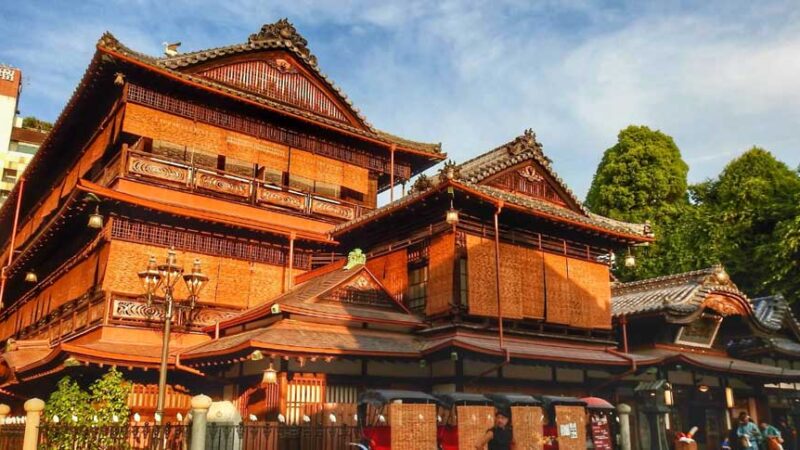
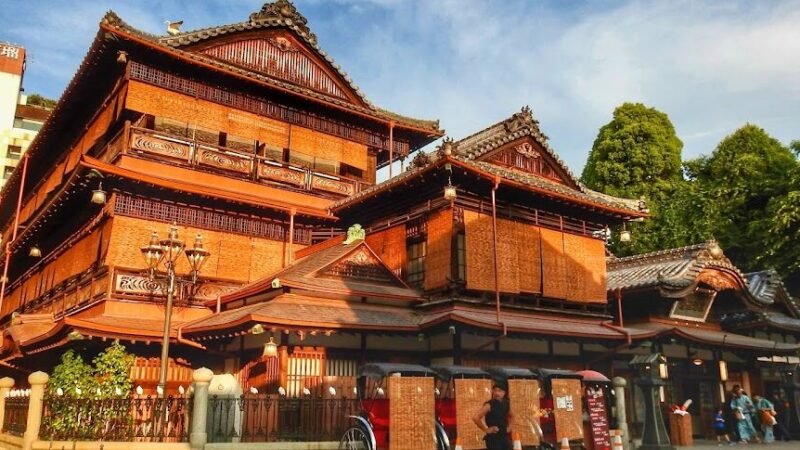
Dogo Onsen Honkan, a representative tourist spot in Matsuyama City, also appears in the work. It is depicted as part of the background of the protagonist’s daily life and as a place symbolizing the city of Matsuyama.
Highlights:
- Historic building designated as a National Important Cultural Property
- Hot spring related to Soseki Natsume’s “Botchan”
- Surrounding shopping streets
Access:
5 minutes walk from “Dogo Onsen Station” on the Iyo Railway city tram.
How to Enjoy:
You can have a deeper experience of Ehime Prefecture’s culture by actually taking a bath at the hot spring between pilgrimage stops. Dogo Onsen Honkan has multiple bathing courses, including a course where you can use the rest room on the second floor.
Around Matsuyama Castle
Matsuyama Castle, the symbol of Matsuyama City, and its surroundings also appear in the film as important places for expressing the city of Matsuyama.
Highlights:
- View of Matsuyama cityscape from the keep
- Shiroyama Park
- Rope way and lift
Access:
5 minutes walk from “Okaido Station” on the Iyo Railway city tram to the rope way station.
Visit Pointers:
The view of Matsuyama city below from the castle keep is an excellent spot where you can see the entire city that served as the setting for the work. The scenery is especially beautiful during cherry blossom season and autumn foliage season.
Around Mitsu Harbor
The area around Mitsu Harbor facing the Seto Inland Sea is known as a location for filming sea scenes and scenes capturing the atmosphere of a port town.
Highlights:
- Retro port town atmosphere
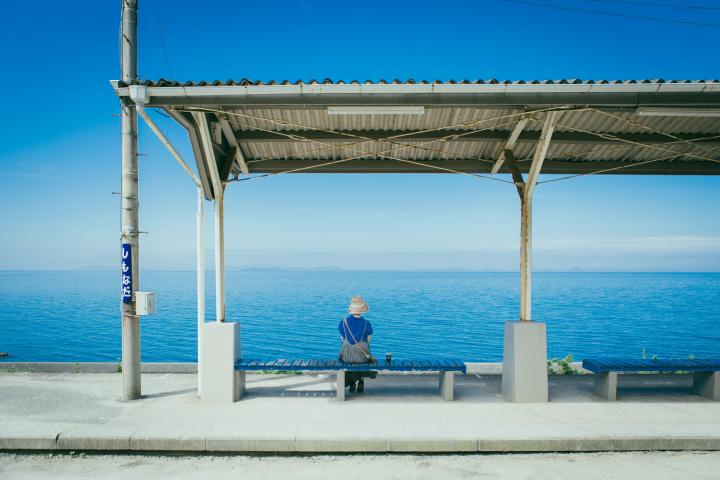
- View of the Seto Inland Sea
- Mitsu no Watashi (one of Japan’s oldest ferries)
Access:
Approximately 10 minutes walk from “Mitsu Station” on the Iyo Railway Takahama Line.
Visit Pointers:
“Mitsu no Watashi” still operates and can be used for free. The short ferry ride offers a valuable experience retaining strong Showa-era atmosphere.
Pilgrimage Model Courses
1-Day Course: Efficiently Tour Matsuyama City
Morning:
- 9:00 Depart from Matsuyama City Station
- 9:30 View the rowing practice scene location at Shigenobu River (1 hour)
- 11:00 Stroll around Matsuyama Kita High School (30 minutes)
- 11:45 Head to Matsuyama Castle, take the rope way up
- 12:00 Visit Matsuyama Castle and have lunch (2 hours)
Afternoon:
- 14:00 Head to Dogo Onsen Honkan
- 14:30 Bathe at Dogo Onsen and explore the area (2 hours)
- 16:30 Head to Mitsu Harbor
- 17:00 Explore Mitsu Harbor area, view sunset (1 hour)
- 18:00 Dinner in Matsuyama City
2-Day Course: Leisurely Enjoy Ehime
Day 1:
- Tour major sites in Matsuyama City (Shigenobu River, Matsuyama Kita High School area, Matsuyama Castle)
- Stay overnight at Dogo Onsen
Day 2:
- Explore the area around Dogo Onsen
- Mitsu Harbor area
- If time permits, extend to the islands of the Seto Inland Sea
Information Useful for Pilgrimage Tourism
Transportation
Train and City Tram:
The Iyo Railway streetcar (city tram) connects major spots in Matsuyama City and is ideal for pilgrimage tourism. Purchasing a 1-day pass (800 yen for adults) is convenient and economical.
Rental Bicycle:
Matsuyama City has a rental bicycle service called “City Cycle” where you can borrow and return at multiple stations. Pilgrimage tourism by bicycle is also comfortable.
Rental Car:
For visiting locations like Shigenobu River that are difficult to access by public transportation, a rental car is convenient. Rental car companies are located around Matsuyama Airport and Matsuyama Station.
Accommodations
Around Dogo Onsen:
Ideal as a base for pilgrimage tourism. There are a wide range of options from long-established inns to affordable hotels.
Matsuyama City Center:
Many business hotels with relatively affordable rates. Good access to all locations by city tram.
Food and Gourmet Information
When visiting Matsuyama City in Ehime Prefecture, be sure to enjoy local cuisine.
Tai Meshi:
A local dish of Ehime Prefecture. There are Matsuyama-style and Uwajima-style versions, both exquisite.
Jako-ten:
Fried fish paste, a specialty of Ehime. Delicious eaten plain or added to udon.
Mikan Sweets:
Ehime is known for tangerines. There are various sweets using mikan including juice, gelato, and cake.
Botchan Dango:
A three-colored dango famous at Dogo Onsen. Perfect as a souvenir.
Notes and Etiquette for Pilgrimage Tourism
Consideration for Private Land and School Facilities
Locations like Matsuyama Kita High School are private property currently in use. Absolutely avoid unauthorized entry into the grounds and view from outside quietly. When photographing, be careful not to include students or staff members.
Consideration for Local Residents
Most pilgrimage sites are within the living areas of local residents. Avoid speaking loudly, blocking paths, or littering, and conduct yourself with good manners.
Photography Etiquette
Photography should be done within a range that doesn’t disturb those around you. Especially in roads and public places, be careful not to obstruct passage. If other tourists or local residents appear in your photos, be considerate of their privacy.
Environmental Protection
Natural environments like Shigenobu River are important settings for the work’s charm and also precious assets of the community. Always take trash with you and avoid polluting nature.
Enjoying “Ganba-Tte-Iki-Masshoi” More Deeply
Watch the Work in Advance
It is recommended to watch the film again before going on pilgrimage. Watching with awareness of which scenes were shot where will intensify the emotion when you actually visit.
Reading the original novel allows you to understand aspects not depicted in the film and the characters’ feelings more deeply.
Learn About Local History and Culture
Learning about Matsuyama City’s history and culture beforehand makes the pilgrimage more enriching. Understanding things like the history of Matsuyama Castle, the origins of Dogo Onsen, and characteristics of the Seto Inland Sea will deepen your understanding of the land where the work is set.
Consider the Season
Visiting during the season the film was set (mainly summer) allows you to feel the work’s atmosphere more. However, Matsuyama in different seasons, such as cherry blossoms in spring or autumn leaves in fall, is also charming.
Ehime Tourism to Combine with Pilgrimage Tourism
Shimanami Kaido
If you have time to spare, it’s also recommended to extend to the islands of the Seto Inland Sea connected by Shimanami Kaido. Known as a cycling holy site, you can enjoy beautiful sea scenery.
Uchiko Town
Approximately 40 minutes by car from Matsuyama, Uchiko Town is a beautiful town with preserved townscapes from the Edo period to the early Showa period. Designated as an Important Traditional Building Preservation District, you can have a time-slip experience.
Mount Ishizuchi
Mount Ishizuchi, the highest peak in western Japan, is a spot for mountain climbing and hiking. There’s also a rope way available for a leisurely enjoyment of mountain scenery.
Imabari Towel Art Museum
The Towel Art Museum in Imabari City allows you to observe the manufacturing process of world-famous Imabari towels. It also has a shop and café, making it ideal for souvenir shopping.
Basic Information and Access to Ehime Prefecture
Access to Ehime Prefecture
Airplane:
- Approximately 1 hour 30 minutes from Haneda Airport to Matsuyama Airport
- Approximately 50 minutes from Itami Airport to Matsuyama Airport
- Approximately 45 minutes from Fukuoka Airport to Matsuyama Airport
Limousine bus from Matsuyama Airport to Matsuyama city center takes about 15 minutes.
Shinkansen and Limited Express:
- Approximately 2 hours 30 minutes from Okayama Station by limited express Shiokaze
- Approximately 2 hours 30 minutes from Hiroshima Station by highway bus
Ferry:
- Approximately 2 hours 40 minutes from Hiroshima Port to Matsuyama Kanko Port (Super Jet approximately 1 hour)
- Approximately 1 hour from Kure Port to Matsuyama Kanko Port
Movement Within Matsuyama City
Iyo Railway City Tram:
A streetcar running through the center of Matsuyama City. Convenient for access to major tourist spots.
Iyo Railway Suburban Railways:
Can be used for travel to areas outside Matsuyama City. The Yokogawara Line is convenient for the Shigenobu River area.
Route Bus:
Use route buses for areas not served by city trams.
Recording Your Pilgrimage Experience
Photography Tips
Capture memories of your pilgrimage in photos. Photographing at the same angle as scenes in the film allows for comparison with the work.
Recommended Photography Spots:
- Shigenobu River riverbank (rowing practice scene angle)
- Front of Dogo Onsen Honkan (nighttime illumination is also beautiful)
- View of cityscape from Matsuyama Castle keep
- Sunset at Mitsu Harbor
Sharing on Social Media
By sharing your pilgrimage experience on Twitter, Instagram, blogs, and other platforms, you can connect with other fans. Utilize hashtags such as “#GanbaUeIkiMasshoi,” “#PilgrimageTourism,” “#EhimePrefecture,” and others.
When posting, follow the aforementioned cautions and etiquette, and ensure your content respects others’ privacy.
Pilgrimage Notebook and Stamp Rally
Creating a pilgrimage notebook to record visited locations, dates, and impressions is also recommended. It becomes a record for future visits and provides enjoyment when looking back later.
Community Contribution Through Pilgrimage Tourism
Pilgrimage tourism not only involves visiting places related to works but also contributes to the local economy.
Patronizing Local Businesses
By using local restaurants and souvenir shops, you can support the local economy. Choosing local specialty shops over chain stores allows for a deeper local experience.
Participating in Local Events
Various events are held throughout the year in Matsuyama City. Participating in events that coincide with your visit makes for a more fulfilling trip.
Major Events:
- Dogo Onsen Festival (March)
- Matsuyama Spring Festival (April)
- Matsuyama Port Festival and Mitsu Hanahire Fireworks (August)
- Matsuyama Autumn Festival (October)
Repeat Visits
Visiting multiple times across different seasons creates continuous connection with the region. Contributing to the community as a repeat visitor is also one form of pilgrimage tourism.
Conclusion: The Appeal of “Ganba-Tte-Iki-Masshoi” Pilgrimage Tourism
“Ganba-Tte-Iki-Masshoi” pilgrimage tourism has value beyond mere sightseeing. By actually visiting Ehime Prefecture’s Matsuyama City, where the work is set, you can see with your own eyes the places where the characters spent time and the scenery they saw.
The clear flow of Shigenobu River, the historic structure of Dogo Onsen, the view from Matsuyama Castle, the retro atmosphere of Mitsu Harbor—all of these help you understand and love the work more deeply.
Ehime Prefecture is a wonderful place blessed with beautiful nature, rich history, and warm people. Through “Ganba-Tte-Iki-Masshoi” pilgrimage tourism, discover the charm of this fascinating region.
Enjoy pilgrimage tourism while holding love for the work and respect for the region and following good manners. It will surely become an unforgettable memory.
Immersed in the brilliance of youth and the beauty of the Seto Inland Sea contained in “Ganba-Tte-Iki-Masshoi,” please by all means visit this world. Matsuyama City, Ehime Prefecture, awaits you.