What is Ryusenkaido? Connection to Demon Slayer
Ryusenkaido (龍泉洞) is one of Japan’s three largest stalactite caves, located in Iwanai Town, Shimohei District, Iwate Prefecture. Designated as a national natural monument, it is known for its fantastical landscape created by a highly transparent underground lake and mystical stalactites.
Why Demon Slayer Fans Are Paying Attention
Among fans of the popular anime and manga “Demon Slayer,” Ryusenkaido has drawn attention as a sacred site pilgrimage spot. The reason is that the cave’s mysterious atmosphere and the glowing blue underground lake evoke the places where demons lurk and where the protagonists train in the work.
In particular, many fans visit because the image of Giyu Tomioka, who uses Water Breathing, and characters who act as Water Pillars align with the beautiful underground lake of Ryusenkaido.
Basic Information about Ryusenkaido
- Location: 1-1 Shinsei, Iwanai, Iwanai Town, Shimohei District, Iwate Prefecture
- Total Length: Approximately 4,088 meters (approximately 700 meters are open to the public)
- Accessible Underground Lakes: 3 (First, Second, and Third Underground Lakes)
- Water Temperature: Approximately 10 degrees Celsius year-round
- Transparency: Among the world’s finest levels of transparency
History and Formation of Ryusenkaido
History of Discovery and Investigation
While the existence of Ryusenkaido was known to local people long ago, systematic investigation began after the Showa period. In 1938 (Showa 13), it was designated as a national natural monument, and continuous investigations have been conducted since.
The total length of the cave confirmed so far is approximately 4,088 meters, but there are many unexplored sections, and the actual total length is estimated to exceed 5,000 meters. Eight underground lakes have been confirmed, and three of them are open to the public.
The Origin of the Name Ryusenkaido
The name “Ryusenkaido” derives from the clear spring that wells up inside the cave and legends of a dragon living there. Locally, it has long been revered as a sacred place and has been an object of dragon deity worship.
Highlights of Ryusenkaido
First Underground Lake – The Most Beautiful Blue World
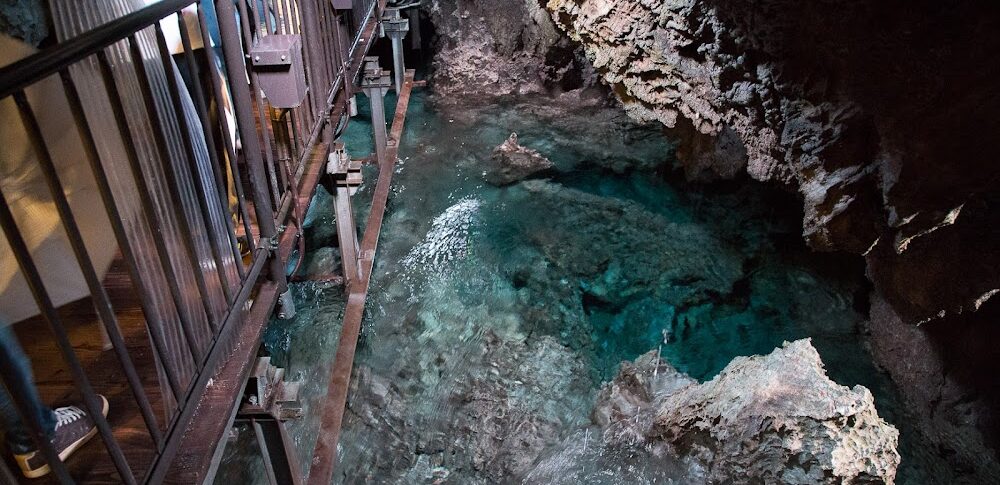
A must-see when visiting Ryusenkaido is the First Underground Lake. This underground lake, boasting a depth of 35 meters, glows with a mystical blue color called “Dragon Blue.”
This unique blue color is created by the underground lake’s high transparency and light reflection. The illuminated underground lake creates a fantastical scene as if you have wandered into another world.
For Demon Slayer fans, the glowing blue water surface evokes Water Breathing techniques and is popular as a photography spot.
Second and Third Underground Lakes
The Second Underground Lake has a depth of 38 meters, and the Third Underground Lake has a depth of 98 meters, each with different depths and characteristics. The Third Underground Lake is known as one of Japan’s deepest underground lakes.
Each underground lake can be viewed from observation platforms, and you can enjoy different perspectives from various angles.
Beauty of Stalactite Formations
Inside Ryusenkaido, there are various stalactites formed over long periods. Stalactites hanging from the ceiling, stalagmites rising from the floor, and stone pillars formed by their combination—natural artwork created by nature can be observed up close.
In particular, an area called the “Moon Palace” in the cave is rich in beautiful stalactites and is one of the highlights.
Clear Stream and Spring Water
Water springs from Ryusenkaido at approximately 5,000 tons per day. This water is extremely pure and is commercialized as “Ryusenkaido Water.” The sound of the clear stream flowing inside the cave provides healing to visitors.
Recommended Ways to Enjoy for Demon Slayer Fans
Exploring While Imagining Water Breathing
When visiting Ryusenkaido, it is recommended to view the site while imagining Water Breathing techniques. While looking at the blue water surface of the underground lake, you can imagine techniques such as “First Form: Water Surface Slash” and “Tenth Form: Constant Flux,” allowing you to immerse yourself even more deeply in the work’s worldview.
Photo Spots
There are numerous excellent photography spots inside Ryusenkaido. Particularly recommended are:
- First Underground Lake Observation Platform: With Dragon Blue water surface as the background
- Illuminated Stalactite Area: The fantastical atmosphere matches the world of Demon Slayer
- Near the Cave Entrance: Contrast between outside light and cave darkness
However, the cave floor is slippery, and tripod use is restricted in some areas, so pay attention to safety around you when photographing.
Cosplay Photography
Cosplay photography is possible at Ryusenkaido within a range that does not inconvenience regular tourists. However, the following points require attention:
- Avoid large costumes and props as the cave has narrow spaces
- Be considerate so as not to obstruct other tourists’ passage
- Confirming with the facility in advance is recommended
- Wear safe footwear as the cave floor is slippery
How to Access Ryusenkaido
Access by Train and Bus
From Tokyo area:
- Tohoku Shinkansen to Morioka Station (approximately 2 hours 30 minutes)
- JR Yamada Line to Shiji Station (approximately 1 hour)
- Iwanai Town Citizen Bus to Ryusenkaido (approximately 50 minutes)
From Sendai area:
- Tohoku Shinkansen to Morioka Station (approximately 40 minutes)
- Same route as above
Bus Notes:
The Iwanai Town Citizen Bus has limited frequency, so it is recommended to check the timetable in advance. Especially in winter, the number of runs may decrease.
Access by Car
From Tokyo area:
- Tohoku Expressway Morioka South IC, approximately 2 hours (approximately 100 km)
- Via National Route 455
From Sendai area:
- Tohoku Expressway Morioka South IC, approximately 2 hours
Parking Information:
- Ryusenkaido Parking Lot: Free
- Capacity: Approximately 150 spaces
- Large buses accommodated
Tourist Taxi and Rental Car
Tourist taxis from Morioka Station and Miyako Station are also convenient. Additionally, renting a car allows you to efficiently visit nearby tourist spots.
Business Hours, Fees, and Visit Duration
Business Hours
- May–September: 8:30 AM–6:00 PM
- October–April: 8:30 AM–5:00 PM
- Open Year-Round (temporary closures may occur)
Admission Fees (as of 2024)
- Adults: 1,100 yen
- Elementary and Middle School Students: 550 yen
- Preschool Children: Free
Group Discount (20 or more people):
- Adults: 900 yen
- Elementary and Middle School Students: 500 yen
Viewing Duration
- Standard Course: Approximately 40–60 minutes
- Leisurely Viewing: Approximately 90 minutes
- Photography-Focused: Approximately 120 minutes
The cave has many stairs, and some sections are steep, so it is recommended to visit with time to spare.
Precautions and Recommended Clothing for Viewing
Clothing and Items to Bring
Essential clothing and items:
- Non-slip Shoes: The cave floor is wet and extremely slippery
- Jacket: The cave temperature is approximately 10 degrees Celsius year-round, so it feels chilly
- Towel: Water droplets may fall from stalactites
Clothing to Avoid:
- Heels and Sandals: High risk of falling
- Shorts and Skirts: Unsuitable for keeping warm
- White Clothing: May become soiled inside the cave
Safety Precautions
- Many Stairs: The approximately 700-meter viewing course has many stairs, especially on descents where it is slippery
- Low Ceiling Areas: Some areas require attention to overhead clearance
- Lighting: While the cave is illuminated, some areas are dark, so watch your footing
- Health Management: Those with heart or respiratory conditions should not overexert themselves
- With Children: Small children must always be held by hand when viewing
Photography Precautions
- Be mindful of flash photography to avoid inconveniencing other tourists
- Refrain from using tripods during busy times
- Do not touch stalactites or cave walls
- Photography outside of barriers is strictly prohibited
Nearby Tourist Spots
Ryusenkaido Underground Lake Hall
A facility adjacent to Ryusenkaido with a circular hall designed to resemble an underground lake. You can learn about the history and geology of Ryusenkaido here.
Ryusenkaido Hot Spring Hotel
A hot spring hotel located approximately 5 minutes’ walk from Ryusenkaido. You can warm yourself in the hot spring after viewing the cave. Day-trip bathing is also available.
Tourist Spots in Iwanai Town
Omoto Coast: Approximately 30 minutes by car from Ryusenkaido. Part of Sanriku Fukko National Park, offering beautiful rias-style coastline.
Anke Cave: Japan’s longest stalactite cave (total length approximately 23,700 meters). It has different appeal than Ryusenkaido.
Michi-no-Eki Iwaizumi: Where you can purchase local specialties and souvenirs. Products made using Ryusenkaido water are also sold.
Ryusenkaido Souvenirs and Cuisine
Recommended Souvenirs
Ryusenkaido Water: Natural water bottled from the cave spring. Praised for being rich in minerals and delicious.
Ryusenkaido Coffee: Coffee brewed with Ryusenkaido water. Beans and drip packs for souvenirs are also sold.
Ryusenkaido Cider: A local cider using Ryusenkaido water. Known for its refreshing taste.
Iwanai Yogurt: A specialty of Iwanai Town. Popular for its rich and creamy flavor.
Nearby Gourmet Spots
Ryusenkaido Rest House: Located near the Ryusenkaido entrance, offering set meals and noodles made with local ingredients.
Michi-no-Eki Iwaizumi: Where you can enjoy dishes made with Tanjiro beef and local mountain vegetable cuisine.
Soba Restaurants in Iwanai Town: Iwate Prefecture is famous for soba. Soba made with Ryusenkaido water is exceptional.
Model Course for Visiting Ryusenkaido
Day Trip Course (Departing from/Returning to Morioka Station)
9:00 AM Depart from Morioka Station (by rental car)
11:00 AM Arrive at Ryusenkaido and view (approximately 90 minutes)
12:30 PM Lunch at Ryusenkaido Rest House
1:30 PM View Ryusenkaido Underground Lake Hall
2:00 PM Purchase souvenirs at Michi-no-Eki Iwaizumi
2:30 PM Travel to Omoto Coast (by car)
3:30 PM Stroll along Omoto Coast
4:30 PM Depart toward Morioka
6:30 PM Arrive at Morioka Station
1 Night, 2 Days Course
Day 1:
- Morning: Depart from Morioka Station
- Afternoon: Arrive at and view Ryusenkaido
- Afternoon: View Anke Cave
- Evening: Check in at Ryusenkaido Hot Spring Hotel
- Night: Relax in hot spring
Day 2:
- Morning: Drive along Omoto Coast and Sanriku Coast
- Noon: Enjoy seafood cuisine
- Afternoon: Visit roadside stations and purchase souvenirs
- Evening: Arrive at Morioka Station
Seasonal Ways to Enjoy
Spring (March–May)
While the cave temperature is constant year-round, spring sees the largest temperature difference with outside air. You can also enjoy the beauty of fresh greenery after exiting the cave. The Golden Week period is crowded, so visiting in early time slots is recommended.
Summer (June–August)
Summer is the best season for Ryusenkaido. While it is hot outside, the cave is cool, like a natural air conditioner. However, the summer vacation period is crowded, so visiting on weekdays or early morning is recommended.
Autumn (September–November)
A season where you can enjoy surrounding autumn foliage. Particularly from mid-October to early November, autumn colors are beautiful, and you can enjoy both cave viewing and leaf peeping at once.
Winter (December–February)
Winter at Ryusenkaido has fewer visitors, allowing leisurely viewing. The cave feels warmer than outside. However, Iwate Prefecture experiences heavy snow in winter, so winter tires are essential for vehicle access.
Environmental Conservation Activities at Ryusenkaido
Conservation Efforts
As a national natural monument, conservation of Ryusenkaido is very important. Iwanai Town conducts the following conservation activities:
- Water Quality Management: Regular water quality testing
- Stalactite Protection: Barriers installed to prevent touching
- Lighting Innovation: Use of LED lighting that minimally impacts cave environment
- Visitor Management: Management considering environmental burden
What Visitors Can Do
Those of us visiting Ryusenkaido should keep the following in mind to protect this valuable natural heritage:
- Always take trash with you
- Do not touch stalactites or cave walls
- Do not speak loudly (sound may affect cave environment)
- Do not venture outside designated routes
- Do not eat or drink inside the cave
Frequently Asked Questions
Can Ryusenkaido be viewed by wheelchair?
Unfortunately, Ryusenkaido has many stairs, and wheelchair viewing is currently difficult. Only the cave entrance area is accessible.
Can I bring pets into the cave?
For sanitary reasons, pets cannot enter. Guide dogs and service dogs can be accommodated with prior notice.
Can I view the cave on rainy days?
Yes, as Ryusenkaido is an indoor cave facility, you can view it without problems on rainy days. In fact, rainy days may increase the water level of the underground lake, allowing you to enjoy a more impressive landscape.
Is reservation necessary?
Individual viewing does not require reservation. However, advance booking is necessary for group visits (20 or more people) or if you wish a guided tour.
Is it open in winter?
Ryusenkaido operates year-round, but temporary closures may occur due to heavy snow or bad weather. When visiting in winter, check the official website or call ahead to confirm operational status.
Conclusion: Experience the World of Demon Slayer at Ryusenkaido
Ryusenkaido in Iwate Prefecture is a long-famous tourist destination as one of Japan’s three largest stalactite caves, but for Demon Slayer fans, it has become a special sacred site where one can experience the work’s worldview.
The mystical underground lake glowing in Dragon Blue, beautiful stalactites formed over long periods, and the sound of the clear stream echoing inside the cave—all of these evoke the world of Demon Slayer where practitioners of Water Breathing battle.
While it takes some time to access from Morioka Station, it is certainly worth the visit. Enjoying it leisurely over 1 or 2 days with nearby tourist spots is also recommended.
When visiting Ryusenkaido, do not forget non-slip shoes and a warm jacket. And to pass this valuable natural heritage to future generations, observe proper etiquette while viewing.
Immerse yourself in the worldview of Demon Slayer while savoring the mystical underground world created by Japan’s nature. Ryusenkaido will surely provide you with a special experience to remember.


完全ガイド|童磨の氷瀑景観と聖地巡礼の魅力-800x450.jpg)