The Miyazawa Kenji Fairy Tale Village is a “raku-shū” (pleasure-learning) facility located in Hanamaki City, Iwate Prefecture, where visitors can experience the fairy tale world of Miyazawa Kenji. Known as a sacred site for Kenji fans and a destination visited by people throughout the country who love Kenji’s works, it is a place where one can immerse oneself in the world of Ihatov in a fantastical space where Giovanni, Matazaburo, and the Wildcat seem ready to appear at any moment.
This article will convey the full appeal of the Miyazawa Kenji Fairy Tale Village and provide detailed information useful for those planning a pilgrimage to this sacred site.
About the Miyazawa Kenji Fairy Tale Village
The Miyazawa Kenji Fairy Tale Village is a facility built in 1996 (Heisei 8) to commemorate the centennial of Kenji’s birth. Located at 26-19 Takamatsu, Hanamaki City, it is a precious spot where visitors can experience the world of “Ihatov,” the ideal land envisioned by Kenji, in Hanamaki, his hometown where he spent his entire life.
What is Ihatov?
“Ihatov” is a neologism created by Miyazawa Kenji that means an ideal land in his inner world. It is said to be the word “Iwate” arranged in the style of Esperanto, and it is a concept that encompasses Kenji’s entire literary world. The Miyazawa Kenji Fairy Tale Village is designed as a place where this Ihatov can be experienced in the real world.
Overall Composition of the Facility
The Miyazawa Kenji Fairy Tale Village consists of multiple areas, each expressing Kenji’s literary world from different angles.
- Galaxy Station (Entrance)
- Sky Plaza
- Kenji’s School (Main Facility)
- Kenji’s Classroom (Log House Exhibition Facility)
- Fairy’s Path
- Owl’s Path
- Alpine Flower Garden
These facilities together invite visitors into the world of Kenji’s fairy tales.
Kenji’s School | Experiencing the Fairy Tale World Through All Five Senses
“Kenji’s School” is the main facility of the Miyazawa Kenji Fairy Tale Village, a hands-on experience facility where visitors can experience the world of Ihatov that Kenji envisioned through all five senses. The building is divided into five zones, each expressing Kenji’s worldview through different themes.
Fantastic Hall
The Fantastic Hall serves as the entrance to Kenji’s School and is a space that guides visitors into the world of fairy tales. The journey that begins here becomes an adventure in experiencing the cosmic view, view of nature, and view of life that Kenji infused into his works.
The Universe Room
“The Universe Room” is a zone imagining outer space, composed of a giant kaleidoscope space made of three mirrors. Accompanied by sound effects reminiscent of twinkling stars, visitors can experience the infinitely expanding universe. It is a popular area that evokes the Milky Way world depicted in “Night on the Galactic Railroad,” offering a fantastical experience.
Through lighting and sound effects, visitors can experience the sensation of becoming Giovanni and Campanella traveling through the galaxy.
The Sky Room
This room, themed on the sky, expresses the world of wind, clouds, and birds that appear in Kenji’s works. It reflects the worldview of works such as “Wind Boy Matazaburo” and “Yodaka’s Star,” allowing visitors to feel the dynamism of life soaring in the sky.
The Earth Room
“The Earth Room” features giant dioramas of insects, grass, and trees, allowing visitors to feel as small as ants. It is a space where one can realize how Kenji’s experience of facing the earth as an agricultural school teacher and farmer is reflected in his works.
You can examine nature from the perspective of the Wildcat that appears in “The Restaurant of Many Orders” and the animals in “Gauche the Cellist.” The small activities of life that are usually overlooked are greatly enlarged and displayed here.
The Water Room
This zone themed on water expresses the ecosystems of rivers, ponds, and oceans. It is a space where visitors can visually and auditorily experience the water elements that frequently appear in Kenji’s works.
Kenji’s Classroom | Learning Deeply About the Fairy Tale World
“Kenji’s Classroom” is an exhibition facility comprising five log houses where visitors can learn in detail about the plants and animals that appear in Kenji’s fairy tales and Kenji’s life. While Kenji’s School is an experiential facility, Kenji’s Classroom serves as a learning facility for deepening knowledge.
Themes of Each Log House
The five log houses each have different themes and introduce Kenji’s multifaceted worldview.
The Plant Classroom displays the grass, flowers, and trees that Kenji loved. Kenji was also deeply knowledgeable about botany, and many plants appear in his works. Visitors can learn the connections between actual specimens and photographs and his works.
The Animal Classroom allows visitors to learn in detail about the animals that appear in Kenji’s fairy tales, such as the Wildcat in “The Restaurant of Many Orders” and the animals in “Gauche the Cellist.”
The Star Classroom introduces Kenji’s interest in astronomy and the world of constellations depicted in works such as “Night on the Galactic Railroad.” Visitors can understand the connection between the starry sky Kenji actually observed and his literary world.
The Bird Classroom features displays of works in which birds appear, such as “Yodaka’s Star,” and actual bird specimens.
The Stone Classroom contains displays about geology and mineralogy, which were Kenji’s specialties, and the connection to works such as “The Wild Bivouac of Scholar Nara.”
The Appeal of Kenji’s Classroom
The warm architectural style of log houses matches Kenji’s literary world, creating an atmosphere of studying in a forest. Each classroom is designed to be enjoyed by both children and adults, and abundant valuable materials are displayed to help visitors understand Kenji’s works more deeply.
Strolling Areas | Walking Through the Fairy Tale Forest
The Miyazawa Kenji Fairy Tale Village is not only filled with buildings but also offers plenty of areas where visitors can stroll through nature.
Fairy’s Path
“Fairy’s Path” is a forest path where it seems the fairies that appear in Kenji’s fairy tales might live. Walking along this path that winds through the trees, one feels as though they have wandered into the worlds of “Acorns and the Wildcat” and “The Restaurant of Many Orders.”
In the nature that shows different faces with each season, visitors can experience the Iwate forest that Kenji depicted. Spring brings new greenery, summer brings deep green, autumn brings red leaves, and winter brings snowy scenery—the beauty of all four seasons can be enjoyed.
Owl’s Path
“Owl’s Path” is a walking trail themed on the owls that appear in Kenji’s works. Walking quietly through the forest, visitors can listen to the sounds of nature. It is a space where one can practice the act of “listening carefully,” which Kenji valued.
Alpine Flower Garden
In the Alpine Flower Garden, visitors can observe plants that naturally grow in the mountains and fields of Iwate. Many of the plants that appear in Kenji’s works can be seen here, and one can recall the works while observing the actual plants. It is a valuable area where visitors can experience the perspective of the plant-loving Kenji.
Limited-Time Events | Fantastical Illumination
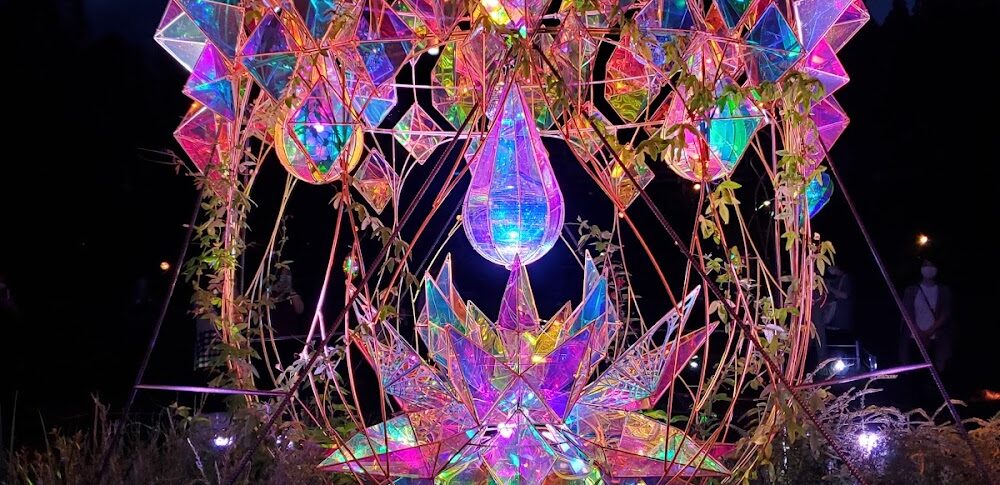
The Miyazawa Kenji Fairy Tale Village periodically holds night illumination events during limited periods. These popular events allow visitors to experience Kenji’s world more deeply in an entirely different fantastical atmosphere than during the day.
The Appeal of Illumination
The fairy tale village at night reveals a beauty that is another world entirely through lighting effects. Trees and buildings are lit up, creating a fantastical space that seems as if you have stepped into the Galaxy Station of “Night on the Galactic Railroad.”
In particular, the Universe Room inside “Kenji’s School” demonstrates its appeal even more greatly during the night in darkness. The sparkle of the stars feels even more vivid, and one experiences the sensation of floating in outer space.
Holding Period
Illumination events are normally held during specific periods such as summer and winter. It is recommended that you check the specific dates and times in advance on the official website of Hanamaki City or the Hanamaki Tourism Association website.
The Value of Visiting as a Pilgrimage to a Sacred Site
The Miyazawa Kenji Fairy Tale Village holds special significance for Kenji fans. Being able to experience his literary world in Hanamaki, where Kenji spent his entire life, is a precious experience that cannot be obtained elsewhere.
Kenji’s Hometown of Hanamaki
Hanamaki is the place where Miyazawa Kenji was born and raised, worked as an agricultural school teacher, lived a solitary self-supporting life, and spent his final days. Many traces of Kenji’s footsteps remain in this town, and pilgrimage spots related to him are scattered throughout the area.
Combining with Other Sacred Sites
By visiting the Miyazawa Kenji Fairy Tale Village along with nearby related facilities, one can gain deeper understanding and emotional satisfaction.
The Miyazawa Kenji Memorial Hall is close to the fairy tale village and is a facility where visitors can learn in detail about Kenji’s life and works through videos and materials. Through displays organized into five genre categories, visitors can discover Kenji’s multifaceted talents.
The Miyazawa Kenji Ihatov Hall offers browsable collections of research materials and books about Kenji, allowing for a more academic approach to understanding Kenji.
The Rasu Chijin Association is the place where Kenji lived a solitary self-supporting life while farming after leaving his position as an agricultural school teacher, and it is regarded as a particularly important sacred site for Kenji fans.
Hanamaki Agricultural High School (formerly Hanamaki Agricultural School) is the place where Kenji taught and where he is also known to have conceived works such as “Night on the Galactic Railroad.”
The “Get Fully Immersed in Miyazawa Kenji Course,” which visits these spots, has become a standard pilgrimage route.
Facility Information and Access
Basic Information
Location: 26-19 Takamatsu, Hanamaki City, Iwate Prefecture
Phone Number: 0198-31-2211
Operating Hours: 8:30–16:30
Closed Days: December 28–January 1
Admission Fee: Kenji’s School is paid admission (adults ¥350, high school students and college students ¥250, elementary and junior high school students ¥150); other areas are free
Access Methods
By Train:
Approximately 15 minutes by car from JR Shin-Hanamaki Station, or approximately 20 minutes by car from JR Hanamaki Station. Taxi is convenient from the station.
By Car:
Approximately 15 minutes from Hanamaki IC on the Tohoku Expressway, or approximately 10 minutes from Hanamaki Airport IC. Free parking is available.
By Bus:
Board the Iwate Kenpoku Bus “Tosawasen” line from Hanamaki Station and get off at the “Kenji Memorial Hall Guchi” bus stop; it is approximately 5 minutes on foot. However, since bus frequency is limited, it is recommended to check the schedule in advance.
Estimated Time Required
For a thorough viewing of the Miyazawa Kenji Fairy Tale Village, it is recommended to allocate 2 to 3 hours. When leisurely viewing Kenji’s School and Kenji’s Classroom and walking through the strolling paths, time passes quickly.
If also visiting the Miyazawa Kenji Memorial Hall, it is best to plan a half-day to full-day schedule.
Enjoyment Tips and Points for Your Visit
Seasonal Appeal
The Miyazawa Kenji Fairy Tale Village presents a different face in each season.
Spring is a beautiful season of new green, and in the Alpine Flower Garden, various flowers begin to bloom. It is the perfect time to observe the spring plants that Kenji loved.
Summer is when the green deepens and strolling through the forest paths is particularly pleasant. Limited-time illumination events may also be held.
Autumn is beautiful with autumn colors, and the entire fairy tale village turns crimson. A scene reminiscent of the autumn landscape in “Night on the Galactic Railroad” unfolds.
Winter offers fantastical snowy scenery, and visitors can experience the worlds of “Snowy Journey” and “The Fourth Day of the Snow Month.” Winter illumination is especially popular.
Recommended Route
- First, obtain a pamphlet at “Galaxy Station” and confirm the overall layout.
- Thoroughly view the main facility “Kenji’s School” and experience all five zones.
- Deepen your knowledge at “Kenji’s Classroom” and learn the background of Kenji’s fairy tales.
- Stroll through “Fairy’s Path” and “Owl’s Path” and immerse yourself in Kenji’s world within nature.
- If time permits, enjoy plant observation in the “Alpine Flower Garden.”
Photography Tips
The Miyazawa Kenji Fairy Tale Village is also popular as a photography spot. The Universe Room inside Kenji’s School offers beautiful kaleidoscope-like photographs. The strolling paths provide beautiful photographs of the contrast between seasonal nature and buildings.
During the illumination period, it is an excellent opportunity to photograph the fantastical nighttime scenery. Please confirm the facility’s rules regarding tripod use.
Goods and Souvenirs
A shop inside the fairy tale village carries Kenji works merchandise and Hanamaki specialties. Original goods featuring Kenji’s works and Iwate crafts are abundantly available—souvenirs that make lasting memories of your pilgrimage.
Nearby Dining and Accommodation
Dining Facilities in the Area
Near the Miyazawa Kenji Fairy Tale Village, there are restaurants offering Hanamaki regional cuisine and dishes associated with Kenji. Visitors can enjoy tempura soba, which Kenji is said to have enjoyed, and dishes made with Iwate ingredients.
Yamaneko-ken is a restaurant named after Kenji’s works and is popular for its dishes made with local ingredients.
Accommodation Facilities
Hanamaki City has plenty of accommodation facilities, including the Hanamaki Hot Spring Resort. Visitors can soothe the fatigue of their sacred site pilgrimage while soaking in hot springs.
It is recommended to stay at a hotel or inn around Hanamaki Station or the Hanamaki Hot Spring as a base for a pilgrimage visiting sites related to Kenji.
To Deepen Your Understanding of Miyazawa Kenji’s Literary World
Reading representative works before visiting the Miyazawa Kenji Fairy Tale Village will allow you to enjoy the facility more deeply.
Essential Masterpieces
“Night on the Galactic Railroad” is Kenji’s most famous work and forms the core of the fairy tale village’s worldview. The journey of Giovanni and Campanella traveling through the galaxy is directly reflected in the displays in the Universe Room and Galaxy Station.
“The Restaurant of Many Orders” is the only fairy tale collection published during Kenji’s lifetime, and many works, beginning with the title story featuring the Wildcat, serve as sources of inspiration for the fairy tale village.
“Wind Boy Matazaburo” is a mysterious tale about a transfer student named Matazaburo and serves as the theme for the Sky Room.
“Gauche the Cellist” is a story of a musician’s growth through interactions with animals and is related to the animal displays in Kenji’s Classroom.
“Yodaka’s Star” is a tale of an ugly bird named Yodaka becoming a star and symbolizes Kenji’s cosmic and life philosophy.
Kenji’s Thought and Work Themes
Miyazawa Kenji’s works share several common themes.
Self-sacrifice and altruism are important themes in Kenji’s works, seen in Campanella in “Night on the Galactic Railroad” and Yodaka in “Yodaka’s Star.”
Coexistence with nature reflects Kenji’s experience as a farmer and leads to the displays in the Earth Room and Alpine Flower Garden.
The fusion of science and art is a perspective unique to Kenji, who was both a geologist and a poet and fairy tale writer, and is also reflected in the design philosophy of the entire fairy tale village.
Ihatov as an ideal land is the crystallization of Kenji’s philosophy that “individual happiness cannot exist until all the world becomes happy.”
Coordination with Hanamaki City’s Miyazawa Kenji-Related Facilities
Hanamaki City places importance on promoting Miyazawa Kenji, with the entire city structured as a kind of Kenji museum.
Position as Culture, Sports, and Lifelong Learning
The Miyazawa Kenji Fairy Tale Village plays not only the role of a tourist facility but also that of a cultural and educational institution. It conducts activities rooted in the community as a place for children’s aesthetic education and lifelong learning.
It is also popular as a destination for school excursions and school trips, serving as a place where students learn about Iwate’s culture and nature through Kenji’s works.
Relationship with City Administration and Urban Development
Hanamaki City is promoting urban development utilizing Miyazawa Kenji, with the fairy tale village being one of its core facilities. Efforts to apply Kenji’s ideal land of Ihatov to real-world urban development are attracting nationwide attention.
Contribution to Industry, Employment, and Business
Miyazawa Kenji-related tourism has become an important industry for Hanamaki City. Kenji-related facilities, including the fairy tale village, contribute to regional economic revitalization and job creation.
Various developments in business can be seen, such as product development featuring Kenji’s works as motifs and the planning of Kenji tourism.
Requests and Notes for Visitors
When visiting the Miyazawa Kenji Fairy Tale Village, please note the following:
Facility Use Etiquette
- Please do not touch the exhibits
- Eating and drinking inside the halls is permitted only in designated areas
- Please refrain from loud conversations, as they disturb other visitors
- Regarding pet accompaniment, please confirm with the facility in advance
- Commercial photography requires prior approval
Weather-Related Notes
Since the strolling paths are in nature, they become slippery in rainy weather. Please wear shoes suitable for walking. In winter, there is snow accumulation, so cold-weather protection and slip-prevention measures are necessary.
Barrier-Free Information
Kenji’s School is barrier-free accessible, but some areas of the strolling paths are difficult to navigate in a wheelchair as they take advantage of natural terrain. It is recommended to inquire with the facility in advance.
Novel Coronavirus Infection Prevention Measures
Before your visit, please check the latest business status and infection prevention measures on Hanamaki City’s official website. Operating hours may be changed or entry may be restricted depending on the situation.
Applications and Group Use
Group Visits
If visiting in a school group or with a tour group, it is recommended to make a reservation in advance. Group admission rates may be applicable, and guided tours may be available.
Educational Use
For use in school education, you can consult about how to use the materials for teaching and learning programs. With coordination from the Hanamaki City Board of Education, support is provided to deepen children’s learning.
Facility Rental
If you wish to use the facility for events or filming, submission of an application form is necessary. Please check the details on Hanamaki City’s official website or contact the facility directly.
Conclusion | The Value of a Sacred Site Pilgrimage
The Miyazawa Kenji Fairy Tale Village is a cultural facility of which Iwate Prefecture’s Hanamaki City is proud and an important sacred site for Kenji fans. Through experiential displays at Kenji’s School, learning at Kenji’s Classroom, and strolling through nature paths, visitors can experience the world of Ihatov from multiple perspectives.
In an atmosphere where characters from Kenji’s works such as Giovanni, Matazaburo, and the Wildcat seem ready to appear at any moment, you will be able to feel the ideal land that Kenji pursued.
The experience of immersing yourself in Kenji’s literary world in Hanamaki, his hometown, brings deep emotion that cannot be obtained from reading books alone. By combining visits to other sacred sites such as the Miyazawa Kenji Memorial Hall and the Rasu Chijin Association, you can gain a more three-dimensional understanding of Kenji’s life and works.
The fairy tale village, which presents a different face in each season, offers new discoveries with each visit. In particular, the limited-time illumination events provide a precious opportunity to experience a fantastical world entirely different from daytime.
A pilgrimage to the Miyazawa Kenji Fairy Tale Village will surely become a lifetime memory for everyone who loves Kenji’s works. In the world of Ihatov, try to grasp the message that Kenji wished to convey.