
Princess Mononoke and Yakushima Island
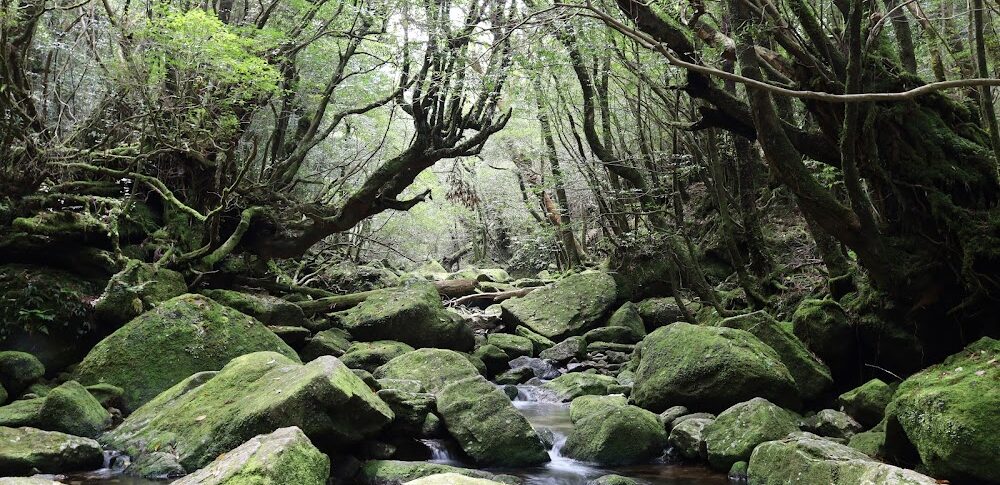
Studio Ghibli’s masterpiece “Princess Mononoke” (released in 1997) was created when director Hayao Miyazaki conducted location scouting on Yakushima Island in Kagoshima Prefecture and drew inspiration from its mystical nature. The deep forests and moss-covered ancient trees that appear in the film faithfully recreate Yakushima’s primeval forest, and many fans have made it a sacred pilgrimage site to visit the model location of the “Shishigami Forest.”
Director Miyazaki praised Yakushima’s nature as “a primeval forest that remains intact,” and visited the location multiple times during film production. In particular, the Yakusugi cedars with their thousands of years of age and the fantastical forest landscape covered in moss became crucial elements in shaping the worldview of Princess Mononoke.
Shiratani Unsuikyo Gorge – Model Location of the Shishigami Forest
About Shiratani Unsuikyo Gorge
Shiratani Unsuikyo Gorge is a ravine located at an altitude of 600-1,050 meters in the northern part of Yakushima Island and is the most famous spot as a model for the Shishigami Forest in Princess Mononoke. It features a round-trip trekking course of approximately 3 hours, attracting many tourists throughout the year.
Moss Forest (Kokemasu Mori)
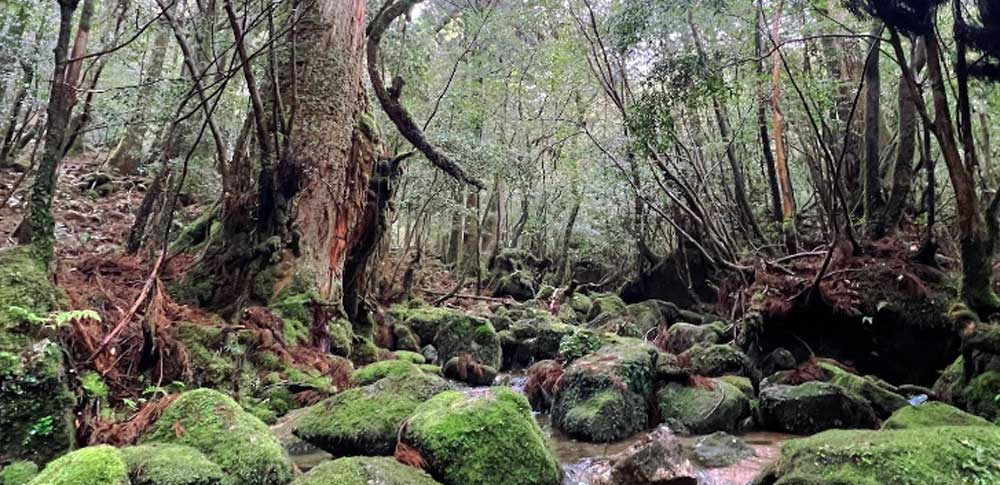
The greatest attraction of Shiratani Unsuikyo Gorge is the “Moss Forest.” This area is covered with Yakusugi cedars hundreds of years old and laurel forests, with trees and rocks blanketed in green moss creating a fantastical landscape. The humid environment unique to Yakushima, where annual precipitation exceeds 8,000mm, nurtures over 600 species of moss.
Walking through the Moss Forest, you feel enveloped in a mystical atmosphere where Shishigami might appear at any moment. Particularly in early morning or during misty conditions after rain, you can experience as if stepping into a scene from the film.
Spectacular Views from Taiko Rock
Taiko Rock, the goal point of the Shiratani Unsuikyo Gorge trek, is a massive granite formation at an altitude of 1,050 meters. From here, you can enjoy a 360-degree panoramic view overlooking Yakushima’s mountains and even the distant sea. Though it’s a round-trip course of approximately 4 hours, the spectacular scenery awaiting at the end makes you forget your fatigue.
Access and Precautions
Access Method:
- Approximately 30 minutes by car from Miyanoura Port
- Parking available at Shiratani Unsuikyo Gorge entrance (paid)
- Public transportation is limited, so rental car or taxi is convenient
Entrance Fee: Forest environment maintenance cooperation fee of 500 yen (for high school students and older)
Precautions:
- Hiking boots or trekking shoes are essential (slippery terrain)
- Rain gear must be brought (Yakushima receives frequent rain)
- Prepare drinking water and snacks
- Restrooms only near the entrance
- Mobile phone signal is unstable
Yakusugi Land – Forest Where You Can Observe Diverse Yakusugi Cedars
Yakusugi Land is a spot where you can feel the worldview of Princess Mononoke alongside Shiratani Unsuikyo Gorge. Located at an altitude of 1,000-1,300 meters, four courses ranging from 30 minutes to 150 minutes are maintained.
Highlights
- Buddha Sugi: A massive Yakusugi cedar approximately 1,800 years old
- Mother-Child Sugi: You can observe “regeneration” with new cedars growing from a tree stump
- Kuguri Sugi: A tunnel-like passage where you can walk through the roots
- Tenshin Sugi: A solemn ancient tree with an estimated age of 3,000 years
With maintained walking paths, it is easier to walk than Shiratani Unsuikyo Gorge and is also recommended for families. Yet you can still fully experience the atmosphere of a primeval forest.
Jomon Sugi Trekking – Yakushima’s Greatest Sacred Site
About Jomon Sugi
Jomon Sugi, estimated to be 2,000-7,200 years old, is the most famous Yakusugi cedar on Yakushima Island. It is considered one of the image sources for the giant trees in Princess Mononoke. With a trunk circumference of 16.4 meters and a height of 30 meters, its overwhelming presence overwhelms those who see it.
Trekking Details
Jomon Sugi trekking is a full-scale mountaineering expedition of approximately 22 kilometers round-trip with a duration of 10-12 hours.
Course Overview:
- Start from Arakawa trailhead (car traffic restrictions during certain periods)
- Walk approximately 8 kilometers on a trolley track
- Enter the Ooarame pathway, passing through Wilson Stump and Taiou Sugi
- Arrive at Jomon Sugi
Things to Prepare:
- Headlamp (for early morning departure)
- Lunch and sufficient water
- Rain wear, top and bottom
- Warm clothing (high altitude and low temperature)
- Trekking poles (recommended)
Wilson Stump – A Tree Stump Where Sky Appears Heart-Shaped
Wilson Stump, located along the way to Jomon Sugi, is a massive Yakusugi cedar stump felled during the Edo period. When you enter the interior and look up at a certain angle, the sky appears heart-shaped, making it popular as a “happiness spot.” With an estimated age of 3,000 years, the interior is about 10 tatami mats in size.
The Charm of Yakushima Island Experienced Through the Worldview of Princess Mononoke
The Mystique of Primeval Forest
The primary reason Yakushima’s forest became the model for the film is its “untouched nature.” Yakushima’s primeval forest, registered as a UNESCO World Natural Heritage site, preserves the appearance of an ancient forest isolated from human activity.
Ecosystem Created by Abundant Precipitation
Yakushima, where it is said “it rains 35 days a month,” has abundant precipitation that nurtures diverse mosses and plants, creating a unique forest ecosystem. This humid environment produces the fantastical mist and moss-covered landscapes that appear in the film.
Life Force of Yakusugi Cedars
Yakusugi cedars, which grow to thousands of years old, develop dense annual rings and high resin content due to their harsh environment, making them resistant to decay. The “regeneration” process where new trees grow from tree stumps literally embodies “the cycle of life,” which aligns with the themes of Princess Mononoke.
Basic Information for Yakushima Tourism
Access Methods
Airplane:
- Approximately 35 minutes from Kagoshima Airport to Yakushima Airport
- Direct flights from Itami Airport and Fukuoka Airport (seasonal service)
Ferry:
- Approximately 4 hours from Kagoshima Main Port to Miyanoura Port or Anbo Port (Ferry Yakushima 2)
- Approximately 2 hours by high-speed boat Toppy
Best Seasons
Spring (March-May):
- Beautiful new foliage, ideal for trekking
- Yakushima Rhododendron blooming (May)
Summer (June-August):
- Heavy rain during rainy season, but moss is most beautiful
- Early reservations necessary due to summer vacation crowds
Autumn (September-November):
- Typhoon season, but spectacular views when clear
- Fall foliage enjoyable in high-altitude areas
Winter (December-February):
- Few tourists, peaceful forest experience
- Possibility of snow in high-altitude areas
Accommodations
Accommodations are concentrated in Miyanoura, Anbo, Onohama and other areas on Yakushima Island.
- Resort Hotels: Full facilities, transfer service available
- Private Inns and Guest Houses: Reasonable rates, interaction with locals
- Mountain Huts: Available for Jomon Sugi trekking
Since most trekking starts early morning, choosing accommodations near the trailhead is convenient.
Trekking Tours and Guide Services
Benefits of Guided Tours
Using a guide tour is recommended to safely and deeply understand Yakushima’s forest.
Benefits:
- No risk of getting lost
- Detailed explanations about plants and ecosystems
- Guides manage pace and rest timing
- Entrust weather judgment and safety management
- Guides show the best photo spots
Types of Tours
- Shiratani Unsuikyo Gorge half-day course: For beginners, 3-4 hours
- Shiratani Unsuikyo Gorge Taiko Rock course: For intermediate level, 6-7 hours
- Jomon Sugi full-day course: For advanced level, 10-12 hours
- Yakusugi Land course: For families, 2-4 hours
Manners and Rules to Follow on Yakushima Island
For Nature Conservation
To protect Yakushima’s nature as a UNESCO World Natural Heritage site, please follow the following manners.
- Always take trash with you: There are no trash bins on the trails
- Do not leave marked trails: Stay on designated routes to protect vegetation
- Do not collect plants and animals: Photography only
- Use portable toilets in the mountains: Mountain facilities are limited
- Do not shout loudly: Consideration for wildlife and other hikers
For Safety
- Submit a climbing plan: In case of emergency
- Check weather: Yakushima weather changes rapidly
- Avoid solo hiking: Especially beginners should go with multiple people or a guide
- Allow extra time: Schedule to descend before sunset
- Consider mountain insurance: Look into mountaineering insurance
Sacred Site Pilgrimage Plan for Princess Mononoke Fans
2-Night, 3-Day Model Course
Day 1:
- Morning: Arrive at Yakushima, check into accommodation
- Afternoon: Explore Yakusugi Land (30-minute or 60-minute course)
- Evening: Preview at Yakushima Environmental Culture Village Center
Day 2:
- Early morning departure: Shiratani Unsuikyo Gorge trekking (Taiko Rock course)
- Experience the atmosphere of Shishigami Forest through the Moss Forest
- Afternoon: Descend, soothe fatigue in hot spring
Day 3:
- Morning: Visit waterfalls such as Senin Falls and Troki Falls
- Afternoon: Depart
3-Night, 4-Day Advanced Course
Add Jomon Sugi trekking to the 2-night, 3-day course. Those confident in their physical abilities can experience Yakushima’s charm more deeply.
Heal in Yakushima’s Hot Springs
After trekking, soothe your fatigue in a hot spring. Yakushima has multiple hot spring facilities.
Recommended Hot Springs
Onoima Hot Spring:
- Hot spring-source flowing bath
- Public bath loved by locals
- Fee: approximately 300 yen
Hirauchi Kaichū Hot Spring:
- Open-air bath accessible only at low tide
- Sense of oneness with the sea
- Free (mixed bathing, swimsuit recommended)
Yudome Hot Spring:
- Open-air bath along the coast
- Bathe while viewing the sunset
- Free
Princess Mononoke Merchandise and Yakushima Souvenirs
Souvenirs Available at Yakushima Airport and Miyanoura
- Yakusugi products: Chopsticks, coasters, accessories
- Yakushima specialty sweets: Sweets made with tankan and ponkan citrus
- Shochu: Yakushima-produced sweet potato shochu
- Princess Mononoke related goods: Available at some souvenir shops
Yakusugi products are made using thinned timber and fallen wood, and the resin fragrance lasts a long time.
Yakushima’s Ecosystem and the World of Princess Mononoke
Yaku Deer and Yaku Monkey
Yakushima is home to endemic subspecies of Yaku deer and Yaku monkey. These are smaller than mainland individuals and are commonly seen in the forest. They are said to be models for the animals appearing in Princess Mononoke.
Yaku monkeys in particular are accustomed to people, and encounters on trekking trails are not uncommon. However, feeding is strictly prohibited. Maintain an appropriate distance from wild animals.
Richness of Laurel Forest
From the low to mid-altitude regions of Yakushima, laurel forests of Shii, Kashi, Tabu oak and other evergreen broadleaf trees spread. This forest of evergreen broadleaf trees serves as habitat for diverse organisms and is literally the “forest of life” depicted in the film.
Photography Spots and Best Times of Day
Photography Techniques for Moss Forest
Recommended Times:
- Early morning (6-8 AM): Misty and fantastical
- After rain: Moss glistens with water droplets
- Cloudy days: Soft light makes moss green beautiful
Photography Tips:
- Tripod helpful for preventing camera shake
- Wide-angle lens to express forest expanse
- Macro lens for moss details
- Polarizing filter to reduce reflection
Panoramic Photography from Taiko Rock
The view from Taiko Rock on a clear day is spectacular. The sight of Yakushima’s mountains lined up and the distant sea visible is breathtaking. Morning is better for photography due to front lighting.
The Relationship Between Yakushima and Studio Ghibli Works
Besides Princess Mononoke, director Hayao Miyazaki has created many works with nature as a theme, but Yakushima is a particularly significant source of inspiration for him.
During film production, the staff, along with Miyazaki, visited Yakushima many times for sketching and photography. As a result, the background art contains details faithful to the characteristics of Yakushima’s forest.
In particular, the depiction of moss growing on trees, the expression of dappled sunlight, and the staging of mist are faithful visual reproductions of Yakushima’s actual landscape.
Aiming for Sustainable Tourism
In recent years, the number of tourists visiting Yakushima as a sacred site for Princess Mononoke has increased. While this is positive for the local economy, concerns are also raised about environmental damage from overtourism.
What We Can Do
- Cooperate with visitor restrictions: Reservation systems may be introduced during peak seasons
- Use guided tours: Appropriate visitor management and environmental education
- Pay cooperation fees: Used for forest environment improvement
- Consider longer stays: Rather than visiting many places at once, plan extended stays
- Visit during off-peak seasons: Contribute to congestion relief by visiting in winter or weekdays
Summary: A Journey to Experience the World of Princess Mononoke
Yakushima is the only place where you can actually experience the worldview of Princess Mononoke. Walking through the Moss Forest of Shiratani Unsuikyo Gorge, you find yourself enveloped in a mystical atmosphere where Shishigami might appear, and standing before Jomon Sugi, you can realize the greatness of nature and the value of life.
However, to preserve this precious natural environment for the future, consideration from each and every one of us who visit is necessary. Visit Yakushima’s forest with proper preparation and equipment, behavior that respects manners, and reverence for nature.
The message that Princess Mononoke conveyed about “coexistence between nature and humans” will resonate more deeply in your heart when you walk through Yakushima’s forest. Those who were moved by the film should definitely visit Yakushima in person and experience its overwhelming natural power.
Yakushima’s forest is an irreplaceable place that teaches us about the life and activities that have continued since ancient times and the importance of nature conservation.


-宮崎県-聖地巡礼-800x450.jpg)