
Princess Mononoke and the Deep Connection with Shiratani Unsuikyo Gorge
The acclaimed Studio Ghibli masterpiece “Princess Mononoke” was released in 1997. The place that director Hayao Miyazaki visited while developing the concept and received major inspiration from is Shiratani Unsuikyo Gorge (白谷雲水峡) located in Yakushima Island, Kagoshima Prefecture.
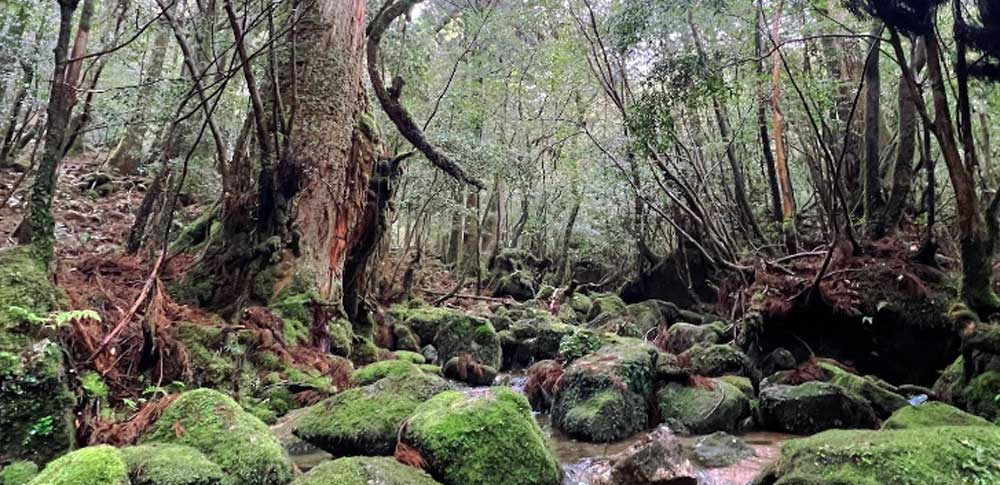
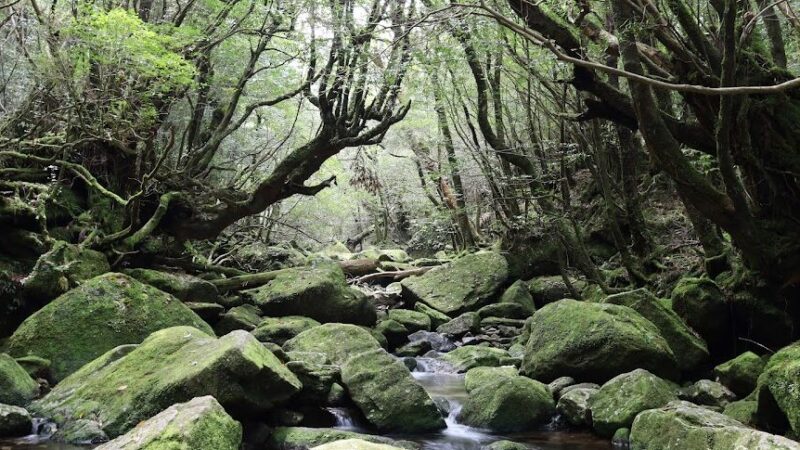
The ancient forest, moss-covered giant trees, and mysterious atmosphere depicted in the film are precisely the very landscape of Shiratani Unsuikyo Gorge. When director Miyazaki visited Yakushima Island, he was deeply impressed by the sight of primeval forest covered in yakusugi cedar trees thousands of years old and deep green vegetation, which is said to have greatly influenced the construction of the world depicted in “Princess Mononoke.”
Shiratani Unsuikyo Gorge is a natural recuperation forest positioned at an elevation of approximately 600 to 1,050 meters. After the film’s release, it became a sacred site visited by many fans from around the world as the “Forest of Princess Mononoke.” In particular, the “Moss Forest” area is known for its fantastical landscape reminiscent of the Forest of the Shishigami.
Basic Information about Shiratani Unsuikyo Gorge
Location and Access
Location: Minoura District, Yakushima Town, Kumage County, Kagoshima Prefecture
Shiratani Unsuikyo Gorge is located in the northern part of Yakushima Island, approximately 40 minutes by car from the Minoura district.
How to Get There:
- How to Reach Yakushima Island
- Airplane: Approximately 35 minutes from Kagoshima Airport to Yakushima Airport, approximately 1 hour from Fukuoka Airport
- High-speed ferry: Approximately 2 to 3 hours from Kagoshima Main Port to Minoura Port or Anbo Port
- Ferry: Approximately 4 hours from Kagoshima Main Port (more economical)
- To the Shiratani Unsuikyo Gorge Trailhead
- Rental car: Approximately 40 minutes from Minoura Port via prefectural roads (most convenient)
- Bus service: Using the “Shiratani Unsuikyo Gorge” bound bus (limited service, advance confirmation required)
- Taxi: Approximately 6,000 to 8,000 yen one way
- Tour participation: Guided tours include transportation
Operating Hours and Fees
Forest entry time: Open year-round (however, early morning to evening entry is recommended for safety)
Forest use cooperation fee (environmental conservation cooperation fee):
- High school students and above: 500 yen
- Middle school students and younger: Free
Parking:
- Shiratani Unsuikyo Gorge Trailhead Parking Lot: Free (accommodates approximately 30 vehicles)
- Note that the lot often becomes full from early morning during busy periods
Restroom: Public restroom at the trailhead (no restrooms in the mountains, so be sure to use facilities before departure)
Precautions
- Collecting plants and animals is strictly prohibited as this is a World Natural Heritage area
- Always take garbage with you
- Entry off the marked trail is prohibited
- Cell phone service is unavailable in many areas
- Equipment to prepare for sudden weather changes is essential
Detailed Trekking Course Guide
Shiratani Unsuikyo Gorge has multiple courses set at different difficulty levels and required times.
1. Yayoi Cedar Course (For Beginners)
Required time: Approximately 1 hour round trip
Distance: Approximately 1 km
Difficulty: ★☆☆☆☆
The shortest course, traveling round trip from the trailhead to the Yayoi Cedar, said to be approximately 3,000 years old. Enjoyable even for those with small children or low physical stamina.
Highlights:
- Yayoi Cedar: A massive yakusugi cedar estimated to be 3,000 years old
- Satsuki Suspension Bridge: A charming suspension bridge spanning the Shiratani River
- Clear streams and moss landscape
2. Bugyo Cedar Course (For Intermediate Hikers)
Required time: Approximately 3 hours round trip
Distance: Approximately 3 km
Difficulty: ★★★☆☆
A course that proceeds beyond the Yayoi Cedar to the Bugyo Cedar further inside. A moderate amount of exercise allows you to fully enjoy the charm of Shiratani Unsuikyo Gorge.
Highlights:
- Nidai Oosugi: A symbol of life force with a new cedar growing atop a tree stump
- Sanbonashi Cedar: A unique cedar standing on three legs with exposed roots
- Bugyo Cedar: A dignified yakusugi cedar estimated to be 2,000 years old
3. Taiko Rock Course (For Advanced Hikers / via Princess Mononoke Forest)
Required time: Approximately 4 to 5 hours round trip
Distance: Approximately 5.5 km (one way)
Difficulty: ★★★★☆
A course that passes through the “Moss Forest (Princess Mononoke Forest),” the highlight of Shiratani Unsuikyo Gorge, and ascends to Taiko Rock at an elevation of 1,050m. Physical fitness is required, but offers the most fulfilling experience.
Highlights:
- Moss Forest: The very world of “Princess Mononoke”! Green moss covering everything is fantastical
- Shichihon Cedar: Seven cedarswith a mysterious presence standing close together
- Taiko Rock: A giant single rock slab observation platform overlooking the mountains of Yakushima Island
- Tsuji Pass: An open landscape approaching the forest line
Course Details:
- Trailhead to Yayoi Cedar (approximately 30 minutes)
- Progress along well-maintained wooden paths and stairs
- Beautiful ravine scenery along the Shiratani River
- Yayoi Cedar to Bugyo Cedar (approximately 40 minutes)
- Slope increases somewhat but remains walkable
- Massive yakusugi cedars appear one after another
- Bugyo Cedar to Moss Forest (approximately 40 minutes)
- Elevation increases and moss density intensifies
- Fallen logs and tree stumps are beautifully covered with moss
- Moss Forest to Taiko Rock (approximately 50 minutes)
- Steep uphill sections continue
- Scenery changes as approaching the forest line
- The spectacular views from Taiko Rock make the fatigue worthwhile
Thorough Explanation of the Appeal of “Moss Forest”
The Very World of Princess Mononoke
The greatest highlight of Shiratani Unsuikyo Gorge is the Moss Forest spread across an elevation of approximately 800 to 900 meters. This is said to be the model for the Forest of the Shishigami that appears in the film “Princess Mononoke,” and invites visitors into another world.
Characteristics of the Moss Forest:
- A 360-degree moss-covered world: Everything from the ground to fallen logs, rocks, and tree trunks are covered with green moss
- Approximately 600 species of moss: The entire Yakushima Island confirms approximately 600 moss species, with Shiratani Unsuikyo Gorge being a treasure trove
- Mystical light: Dappled sunlight reflected off the moss creates a fantastic green glow
- A world of silence: In the deep forest, only bird songs and water sounds echo
Why is Moss so Abundant Here
Yakushima Island is said to have “rain falling 35 days a month.” Particularly in the mountainous regions, annual precipitation reaches 8,000 to 10,000 mm, which is approximately five times that of Tokyo.
This abundant moisture combined with Yakushima Island’s warm climate and the moderate coolness from elevation creates an ideal environment for moss growth. Furthermore, the high-humidity microclimate created by the yakusugi cedar forest promotes moss proliferation.
Photography Tips
Tips for taking beautiful photos in the Moss Forest:
- Cloudy or rainy days are best: Soft light rather than direct sunlight brings out the moss’s green beautifully
- Early morning or evening: Dappled sunlight creates beautiful light rays
- Macro photography: Close-ups of the moss’s delicate structure
- Wide-angle lens: Capture the overall atmosphere of the forest
- Bring a tripod: A lightweight type is essential for preventing camera shake in the dark forest (while not adding burden to the hike)
Best Season and Weather Preparation
Seasonal Characteristics
Spring (March to May)
- Advantages: Fresh greenery is beautiful and temperatures are comfortable. Yakushima Island’s flowers begin to bloom
- Disadvantages: Crowded during Golden Week. Possibility of rainy season beginning in May
- Recommendation: ★★★★☆
Summer (June to August)
- Advantages: Greenery is most intense and moss is vibrant
- Disadvantages: Rainy season (June) and typhoon season (July-September). Hot and humid with leeches and horseflies active
- Recommendation: ★★★☆☆
Autumn (September to November)
- Advantages: Stable weather after typhoon season. Fall foliage also enjoyable (in higher elevation areas)
- Disadvantages: Typhoon risk in September
- Recommendation: ★★★★★ (October-November is best)
Winter (December to February)
- Advantages: Fewer tourists mean quieter experience. Clear air provides clear views
- Disadvantages: Cold preparation essential. Possibility of snow or frost. Shorter daylight hours
- Recommendation: ★★★☆☆
Overall Best Season
October to November is most recommended. The typhoon season has ended, weather is stable, and temperatures are comfortable. Tourism crowds are smaller than in summer.
The next best option is March to April. The beautiful new greenery and comfortable temperatures are appealing.
Rain Countermeasures Are Essential
On Yakushima Island, sudden rain can occur even on sunny forecasts—it’s commonplace.
Essential rain gear:
- Rainwear top and bottom (separate type, not poncho)
- Pack cover
- Waterproof bag (for valuables and electronics)
- Quick-drying clothing
How to Enjoy Rainy Days:
Actually, rainy Shiratani Unsuikyo Gorge has unique charm. Moss wet with rain becomes an even more vivid green color and shines, while the fog-wrapped forest increases its fantastical atmosphere. With proper equipment, a rainy day allows you to immerse yourself in the world of “Princess Mononoke.”
Complete Clothing and Equipment Checklist
Essential Equipment
Clothing:
- Trekking shoes (waterproof and high-cut recommended)
- Quick-drying underwear
- Long-sleeved shirt (insect bite and sunburn protection)
- Trekking pants
- Rainwear top and bottom
- Hat
- Gloves (hand protection on rocky terrain)
Items to Carry:
- Backpack (approximately 20-30 liters)
- Drinking water (1 liter or more)
- Energy snacks (rice balls, bread, chocolate, nuts, etc.)
- Headlight (preparation for unexpected delays)
- Map and compass (smartphone will have no signal)
- First aid kit (bandages, disinfectant, pain relievers, etc.)
- Towel or hand towel
- Garbage bag
- Portable toilet (emergency use)
- Smartphone (for camera and emergency contact)
- Mobile battery
Recommended Equipment:
- Trekking poles (reduces knee stress on descent)
- Insect repellent spray (spring through fall)
- Sunscreen
- Change of clothes (leave in vehicle)
- Sunglasses
- Camera (in addition to smartphone)
Seasonal Additional Equipment
Summer:
- Insect net (for face)
- Salt supplement tablets
- Cooling towel
Winter:
- Winter clothing (fleece, down jacket)
- Winter gloves and hat
- Hand warmers
- Lightweight crampons (for snow and frost)
Benefits of Using Guided Tours
Advantages of Guided Tours
Shiratani Unsuikyo Gorge can be visited individually, but guided tours are especially strongly recommended for those visiting for the first time or with limited hiking experience.
Advantages:
- Improved Safety
- Weather judgment and guidance through dangerous areas
- Emergency response capability
- Appropriate pace setting
- Acquisition of Deep Knowledge
- Explanation of yakusugi cedar ecology and history
- Explanation of moss types and characteristics
- Introduction of “Princess Mononoke” related points
- Local-only information
- Efficient Tourism
- Don’t miss highlights
- Guidance to best photography spots
- Optimal time allocation
- Reduced Equipment Load
- Rental of rainwear and equipment (depending on tour)
- Meal provision (some tours)
- Transportation Service
- Pickup and dropoff from accommodations (most tours)
- No need for rental car
How to Choose a Tour
Points to Verify:
- Guide qualifications (Yakushima authorized guide, etc.)
- Whether it’s small group (8 people or fewer recommended)
- What’s included in the price (transportation, meals, equipment rental, etc.)
- Reviews and ratings
- Cancellation policy
Price Range:
- Full day tour: Approximately 8,000 to 15,000 yen
- Half day tour: Approximately 5,000 to 8,000 yen
Nearby Tourist Attractions
When visiting Shiratani Unsuikyo Gorge, be sure to explore other fascinating attractions on Yakushima Island.
Jomon Cedar Trekking
The Yakushima Island’s largest yakusugi cedar, estimated to be 7,200 years old (various theories exist). A serious mountain climb requiring over 10 hours round trip, but an unforgettable experience.
Yakusugi Land
A natural recuperation forest at higher elevation than Shiratani Unsuikyo Gorge (approximately 1,000 to 1,300m). With multiple courses ranging from 30 to 210 minutes, you can choose according to your fitness level.
Okawa Falls
Yakushima Island’s largest waterfall with a drop of 88 meters. Easily accessible from the parking lot in just a few minutes of walking, reaching near the waterfall basin.
Senzumi Falls
A waterfall flowing down a massive single granite rock face. The view from the observation platform is spectacular.
Western Forest Road
A road passing through World Natural Heritage area. You can encounter wild yakushika (sika deer) and yakuzaru (Japanese macaques) with high probability.
Nagata Inaka Beach
Famous as a sea turtle nesting site with beautiful beach scenery. May through July is nesting season.
Hirauchi Kaichin Onsen
A natural open-air hot spring that appears only at low tide. An open open-air bathing experience merged with the ocean.
How to Choose Accommodations
Considering access to Shiratani Unsuikyo Gorge, accommodation in the Minoura district or Anbo district is recommended.
Minoura District
- Closest to Shiratani Unsuikyo Gorge (approximately 40 minutes by car)
- Convenient with nearby ports and supermarkets
- Abundant accommodation options including hotels, guest houses, and inns
Anbo District
- Ideal base for Jomon Cedar trekking
- Many restaurants
- Nearby hot spring facilities
Accommodation Types
Hotels and Resorts:
- Comfortable amenities and service
- Higher cost (10,000 yen and up per night)
Guest Houses:
- Homey atmosphere
- Can enjoy local cuisine
- Mid-range cost (7,000 yen and up per night)
Guest Houses:
- For backpackers
- Interaction with other travelers
- Lower cost (3,000 yen and up per night)
Rental Villas and Cottages:
- For groups and families
- Private space
- Cost depends on group size
Natural Conservation and Etiquette on Yakushima Island
It is important for each visitor to the World Natural Heritage area of Yakushima Island to follow proper etiquette to preserve the beautiful nature for the future.
Basic Etiquette
- Take All Garbage With You
- Spirit of “leaving the place more beautiful than when you arrived”
- Make an effort to pick up any trash you find
- Do Not Collect Plants or Animals
- Don’t pick flowers or moss
- Don’t catch insects
- Don’t feed wildlife
- Don’t Step Off the Marked Trail
- For vegetation protection
- For accident prevention
- Don’t Shout Loudly
- Consideration for wildlife
- Consideration for other hikers
- Restroom Etiquette
- Always use the restroom at the trailhead
- If unavoidable in the mountains, use a portable toilet
- Photography Etiquette
- Be considerate of other hikers
- Drone use is generally prohibited
Contributing to Environmental Conservation
- Payment of forest entry cooperation fee: Used for trail maintenance and environmental conservation
- Use of certified guides: Proper guide use reduces environmental impact
- Visit during off-season: Distributing crowds also contributes to conservation
Experiences from Actual Visitors
“It Really Was the World of Princess Mononoke”
“As a movie fan, visiting Shiratani Unsuikyo Gorge was my long-held dream. The moment I stepped into the Moss Forest, I got goosebumps from the atmosphere where the Shishigami truly seemed about to appear. Especially the early morning forest enveloped in mist was another world. The guide’s explanation helped me learn the specific points where director Miyazaki drew inspiration, making the emotional impact even greater.” (30-year-old woman)
“More Challenging Than Expected, But Worth It”
“I heard the Taiko Rock course was 5 hours round trip, but it actually took 6 hours taking photos while walking slowly. The final climb to Taiko Rock was particularly challenging. However, the 360-degree panorama from the summit and the fantastical beauty of the Moss Forest made me forget my fatigue. Bringing trekking poles turned out to be the right call.” (40-year-old man)
“More Beautiful on Rainy Days”
“I was visiting on a rainy morning. At first I was disappointed, but my guide said ‘The moss is most beautiful on rainy days,’ and he was right. Moss wet with rain glowed with an incredibly vivid green color, and the fog-wrapped forest was mysterious itself. There’s a different kind of charm compared to sunny days. As long as you’ve properly prepared for rain protection, rainy days are also recommended.” (20-year-old woman)
Frequently Asked Questions and Answers
Q: Is it okay if I’m a hiking beginner?
A: The Yayoi Cedar course and Bugyo Cedar course are possible for beginners. The Taiko Rock course takes over 5 hours round trip, so some physical fitness and hiking experience is reassuring. If unsure, using a guided tour is recommended.
Q: Can I go with children?
A: The Yayoi Cedar course (1 hour round trip) is possible for elementary school children. However, there are slippery sections requiring sturdy shoes and parental attention. The Taiko Rock course is suited to upper elementary school children and older with good fitness.
Q: Is it safe to go alone?
A: The marked trail is well-maintained and attracts many hikers, so going alone is basically safe. However, considering the risk of sudden weather changes or injury, going with multiple people or using a guided tour when visiting for the first time is more reassuring.
Q: Can I use my cell phone?
A: Except near the trailhead, there is no service in most areas. To prepare for emergencies, inform your accommodation of your hiking plan.
Q: Are there restrooms?
A: There is a public restroom at the trailhead, but no facilities in the mountains. Please use the restroom before departing and consider bringing a portable toilet if concerned.
Q: Can I go in winter?
A: Winter entry is possible, but snow and frost are possible. Prepare thoroughly for cold weather and check weather information in advance. Lightweight crampons may be needed during heavy snow.
Q: Can I bring pets?
A: Pet accompaniment is generally prohibited as this is a World Natural Heritage area. Please understand this from the perspective of wildlife impact and ecosystem protection.
Q: How much time should I plan for?
A: Allow approximately 1 hour for the Yayoi Cedar course, 3 hours for the Bugyo Cedar course, and 5 to 6 hours for the Taiko Rock course. Including photo time and breaks, plan for an additional 1 to 2 hours.
Summary: Experience Something Special in the Princess Mononoke Forest
Shiratani Unsuikyo Gorge is the mystical forest that inspired the world of the Studio Ghibli masterpiece “Princess Mononoke.” The yakusugi cedars thousands of years old, the green moss covering everything, and the clear ravine creating the landscape transport visitors to primordial nature.
Key Points for Visiting Shiratani Unsuikyo Gorge:
- Best season is October to November, but each season has different appeal
- Rain preparation is essential; rainy days actually bring out moss beauty
- Choose courses according to fitness level; beginners should start with shorter courses
- Using guided tours improves safety and deepens understanding
- Following environmental etiquette is our responsibility to the future
The reverence for nature that director Hayao Miyazaki must have felt, the mystery of life, and the importance of coexistence between humans and nature. Visiting Shiratani Unsuikyo Gorge allows deeper understanding of the message of “Princess Mononoke.”
A trip where you immerse yourself in the primeval forest nurtured by Yakushima Island, experiencing the world of “Princess Mononoke” with your whole being. It will be a special experience that transcends mere sightseeing and remains in your heart.
With adequate preparation and respect for nature, visit this mystical forest. Surely an moving experience awaits that may change your perspective on life.


-宮崎県-聖地巡礼-800x450.jpg)