Yamada Naoko’s latest film “Kimi no Iro” (Your Color), released on August 30, 2024, is a moving work set against the beautiful scenery of Nagasaki Prefecture. Against the background of this youth story depicted by director Yamada, who has created masterpieces such as “K-On! the Movie” and “A Silent Voice,” Nagasaki Prefecture’s diverse landscapes form the film’s world view. This article provides detailed explanations of pilgrimage spots featured in the movie and offers practical information for fans planning to visit.
“Kimi no Iro” Work Information and Connection to Nagasaki Prefecture
Work Overview
“Kimi no Iro” is a youth story that begins with the encounter between Tsutsuko, a girl who can see emotions as colors, and Rui, a boy who loves music. The production committee includes the Nagasaki Prefecture Tourism Federation, which actively proposed filming locations three years before the film’s release, developing it as a project involving both public and private sectors working together.
Nagasaki Prefecture, the setting of the story, is depicted as a place with diverse characteristics: unique topography with many slopes, historical buildings, and beautiful nature in the remote islands. Many important scenes in the film—the remote island where Tsutsuko’s mother lives, the school the protagonists attend, and the old church that serves as the band’s practice venue—are modeled after actual locations within Nagasaki Prefecture.
Director Yamada Naoko’s Commitment to Background Art
The characteristics of director Yamada Naoko’s works lie in delicate character design and beautiful background depiction. In “Kimi no Iro” as well, Nagasaki’s slopes, cobblestones, churches, and seascapes are carefully drawn in detail, and visiting the actual locations brings the film’s scenes vividly back to life. Even in the approximately 1 minute 30 second trailer, many impressive landscapes are used, including slopes in Nagasaki City and the coastline of the Goto Islands.
The production committee cooperated with Nagasaki Prefecture, conducting detailed location scouting from the preliminary stages. With cooperation from local residents, they selected locations best suited to the story. Through this process, the Nagasaki Prefecture Tourism Federation went beyond simply assisting with filming and became deeply involved in constructing the film’s world view.
Major Pilgrimage Spots in Nagasaki City
Glover Garden and Surrounding Area
Glover Garden is one of the most impressively featured locations in the film. The Western-style buildings, including the designated Important Cultural Property Old Glover House, and the view of Nagasaki Harbor seen from above are used multiple times as backgrounds for important scenes in the film.
Access Information
- Address: 8-1 Minami Yamashitecho, Nagasaki City
- Nearest streetcar stop: 7-minute walk from Oura Tenshudo-shita stop, 10-minute walk from Ishibashi stop
- Opening hours: 8:00 AM–6:00 PM (varies by season)
- Admission: Adults ¥620
Glover Street, which leads to Glover Garden, also appears in the film. The souvenir shops along the cobblestone slope and retro-style buildings embody the daily scenery of Nagasaki, where the story is set. The view at dusk especially overlaps with impressive scenes from the film, making it a popular photo spot among fans.
Dondondaka Slope and Holland Slope
The characteristic slopes in Nagasaki City appear multiple times as roads that Tsutsuko regularly travels. Dondondaka Slope is a steep stone stairway leading to Katsuura Women’s University and is depicted as the protagonists’ school route.
Holland Slope is a cobblestone slope in the Higashiyamete district, characterized by Meiji-era Western-style buildings. In the film, it is used in important scenes, such as when Tsutsuko deeply contemplates her ability to see emotions as colors.
Visitation Tips
- Multiple slopes can be visited on foot from Ishibashi streetcar stop
- Sturdy, comfortable shoes recommended due to steep gradients
- Quiet, respectful behavior requested as the area passes through residential neighborhoods
Higashiyamete Jusan-bankan
Higashiyamete Jusan-bankan is a Western-style building constructed in the mid-Meiji period and is now open to the public as a tourist facility. In the film, it appears as a place where band members gather and as the background for scenes where Tsutsuko and Rui converse.
The interior of the building can be viewed free of charge, and the second floor offers a panoramic view of Nagasaki Harbor. It is also a pilgrimage site for the anime “Irozuku Sekai no Ashita kara” and serves as an important hub for anime pilgrimage tourism in Nagasaki.
Nagasaki Waterside Forest Park
An urban park facing Nagasaki Harbor, characterized by open grassy lawns and seascapes. In the film, it is used in scenes where the protagonists discuss music and in impressive shots where emotions’ colors reflect in the sea.
Located just a 5-minute walk from Shintchi Chinatown streetcar stop with convenient access, it is also ideal as a rest spot. The walking path extending from around Oranda Bridge to the park allows visitors to slowly experience the film’s world view.
Nabeyamagasa Mountain Park Observatory
An observation spot overlooking Nagasaki City, also known as a famous night-view location. The film features it in a scene where Tsutsuko faces her emotions while overlooking the city of Nagasaki.
The Glover Sky Road allows access to the observation deck without climbing slopes. The time from dusk to night offers a special atmosphere where visitors can relive scenes from the film.
Pilgrimage Spots in the Goto Islands
Onidake (Goto City)
Onidake, a symbol of Goto City, is a volcano with a 315-meter elevation and gentle grassy slopes. In the film, it appears as the symbolic landscape of the remote island where Tsutsuko’s mother lives and is used in scenes that represent important turning points in the story.
Access Information
- Approximately 20 minutes by car from Fukue Airport
- Approximately 15 minutes by car from Fukue Port
- Parking available; approximately 15-minute walk to observation point
From the Onidake Observation Point, a 360-degree panoramic view can be enjoyed, and on clear days, the horizon of the East China Sea is visible. The vast sky and grassland landscapes depicted in the film can be truly appreciated by visiting in person.
Church Group on Fukue Island
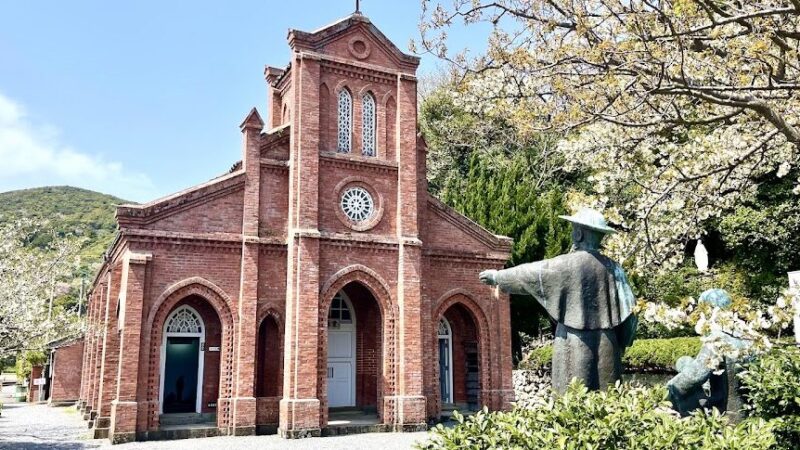
Numerous churches are scattered throughout the Goto Islands, and in the film, an old church appears as a band practice venue. Historic churches such as Dosaki Church and Mizuno-ura Church serve as important settings for the story.
Visitation Precautions
- Understand that churches are places of faith and act respectfully
- Do not photograph in areas where photography is prohibited
- Avoid loud conversation and noise
- Refrain from visiting during Mass and other religious services
- Show consideration for the lives of local residents
Hamaguri Beach (Shin-Kamigoto Town)
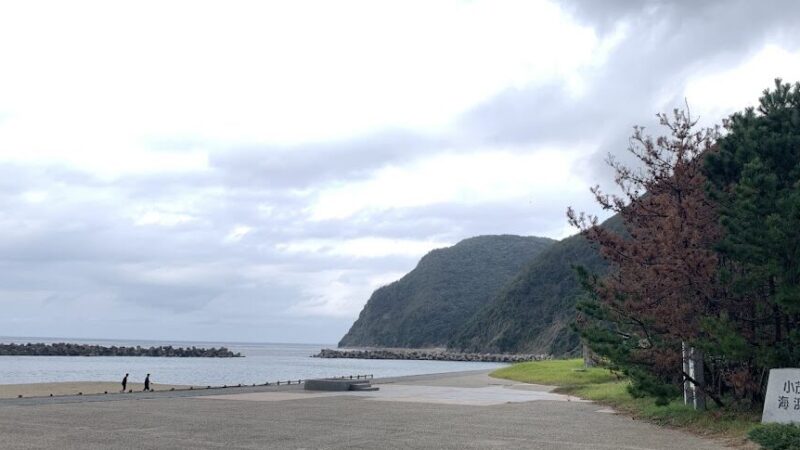
Hamaguri Beach in Shin-Kamigoto Town is a beautiful beach with highly transparent waters and white sand. In the film, it is the setting for an important scene where Tsutsuko and Rui converse by the seaside, and impressive imagery of emotions’ colors dissolving into the sea was filmed here.
Access Information
- Approximately 30 minutes by car from Arikawa Port
- Open as a bathing beach during summer (mid-July to late August)
- Parking, restrooms, and shower facilities available
The calm, shallow waters are depicted in the film as a place of peace. The changing colors of the sea at dusk provide an excellent opportunity to experience the work’s theme of “color.”
Pilgrimage Spots in Sasebo City
Kujukushima Observation Park (Kujukushima Pearl Sea Resort)
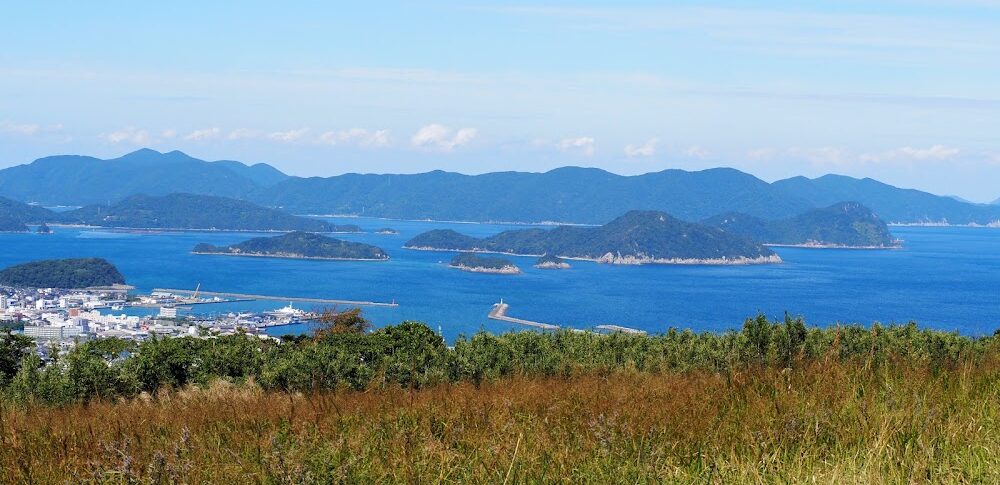
Kujukushima, a representative tourist attraction of Sasebo City, is characterized by beautiful archipelago scenery formed by 208 islands. The film impressively uses scenes of boats connecting the islands and the seascapes.
Ways to Enjoy
- Kujukushima sightseeing cruise touring the islands (approximately 50 minutes)
- Panoramic view of the archipelago from observation deck
- Observe marine life at the aquarium “Umikirara”
The Kujukushima scenery forms an important element in shaping the image of the “remote island” in the story. Taking a sightseeing cruise allows visitors to experience navigating between islands as depicted in the film.
Ishidake Observation Deck
A scenic spot overlooking the Kujukushima islands, likely used in the film’s poster and visuals. The panorama created by 208 islands symbolizes Nagasaki Prefecture’s diverse natural landscapes.
Efficient Pilgrimage Model Courses
One-Day Nagasaki City Course
Morning (9:00 AM–12:00 PM)
- Start at Ishibashi streetcar stop
- Holland Slope and Higashiyamete Jusan-bankan (60 minutes)
- Dondondaka Slope (30 minutes)
- Glover Garden (90 minutes)
Afternoon (1:00 PM–5:00 PM)
- Lunch on Glover Street (60 minutes)
- Nagasaki Waterside Forest Park (45 minutes)
- Shinchi Chinatown stroll (45 minutes)
- Evening view at Nabeyamagasa Mountain Observatory (60 minutes)
The main spots in Nagasaki City can be efficiently visited in one day using the streetcar and Glover Sky Road. Purchasing a one-day pass (¥600) is recommended.
Two-Night, Three-Day All Nagasaki Prefecture Course
Day 1: Nagasaki City
Visit pilgrimage sites in the city following the one-day course above
Day 2: Goto Islands (Fukue Island)
- Jet foil from Nagasaki Port to Fukue Port (approximately 1 hour 25 minutes)
- Tour Onidake, Dosaki Church, and Fukue Island’s coastline by rental car
- Stay overnight on Fukue Island
Day 3: Sasebo City
- Travel from Fukue Port to Sasebo via Nagasaki Port
- Visit Kujukushima Observation Park and Ishidake Observation Deck
- Lunch with Sasebo burger before heading to Nagasaki Airport
Comprehensive Pilgrimage Course Including Remote Islands (3 Nights, 4 Days)
Travel to remote islands requires time, making a relaxed schedule necessary. If visiting Hamaguri Beach in Shin-Kamigoto Town, consider either traveling by boat from Fukue Island or traveling directly from Nagasaki Port to Arikawa Port.
Practical Advice for Pilgrimage Sightseeing
Using Location Maps
The Nagasaki Prefecture Tourism Federation distributes location maps commemorating the film’s first anniversary. They can be obtained at major tourist information centers, Nagasaki Station, and the airport. Downloads from the official website are also available, allowing confirmation on smartphones while sightseeing.
Period-limited special offers such as scene photograph postcard giveaways are available, so check the Nagasaki Prefecture Tourism Federation’s official website for the latest information before your visit.
Photography Manners and Consideration
In pilgrimage sightseeing, consideration for local residents is most important. Please pay special attention to the following:
When Visiting Churches
- Understand that they are places of faith and act with respect
- Do not photograph in areas where photography is prohibited
- Avoid loud conversation and noise
- Refrain from visiting during Mass, weddings, or other religious events
In Residential Areas
- Do not trespass on private property
- Avoid early morning or nighttime visits
- Be mindful that lingering on roads does not obstruct traffic
- Always take trash with you
On Slopes and Narrow Alleys
- Prioritize passage for locals
- Don’t spread out while walking
- Be aware of vehicle traffic
Recommended Visiting Seasons by Season
Spring (March–May)
- Mild climate makes walking comfortable
- Cherry blossom season (late March–early April) offers beautiful scenery
- Be aware of crowding during Golden Week
Summer (June–August)
- Enjoy swimming at Hamaguri Beach
- Possible special events coinciding with the film’s release period
- High temperatures require heatstroke prevention measures
- Typhoon season can cause ferry services to remote islands to be cancelled
Autumn (September–November)
- Most stable climate, ideal for pilgrimage
- Local festivals such as Nagasaki Kunchi are held
- Fall foliage visible until early December in some locations
Winter (December–February)
- Fewer tourists allow leisurely sightseeing
- Beautiful night views
- Goto Islands experience strong winds and frequent ferry cancellations
- Cold-weather protection necessary
Transportation Methods and Travel Tips
Within Nagasaki City
- Streetcar: Convenient transportation connecting major sites
- One-day pass (¥600) allows unlimited travel
- Glover Sky Road: Free inclined elevator for easy slope traversal
Access to Goto Islands
- Airplane: Approximately 30 minutes from Fukuoka Airport to Fukue Airport
- Jet foil: Approximately 1 hour 25 minutes from Nagasaki Port to Fukue Port
- Ferry: Approximately 3 hours 10 minutes from Nagasaki Port to Fukue Port (vehicle transport available)
- Island transportation by rental car is convenient (advance reservation recommended)
Access to Sasebo City
- JR: Approximately 1 hour 40 minutes from Nagasaki Station to Sasebo Station by express
- Bus: Approximately 1 hour 30 minutes from Nagasaki Airport to Sasebo by expressway
- Rental car or taxi convenient for transportation around Kujukushima
Nagasaki Gourmet to Enjoy Alongside Pilgrimage Sightseeing
Recommended Gourmet in Nagasaki City
Nagasaki Chanpon and Sara-udon
Many long-established Chinese restaurants surround Glover Garden, allowing visitors to enjoy authentic flavors between pilgrimage sites. Restaurants such as Shianshibashi Ramen and Shikairo are scattered throughout the area.
Castella
Famous shops such as Bunmeido and Fukusaya have multiple locations in the city and are ideal souvenirs. Many shops near Glover Street offer tastings, allowing for taste comparisons.
Toruko Raisu
A Western dish originating in Nagasaki featuring pilaf, spaghetti, and pork cutlet served on a single plate—a hearty, filling meal. It is served at kissaten (teahouses) around Shinchi Chinatown.
Recommended Gourmet in Goto Islands
Goto Udon
Goto udon is characterized by thin noodles with strong chewiness and is a local specialty. Eating them in ago (flying fish) broth is the traditional style.
Fresh Seafood
Fish and shellfish caught in waters near the Goto Islands are exceptionally fresh. Firefly squid, horse mackerel, and squid are particularly excellent. They can be enjoyed at food stalls near Fukue Port.
Kanko-ro Mochi
A traditional Goto confection made with sweet potato, characterized by simple sweetness. It is popular as a souvenir.
Recommended Gourmet in Sasebo
Sasebo Burger
After sightseeing in the Kujukushima area, enjoy an authentic Sasebo burger. Famous shops such as Log Kit, Big Man, and Hikari are scattered throughout the city.
Lemon Steak
Thinly sliced beef grilled on an iron plate and eaten with lemon-based sauce—a signature Sasebo dish.
Choosing Accommodations
Nagasaki City
As a base for pilgrimage sightseeing, hotels near streetcar stations are convenient. Hotels are concentrated around Nagasaki Station, Shianshibashi and Hamachi areas, and the Inasayama area.
Recommended Areas
- Around Nagasaki Station: Excellent access, many new hotels
- Shianshibashi and Hamachi area: Close to bustling entertainment district with abundant dining options
- Inasayama area: Luxury hotels offering night views
Goto Islands
Fukue Island has various types of accommodations including guesthouses, business hotels, and resort hotels. Guesthouses offering fresh seafood unique to remote islands are recommended.
Reservation Notes
- Early reservations essential during peak season (summer, holidays)
- Guesthouses typically offer dinner and breakfast plans
- Arrange rental cars simultaneously with accommodation reservations for certainty
Sasebo City
Accommodations concentrate around Sasebo Station. Resort hotels with ocean views are available in the Kujukushima area, offering relaxed stays.
“Kimi no Iro” Related Events and Campaign Information
First Anniversary Commemoration Projects
Special events are being held throughout Nagasaki Prefecture to commemorate the film’s first anniversary. Location map distribution, scene photograph postcard giveaways, and café collaboration openings are among period-limited projects being implemented.
Latest information can be confirmed on the Nagasaki Prefecture Tourism Federation’s official website “Nagasaki Travel Net.” Details on special event schedules, participation methods, and distribution locations are updated continuously.
Collaboration Projects
Local restaurants and souvenir shops may sell limited-edition menus and goods in collaboration with the film. They are offered at pilgrimage destinations including the Glover Garden area, Nagasaki Station, and Fukue Port.
Photo Spots
Main pilgrimage sites may have photo spots recreating film scenes. Set up as photo spots designed for social media sharing, they are ideal for commemorative photography of your visit.
Nagasaki Prefecture as an Anime Pilgrimage Destination
Synergy with “Irozuku Sekai no Ashita kara”
Before “Kimi no Iro,” Nagasaki Prefecture was already the setting for the P.A.WORKS anime “Irozuku Sekai no Ashita kara,” providing an established foundation as an anime pilgrimage destination. Many locations appear in both works, allowing fans to simultaneously enjoy both films’ world views.
At shared locations such as Ishibashi streetcar stop, Nabeyamagasa Mountain Observatory, and Higashiyamete Jusan-bankan, visitors can recall scenes from both works while sightseeing.
“88 Japanese Anime Pilgrimage Sites Worth Visiting”
Nagasaki Prefecture was selected for the Anime Tourism Association’s “88 Japanese Anime Pilgrimage Sites Worth Visiting.” With “Kimi no Iro”‘s release, attention has further increased, with growing visits from domestic and international fans.
Nagasaki Prefecture’s Pilgrimage Promotion Efforts
Nagasaki Prefecture actively works to attract anime productions, implementing comprehensive support systems including production committee participation, location scouting assistance, and post-release promotional cooperation.
The long-term effort of proposing filming locations three years before release is noted as an advanced example of local government content tourism promotion. This approach has resulted in the film’s world view and actual regional charm merging at high levels, creating highly satisfying pilgrimage experiences for fans.
Experiencing “Kimi no Iro”‘s World View Through Pilgrimage Sightseeing
Feeling “Color” in Nagasaki’s Landscapes
The film’s theme of “color” is deeply connected to Nagasaki Prefecture’s diverse scenery. The blue sea and sky, green mountains, gray cobblestones, white churches, and orange sunset all overlap with the colors of emotions that Tsutsuko sees. The colors woven by Nagasaki’s nature and architecture merge with the film’s color world.
Actually visiting the pilgrimage sites allows experiencing the film’s color world through all five senses. The ever-changing landscape colors with time and season deepen understanding of the story’s theme.
Harmony of Music and Scenery
Music and band activities, important elements of the story, are depicted in harmony with Nagasaki’s landscapes. The quiet church spaces, open seascapes, and everyday slope scenery each match the characters’ music and emotions.
When visiting pilgrimage sites, listening to the film’s soundtrack while sightseeing enhances immersion. At locations such as seashores and observation decks where important film music played, visitors can relive the film’s world view.
Meaning of Remote Islands
In the story, the remote island where Tsutsuko’s mother lives is an important place for confronting the protagonist’s past. The quiet Goto Islands seas, vast skies, and simple village landscapes convey a different sense of time from urban Nagasaki City.
Actually visiting remote islands allows realizing the significant role these islands play in the story. The travel time on boats connecting mainland and islands becomes part of the valuable experience of encountering the story’s setting.
Conclusion: Deepened Work Understanding Through Pilgrimage Sightseeing
Pilgrimage sightseeing for “Kimi no Iro” holds value beyond mere tourism. The Nagasaki Prefecture landscapes carefully selected by director Yamada Naoko are crucial elements forming the story’s world view, and visiting them in person deepens work appreciation.
Each location—from slopes and churches in Nagasaki City to Goto Islands’ sea and sky and Sasebo’s archipelago—possesses unique charm connecting to the characters’ emotions and story development. The “pilgrimage destinations” created through production committee and Nagasaki Prefecture cooperation become special places where fans can enter the work’s world.
When visiting, remember to show consideration for local residents and practice courteous pilgrimage. Utilize location maps and event information provided by the Nagasaki Prefecture Tourism Federation for efficient and fulfilling pilgrimage sightseeing.
Holding the film’s themes of “color” and “music” in your heart, discover your own “Kimi no Iro” experience within Nagasaki Prefecture’s beautiful landscapes.