
Nagasaki Prefecture’s Goto City opened the “Goto no Kumo Yamamoto Nizo Art Museum” in July 2018, a unique art museum where visitors can experience the artistic world of Yamamoto Nizo, a master of Japanese animation. Built in Yamamoto’s hometown of Goto, where he served as art director for numerous acclaimed animations including “Castle in the Sky,” “Grave of the Fireflies,” “Princess Mononoke,” and “The Girl Who Leapt Through Time,” this museum has garnered attention as a pilgrimage destination for anime fans and as a tourist attraction where visitors can experience Goto’s history and culture.
Who is Yamamoto Nizo? The Legacy of a Master Art Director in Japanese Animation
Yamamoto Nizo (1953-2023) was an animation filmmaker and artist from Goto City, Nagasaki Prefecture. Raised surrounded by the majestic natural beauty of the Goto Islands, Yamamoto carried those pristine landscapes with him throughout his career as art director for numerous masterpiece animations.
Representative Works He Directed
The works for which Yamamoto Nizo served as art director are all masterpieces remaining in the history of Japanese animation. In Studio Ghibli’s “Castle in the Sky” (1986), he depicted fantastical floating castles and beautiful sea-of-clouds backgrounds that captivated many audiences. In “Grave of the Fireflies” (1988), he delicately expressed the landscapes of Japan during wartime, and in “Princess Mononoke” (1997), he created the mysterious atmosphere of an ancient forest.
Additionally, in director Hosoda Mamoru’s “The Girl Who Leapt Through Time” (2006), he impressively depicted the contemporary Tokyo streetscape and twilight sky, gaining many fans among younger generations. What these works share in common is overwhelmingly beautiful depictions of sky and clouds. Among fans, the unique cloud expressions known as “Nizo-clouds” have become Yamamoto’s trademark.
Deep Love for Goto
While achieving worldwide recognition, Yamamoto Nizo maintained constant affection for his hometown of Goto. The original painting series titled “One Hundred Views of Goto” depicting Goto’s landscapes is the crystallization of this love. This collection of works depicting Goto’s seas, skies, churches, and settlements conveys the essence of the island more effectively than any tourist guide.
The Charm of Goto no Kumo Yamamoto Nizo Art Museum
The Building: “Shoen-tei,” a Samurai Residence from the Edo Period
The art museum building uses a renovated samurai residence “Shoen-tei” built in 1863 during the late Edo period. This historic structure, once home to samurai of the Goto domain, is a precious cultural legacy that conveys Goto’s history and culture to the present day.
The Shoen-tei, reborn as an art museum, maintains the beauty of traditional Japanese architecture while functioning as a contemporary exhibition space. Experiencing Yamamoto Nizo’s works in the tatami rooms, verandas, and gardens of a samurai residence offers a unique experience unavailable in other museums. The building itself becomes part of the exhibition, allowing visitors to feel Goto’s history firsthand.
“The Room of Sky and Clouds” – A Blissful Space Enveloped in Nizo-clouds
The museum’s greatest attraction is the exhibition room called “The Room of Sky and Clouds.” In this room, visitors experience being surrounded 360 degrees by the world of “Nizo-clouds,” Yamamoto Nizo’s signature. The large-scale folding panels depicting clouds and sky backgrounds captivate visitors with their overwhelming impact and beauty.
Sofas are arranged in the center of the room, allowing visitors to relax and immerse themselves in the world of clouds. This sensation of entering into the animation itself becomes an unforgettable experience for fans on pilgrimage. The clouds’ depictions, which change their expression with the play of light, never bore viewers no matter how long they gaze.
Animation Background Paintings Exhibition
The museum displays numerous background paintings from animations that Yamamoto Nizo actually directed. Visitors can view original paintings of iconic scenes up close—the castle of Laputa from “Castle in the Sky,” the streets of Kobe from “Grave of the Fireflies,” the deep forests from “Princess Mononoke,” and Tokyo’s landscapes from “The Girl Who Leapt Through Time.”
These background paintings were actually used in animation production, and the meticulous brushwork and beautiful coloring convey an emotion that cannot fully be transmitted through video. Viewing these original paintings allows visitors to understand the behind-the-scenes work of animation production and the importance of the art director’s role.
One Hundred Views of Goto – Original Works Depicting Love for Home
The “One Hundred Views of Goto” series, painted by Yamamoto Nizo specifically for his hometown, is also an important part of the museum’s collection. Each painting captures the diverse charms of Goto—the majestic natural beauty of the Goto Islands, historic churches, traditional settlements, and fishing port scenery.
The exhibition room of One Hundred Views of Goto features touch-panel tables where visitors can confirm which regions each painting depicts. Using this function, visitors can plan a “pilgrimage” to experience the actual landscapes after visiting the museum. Through Yamamoto’s eyes, one can discover new charms of the island.
Short Animation Screenings
The museum also screens short animations that help visitors more deeply understand Yamamoto Nizo’s artistic world. Works that Yamamoto himself directed or worked on as art director, videos introducing the production process, and other precious content available nowhere else are presented.
Through video, visitors can realize how static background paintings move within animations and color the narrative. By combining painting exhibitions with video screenings, the museum is structured to allow visitors to comprehend the full scope of Yamamoto Nizo’s art in three dimensions.
Anime Sacred Sites 88 Designation – A New Pilgrimage Destination
Goto no Kumo Yamamoto Nizo Art Museum is certified as one of “88 Japanese Anime Sacred Sites Worth Visiting (2019 Edition)” selected by the General Incorporated Association of Anime Tourism. This certification means the place has been officially recognized as worthy of visitation by anime fans.
Anime Sacred Sites 88 Certification Plaque Installation
The museum displays a plaque certifying its status as one of the Anime Sacred Sites 88, serving as a commemorative photo spot. Additionally, a dedicated seal stamp is available, allowing visitors to collect proof of their pilgrimage. For fans touring anime sacred sites across Japan, Goto has become an essential destination.
Goto’s Charm as a Pilgrimage Destination
Visiting the Yamamoto Nizo Museum is not merely viewing an art museum but also experiencing the very natural environment in which Yamamoto grew up. By visiting the “One Hundred Views of Goto” landscapes seen at the museum, visitors can understand the source of Yamamoto’s ability to create such beautiful background paintings.
The Goto Islands’ crystal-clear seas, endless blue skies, uniquely-shaped clouds, and sunset-painted horizons that repeatedly appear in Yamamoto’s works all originate from the actual landscapes of Goto. Combined with museum visits, touring Goto’s natural scenery provides a deeper pilgrimage experience.
Facility Information and Access
Basic Information
Location: Goto City, Nagasaki Prefecture, Bukeyashiki-dori Street (please confirm the specific address on the official website)
Hours: Generally 9:00 AM – 5:00 PM (final entry 4:30 PM)
※Hours may change seasonally or by day of the week; please confirm the latest information on the official website before visiting.
Closed: Mondays (if a holiday, the following day), year-end and New Year periods
※The museum may close temporarily for exhibition changes.
Admission:
- General: Around 500 yen (varies with special exhibitions)
- High school students and under: Free or discounted
- Groups (20+ people): Discounted rates
※Prices may change; please check the official website for the latest information.
Access
By Airplane:
- Approximately 30 minutes from Nagasaki Airport to Goto Tsubaki Airport
- Approximately 40 minutes from Fukuoka Airport to Goto Fukue Airport
- Approximately 15 minutes from the airport to the museum by rental car or taxi
By Ferry or High-Speed Boat:
- Approximately 1 hour 25 minutes by high-speed boat from Nagasaki Port to Fukue Port, or approximately 3 hours by ferry
- Approximately 10-15 minutes from Fukue Port to the museum by rental car, taxi, or local bus
Transportation Within the Island:
A rental car is most convenient for moving around Goto City. There are also pedestrian-friendly tourist spots near the museum, such as Bukeyashiki-dori Street.
Nearby Tourist Attractions
When visiting the Yamamoto Nizo Museum, we recommend visiting other tourist spots in Goto City as well.
Bukeyashiki-dori Street: Other samurai residences from the Edo period are preserved along the street where the museum is located, allowing visitors to enjoy the historical streetscape.
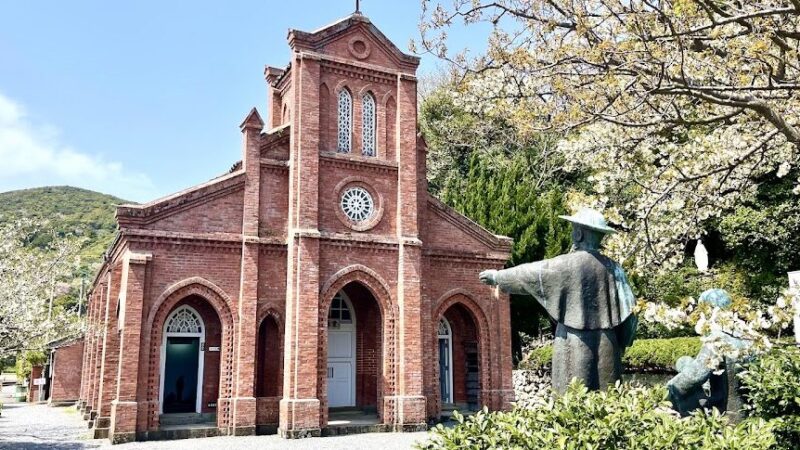
Dorozaki Church: A beautiful church representative of the Goto Islands and a component asset of the UNESCO World Heritage site “Hidden Christian Sites and Monuments of Nagasaki and the Kumano Kodo.”
Onidake: A volcano symbolizing Goto, with 360-degree panoramic views from its summit. This landscape appears in Yamamoto Nizo’s works.
Ose Cape Lighthouse: A white lighthouse standing on a cliff jutting into the East China Sea, known as a famous sunset viewing spot.
Points for Your Visit and Recommended Ways to Enjoy
Recommended Viewing Time
For a thorough tour of the museum’s exhibitions, plan for approximately 1.5 to 2 hours. Those wanting to spend more time in “The Room of Sky and Clouds” or carefully viewing each painting of One Hundred Views of Goto should allow extra time.
Photography
Please confirm the museum’s photography policy at the time of your visit. Generally, personal photography for record-keeping is often permitted, but flash photography and commercial photography may be restricted. “The Room of Sky and Clouds” is particularly popular for photos, but consideration for other visitors’ viewing experience is necessary.
Using the One Hundred Views of Goto Map
After viewing One Hundred Views of Goto at the museum, try visiting the actual landscapes confirmed via the touch panel. Obtaining maps and information at the museum and exploring the island by rental car in this “Art × Nature” pilgrimage is a uniquely Goto experience.
Museum Shop
A museum shop is attached to the museum where visitors can purchase Yamamoto Nizo art books, postcards, original merchandise, and more. Find favorite items as souvenirs of Goto or commemorate your pilgrimage.
The Charm of Goto City – The Island That Nurtured Yamamoto Nizo
The Natural Beauty of the Goto Islands
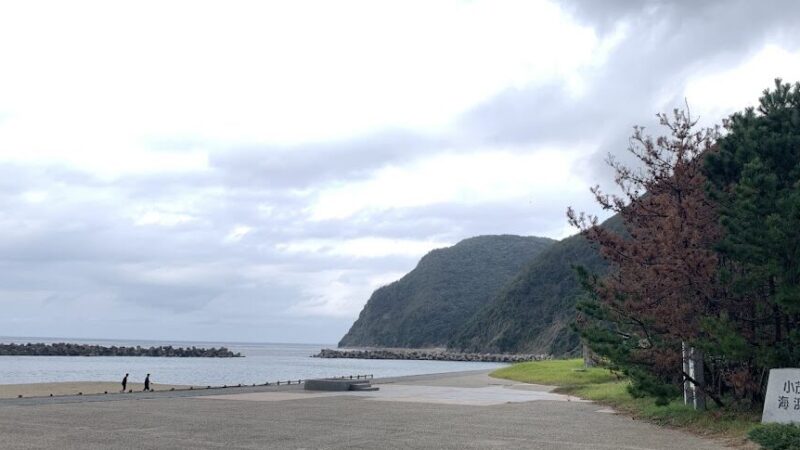
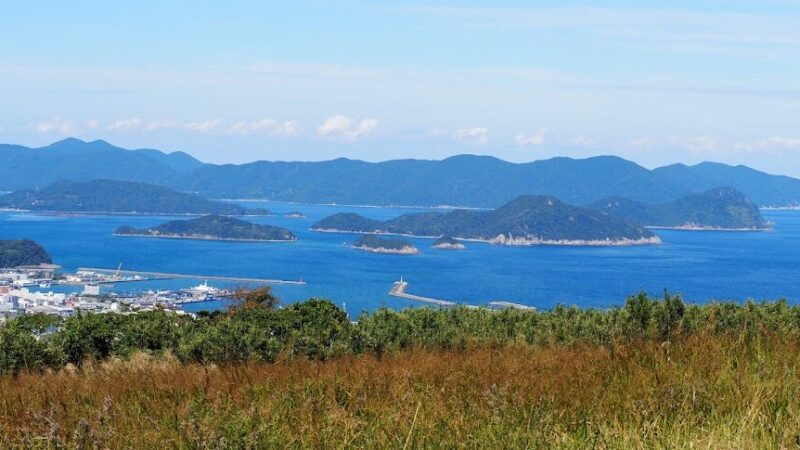
The Goto Islands consist of over 140 islands floating in the waters west of Nagasaki Prefecture. High-transparency seas, lush greenery, and uniquely-formed landscapes continue to captivate visitors. The majestic skies and seas appearing repeatedly in Yamamoto Nizo’s works are the very embodiment of Goto’s natural beauty.
Christian History and Culture
The Goto Islands are known as a region where many hidden Christians relocated during the Edo period’s prohibition on Christianity. Over 50 churches dot the islands, many of which stand in beautiful natural settings. In 2018, the islands were registered as a UNESCO World Heritage site under “Hidden Christian Sites and Monuments of Nagasaki and the Kumano Kodo,” gaining international attention.
Goto’s Food Culture
When visiting Goto, be sure to enjoy the local cuisine. Goto udon (one of Japan’s three great udon types), fresh seafood, and Goto beef are abundant. Goto udon in particular is characterized by its thinness, strong bite, and unique texture.
Conclusion: The Special Experience at Goto no Kumo Yamamoto Nizo Art Museum
Goto no Kumo Yamamoto Nizo Art Museum is the only place where visitors can experience the artistic world of Japanese animation’s master and an important pilgrimage site for anime fans. The experience of viewing background paintings from masterpiece animations like “Castle in the Sky” within a historic Edo-period samurai residence is matchless anywhere else.
The emotion of being enveloped in Nizo-clouds in “The Room of Sky and Clouds,” the joy of sensing deep love for home through One Hundred Views of Goto, and the pleasure of touring the actual Goto landscapes after the museum visit—the Yamamoto Nizo Museum holds value far beyond a typical art museum, serving as an entrance to experiencing the entire island of Goto.
Visiting this museum, designated as one of 88 Anime Sacred Sites, provides a valuable opportunity to understand the natural and cultural sources of Yamamoto Nizo’s artistry and learn how masterpiece animations were created. When planning a trip to Nagasaki Prefecture’s Goto City, by all means place Goto no Kumo Yamamoto Nizo Art Museum at the top of your visitation list.