Steins;Gate and Akihabara’s Deep Connection
Steins;Gate (Steins;Gate) is a popular series originating from a visual novel game released in 2009, with Akihabara in Tokyo as its main setting. This work has captivated fans worldwide as an SF story themed around time travel, and Akihabara has become a “holy site” where many fans visit.
Akihabara is not merely a backdrop but an important stage deeply involved in the core of the story. The “Future Gadget Lab” where the protagonist Okabe Rintaro (Hōōin Kyouma) and others operate, and the “Radio Kaikan” which holds the key to the story, are meticulously depicted as actual buildings and locations.
This article provides detailed explanations of must-see spots for Steins;Gate fans visiting Akihabara, actual locations featured in the work, and key points for pilgrimage to holy sites.
Akihabara Radio Kaikan: The Place Where the Story Begins
The Importance of Radio Kaikan
In the story of Steins;Gate, Akihabara Radio Kaikan plays an extremely important role. It is the location where Dr. Nakabe’s lecture is held at the beginning of the work, and it is also the place where the fateful meeting with Makise Kurisu occurs.
The old Radio Kaikan was demolished in 2011 due to deterioration and was reborn as a new building in 2014. While the building depicted in the work is the old Radio Kaikan, the current new Radio Kaikan is also visited by many fans as a holy site pilgrimage spot.
Holy Site Pilgrimage at the New Radio Kaikan
The new Radio Kaikan is a 10-story building with anime merchandise shops, figure shops, retro game stores, and more on each floor. While the building’s exterior differs from the old building, its status as an Akihabara landmark remains unchanged.
Access Information:
- Address: 1-15-16 Soto-Kanda, Chiyoda Ward, Tokyo
- Nearest Station: 1 minute walk from JR Akihabara Station Denki-gai Exit
- Business Hours: Varies by store (approximately 10:00~20:00)
The Future Gadget Lab Model: An Akihabara Apartment Building
The Location Serving as the Lab
The “Future Gadget Lab (commonly known as: the Lab)” where Okabe Rintaro and others operate their base is set in a room of an apartment building in Akihabara. In the work, it is positioned above the “Brown Tube Workshop,” and similarly atmospheric buildings actually exist in Akihabara.
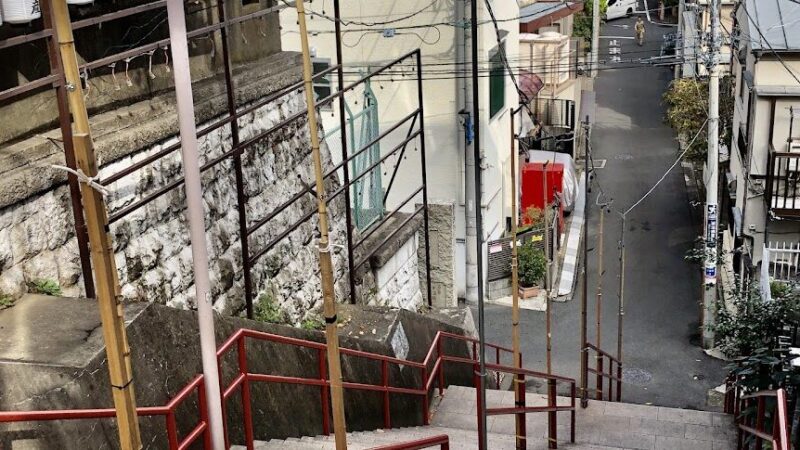
While multiple candidates have been suggested as the specific model building for the Lab, it has not been officially identified. However, groups of old apartment buildings in back alleys slightly off Akihabara’s Chuo-dori Street retain the work’s atmosphere vividly.
Characteristic Elements of the Lab
The Lab in the work has the following characteristics:
- Narrow stairs: A hidden-away space reached by climbing steep stairs
- Old interior: A room retaining Showa-era atmosphere
- View from windows: A position overlooking Akihabara’s streetscape
- Brown Tube Workshop: A watch repair shop located on the first floor
These elements faithfully recreate the characteristics of old Akihabara apartment buildings.
Important Spots Around Akihabara Station
JR Akihabara Station
JR Akihabara Station appears multiple times in the work. In particular, the Denki-gai Exit is depicted as the exit Okabe and others frequently use. The plaza in front of the station and the path toward the UDX area can be explored while comparing them to scenes in the work.
Chuo-dori Street
Chuo-dori Street, Akihabara’s main street, also serves as an important stage in the work. On Sundays when the pedestrian zone is implemented, you can experience an atmosphere closer to that in the work.
Along Chuo-dori Street, there are the following characteristic spots:
- Large electronics retailers: Yodobashi Camera, Sofmap, etc.
- Anime shops: Animate, Gamers, etc.
- Maid cafes: The existence of maid cafes is mentioned in the work
Restaurants and Commercial Facilities Featured in the Work
FamilyMart (In the work: Mr. Brown)
The convenience store that plays an important role in the work is modeled after the actual FamilyMart. It is depicted as a place Okabe and others frequently visit and where Mayuri works part-time.
There are multiple FamilyMarts in Akihabara, but the store near Radio Kaikan in particular is known as a holy site pilgrimage spot.
Where to Get Doctor Pepper
“Doctor Pepper” (called “Doctor Pepper” in the work), which Okabe Rintaro loves to drink, can be purchased at convenience stores and vending machines in Akihabara. During pilgrimage to holy sites, definitely try walking the streets with Doctor Pepper in hand.
Akihabara UDX
Akihabara UDX is a large multiplex facility that also appears in the work. With restaurant floors and event spaces, anime-related events are frequently held.
Practical Route Guide for Holy Site Pilgrimage
Half-Day Course (approximately 3-4 hours)
A recommended route for efficiently visiting Steins;Gate’s main spots:
1. JR Akihabara Station Denki-gai Exit (Starting point)
- Feel the work’s atmosphere at the station plaza
- Also ideal as a photo spot
2. Akihabara Radio Kaikan (1 minute walk)
- Visit the place where the story begins
- Browse shops on each floor
- Views from the rooftop (may not be open to the public)
3. Stroll down Chuo-dori Street (5-10 minute walk)
- Experience the streetscape depicted in the work
- Shop at FamilyMart
- Purchase Doctor Pepper
4. Explore back alleys and apartment buildings (10-15 minute walk)
- Savor the atmosphere of the buildings that inspired the Lab
- Search for traces of old Akihabara
5. Akihabara UDX (5 minute walk)
- Rest and have lunch
- Browse anime shops
Full-Day Course (approximately 6-8 hours)
In addition to the half-day course, also visit:
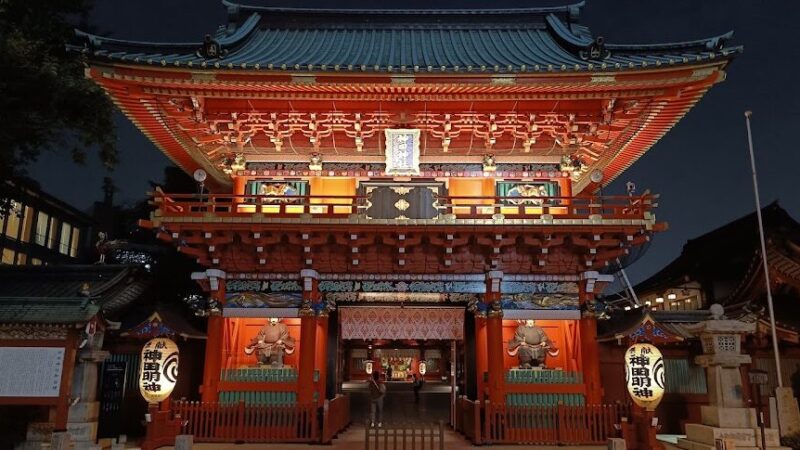
- Kanda Myojin: A shrine within walking distance of Akihabara. Also famous as an anime holy site
- Manseibashi area: A historical area matching the work’s atmosphere
- Anime shops throughout Akihabara: Search for Steins;Gate-related merchandise
- Maid cafe experience: Experience one aspect of Akihabara culture
Steins;Gate-Related Events and Exhibitions
Limited-Time Events
Limited-time events and collaboration projects related to Steins;Gate are regularly held in Akihabara. There are types such as the following:
1. Collaboration Cafes
- Limited menus themed around the work
- Sale of original merchandise
- In-store decoration recreating the work’s world
2. Pop-up Stores
- Early sale of new merchandise
- Handling of limited products
- Panel displays and photo spots
3. Stamp Rally
- Events where you visit various locations in Akihabara
- Original merchandise as participation rewards
- Projects allowing you to experience the work’s world
Permanent Exhibitions and Shops
At major anime shops in Akihabara, Steins;Gate-related products are constantly handled:
- Animate Akihabara Store: Large store with abundant selection
- Gamers Akihabara Main Store: Well-stocked with game-related merchandise
- Tora no Ana Akihabara Store: Doujinshi and limited merchandise
Akihabara’s Culture and the Steins;Gate World
Akihabara as a Holy Site of Otaku Culture
The reason Steins;Gate chose Akihabara as its setting lies in the unique culture this town possesses. Akihabara has the following characteristics:
History as an Electric Town
- A town of electronic parts continuing from postwar period
- Fusion of science and technology with subculture
- Affinity with the “Future Gadget” concept in the work
Center of Otaku Culture
- Holy site of anime, games, and manga
- Birthplace of maid cafe culture
- Hub of doujinshi and cosplay culture
A Town Symbolizing the Passage of Time
- Coexistence of old and new through redevelopment
- Coexistence of tradition and innovation
- Resonance with the work’s time travel theme
The Significance of Depicting 2010s Akihabara
In 2009 when the original work was released, and in 2010 when the story is set, Akihabara was at a major turning point. It was before the rebuilding of the old Radio Kaikan, and it was also the last era when old Akihabara’s atmosphere remained.
By carefully depicting Akihabara during this period, the work also possesses value as a “historical record” that transcends a mere SF story.
Etiquette and Cautions During Holy Site Pilgrimage
Basic Etiquette
When enjoying holy site pilgrimage, please follow the following etiquette:
1. No Entry to Private Property
- The interiors of apartment buildings are private property
- Do not enter buildings without permission
- Even photographing exteriors should be done with discretion
2. Consideration for Nearby Residents
- Avoid loud conversations and noise
- Be careful not to obstruct traffic
- Avoid visiting early morning or late night
3. Cautions When Photographing
- Be considerate if people appear in the frame
- Obtain permission before photographing inside stores
- Photograph in places that don’t obstruct traffic
Safety Precautions
While Akihabara is a relatively safe town, please note the following:
- High-traffic roads: Be careful photographing on high-traffic streets like Chuo-dori
- Crowds: On weekends it’s extremely crowded, so be careful with valuables
- Heat stroke prevention: Remember to drink water when pilgriming in summer
Works Other Than Steins;Gate Set in Akihabara
Akihabara has served as the setting for many anime and game works besides Steins;Gate:
Related Works
- AKIBA’S TRIP: An action game set in Akihabara
- Durarara!!: A work with Ikebukuro as the main setting but Akihabara also appears
- Genshiken: A work depicting otaku culture where Akihabara frequently appears
- Love Live!: A work with UTX Academy positioned in Akihabara
Visiting Akihabara while pilgriming these works as well allows for a richer Akihabara experience.
Ways to Enjoy Akihabara by Season
Spring (March~May)
- Ideal weather for holy site pilgrimage
- The new school/work season brings energy to the town
- Can also visit Ueno Park nearby during cherry blossom season
Summer (June~August)
- Anime merchandise is abundant around Summer Comiket
- Heat countermeasures are essential
- Plan indoor facilities strategically for rest
Autumn (September~November)
- Comfortable weather suitable for long-distance walks
- Many events such as Akihabara Electric Town Festival
- Can savor the seasonal feeling of the work’s setting
Winter (December~February)
- Particularly lively around Winter Comiket
- Illumination events also held
- Take proper cold-weather precautions
Merchandise and Apps for Steins;Gate Holy Site Pilgrimage
Recommended Items
Items to make holy site pilgrimage more enjoyable:
1. Work Materials
- Anime screenshots
- Official guidebooks
- Holy site pilgrimage maps (available on fan sites)
2. Photography Equipment
- Smartphone or camera
- Mobile battery (battery drain is heavy with photography)
- Selfie stick (use with consideration for surroundings)
3. For Comfortable Pilgrimage
- Comfortable walking shoes
- Drinks
- Map app
Convenient Apps
- Google Maps: Route search and current location confirmation
- Holy Site Pilgrimage Apps: Apps introducing anime holy sites
- Twitter: Gather real-time event information
- Photo Editing Apps: Edit photographed photos in work style
Accommodations and Access Information
Accommodations Near Akihabara
Lodging options for those visiting from distant locations:
1. Hotels Around Akihabara Station
- Convenient access ideal for holy site pilgrimage
- Range from business hotels to capsule hotels
- Price range: ¥5,000~¥15,000/night
2. Kanda/Ochanomizu Area
- Within walking distance of Akihabara
- Relatively quiet environment
- Price range: ¥6,000~¥12,000/night
3. Ueno Area
- 1 JR station away, also walkable
- Many tourist spots
- Price range: ¥5,000~¥10,000/night
Access to Akihabara
By Train:
- JR Yamanote, Kehin-Tohoku, and Sobu Lines “Akihabara Station”
- Tokyo Metro Hibiya Line “Akihabara Station”
- Tsukuba Express “Akihabara Station”
Travel Time from Major Stations:
- From Tokyo Station: approximately 5 minutes (JR)
- From Shinjuku Station: approximately 15 minutes (JR)
- From Shibuya Station: approximately 20 minutes (JR)
- From Narita Airport: approximately 60 minutes (Narita Express + transfer)
- From Haneda Airport: approximately 40 minutes (Keikyu Line + transfer)
Steins;Gate Sequel Works and Akihabara
Steins;Gate 0
“Steins;Gate 0,” a sequel released in 2015, also has Akihabara as its setting. Set several years after the original work, the town’s changes are also depicted. When pilgriming holy sites, it’s interesting to compare the differences between the two works.
Other Related Works
- Linear Bounded Phenogram: Side story work
- Hiyoku Renri no Darling: Side story with strong romantic comedy elements
- Movie Steins;Gate: Load Region of Déjà Vu: Anime film version
These works also contain scenes set in Akihabara, expanding the scope of holy site pilgrimage.
Fan Community and Exchange
Online Communities
The Steins;Gate fan community is active, and you can interact in places such as:
- Twitter: Hashtags “#シュタゲ” “#聖地巡礼”
- Reddit: r/steinsgate (English-speaking community)
- Discord: Servers run by fans
- Fan Sites: Sharing of holy site pilgrimage information
Offline Events
Meetings organized by fans and holy site pilgrimage tours are occasionally held in Akihabara. Besides official events, these grassroots activities have also become part of Steins;Gate culture.
Akihabara’s History and Steins;Gate’s Timeline
Changes in Akihabara
Akihabara has undergone significant changes over time:
1950s~1980s:
- Development as an electric town
- From radio parts to home appliances to computers
1990s~2000s:
- Became the center of otaku culture
- Increase in anime and game shops
- Maid cafe boom
2010s~Present:
- Modernization through redevelopment
- Enhancement of its aspect as a tourist destination
- Coexistence of old and new culture
The story of Steins;Gate cuts across 2010, a point in this transition, and has a structure where time travel as a theme overlaps with Akihabara’s temporal changes.
Conclusion: The Charm of Steins;Gate and Akihabara
Steins;Gate and Tokyo’s Akihabara are inseparably connected. The work has transmitted the charm of Akihabara to fans worldwide, and Akihabara continues to provide special experiences to fans of the work.
Through holy site pilgrimage, fans can experience the following:
- Immersion in the Work’s World: Visiting actual locations brings the story closer
- Understanding of Akihabara Culture: Feel the center of otaku culture firsthand
- Historical Record: Witness the changing face of the town
- Exchange Among Fans: Meeting people with shared interests
Akihabara continues to change even now, but the memory of 2010’s town as depicted by Steins;Gate will remain eternal with the work. Please visit Akihabara in person and experience the town where Okabe Rintaro and the others ran through.
El Psy Congroo.