
![[Urusei Yatsura] Nerima Ward, Tokyo](https://anime-place.site/cms/wp-content/uploads/2026/05/places-1905-うる星やつら-東京都練馬区.jpg)
“Urusei Yatsura,” an immortal masterpiece by Rumiko Takahashi, was serialized in “Weekly Shonen Sunday” from 1978 to 1987 and shines brilliantly in the history of Japanese manga and anime. Did you know that “Tomobiki Town,” the setting of this work, was actually modeled after Nerima Ward, Tokyo? This article provides detailed explanations of the deep relationship between “Urusei Yatsura” and Nerima Ward, sacred pilgrimage spots, and the regional characteristics embedded in the work.
The Setting of “Urusei Yatsura” is Nerima Ward, Tokyo
Nerima Ward Setting Revealed in the Original Work
Tomobiki Town, the setting of “Urusei Yatsura,” is clearly positioned in Nerima Ward, Tokyo in the original work. This fact was first revealed in the original’s fifth episode, “Desperate Situation.” In this episode, through news of a Self-Defense Force aircraft disappearance incident caused by Lum’s phone interference in a rendezvous between Ataru and Shinobu, it becomes clear that Tomobiki Town is located in Nerima Ward.
Ataru Moroboshi’s Address and Nerima Ward
The address of the protagonist Ataru Moroboshi’s house is listed as “4-chome Koizumi Gakuen, Nerima Ward, Tokyo.” Mail delivered to the Moroboshi residence in manga volume 7 clearly states “Koizumi Gakuen, Nerima Ward, Tokyo,” showing that author Rumiko Takahashi intentionally set the story in Nerima Ward.
This place name “Koizumi Gakuen” is believed to be modeled after the actual “Oizumi Gakuen.” Oizumi Gakuen is a station on the Seibu Ikebukuro Line and is known as an educational district located in the northwestern part of Nerima Ward.
Tomobiki Town is a Fictional Place Name, But Nerima Ward is the Setting
The Fictional Town of Tomobiki
“Tomobiki Town,” which appears in the story, is a fictional place name. However, the setting that this town exists within Nerima Ward is consistent throughout the work. The daily lives of Ataru Moroboshi, Lum, and Shutaro Mendou, who attend Tomobiki High School, truly reflect the atmosphere of Nerima Ward in the 1980s.
The name “Tomobiki” itself is derived from “Tomobiki,” one of the six-day cycle, and symbolizes a world where strange and mysterious events occur one after another in the story.
Reasons for Choosing Nerima Ward as the Setting
The reasons why Rumiko Takahashi chose Nerima Ward as the setting have not been explicitly stated, but Nerima Ward has relatively many residential areas among Tokyo’s 23 wards and has a commonplace, approachable atmosphere. The area is home to many animation studios and has strong affinity with anime and manga culture.
From the 1970s to the 1980s, Nerima Ward developed as a residential area with good access to the city center while still retaining greenery. This “in-between quality of urban and suburban” character may have made it suitable as the setting for “Urusei Yatsura.”
Sacred Pilgrimage Spots in Nerima Ward
Around Oizumi Gakuen Station | Sacred Site of Urusei Yatsura
The greatest spot symbolizing the relationship between Nerima Ward and “Urusei Yatsura” is the area around Oizumi Gakuen Station on the Seibu Ikebukuro Line. This area has multiple sacred sites that are must-see for fans.
Oizumi Anime Gate
On April 4, 2015, the “Oizumi Anime Gate” was opened on a pedestrian path directly connected to the north exit of Oizumi Gakuen Station. Bronze statues of manga works associated with Nerima Ward are installed here, and “Urusei Yatsura” was selected from Rumiko Takahashi’s works.
A bronze statue of Lum, wearing a tiger-striped bikini and smiling cutely, is displayed and has become an established sacred pilgrimage site for fans. The statue is constantly surrounded by fans taking commemorative photos, with many posts visible on SNS.
Besides “Urusei Yatsura,” the Oizumi Anime Gate features character statues such as “Tomorrow’s Joe” and “Astro Boy,” works with connections to Nerima Ward, making it a pilgrimage route for anime and manga fans.
Designed Manhole Covers
Nerima Ward has installed designed manhole covers as part of its efforts to promote regional appeal. Near Higashi-Oizumi 1-28-1, Nerima Ward (near the entrance to Grand Emio Oizumi Gakuen at the north exit of Oizumi Gakuen Station), a designed manhole cover of “Lum (Urusei Yatsura)” has been installed.
This manhole cover features a cute illustration of Lum and has become an unmissable photo spot for fans. While serving as practical infrastructure, it represents a wonderful initiative to utilize regional cultural assets.
Grand Emio Oizumi Gakuen
The shopping center “Grand Emio Oizumi Gakuen” directly connected to Oizumi Gakuen Station and its surroundings are also important spots for “Urusei Yatsura” fans. The neatly developed streetscape around the station is a place where you can take walks while feeling the world of the work.
The Deep Relationship Between Nerima Ward and Anime Culture
Nerima Ward: The Town of Anime
Nerima Ward is also said to be the “birthplace of Japanese anime.” Many animation production companies, including Toei Animation, are concentrated here. Since the opening of Toei Animation’s Oizumi Studio (then Toei Doga) in 1958, Nerima Ward has developed as one of the centers of the anime industry.
Against this background, Nerima Ward actively utilizes anime culture for regional revitalization, with “Urusei Yatsura” serving as one of its important pillars.
Other Works Set in Nerima Ward
Nerima Ward has been the setting for many other manga and anime works besides “Urusei Yatsura.” Works such as “Tomorrow’s Joe” and “Astro Boy,” which represent Japan, have connections to Nerima Ward, speaking to how much this area has been loved by creators.
The Charm of “Urusei Yatsura”
Work Overview and Serialization History
“Urusei Yatsura” is Rumiko Takahashi’s debut and representative work, serialized in “Weekly Shonen Sunday” from 1978 to 1987. It became a long-running series of 34 volumes, with cumulative sales exceeding tens of millions of copies, becoming a massive hit.
The story centers on Lum, a beautiful demon princess who came to invade Earth, and Ataru Moroboshi, an unfaithful high school student chosen as Earth’s representative. With its novel SF comedy genre, the work’s world, where slapstick comedy and romance are exquisitely fused, captivated many fans.
Characters and Setting
The protagonist Ataru Moroboshi is a high school student at Tomobiki High School in Tokyo with a rarely seen face of misfortune. His hobby is girl hunting, and Lum calls him “Darling.” With the vitality of a phoenix, he is struck with electrical shocks by Lum when suspected of infidelity, but remains unaffected with a tough personality.
Lum is a beautiful demon princess from space, with a tiger-striped bikini as her trademark. She calls Ataru “Darling” and loves him devotedly, but is troubled by his infidelity. She has the ability to control electricity and can also fly through the air.
History of Anime Adaptation
“Urusei Yatsura” was adapted into a television anime in 1981 and broadcast until 1986. It became a long series of 218 episodes, with 1 1981 anime series, 6 theatrical films, and 12 OVAs produced. It achieved major success with merchandise sales exceeding one billion yen.
In particular, Mamoru Oshii’s work as chief director and the production of the theatrical film “Beautiful Dreamer” became significant events in anime history.
In 2022, a completely new remake was produced, gaining fans from a new generation. With an impressive cast including Hiroshi Kamiya (as Ataru Moroboshi) and Sumire Uesaka (as Lum), it revives the charm of the original work for the modern era.
The Setting of the 2022 Remake Version
Nerima Ward Remains in the Remake Version
In the 2022 remake “Urusei Yatsura,” the basic setting follows the original work. The setting that Tomobiki Town is located in Nerima Ward remains unchanged, which is a welcome consideration for original fans.
In the remake, the evolution of video technology allows the streetscapes and backgrounds to be depicted in greater detail, making it a work where the atmosphere of Nerima Ward can be felt even more.
Sacred Site Where Old and New Fans Gather
With the broadcast of the remake version, both old and new fans have begun visiting the area around Oizumi Gakuen Station. Scenes of the generation that enjoyed the work in real time in the 1980s interacting with younger generations encountering the work for the first time through the 2022 version are now visible.
Nerima Ward’s Initiatives and Regional Revitalization
Official Nerima Ward Anime Promotion Measures
Nerima Ward is actively engaged in regional revitalization utilizing anime culture. It has formulated a “Nerima Ward Anime Promotion Plan” and is promoting tourism revitalization, industrial revitalization, and cultural revitalization through anime.
“Urusei Yatsura” is positioned as one of the core works in this plan, and the installation of bronze statues and designed manhole covers represent concrete results.
Events and Collaborations
Nerima Ward regularly holds anime-related events. Large-scale events such as “Nerima Anime Carnival” introduce works associated with Nerima Ward, including “Urusei Yatsura,” and serve as venues for fan interaction.
Additionally, collaboration projects with local shopping streets have been implemented, including stamp rallies and the sale of limited merchandise, with various initiatives for fans to enjoy.
How to Enjoy Sacred Pilgrimage
Access
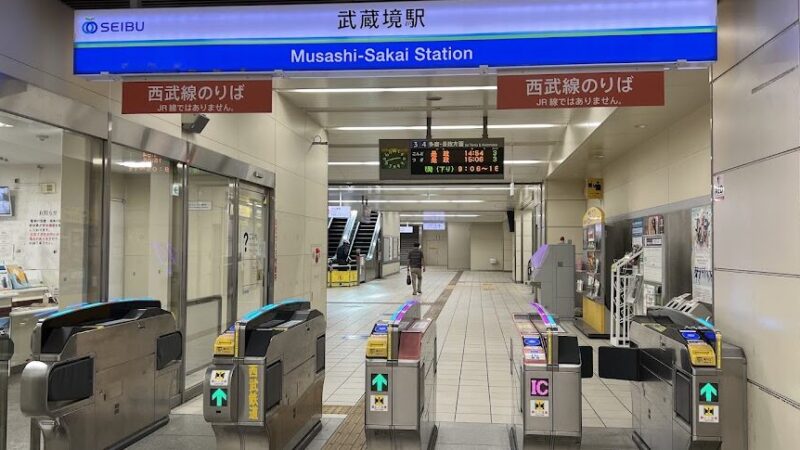
Oizumi Gakuen Station is accessed via the Seibu Ikebukuro Line. It takes about 15 minutes from Ikebukuro Station by express and about 20 minutes by local train, making it very accessible. It can be easily visited from the city center.
The area around the station is well-developed, and you can visit major sacred sites on foot. Lum’s bronze statue and designed manhole cover are within walking distance, and you can enjoy them sufficiently in half a day.
Recommended Pilgrimage Route
- Arrive at Oizumi Gakuen Station north exit
- View and photograph Lum’s bronze statue at Oizumi Anime Gate
- Explore the designed manhole near the Grand Emio Oizumi Gakuen entrance
- Stroll through the shopping street around the station
- Visit other anime spots in Nerima Ward (if time permits)
With this route, you can efficiently visit the sacred sites of “Urusei Yatsura.”
Photography Tips
Lum’s bronze statue is beautifully lit by natural light from late morning to early afternoon on clear days. The designed manhole looks beautiful when photographed after rain when the road surface is wet, capturing nice reflections.
When posting to SNS, using hashtags such as “#UrseiYatsura” “#NerimaWard” “#OizumiGakuen” “#SacredPilgrimage” helps you connect with fans with similar interests.
Experiencing the World of “Urusei Yatsura” in Nerima Ward
The Atmosphere of Tokyo’s Suburbs in the 1980s
Walking around Oizumi Gakuen Station, you can feel the atmosphere where urban convenience and residential calm coexist. This is precisely the image of Tokyo’s suburbs in the 1980s depicted in “Urusei Yatsura.”
The everyday scenery that appears in the work—shopping streets, residential areas, schools—lives on in actual Nerima Ward. Through sacred pilgrimage while imagining the streets where Ataru and Lum walked, your understanding of the work will deepen further.
The Relationship Between Local Residents and the Work
For Nerima Ward residents, “Urusei Yatsura” is also a source of pride for the community. Local people cherish the bronze statues and designed manhole covers and warmly welcome visiting fans.
Local bookstores and libraries sometimes set up special corners for “Urusei Yatsura,” where you can feel the deep connection between the work and the community.
Cultural Legacy “Urusei Yatsura” Left in Nerima Ward
Contribution to Japanese Anime and Manga Culture
“Urusei Yatsura” is far more than mere entertainment, having had tremendous influence on Japanese anime and manga culture. The character Lum is said to be the origin of “moe” culture and has influenced many subsequent works.
By being set in Nerima Ward, the area established its status as a sacred site for anime and manga, and today many creators and fans continue to visit.
A Work Loved Across Generations
More than 40 years have passed since serialization began in 1978, yet “Urusei Yatsura” continues to be loved across generations. The 2022 remake production proves the timeless appeal of the work.
By setting the story in the actual region of Nerima Ward, fans can feel the world of the work more intimately, and a new way of enjoying it—sacred pilgrimage—was born.
Conclusion | Experiencing the World of “Urusei Yatsura” in Nerima Ward
The relationship between “Urusei Yatsura” and Nerima Ward, Tokyo goes beyond a mere story setting to a deep connection. By being clearly set in Nerima Ward in the original work and through regional depictions modeling Oizumi Gakuen, Nerima Ward has become a special place for fans.
Around Oizumi Gakuen Station, fan-must-see spots such as Lum’s bronze statue and designed manhole covers have been developed, establishing it as a sacred pilgrimage destination. Nerima Ward itself is actively engaged in regional revitalization utilizing anime culture, with “Urusei Yatsura” positioned as its central work.
With the broadcast of the 2022 remake, new generations of fans have increased, further enhancing Nerima Ward’s appeal as a sacred site. With good access from the city center and the ability to visit major spots in half a day, it is easy to visit.
For fans of “Urusei Yatsura,” Nerima Ward is a must-visit sacred site. Why not experience the world of the work while feeling the atmosphere of Tomobiki Town as depicted by Rumiko Takahashi? Walking the stage yourself where Lum and Ataru’s slapstick comedy unfolded will deepen your love for the work even further.



完全ガイド-800x450.jpg)