![[Studio Ghibli] Castle in the Sky Laputa – Beng Mealea Ruins (Cambodia)](https://anime-place.site/cms/wp-content/uploads/2026/06/img_3009.jpg)
【Complete Explanation】Laputa: Castle in the Sky and Beng Mealea Ruins: The Truth | Cambodia Tourism Attractions and Access Guide
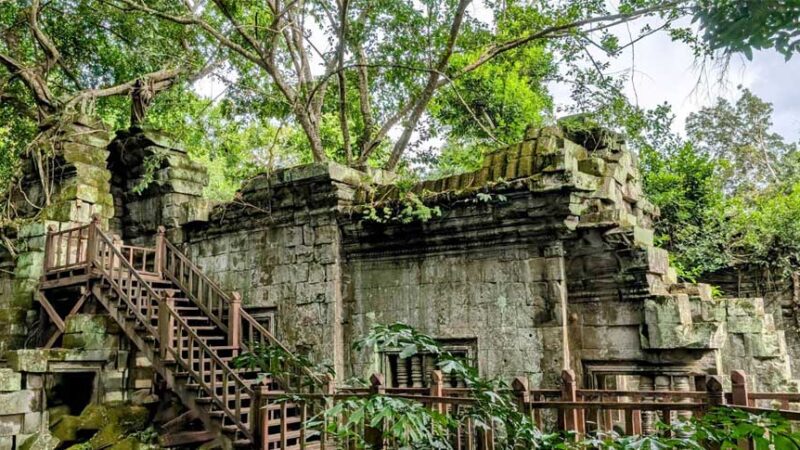
The Beng Mealea ruins, located in the outskirts of Siem Reap in Cambodia, have recently attracted many tourists amid spreading rumors that they may be “the model for Laputa: Castle in the Sky.” The collapsed stone walls entwined with giant trees, moss-covered corridors, and the mysterious appearance of the forest-embraced ruins that remain unrestored do indeed evoke the world of the Studio Ghibli film.
However, is this “Laputa model theory” actually true? In this article, based on the official position of Studio Ghibli and historical facts, we comprehensively explain the true charm of Beng Mealea ruins, tourism information, and access methods.
Beng Mealea Ruins | A Massive Temple Hidden in Cambodia’s Unexplored Region
Basic Information and Historical Background
The Beng Mealea ruins (Beng Mealea) are positioned as part of the Angkor Wat World Heritage Site complex. Located approximately 40-50 kilometers east of Angkor Wat and about 60 kilometers from Siem Reap city center, it stands deep in the forest.
The construction period is estimated to be between the late 11th and early 12th centuries, suggesting it was built around the time of Angkor Wat’s construction or simultaneously. Due to similarities in architectural style and decorative details with Angkor Wat, it is believed highly likely that it was constructed based on the same architectural techniques and philosophy.
Scale and Structure of the Ruins
Although slightly smaller than Angkor Wat, Beng Mealea boasts a massive temple complex spanning approximately 1 kilometer east-west and 0.9 kilometers north-south. Centered on a central shrine, it possesses a typical Khmer architectural structure surrounded by three concentric galleries and a moat.
The entire temple expresses Hindu cosmology, with the central shrine symbolizing the sacred Mount Meru. Though once believed to be decorated with intricate reliefs and sculptures, most of it has now collapsed and is returning to nature, creating a unique beauty.
Why Has It Not Been Restored?
The most distinctive feature that differentiates Beng Mealea from other Angkor temple complexes is that restoration has deliberately not been pursued. Due to land mines being buried there until the 1990s—making it a dangerous zone—and the judgment that the collapsed state holds both historical value and tourism appeal, only minimal maintenance has been carried out.
Currently, safe wooden walkways have been installed, allowing visitors to explore the ruins by walking over collapsed stone materials. This “as-discovered” appearance creates a unique adventure experience that captivates explorers.
The Truth Behind the “Laputa: Castle in the Sky” Model Theory
Studio Ghibli’s Official Position
To be direct: the theory that Beng Mealea ruins are “the model for Laputa: Castle in the Sky” has been explicitly denied by Studio Ghibli.
According to multiple sources who have inquired directly with Studio Ghibli, they have clearly responded that this is “completely false,” and that director Hayao Miyazaki has never visited Beng Mealea. Laputa was born entirely from imagination, and there was no actual specific place that served as a model—this is the official position.
Time Sequence Contradictions
The most decisive reason the model theory is negated lies in chronological contradiction.
- “Laputa: Castle in the Sky” release date: August 2, 1986
- Beng Mealea ruins opened to the public: 2001 onwards
At the time the film was released in 1986, the Beng Mealea area was under the influence of Cambodia’s civil war, making it impossible for ordinary tourists or foreigners to enter. Since land mines were buried there until the 1990s, making it a dangerous zone, the production staff could not have visited for research, regardless of desire.
In other words, at the production period (around 1984-1986), the Beng Mealea ruins were virtually unknown in Japan, making it impossible to use them as reference material.
Why Did the “Model Theory” Spread?
Then, why has this theory become so widespread? The main reasons appear to be:
- Visual similarity: The landscape of collapsed stone structures entwined with giant trees closely resembles the ruins scenes in Laputa
- Tourism marketing: The phrase “model of Laputa” became an effective catchphrase attracting tourists
- SNS spread: Visitors posting “it looks like Laputa” caused rumors to spread as if they were fact
- Yearning for romance: The psychological desire of fans to believe “there really is a model”
Some local tour guides and hotel staff do introduce it as “the Laputa model” in response to visitors’ expectations, but this is not official information.
The True Sources of Inspiration
The elements that director Hayao Miyazaki is said to have referenced when conceiving “Laputa: Castle in the Sky” include:
- “Gulliver’s Travels” by Jonathan Swift: The origin of the name “Laputa,” the floating island
- Welsh mining towns: Industrial Revolution-era landscapes
- Mountain cities of India and Tibet: The concept of sky-bound fortresses
- Medieval European fortifications: Images of architectural style
Rather than Beng Mealea ruins, it was the fusion of these diverse cultural and historical elements that gave birth to Laputa’s unique worldview.
The True Charm of Beng Mealea Ruins | A Mystical World Beyond Laputa
The Beauty of Nature and Ruins in Harmony
Even with the model theory debunked, Beng Mealea’s charm remains undiminished. Rather, this ruin possesses its own distinct beauty and value that transcends the “Laputa model” framework.
The sight of massive fig trees and Sporan trees with roots entwining the stone walls and embracing the buildings is awe-inspiring. Moss-covered walls are dyed deep green, and combined with the humid air of the tropical rainforest, they create a fantastical atmosphere.
Witnessing how artificial temple structures are eroded by nature and gradually return to the forest allows visitors to feel the passage of time and the power of nature. This is an experience that could never be obtained from restored ruins—unique to Beng Mealea.
An Exploration Experience That Stirs the Spirit of Adventure
The greatest charm of Beng Mealea is that it allows you to experience feeling like an “archaeologist.” Following the wooden walkway and advancing through the ruins, you climb over piles of collapsed stone, squeeze through narrow passages, and suddenly emerge into open spaces—providing an adventurous experience.
Darkness in corridors broken by shafts of light, plants sprouting through gaps in stone, unpredictable routes—all of these bring special excitement to ruin exploration. Unlike touristy sites like Angkor Wat, you can experience “the joy of discovery.”
A Quiet Time With Few People
Due to its distance from Siem Reap city, Beng Mealea tends to have fewer tourists than Angkor Wat or Angkor Thom. Especially if visited at dawn or late afternoon, it’s not uncommon to have nearly the entire ruin to yourself.
Walking through the ruins in silence, listening to birdsong and wind sounds, is a luxury not found at crowded tourist destinations. In this meditative atmosphere, you can contemplate the prosperity and decline of the ancient Khmer Kingdom.
An Ideal Photography Spot
Beng Mealea is a photographer’s dream subject. The complex compositions created by collapsed stones, the contrast between tree roots and architecture, the dramatic interplay of light and shadow—the landscape is picturesque from every angle.
Particularly during early morning soft light or afternoon slanting light, fantastical photographs can be captured. It’s a popular photo spot known on Instagram and other SNS platforms, and ideal for those wanting to photograph “Laputa-like” scenes.
Access Information and How to Get to Beng Mealea Ruins
Distance from Siem Reap and Travel Time
Beng Mealea is located approximately 60 kilometers east of Siem Reap, Cambodia’s tourism hub. Depending on road conditions, you should plan for approximately 1.5 to 2 hours travel time each way.
Road improvements in recent years have made access easier than before, but it’s recommended to allocate more than half a day for the visit.
Main Access Methods
1. Participate in a Tour (Most Common)
Joining a Beng Mealea tour departing from Siem Reap is the most convenient and safe method. Half-day and full-day tours are available, with many plans offering Japanese-language guides.
Tour advantages:
- No need to arrange transportation
- Can listen to professional guide explanations
- Efficient tourism combining multiple sites
- High safety
Rates average 30-80 dollars per person, with various options including private and group tours.
2. Charter a Tuk Tuk
Chartering a tuk tuk (three-wheeled taxi) in Siem Reap is another option. After negotiating the fare, round-trip costs approximately 40-60 dollars.
Points to note:
- Variable driver quality
- Possibility of getting lost
- No ruin explanations provided
- Significant fatigue from long-distance travel
3. Arrange a Taxi or Private Car
For more comfortable travel, you can arrange an air-conditioned taxi or private car through your hotel. Costs are approximately 60-100 dollars round-trip.
4. Rent a Motorbike and Go Independently (For Experienced Travelers)
Some adventurous travelers rent motorbikes and go on their own. However, this is not recommended if unfamiliar with road conditions and traffic regulations, as it can be dangerous.
Admission Fee and Hours of Operation
- Admission fee: 5 dollars (as of 2024; subject to change)
- Hours of operation: 7:00-17:30 (approximate)
A separate ticket purchase is required for Beng Mealea, different from the Angkor temple group pass. Tickets can be purchased at the entrance.
Best Times and Hours to Visit
Optimal seasons:
- Dry season (November-March): Less rainfall and easier tourism. Particularly December-February offer relatively cool temperatures
- Rainy season (June-October): Lush greenery, but road conditions may deteriorate
Optimal visiting hours:
- Early morning (7:00-9:00): Fewer tourists, soft morning light is beautiful
- Late afternoon (15:00-17:00): Evening light creates a mystical atmosphere
Midday before noon features intense sunlight and heat, best avoided.
Practical Visitor Guide for Beng Mealea
Recommended Clothing and What to Bring
Recommended clothing:
- Comfortable long pants (short pants not recommended due to stone abrasion risk)
- Easy-to-walk-in sneakers or trekking shoes (sandals are unsafe)
- Hat and sunglasses (sun protection)
- Thin long-sleeved shirt (sunburn and insect bite prevention)
Essential items:
- Drinking water (1 liter or more recommended)
- Insect repellent spray
- Sunscreen
- Towel or handkerchief
- Camera or smartphone
- Small cash (for admission)
Since there are no shops or vending machines within the ruins, prepare necessary items in advance.
Estimated Viewing Time
Plan 1.5-2 hours for thorough sightseeing. With photography and leisurely exploration, 2-3 hours may be needed.
Including round-trip travel time from Siem Reap, you should allocate half a day (4-5 hours).
Safety Precautions
- Watch your footing: Fallen stones and unstable areas are numerous; constantly check your path
- Respect restricted areas: Do not venture beyond wooden walkways into dangerous zones
- Manage valuables: Use a backpack or pouch allowing hands to be free
- Heat stroke prevention: Don’t forget frequent hydration and rest
- If with children: Hold hands constantly and keep them in sight
Photography Tips
Points for capturing impressive photographs at Beng Mealea:
- Emphasize the contrast between tree roots and stone
- Utilize the contrast of light and shadow (especially in corridor areas)
- Include people to express the ruin’s scale
- Use vertical composition to emphasize height and depth
- Apply macro photography to capture moss and plant details
Early morning and late afternoon slanting light are especially ideal for dramatic photography.
Tourism Spots to Combine With Beng Mealea
Koh Ker Temples
Located approximately 60 kilometers further northeast, Koh Ker temple group is where the Khmer Kingdom’s capital was temporarily relocated in the 10th century. The pyramid-shaped “Prasat Thom” is famous, and tours combining both Beng Mealea and Koh Ker in one day are popular.
Banteay Srei
Located between Siem Reap and Beng Mealea, this temple is called “the Mona Lisa of the East” for its beautiful sculptures. The intricate reliefs carved in red sandstone are must-see.
Phnom Kulen National Park
Considered Cambodia’s sacred mountain, featuring waterfalls and lingam sculptures carved into the riverbed. It’s possible to combine this with Beng Mealea.
Roluos Group of Temples
Where the Khmer Kingdom’s early capital was located, with 9th-century temple remains. You can stop here on the way back from Beng Mealea.
Basic Information for Cambodia Travel
Visa and Entry Requirements
For Japanese nationals, a visa is required to enter Cambodia. Main acquisition methods:
- e-Visa (electronic visa): Online pre-application, 36 dollars, issued in approximately 3 business days
- Arrival visa: Obtained upon airport arrival, 30 dollars + one photograph
- Embassy acquisition: Pre-obtained at the Cambodian Embassy in Japan
e-Visa is most convenient and reliable. Tourist visas permit 30-day stays.
Currency and Exchange
Cambodia’s currency is the Riel (KHR), but US dollars circulate widely, and dollar payment is standard in tourist areas. The approximate exchange rate is 1 dollar = 4,000 riel.
Credit cards work at upscale hotels and restaurants, but cash is necessary for ruin admission fees and tuk tuk rides.
Climate and Clothing
Cambodia has a tropical monsoon climate with high temperatures and humidity year-round.
- Dry season (November-April): Little rainfall and ideal for tourism, particularly December-February are relatively cool
- Rainy season (May-October): Afternoon downpours are common; verdant period
Average annual temperature is approximately 27-28 degrees Celsius, though daytime temperatures often exceed 35 degrees. Light, breathable clothing is basic, but temples require modest dress with limited skin exposure.
Language and Communication
The official language is Khmer, but English is understood in tourist areas. Japanese-language guided tours are abundantly available. Learning simple Khmer phrases makes local interaction more enjoyable.
- Hello: Chhum reap sua
- Thank you: Aw kun
- How much?: Tlai pongman
Beng Mealea Tourism Q&A
Q: Is Beng Mealea really the model for Laputa: Castle in the Sky?
A: No, Studio Ghibli has officially denied this. Since land mines made the area inaccessible to civilians at the time of the film’s release (1986), using it as a model was impossible. However, you can enjoy the “Laputa-like atmosphere” due to visual similarities.
Q: Is it okay to bring children?
A: With wooden walkways installed, elementary school-age children are generally fine with careful supervision. However, due to numerous collapsed stones and steps, constantly holding hands and maintaining sight is critical. Strollers cannot be used.
Q: Is a half-day tour sufficient for just Beng Mealea?
A: Half a day is adequate for ruin viewing alone. However, since it’s a remote trip, a full-day tour combining Banteay Srei or Koh Ker temples provides a richer experience.
Q: Can you visit during rainy season?
A: It’s possible, but road conditions may deteriorate. Rain also makes stones slippery, requiring caution. The verdant beauty of this season is also appealing, depending on weather.
Q: Does the Angkor temple group pass work here?
A: No, Beng Mealea requires a separate fee (5 dollars). Purchase tickets at the entrance.
Q: Is a Japanese-language guide necessary?
A: If wanting detailed knowledge of ruin history and architecture, a Japanese-language guided tour is recommended. However, you can enjoy the atmosphere adequately without a guide.
Conclusion: The True Value of Beng Mealea Ruins
The fact that Beng Mealea is not the official model for “Laputa: Castle in the Sky” in no way diminishes the ruin’s worth. Rather, liberation from the “Laputa model” framework allows Beng Mealea’s true charms—the fusion of nature and human creation, beauty carved by the passage of time, and the adventure experience that stirs the explorer’s spirit—to become ever more vivid.
When visiting Siem Reap, Cambodia, be sure to venture to Beng Mealea beyond just famous temples like Angkor Wat and Angkor Thom. There awaits a special experience unavailable at restored tourist sites: the “joy of discovery” and the realization of nature’s power.
Whether you’re a Studio Ghibli fan or not, Beng Mealea is worth visiting, representing one of Cambodia’s premier unexplored regions. In the mystical ruins embraced by forest, please experience firsthand the grand story woven by the Khmer Kingdom’s ancient glory and nature’s operations.