【Demon Slayer】Ashikaga Flower Park (Tochigi Prefecture) Complete Guide|The Charm of Pilgrimage to Sacred Sites and Highlights
“Ashikaga Flower Park” in Ashikaga City, Tochigi Prefecture, has become a topic of conversation as a “sacred site” among fans of the hugely popular anime “Demon Slayer.” Many fans from across the country visit because it resembles the fantastical wisteria flower scenery of Mount Fujikasane (Fujikasaneyama) depicted in the work. This article thoroughly introduces the charm of Ashikaga Flower Park and provides useful information for those planning a pilgrimage to this sacred site.
Why Ashikaga Flower Park Is Called the Sacred Site of “Demon Slayer”
Surprising Similarities with Mount Fujikasane
In “Demon Slayer,” “Mount Fujikasane” appears as the place where candidates for the Demon Slayer Corps’ final selection undergo their ordeal. This mountain is surrounded by wisteria flowers, which demons hate, and the scene of purple wisteria flowers blooming fantastically is depicted impressively.
The wisteria flowers at Ashikaga Flower Park, especially the sight illuminated at night, are strikingly similar to this Mount Fujikasane scene. On SNS, posts such as “Just like Mount Fujikasane itself” and “It feels like entering the world of Demon Slayer” have become topics of conversation. The nighttime illumination during the “Wisteria Flower Story” event held from mid-April to mid-May is an excellent opportunity to experience the work’s worldview.
The Importance of Wisteria Flowers in the Work
In the world of “Demon Slayer,” the wisteria flower is depicted as the plant that demons dislike the most. The Demon Slayer Corps uses poison extracted from wisteria flowers as a weapon, and at Mount Fujikasane, the wisteria flowers serve a role similar to a barrier. Ashikaga Flower Park allows you to appreciate these wisteria flowers, which are such important elements of the work, on an overwhelming scale.
Known as one of the Kanto region’s premier flower viewing spots, this place has become a precious sacred site for “Demon Slayer” fans where they can actually experience the work’s worldview.
History and Overview of Ashikaga Flower Park
The Establishment of the Facility
Ashikaga Flower Park is a vast flower theme park covering approximately 94,000 square meters located in Sakoma Town, Ashikaga City, Tochigi Prefecture. When it relocated to its current location in 1997, an unprecedented major project was undertaken to transplant wisteria trellises, including a large wisteria tree over 130 years old.
This transplant was initially considered “impossible,” but succeeded thanks to the outstanding technique of certified tree specialist Konami Tsukamoto (the current director). Now exceeding 160 years of age, the “Miraculous Great Wisteria” boasts an area of 600 mats (approximately 1,000 square meters), attracting attention from both domestic and international visitors.
Beauty Recognized by the World
In 2014, Ashikaga Flower Park was selected as the only Japanese location in CNN’s “10 Dream Travel Destinations of the World.” This is evidence that the beauty of wisteria flowers was recognized globally and served as a catalyst for increased foreign visitors.
Furthermore, the illumination “Garden of Light Flowers” held from autumn to winter each year won the national top spot for five consecutive years from 2016 in the illumination rankings selected by night-view specialists. The grand illumination using approximately 5 million LED light bulbs is truly a work of light art.
Spectacular Wisteria Flowers|Types and Highlights
The Miraculous Great Wisteria (Purple Wisteria)
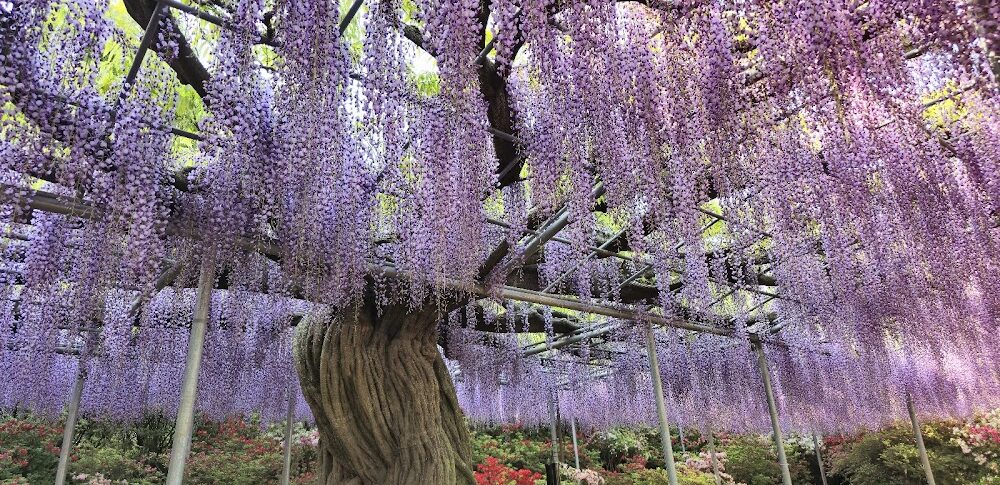
The greatest highlight of Ashikaga Flower Park is undoubtedly the “Miraculous Great Wisteria,” over 160 years old. There are two large wisteria trees, each with a 300-mat wisteria trellis, spanning a combined area of 600 mats.
This great wisteria reaches full bloom from late April to early May, with light purple flower clusters cascading like a waterfall—a sight to behold. Standing beneath the wisteria trellis creates a fantastical experience of being wrapped in a purple ceiling. This sight is the primary reason the park evokes the image of Mount Fujikasane from “Demon Slayer.”
White Wisteria Tunnel
An 80-meter-long white wisteria tunnel is another must-see spot. The tunnel created by pure white wisteria flowers feels like an entrance to another world. It reaches its peak viewing period from early to mid-May.
White wisteria blooms later than purple wisteria, allowing visitors to enjoy different beauty depending on the variety. Walking through the white wisteria tunnel, wrapped in sweet fragrance, becomes an unforgettable memory.
Kibana Wisteria (Yellow Wisteria)
Kibana wisteria reaches its peak viewing period around mid-May and is characterized by vibrant yellow flowers. This bright color adds vibrancy to the garden, different from purple and white varieties. Since wisteria flowers have different blooming periods depending on type, visitors can enjoy different scenery depending on when they visit.
Wisteria Flower Types and Blooming Calendar
- Usui Beni Wisteria: Mid-April to late April
- Murasaki Wisteria (Great Wisteria): Late April to early May
- White Wisteria: Early May to mid-May
- Kibana Wisteria: Mid-May to late May
In this way, various wisteria flowers can be enjoyed for approximately one and a half months from mid-April to late May. Depending on the timing of your visit, you can experience different scenery, which is why this location has many repeat visitors.
Wisteria Flower Story|Spring’s Largest Event
Event Period and Characteristics
The “Wisteria Flower Story” is the largest spring event among Ashikaga Flower Park’s annual events. It typically runs from mid-April to mid-May, with over 350 wisteria flowers blooming in succession.
During this period, the garden becomes completely filled with wisteria flowers, truly becoming a “paradise of wisteria flowers.” The scenery created by purple, white, pink, and yellow wisteria is nothing short of spectacular. It’s popular not only among “Demon Slayer” fans but also among photography enthusiasts and flower lovers.
The Appeal of Nighttime Illumination
Nighttime illumination, implemented during part of the “Wisteria Flower Story” period, creates a completely different fantastical world from daytime. The illuminated wisteria flowers appear mysteriously suspended in darkness, truly evoking Mount Fujikasane itself.
The great wisteria illumination is particularly magnificent, with purple light cascading like a waterfall—so beautiful it leaves one speechless. It’s also popular as an Instagram-worthy photo spot, with many visitors enjoying photography with cameras and smartphones in hand.
Crowding Status and Tips for Visiting
Due to the “Demon Slayer” boom, the “Wisteria Flower Story” period is extremely crowded. Particularly during Golden Week and weekends, queues may form for entry.
To avoid crowds, weekday mornings or shortly after nighttime illumination begins are recommended. Also, blooming conditions are continuously updated on the official website and SNS, so checking beforehand is advisable.
Garden of Light Flowers|National Top-Ranked Illumination
Illumination Overview
The “Garden of Light Flowers,” held from autumn to winter, is a grand illumination event using approximately 5 million LED lights. It won the national top spot for five consecutive years from 2016 in the illumination rankings selected by night-view specialists and also received the “Excellent Story Award” in the Illumination Event Category.
Flower Park of Light
The entire garden is illuminated with light, with various illuminations featuring floral motifs displayed throughout. Particularly, the “Light Great Wisteria” recreates the spring wisteria flowers with illumination, with purple light shining fantastically.
With many photo spots such as reflections of illumination on water surfaces and light tunnels, many visitors are fascinated by beauty that makes one forget winter’s cold.
Also Recommended for “Demon Slayer” Fans
The illumination period also allows visitors to feel the “Demon Slayer” worldview. The light-purple glowing wisteria evokes the mysterious atmosphere of the nighttime Mount Fujikasane. Visiting during winter as a “sacred site of light” is also recommended.
Highlights in Other Seasons
Spring Tulips
Before the wisteria flowers, from late March to early April, approximately 25,000 tulips bloom magnificently. The colorful tulip landscape makes you feel the arrival of spring.
Summer Water Lilies
During summer, beautiful water lilies bloom in the garden’s ponds. The cool water-side scenery provides healing during hot summers.
Autumn Roses
Autumn brings approximately 2,500 roses into peak bloom. Various rose varieties bloom together, filling the garden with sweet fragrance.
Winter Cold Red Plum
In winter, cold red plums bloom, and their interplay with illumination can be enjoyed. The ability to enjoy flowers of all four seasons is a major attraction of Ashikaga Flower Park.
Access Methods|How to Get There by Train, Car, and Bus
Access by Train
3-minute walk from “Ashikaga Flower Park Station” on the JR Ryomo Line
The “Ashikaga Flower Park Station,” which opened in 2018, was created for the park and offers extremely convenient access. From Tokyo area, it takes about 2 hours via JR Ueno Station through the Ryomo Line. It’s also easily accessible from within Tochigi Prefecture and Gunma Prefecture.
Easily reachable from various locations in the Kanto region, train use eliminates traffic jam concerns.
Access by Car
About 30 minutes from “Sano Fujioka IC” on the Tohoku Expressway
Visiting by car is also possible, with a free parking lot accommodating about 300 vehicles. However, during the “Wisteria Flower Story” period, additional parking may be set up due to congestion. Parking fees vary by period, and during peak seasons, charges apply (ordinary vehicles 500 yen~).
When setting up car navigation, search using the address “607 Sakoma Town, Ashikaga City, Tochigi Prefecture” or phone number “0284-91-4939.”
Access by Express Bus
Express buses running directly to Ashikaga Flower Park operate from Tokyo, Yokohama, Omiya, and other areas. Particularly during the “Wisteria Flower Story” period, additional buses may be added. Since some buses require reservations, checking in advance is recommended.
Using a nighttime bus allows you to enjoy the garden from early morning and offers the advantage of avoiding crowds.
Admission Fees and Operating Hours
Fee Structure
Ashikaga Flower Park employs a “flower satisfaction pricing system” where admission fees fluctuate based on flower blooming conditions.
- Regular Period: Adults ¥300-900, Children ¥100-500
- Wisteria Flower Story Period: Adults ¥900-2,000, Children ¥500-1,000
- Illumination Period: Adults approximately ¥1,200, Children approximately ¥600
Fees are highest when the great wisteria reaches full bloom. Fees are announced along with blooming conditions on the official website, so checking before visiting is recommended.
Operating Hours
Operating hours vary by season.
- Regular Period: 9:00 AM – 6:00 PM
- Wisteria Flower Story Period: 7:00 AM – 9:00 PM (on nighttime illumination nights)
- Illumination Period: 3:30 PM – 9:00 PM (10:30 AM – on Saturdays, Sundays, and holidays)
Particularly during peak seasons, operating hours may be extended, so checking official information is important.
Facilities and Restaurants in the Garden
Restaurant “Wisteria”
Within the garden, there is a restaurant “Wisteria” where visitors can enjoy cuisine using local Tochigi ingredients. Some seating offers views of wisteria flowers, allowing for a leisurely time.
Recommendations include “Wisteria Udon” and “Sano Ramen,” local specialty dishes. Seasonal limited menus are offered, so different flavors can be enjoyed depending on visiting period.
Shops and Souvenirs
The garden’s shop sells original merchandise and local specialty products. Sweets featuring wisteria flowers and flower seedlings are popular. For “Demon Slayer” fans, merchandise inspired by wisteria flowers is recommended as souvenirs.
Rest Areas
Throughout the expansive garden, benches and rest spaces are provided at various locations. Relaxing beneath the wisteria trellis is one way to enjoy Ashikaga Flower Park.
Points for Sacred Site Pilgrimage|Photography Spots and Ways to Enjoy
Best Photo Spots
Here are must-see photography spots for “Demon Slayer” fans.
1. Beneath the Great Wisteria Trellis
To recreate the final selection scene of Mount Fujikasane, the area beneath the great wisteria trellis is best. You can photograph purple flower clusters cascading down.
2. White Wisteria Tunnel
Photographing from the tunnel entrance toward the interior produces fantastical images. Aim for times with fewer crowds.
3. Great Wisteria During Nighttime Illumination
To recreate the nighttime Mount Fujikasane, the illuminated great wisteria is ideal. Long exposure photography using a tripod is also recommended.
Regarding Cosplay
More “Demon Slayer” cosplayers are visiting the garden. Cosplay within the garden is generally permitted, but consideration for other visitors is necessary. Avoid cosplay during crowded times, change costumes outside the garden, and enjoy while following etiquette.
Tips for SNS Posts
Posts on Instagram and Twitter use popular hashtags such as “#AsikagaFlowerPark,” “#DemonSlayerSacredSite,” and “#MountFujikasane.” Including visiting period and blooming conditions provides useful information for those planning to visit.
Surrounding Tourist Spots|Charm of Ashikaga City
Ashikaga School
Known as Japan’s oldest school, Ashikaga School is located about 15 minutes by car from Ashikaga Flower Park. Historic buildings are preserved, and it’s also been discussed as a sacred site among “Demon Slayer” fans.
Bannaji Temple
Bannaji Temple, known as the Ashikaga clan’s family temple, is also considered one of the sacred sites among “Demon Slayer” fans. Some note that the temple’s atmosphere aligns with the work’s worldview.
Ashikaga Weaving Maiden Shrine
Known as a shrine for matchmaking, Ashikaga Weaving Maiden Shrine is located at the summit of 229 stone steps. The view from the shrine grounds overlooks Ashikaga city and is popular as a night-view spot.
Watarase Bridge
The bridge made famous by singer Chiyuri Mori’s song “Watarase Bridge.” The scenery at twilight is beautiful and popular as a photography spot.
Accommodation|Recommended Hotels Around Ashikaga City
Hotels in Ashikaga City
During the “Wisteria Flower Story” period, accommodation and leisurely sightseeing is recommended due to crowds. Ashikaga City has various accommodations from business hotels to hot spring inns.
- Hotel Route-Inn Ashikaga Station Front: Conveniently located within walking distance of JR Ashikaga Station
- Hotel Takao: Historic hotel in Ashikaga’s city center
- Ichinomiya: Traditional inn with hot springs
Accommodation in Nearby Areas
Accommodation is abundant in nearby areas such as Sano City, Tochigi City, and Ota City in Gunma Prefecture. Using a rental car allows combined sightseeing of surrounding attractions.
Precautions and Etiquette When Visiting
Responses to Crowding
Particularly during Golden Week, the “Wisteria Flower Story” period is extremely crowded. Entry restrictions may be imposed, so plan with sufficient time.
Photography Etiquette
With many visitors enjoying photography, consideration for others is necessary. Avoid using tripods during crowded times, and don’t occupy the same location for extended periods.
Flower Protection
To protect beautiful flowers, touching flowers or climbing onto wisteria trellises is strictly prohibited. Appreciate flowers from designated pathways.
Regarding Pet Accompaniment
Pet accompaniment is only permitted for small dogs in cages or carriers. Guide dogs, assistance dogs, and hearing dogs are exempt.
Methods for Obtaining Latest Information
Official Website
Ashikaga Flower Park’s official website continuously updates blooming conditions, event information, fees, and more. Definitely check before visiting.
Official SNS Accounts
Official Twitter and Instagram accounts post real-time views of the garden. Useful for confirming blooming and crowding conditions.
Bloom Forecasts
Wisteria bloom timing varies with weather. While late April is typical peak season, blooms may occur earlier in unusually warm winters. Using the official site’s bloom forecast helps determine visiting timing.
Conclusion|Experience “Demon Slayer” World at Ashikaga Flower Park
Ashikaga Flower Park in Ashikaga City, Tochigi Prefecture, is a precious sacred site for “Demon Slayer” fans where the work’s worldview can be directly experienced. The miraculous great wisteria exceeding 160 years of age, the 80-meter white wisteria tunnel, and fantastical nighttime illumination truly evoke Mount Fujikasane itself.
The “Wisteria Flower Story” in spring features over 350 blooming wisteria flowers, while winter’s “Garden of Light Flowers” offers the nation’s top-ranked illumination. With excellent accessibility from the Kanto region—just a 3-minute walk from “Ashikaga Flower Park Station”—visiting is convenient.
Beyond just “Demon Slayer” sacred site pilgrimage, it offers seasonal flowers, world-recognized beauty, and surrounding tourist attractions—a place full of charm.
Why not create unforgettable memories while immersed in the “Demon Slayer” world beneath the purple ceiling created by wisteria flowers? When visiting, check the official website for the latest information and select uncrowded times to leisurely explore the garden.
Ashikaga Flower Park is a flower paradise that Japan can be proud of, giving wonder not just to “Demon Slayer” fans but to all people.