【Demon Slayer】Complete Guide to Sacred Site Pilgrimage at Koyasan (Wakayama Prefecture)|Filming Locations and Model Sites Thoroughly Explained
The Deep Connection Between Demon Slayer and Koyasan
“Demon Slayer,” which sparked a social phenomenon. Many fans have noted that Koyasan, a sacred mountain in Wakayama Prefecture, has played an important role in constructing its world view.
Koyasan is a sacred site of Shingon esoteric Buddhism founded by Kobo Daishi Kukai, a religious city spread across a mountain plateau at an altitude of approximately 900 meters. The mystical atmosphere surrounded by deep forests, the history continuing from ancient times as a place of practice, and the unique spirituality where life and death intersect share many commonalities with the world view of Demon Slayer.
Although the author Gotouge Koyoharu has not officially stated that Koyasan is a model, the influence of Koyasan is distinctly visible in the temple architecture, depictions of training, and spiritual elements that appear in the work, which is why many fans visit it as a sacred pilgrimage site.
The Influence of Koyasan on Demon Slayer
The Common Ground as a Place of Practice
In Demon Slayer, the protagonist Tanjiro Kamado undergoes rigorous training under Sakonji Urokodaki. The harsh training in the depths of mountains, training under waterfalls, and the final trial of cutting through a massive boulder overlap with the training of traditional Japanese Shugendo asceticism.
Koyasan too is a place where monks have engaged in rigorous training for over 1,200 years. The tradition of climbing steep mountain paths and honing body and mind in unity with nature has a deep affinity with the process of acquiring “Breathing Techniques” in Demon Slayer.
The Boundary Between Life and Death
At Koyasan’s Okunouin, there is the “Nyujo belief” that Kobo Daishi continues to live and meditate. Furthermore, the sacred grounds with over 200,000 gravestones and memorial towers lined up form a special space where the living and the dead coexist.
Demon Slayer too is a story depicting the boundary between humans and demons, the living and the dead. The theme of the sorrow of those who became demons, the longing for lost families, and the salvation of souls deeply resonates with the aspect of Koyasan as a “sacred site for the commemoration of the dead.”
Architectural Style and Artistic Elements
The depiction of temples and structures appearing in the work shows the influence of Koyasan’s mandala architecture. In particular, the vermillion-lacquered buildings such as the Konpon Daito (Root Pagoda) and the Golden Hall of Tanjogaran, and the cedar-lined approach path to Okunouin may have contributed to forming the visual image of the fictional world.
Detailed Sacred Pilgrimage Spots at Koyasan
Okunouin Approach Path
Appeal as a Sacred Site
The Okunouin approach path, extending approximately 2 kilometers in length, is the most mystical place at Koyasan. Towering cedar trees with centuries-old histories stand in rows, and the unique atmosphere of dimness even in daylight is exactly like the deep forest scenes that appear in Demon Slayer.
Along the path are grave sites of people from all classes, from samurai warlords to commoners, truly making it a place where “life and death intersect.” Early morning when mist rises or twilight when lanterns are lit is particularly fantastic, allowing you to experience a sensation of stepping into the fictional world.
Points of Interest
- The stone-paved path continuing from Ichinohashi (First Bridge) to Gobyo (Sacred Mausoleum)
- Ancient gravestones and memorial towers covered in moss
- The sacred area beyond Gobyo Bridge
- The countless oil lamps of Toro Hall
Tanjogaran Area
Konpon Daito
The vermillion-lacquered multi-story pagoda at 48.5 meters in height is an iconic symbol of Koyasan. The vibrant vermillion and gold decorations evoke the brilliance reminiscent of the “Flame Breathing” of Kyojuro Rengoku, the Flame Pillar in Demon Slayer.
Inside, a three-dimensional mandala is arranged, expressing the cosmology of esoteric Buddhism. This mystical spatial composition relates to the visualization of transcendent realms in the work such as “Marks” and the “Transparent World.”
Golden Hall
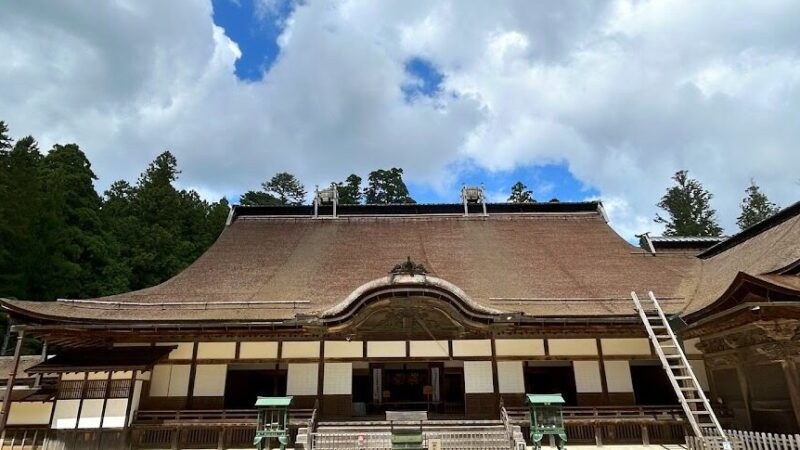
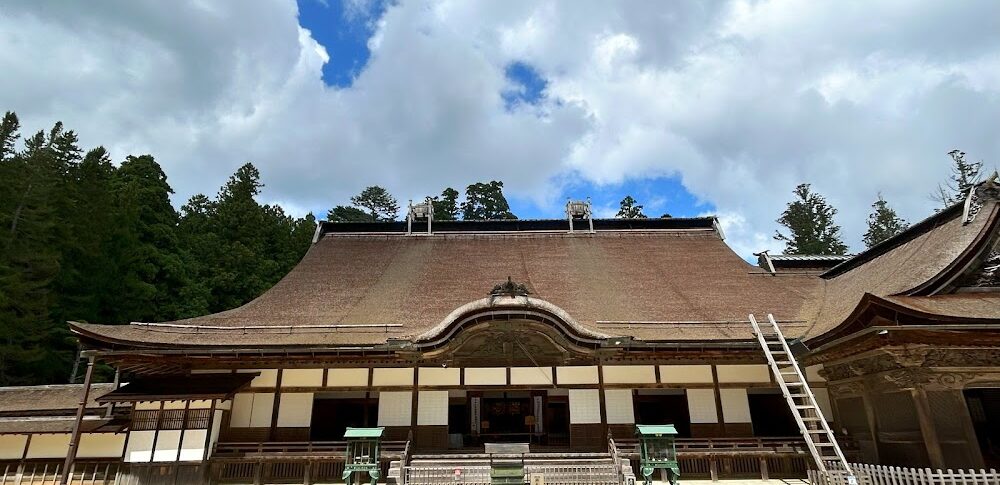
At Kongo-ji, the headquarters temple of Koyasan, important Buddhist services are performed. The solemn atmosphere and quiet air evoke scenes where the Demon Slayer Corps’ warriors prepare their hearts before a mission.
Kongobuji
As the head temple of Shingon Buddhism in Japan, Kongobuji possesses “Banryu-tei,” one of Japan’s largest stone gardens. The scene of a dragon rising from a sea of clouds expressed in white sand is reminiscent of the dragon in the water breathing technique “Shogenryu” (Perpetual Motion) in Demon Slayer.
The fusuma paintings and ceiling paintings inside the building depict beautiful Japanese paintings with nature and animals as motifs, and you can feel a commonality with the delicate artistic expression of the work.
Nyonin-do
Nyonin-do was the only place where women could worship at Koyasan, which was once forbidden to women. This concept of “boundary” overlaps with the themes of Demon Slayer, which depicts the boundary between humans and demons and between life and death.
Although anyone can visit today, understanding its historical background allows for a deeper comprehension of the work’s themes of “walls that cannot be crossed” and “the will to move forward nonetheless.”
Access to Koyasan
Access by Train
From Osaka
- Board the “Koya Line” limited express Koya from Namba Station on Nankai Electric Railway (approximately 90 minutes)
- Get off at Gokurakubashi Station
- Transfer to the Koyasan Cable Car (approximately 5 minutes)
- Arrive at Koyasan Station
The limited express Koya sometimes has observation deck cars, allowing you to enjoy mountainous scenery while traveling. The deep mountains visible through the train windows are precisely the world of Demon Slayer.
From Kyoto
From Kyoto Station, take the JR limited express Kuroshio to Hashimoto Station (approximately 90 minutes), then transfer to the Nankai Koya Line heading to Gokurakubashi Station.
By Car
From Osaka
Via Hanwa Expressway → Kina Expressway → National Route 370, approximately 2 hours. Roads within Koyasan are narrow, and congestion is common during tourist season, so public transportation is recommended.
Parking Information
Multiple paid parking lots are available within Koyasan, and if staying at a Buddhist lodge, you can typically use dedicated parking.
Transportation Within the Mountain
Nankai Rinkan Bus operates from Koyasan Station to major spots. Purchasing a 1-day unlimited ride ticket (830 yen for adults) allows for efficient pilgrimage.
Recommended Sacred Site Pilgrimage Model Courses
Day Trip Course (Duration: approximately 6 hours)
9:00 AM Arrival at Koyasan Station
Move to Senju-in Bridge bus stop by bus after arriving via cable car.
9:30-11:00 AM Okunouin Approach Path Walk
Leisurely walk from Ichinohashi to Gobyo, savoring the mystical atmosphere. The quiet early morning hours are especially recommended.
11:30 AM-12:30 PM Lunch
Experience shojin ryori (Buddhist vegetarian cuisine) of Koyasan. Goma tofu and mountain vegetable dishes evoke the simple, nourishing meals the Demon Slayer Corps warriors might have eaten.
1:00-2:30 PM Tanjogaran Area
Pay respects at Konpon Daito, Golden Hall, and Oei-do. Capture photographs of the harmony between vermillion buildings and nature.
2:45-3:45 PM Kongobuji
View Banryu-tei and tour the interior fusuma paintings. You will receive tea and refreshments.
4:00 PM Move to Koyasan Station
1 Night, 2 Day Course (Including Buddhist Lodge Experience)
Day 1
- Arrive at Koyasan in the afternoon
- Explore the Tanjogaran area
- Check in to a Buddhist lodge in the evening
- Enjoy shojin ryori dinner
- Participate in evening services (worship)
Day 2
- Participate in early morning services (around 6:00 AM)
- Enjoy shojin ryori breakfast
- Early morning walk on the Okunouin approach path (the most mystical time of day)
- Tour Kongobuji and the Reihokan Museum
- Head down the mountain after lunch
The experience at a Buddhist lodge is a valuable opportunity to quasi-experience the training life of the Demon Slayer Corps. Through early morning services, meditation, and copying sutras, your understanding of the fictional world deepens.
Buddhist Lodge Experience at Koyasan
What is a Buddhist Lodge?
A Buddhist lodge is historically a lodging facility operated by temples for pilgrims. Koyasan has 52 Buddhist lodges, and general tourists can also stay overnight.
Recommended Buddhist Lodges
Akamatsuin
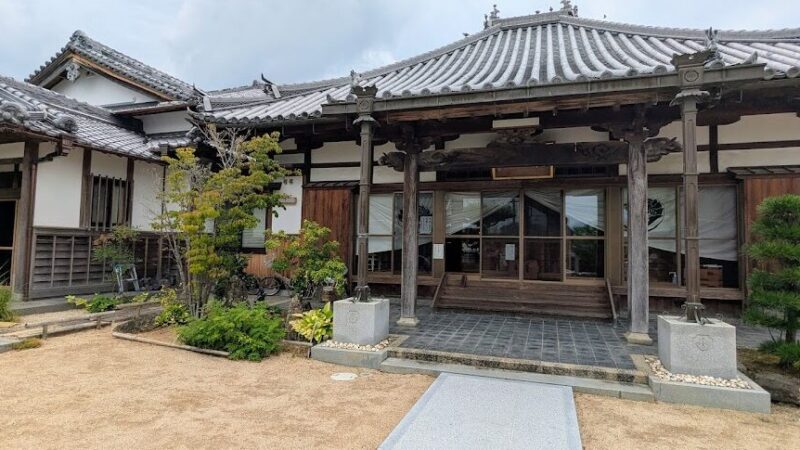
Known for beautiful gardens and high-quality shojin ryori. The relatively accessible location is also appealing.
Ekokuin
A Buddhist lodge where you can experience Ajikan meditation. You can have an experience that resonates with the themes of Demon Slayer, which emphasizes breathing techniques.
Fugenin
Located close to Okunouin, it’s convenient for early morning pilgrimage. Recommended for those seeking a quiet environment and ascetic-style stay.
How to Spend Time at a Buddhist Lodge
- Attending Services: Participate in morning and evening sutra recitation and experience monastic life
- Shojin Ryori: Taste traditional Buddhist vegetarian cuisine
- Sutra Copying and Meditation: Experience training to settle the heart
- Ajikan: Learn Shingon Buddhist meditation methods
These experiences offer a valuable opportunity to actually experience the “concentration,” “breathing,” and “peace of mind” that Tanjiro and others learned through training.
History and Culture of Koyasan
Kobo Daishi Kukai and the Founding of Koyasan
In 816, Kobo Daishi Kukai was given Koyasan by Emperor Saga and founded it as the fundamental training ground of Shingon esoteric Buddhism. He discovered a plateau at an altitude of 900 meters surrounded by eight peaks arranged like lotus petals and envisioned it as an ideal sanctuary of esoteric Buddhism.
This setting of a “chosen special place” shares elements with the special spaces depicted in Demon Slayer, such as “Fujitsuyama of the Final Selection” and the “Infinite Castle.”
Over 1,200 Years of Continuing Faith
Since its founding, Koyasan has functioned as a place of faith for over 1,200 years, even through periods of warfare. This theme of “inheritance” overlaps with the history of battles against demons passed down through generations by the Demon Slayer Corps.
The history of Koyasan—avoiding Oda Nobunaga’s burning, receiving protection from Toyotomi Hideyoshi and Tokugawa Ieyasu, and developing further—resonates with the work’s themes as an attitude of overcoming difficulties and continuing to fulfill one’s mission.
Value as a World Heritage Site
In 2004, Koyasan was registered as a UNESCO World Heritage Site as part of “Sacred Sites and Pilgrimage Routes in the Kii Mountain Range.” As a cultural landscape where nature and human activity are in harmony, it has received high international acclaim.
Tourist Spots Near Koyasan
Jison-in
Located at the gateway to Koyasan, Jison-in is known as the temple where Kobo Daishi’s mother lived. Also called “Women’s Koyasan,” it has gathered the faith of women.
In terms of thoughts toward one’s mother, there is a shared theme with Tanjiro’s feelings as he yearns for his family.
Niutsuhime Shrine
This shrine enshrines the guardian deity of Koyasan, said to be the deity who granted Koyasan to Kukai. It is an important site conveying the history of shinbutsu-shugo (syncretism of Shinto and Buddhism), and is also an interesting spot for understanding Shinto elements in Demon Slayer (such as “Hinokami Kagura” of the Sun Breathing).
Townstone Path
A pilgrimage route of approximately 24 kilometers from Jison-in to Koyasan. One hundred and eighty waystones (markers) line this path, which pilgrims walked in the past.
Completing the entire route takes 7-8 hours, but walking even sections of it allows you to experience the severity of training.
Notes and Etiquette When Visiting
Clothing
Koyasan is at a high altitude and is approximately 5 degrees Celsius cooler than lower elevations. Even in summer, bring something to wear over your clothes. Additionally, when visiting religious facilities, avoid clothing with excessive exposure.
The stone-paved Okunouin approach path is slippery, so comfortable shoes are essential.
Photography Etiquette
- Photography is prohibited beyond Gobyo Bridge at Okunouin
- Be conservative with photographing gravesites
- Photography is prohibited in many buildings
- Do not forget consideration for other worshippers
Even as a sacred site pilgrimage, this is an active religious facility and place of training. Act with respect in mind.
Worship Etiquette
- Remove your hat on the Okunouin approach path
- Bow once before crossing Gobyo Bridge
- Avoid loud conversation
- Always take your trash with you
Best Seasons
Spring (April-May)
Cherry blossoms and fresh greenery are beautiful, and the weather is mild. However, Golden Week is crowded.
Autumn (October-November)
Fall foliage is spectacular and the most popular season. The early November peak viewing period is especially crowded.
Winter (December-February)
Snow-covered Koyasan is fantastic, and fewer tourists visit. However, cold-weather preparation is essential.
Summer (June-August)
Cool and comfortable, but rain gear is necessary during the rainy season.
Shojin Ryori (Buddhist Vegetarian Cuisine) at Koyasan
What is Shojin Ryori?
Buddhist vegetarian cuisine created based on Buddhist precepts, using only plant-based ingredients without meat or fish. Koyasan’s shojin ryori has been refined over 1,200 years of history and has reached an artistic level.
Representative Dishes
Goma Tofu
Koyasan’s signature goma tofu is made only from sesame and arrowroot starch, not soybeans. The rich, creamy texture is unforgettable once tasted.
Sasazushi
A pressed sushi using mountain vegetables and shiitake mushrooms, wrapped in bamboo leaves. It is popular as a takeaway souvenir.
Seasonal Mountain Vegetable Dishes
Dishes using mountain vegetables harvested around Koyasan change with the seasons. The spirit of treasuring nature’s bounty resonates with the theme of coexistence with nature depicted in Demon Slayer.
Recommended Dining Establishments
Hamadaya
An established restaurant for over 150 years. Authentic shojin ryori can be enjoyed at reasonable prices.
Sumikoji Gomatofu Honten
A specialty shop for goma tofu. Enjoy freshly made goma tofu.
Chuo Shokudo Sanbou
A dining hall popular with tourists. Shojin ryori set meals are available at affordable prices.
Souvenirs and Goods
Traditional Souvenirs from Koyasan
Prayer Beads
Koyasan is also famous as a production center for prayer beads. Prayer beads of various materials and colors are available.
Wooden Prayer Tablets
Prayer tablets where you write wishes and dedicate them can also be taken home as amulets.
Incense and Fragrance
Incense made at Koyasan is of high quality and is popular as a gift.
Goma Tofu
Vacuum-packed goma tofu has good shelf life, making it ideal as a souvenir.
Demon Slayer Related Goods
Official Koyasan shops do not sell Demon Slayer collaboration goods, though related products may be handled at surrounding souvenir shops.
However, since Koyasan itself is a sacred site, always remember to act with respect for the work and consideration for religious facilities.
The Spirituality of Koyasan and Demon Slayer
Compassion and Salvation
One of the major themes of Demon Slayer is “compassion” toward demons. Tanjiro seeks the salvation of their souls even as he defeats demons, connecting with their sadness.
This spirituality is the very concept of “compassion” in Buddhism. The teachings of Shingon esoteric Buddhism learned at Koyasan carry the spirit of Mahayana Buddhism, which seeks to save all existence.
Training and Growth
The story of Tanjiro and others growing through rigorous training overlaps with the 1,200-year tradition of training at Koyasan.
The process of improving not only physical conditioning but also spiritual refinement and deepening compassion for others is the very essence of Buddhist practice.
Acceptance of Life and Death
Demon Slayer depicts the deaths of many characters, but not as despair; rather, it is depicted as the inheritance of hope to the next generation.
The countless gravestones lined up at Koyasan’s Okunouin demonstrate a worldview where the dead and the living coexist, not rejecting death. This view of life and death deeply resonates with the work’s message.
Conclusion: The Significance of Sacred Site Pilgrimage to Koyasan
Koyasan is likely one of the important elements that shaped the world view of Demon Slayer. Deep forests, rigorous training, the boundary between life and death, and the spirituality of compassion and salvation—all of these exist at Koyasan.
Visiting Koyasan as a sacred site pilgrimage is not merely a tour of the work’s filming locations but becomes a journey to experience the deep messages the work sought to convey.
In a sacred mountain with 1,200 years of history, taking time to place yourself in nature and settle your heart in silence is a precious experience for modern people. Whether or not you are a Demon Slayer fan, Koyasan is a special place well worth visiting.
Through sacred site pilgrimage, while deepening your understanding of the work, we hope you will use it as an opportunity to come into contact with Japan’s traditional culture and spirituality. We sincerely hope that your experience at Koyasan will be deeply imprinted on your heart.