【Demon Slayer】Houman Kamado Shrine (Fukuoka Prefecture) Complete Guide | Sacred Site Pilgrimage, Access, and Blessings Explained in Detail
In recent years, the popular manga and anime “Demon Slayer” has become a social phenomenon. The Houman Kamado Shrine in Dazaifu City, Fukuoka Prefecture, which shares the name “Kamado” with the protagonist Tanjiro Kamado, has attracted significant attention among fans as a “sacred site.” This article comprehensively covers information useful for those planning sacred site pilgrimages, including the connection between this historic shrine and Demon Slayer, its history spanning over 1,350 years, blessings such as matchmaking, directional protection, and exorcism of bad luck, detailed access methods, and highlights within the shrine grounds.
What is Houman Kamado Shrine? An Ancient Shrine with 1,350 Years of History
Houman Kamado Shrine (Houman-guu Kamado-jinja) is located at 883 Uchiyama, Dazaifu City, Fukuoka Prefecture, and is a historic shrine boasting over 1,350 years of history. Positioned approximately 4 km east of Dazaifu Tenmangu, at the foot of Mount Houman (elevation 829.6 m), with an upper shrine enshrined at the mountain’s peak.
The Origins of Mount Houman and Kamado Mountain
Mount Houman is also called “Kamado Mountain (Kamado-yama).” This name is said to derive from the mountain’s shape resembling that of a stove (kamado). Since ancient times revered as a sacred mountain, it prospered as a holy site of ascetic Buddhism (Shugendo) from the medieval period onward. Ascetics performed strict training on this mountain and conducted rituals for peace and protection against disasters.
Enshrined Deity and History of Faith
The principal deity is Tamayorihime no Mikoto, who has long been venerated as a deity of matchmaking. Also known as a deity of directional protection and exorcism of bad luck, positioned in the demon gate (northeast) of the Dazaifu administrative center, it has played an important role in protecting the city. Mount Houman, designated as a national historic site, is regarded as sacred ground in its entirety, preserving a unique faith form combining mountain worship and Shintoism.
Connection to Demon Slayer | Why It’s Called a Sacred Site
The reason Houman Kamado Shrine attracts attention as a “sacred site” for Demon Slayer is not merely because of the shared name. Multiple fascinating points of commonality exist.
Name Match with Protagonist Tanjiro Kamado
The most obvious connection is the match between the protagonist’s name “Tanjiro Kamado” and the shrine name “Kamado.” This rare surname being shared between the work and shrine is the primary factor drawing fan attention. The surname “Kamado” is extremely uncommon nationwide, leaving a strong impression of its connection to this shrine.
Checkered Pattern Garments of Ascetics
Records remain that ascetics who trained on Mount Houman wore garments with an “ichimatsu checkered pattern” identical to Tanjiro’s haori. While the checkered pattern has long been used as a traditional Japanese design, the connection between this shrine and Shugendo makes this correspondence with the work feel less than coincidental.
Connection to Sword Smiths
Near the outer shrine of Kamado Shrine stands the grave of Kongobei, a sword smith. In the Demon Slayer narrative, sword smiths are crucial beings who forge the Nichirin swords that are weapons of the Demon Slayer Corps. This historical fact is another element creating a mysterious bond between the shrine and the work.
Author’s Fukuoka Prefecture Origin Theory
While the author of Demon Slayer, Gotouge Koyoharu, has not publicly disclosed their birthplace, a theory of Fukuoka Prefecture origin is prominent. It has been suggested that the author may have been familiar with this shrine from childhood, possibly serving as an inspiration source for the work’s creation.
Demon Slaying Legends
Ancient legends concerning demons remain in the areas surrounding Mount Houman. As a place of ascetic Buddhist training, belief in exorcising evil spirits and slaying demons took root, which overlaps with the themes of “Demon Slayer.”
Blessings of Houman Kamado Shrine | Matchmaking, Directional Protection, and Exorcism of Bad Luck
Beyond its aspect as a sacred site for Demon Slayer, Houman Kamado Shrine is known for numerous blessings as a spiritually efficacious shrine.
Deity of Matchmaking
The principal deity Tamayorihime no Mikoto has been venerated since ancient times as a deity of matchmaking. Visitors seeking good relationships come from across the nation to receive blessings of romantic fulfillment and matrimonial success. Within the shrine grounds exists a power spot called “Aikei no Iwa” (Rock of Affection), popular among those wishing for matchmaking blessings.
Divine Virtue of Directional Protection and Exorcism
As the location is in the demon gate of the Dazaifu administrative center, it is deeply revered as a deity of directional protection and exorcism of bad luck. It is believed to provide blessings of protection from misfortune and attraction of good fortune for directional cleansing at new construction or relocation and exorcism at life’s turning points.
Household Harmony and Traffic Safety
Also known as a deity protecting family health and safety, many visitors come to pray for household harmony and traffic safety. Particularly, belief in protecting travelers’ safety as the guardian deity of Mount Houman has been rooted since ancient times.
Highlights of the Shrine Grounds | Sacred Sites to Visit on Pilgrimage
The shrine grounds contain numerous highlights where history and nature are in harmony.
Main Hall and Worship Hall
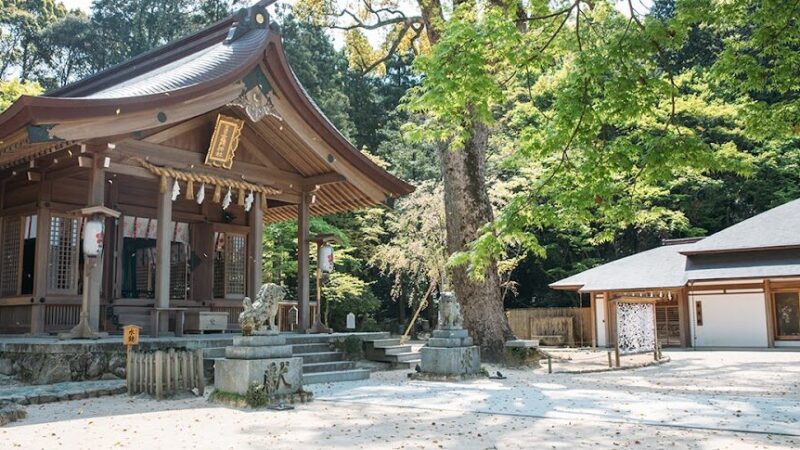
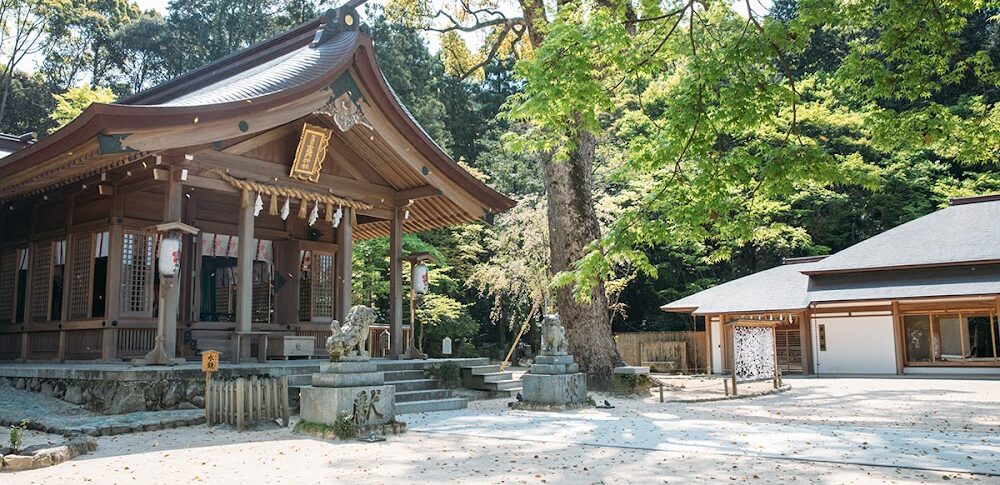
The beautifully vermillion-colored main hall exudes a solemn atmosphere. When visiting, first pay respects here. Among Demon Slayer fans, many are seen praying with thoughts of Tanjiro.
Shrine Office and Talismans
The recently constructed shrine office, which became a topic of discussion for its modern design, was designed by architect Katayama Masakatsu of Wonderwall. In this space harmonizing tradition and modernity, various talismans and seal impressions of pilgrimage are granted. Matchmaking talismans are particularly popular with refined designs.
Autumn Foliage Scenic Spot
Houman Kamado Shrine is known as a scenic spot for autumn foliage. From mid to late November each year, the shrine grounds turn vivid red and yellow, drawing many visitors. Autumn visits are especially recommended.
Climbing to Houman Mountain Upper Shrine
Those with confidence in their physical fitness may climb to the upper shrine at the mountain’s summit (elevation 829.6 m). The climbing trail is well-maintained, and a spectacular view overlooking the Fukuoka plain unfolds from the summit. Tracing the path walked by ascetics allows for a deeper pilgrimage experience.
Musubi no Ito
Within the grounds exists a place called “Musubi no Ito” (Thread of Connection) where visitors tie papers on which they have written wishes. This spot is popular with pilgrims praying for matchmaking and wish fulfillment.
Access Methods to Houman Kamado Shrine | Detailed Guide
Located at 883 Uchiyama, Dazaifu City, Fukuoka Prefecture, here are detailed access methods to Houman Kamado Shrine by transportation mode.
Access by Train and Bus
Using Nishi-Nippon Railroad
- From Nishi-Nippon Fukuoka (Tenjin) Station via Nishi-Nippon Dazaifu Line to Dazaifu Station (approximately 30 minutes)
- From Dazaifu Station via Community Bus “Mahoroba” (approximately 10 minutes), disembark at “Uchiyama (Kamado Shrine Mae)” stop
Using JR
- From JR Hakata Station via JR Kagoshima Main Line to Futsutsuji Station (approximately 15 minutes)
- Transfer to Nishi-Nippon Futsutsuji Station, via Nishi-Nippon Dazaifu Line to Dazaifu Station (approximately 5 minutes)
- From Dazaifu Station via Community Bus “Mahoroba” (approximately 10 minutes)
Details of Community Bus “Mahoroba”
The community bus “Mahoroba” from Dazaifu Station to Kamado Shrine is convenient. Operating hours differ between weekdays and weekends/holidays, so advance confirmation of the schedule is recommended. The fare is 100 yen (as of 2024), which is extremely reasonable.
Access via Long-Distance Bus
From Throughout Japan to Hakata
When visiting from distant areas, long-distance buses operate to Hakata Station and Hakata Bus Terminal from various regions. Service from major cities including Tokyo, Osaka, and Nagoya is available.
From Hakata to Dazaifu
Using “Dazaifu Liner Bus Tabito (Traveler)” from Hakata Bus Terminal allows direct access to Dazaifu. Journey time is approximately 40 minutes.
Access by Private Vehicle and Parking Information
Using Kyushu Expressway
- Approximately 20 minutes from Dazaifu IC
- Approximately 20 minutes from Chikushino IC
Parking Lot
The shrine has a visitor parking lot (approximately 100 vehicles). Free to use, though busy on holidays, during autumn foliage season, and New Year period; use of public transportation is recommended. When full, utilize paid parking near Dazaifu Station and access via bus.
Taxi Use
Using a taxi from Dazaifu Station takes approximately 5 minutes with a fare of approximately 1,000 yen. Convenient for group visits or when carrying luggage.
Walking Access
Walking from Dazaifu Station takes approximately 40 minutes. A route via Dazaifu Tenmangu is also available, recommended for those wishing to visit both locations. Since the path continues uphill, walking shoes are advised.
Precautions and Etiquette When Visiting
Even when visiting as a sacred site pilgrimage, it is important to observe the propriety and etiquette of a shrine.
Visiting Hours
The shrine office reception is open 9:00–17:00. Entry to the shrine grounds is possible 24 hours, though nighttime visits should be modest with consideration for nearby residents.
Photography Etiquette
Photography within the grounds is generally permitted, but consideration for the interior of the main hall and other visitors is necessary. Avoid tripod use and loud conversation; maintain quiet during visits. When posting to SNS, be mindful that this is a sacred place.
Attire
While no specific dress code exists, wearing attire appropriate for a sacred shrine location is advisable. Since it is located at the foot of a mountain, temperatures may be lower than in urban areas depending on the season.
Busy Periods
New Year season (January 1–3), autumn foliage season (mid to late November), and weekends see particular crowds. Those wishing to visit peacefully should come on weekday mornings.
Nearby Attractions | Enjoy the Dazaifu Area
Here are tourist attractions worth visiting in conjunction with a pilgrimage to Houman Kamado Shrine.
Dazaifu Tenmangu
A nationally famous shrine dedicated to Sugawara no Michizane, the deity of scholarship. It is approximately 10 minutes by car or 40 minutes on foot from Kamado Shrine. Known as a plum blossom scenic spot, the grounds contain approximately 6,000 plum trees.
Kyushu National Museum
Adjacent to Dazaifu Tenmangu, this is Japan’s fourth national museum. Centering on the history of exchange with Asia, it exhibits valuable cultural properties. The architectural design is also remarkable and worth seeing.
Komyozenji
A Zen temple known for its beautiful moss garden. Particularly beautiful during autumn foliage, it is a quiet space to calm the mind.
Kanzeonji
An ancient temple founded by Emperor Tenji to pray for the repose of his mother, Empress Saimei. It houses national treasures including a bronze bell and important cultural property Buddhist statues.
Other Kamado Shrines | “Kamado” Shrines Throughout Japan
Multiple shrines bearing the “Kamado” name exist within Fukuoka Prefecture.
Mizoguchi Kamado Shrine (Fukuoka Prefecture, Chikugo City)
Located in Mizoguchi, Chikugo City, Mizoguchi Kamado Shrine was established in Jowa 3 (1014) through branch enshrinement from Houman Kamado Shrine. Positioned in the demon gate of Mizoguchi Castle, it was relocated to its current location approximately 300 years later. Among Demon Slayer fans, it is known as the “second sacred site of Tanjiro.”
Hachiman Kamado Shrine (Oita Prefecture, Beppu City)
Hachiman Kamado Shrine in Beppu City, Oita Prefecture has also become a topic of discussion as a Demon Slayer sacred site. Known for legends of man-eating demons, it possesses elements directly connecting to the work’s themes. Many fans visit in conjunction with Beppu Hot Spring tourism.
Kamado Shrine Pilgrimage Throughout Japan
Among dedicated fans, some undertake “Kamado Shrine pilgrimage” visiting all shrines bearing the “Kamado” name throughout the nation. Each shrine possesses its own unique history and characteristics, providing a good opportunity to learn about Japanese belief culture.
Demon Slayer Goods and Seal Impression Information
Seal Impressions
Houman Kamado Shrine grants standard seal impressions for pilgrimage. Seal impression books are also sold, with designs featuring a refined matchmaking theme. Initial fees are typically 300–500 yen.
Official Merchandise
The shrine does not sell official Demon Slayer merchandise. This reflects the shrine’s commitment to maintaining dignity and valuing its role as a place of authentic faith. Some fans approve, noting that “the atmosphere is preserved, allowing for calm visitation.”
Types of Talismans
Various talismans are available including those for matchmaking, directional protection, exorcism of bad luck, and traffic safety. The designs are refined and popular as souvenirs.
Seasonal Highlights | Year-Round Appeal
Houman Kamado Shrine offers beauty to enjoy throughout the four seasons.
Spring (March–May)
A season of beautiful cherry blossoms and fresh greenery. An optimal time for climbing Mount Houman, enjoying the summit’s view.
Summer (June–August)
The lush shrine grounds offer relief from urban summer heat. Early morning is recommended for summer mountain climbing.
Autumn (September–November)
The most crowded season as a scenic spot for autumn foliage. Mid to late November is prime viewing, with grounds turning vivid red and yellow. Weekday visits are recommended to avoid weekend crowds.
Winter (December–February)
The New Year period draws many pilgrims. Visits in clear winter air offer a refreshing spiritual cleansing.
Deeper Understanding of Houman Kamado Shrine’s History
Origins of Establishment
The founding of Houman Kamado Shrine is said to date from the Asuka through early Nara periods. During the era when the Dazaifu administrative center was established, it played an important role in protecting the city’s demon gate.
Connection to Ascetic Buddhism
From the medieval period onward, Mount Houman prospered as a holy site of ascetic Buddhism. A unique faith form developed fusing mountain worship, Buddhism, and Shintoism, with many ascetics performing strict training. The checkered pattern garments they wore remain preserved as historical documents.
Modern History
Following the Meiji Restoration’s separation of Buddhism and Shintoism, Buddhist elements were eliminated, and the shrine restarted as a purely Shinto institution. After the war, it became widely known as a deity of matchmaking, attracting many visitors.
Development in Heisei and Reiwa Eras
In 2012, a new shrine office was constructed, presenting a new shrine form harmonizing tradition and modernity. From 2019 onward, the Demon Slayer boom brought a new layer of visitors, advancing further development.
Visitor Testimonies | Sacred Site Pilgrimage Experiences
Visitors who have actually visited Houman Kamado Shrine share various impressions.
“As a Demon Slayer fan, I visited, but was fascinated by the shrine’s own history and atmosphere. I find it wonderful that it maintains its original shrine character without becoming overly commercial.” (Woman in her 20s)
“I visited during autumn foliage season. I was overwhelmed by the shrine grounds’ beauty and felt there was value in visiting apart from Demon Slayer.” (Man in his 30s)
“I visited praying for matchmaking blessings. In the quiet, calm atmosphere, I was able to pray with sincerity.” (Woman in her 40s)
Tips for Maximizing Your Houman Kamado Shrine Visit
Prior Preparation
- Check the official website for latest information
- Check the weather forecast (mountain foot weather changes easily)
- Prepare comfortable walking shoes
- Confirm camera and smartphone battery charge
Estimated Duration
Shrine grounds visitation alone requires 30 minutes to 1 hour, but including surrounding walks and photography, 1.5–2 hours is advisable. Including Mount Houman climbing requires 3–4 hours round trip.
Recommended Time of Day
Weekday mornings are least crowded, allowing peaceful visits. Weekends and holidays become crowded in the afternoon; early visits are recommended.
Packing Checklist
- Seal impression book (for those collecting impressions)
- Camera/smartphone
- Beverages (especially in summer)
- Small coins (for offerings, bus fare)
- Rain gear (for uncertain weather)
Conclusion | Experience Something Special at Houman Kamado Shrine
Houman Kamado Shrine in Dazaifu City, Fukuoka Prefecture, draws attention as a Demon Slayer sacred site while maintaining its status as a historic shrine spanning over 1,350 years. Numerous mysterious correspondences with the work exist: name alignment with protagonist Tanjiro Kamado, ascetics’ checkered pattern garments, and a sword smith’s grave.
Known for matchmaking, directional protection, and exorcism blessings, the grounds offer four seasons of natural beauty. Autumn foliage season presents spectacular scenery.
Access from Nishi-Nippon Dazaifu Station via community bus “Mahoroba” in approximately 10 minutes is convenient. With abundant nearby attractions including Dazaifu Tenmangu and Kyushu National Museum, you can enjoy the Dazaifu area for a full day.
Whether Demon Slayer fans, those interested in Japanese history and belief, or those seeking matchmaking and good fortune, this is a special place worth visiting. When visiting Fukuoka, consider adding Houman Kamado Shrine pilgrimage to your plans. It will surely create a memorable experience.
【Basic Information】
- Address: 883 Uchiyama, Dazaifu City, Fukuoka Prefecture 818-0115
- Phone: 092-922-4106 (Reception hours: 9:00–17:00)
- Fax: 092-922-4107
- Parking: Available (approximately 100 spaces, free)
- Official Website: https://kamadojinja.or.jp/
May your sacred site pilgrimage become a wonderful memory.