
【Demon Slayer: Kimetsu no Yaiba】Complete Guide to Takinogawa Hachimangu Shrine|A Historic Shrine in Kita Ward, Tokyo, Where Pilgrims Never Cease to Visit as the Birthplace Shrine of Shinobu Kocho
Takinogawa Hachimangu Shrine (also written as Takino-kawa Hachimangu Shrine), located in Takinogawa, Kita Ward, Tokyo, is a venerable shrine with over 800 years of history. In recent years, following the official setting that Shinobu Kocho, the Insect Pillar from the popular anime “Demon Slayer: Kimetsu no Yaiba,” hails from “Tokyo Prefecture, Kita Toshima District, Takinogawa Village (present-day Takinogawa, Kita Ward, Tokyo),” the shrine has become known as her birthplace shrine (ubusuna-gami), attracting pilgrims from across the nation.
This article comprehensively explains everything you should know before visiting, including the history of Takinogawa Hachimangu Shrine, highlights of the shrine grounds, its connection to Demon Slayer, omamori stamp information, and access directions.
Overview and History of Takinogawa Hachimangu Shrine
Basic Information About the Shrine
Takinogawa Hachimangu Shrine has been beloved by local residents as the tutelary shrine of the former Takinogawa Village. Its former shrine rank was village shrine, with Emperor Ojin as its chief enshrined deity. While there are various theories about the founding period and origins, with some details remaining unclear, it is believed to have existed for at least 800 years or more.
Location: 5-26-15 Takinogawa, Kita Ward, Tokyo
Former Shrine Rank: Village Shrine
Chief Enshrined Deity: Emperor Ojin (Hachiman Okami)
Annual Festival Date: September 15
History and Divine Origins
The founding of Takinogawa Hachimangu Shrine is estimated to have occurred between the late Heian and early Kamakura periods. The place name Takinogawa is said to derive from waterfalls that once flowed through this area, and it was a land blessed with abundant water and greenery.
Entering the Meiji period, Takinogawa Village developed as part of Kita Toshima District in Tokyo Prefecture, and Takinogawa Hachimangu Shrine became the spiritual pillar of the community as its tutelary shrine. During the Taisho period, agriculture thrived in this region, and it was particularly known for seed production. Records show that the shrine’s office was used as a meeting place for the Tokyo Seed Traders Association until just before the end of World War II. Seed production of vegetables such as Nerima radish and carrots was the region’s primary industry, and the shrine watched over the development of agriculture.
After the war, urbanization progressed, and Takinogawa Village was incorporated into Tokyo’s Kita Ward. However, Takinogawa Hachimangu Shrine has continued to be cherished as the protective deity of the community and as a precious cultural heritage conveying history.
The Takinogawa Guardian’s Hachimangu Shrine
Hachimangu deities have been worshipped as both war gods and deities of agriculture and fishing. Takinogawa Hachimangu Shrine is affectionately known as “Takinogawa’s Hachimangu,” and has served as a place where local residents pray for safety and prosperity. It bustles with visitors at New Year’s, Shichi-Go-San celebrations, and purification rites.
Takinogawa Hachimangu Shrine as a Sacred Site for Demon Slayer and Shinobu Kocho
Shinobu Kocho’s Hometown Setting
According to the official Demon Slayer fanbook, the hometown of Shinobu Kocho, the Insect Pillar, is explicitly stated as “Tokyo Prefecture, Kita Toshima District, Takinogawa Village (Kita Ward, Takinogawa).” In the Taisho period setting of the story, this region was actually called “Tokyo Prefecture, Kita Toshima District, Takinogawa Village,” reflecting author Gotouge Koyoharu’s meticulous historical research.
Shinobu Kocho is a swordswoman who uses Butterfly Breathing and fights demons using the poison of wisteria flowers. Her elegant and beautiful combat style and her strong-willed personality have captivated many fans.
What is Ubusuna-gami (Birthplace Deity)?
Ubusuna-gami refers to the deity that protects a person throughout their life from the place where they were born. Since Shinobu Kocho is from Takinogawa Village, Takinogawa Hachimangu Shrine, the tutelary shrine of former Takinogawa Village, serves as her birthplace deity. For this reason, the shrine has become known as Shinobu Kocho’s birthplace shrine and a sacred site for Demon Slayer fans.
The Spread of Sacred Site Pilgrimage
Following the anime broadcast in 2019 and the massive success of the theatrical film “Mugen Train” in 2020, the number of fans visiting Takinogawa Hachimangu Shrine increased dramatically. Numerous prayer plaques featuring Shinobu Kocho have been donated at the shrine grounds, and offerings from fans are also visible. The shrine has embraced this situation and prepared special omamori stamps and offerings featuring butterflies and wisteria flowers, showing a welcoming attitude toward fans.
Butterflies and Wisteria as Shrine Symbols
At Takinogawa Hachimangu Shrine, butterflies and wisteria flowers have been adopted as symbols in honor of Shinobu Kocho. These motifs are used in the shrine’s decorations, offerings, and omamori stamps, delighting visiting fans. In particular, the omamori stamp featuring a purple butterfly perfectly captures Shinobu Kocho’s image and has become a popular collector’s item.
Shrine Grounds Guide and Highlights
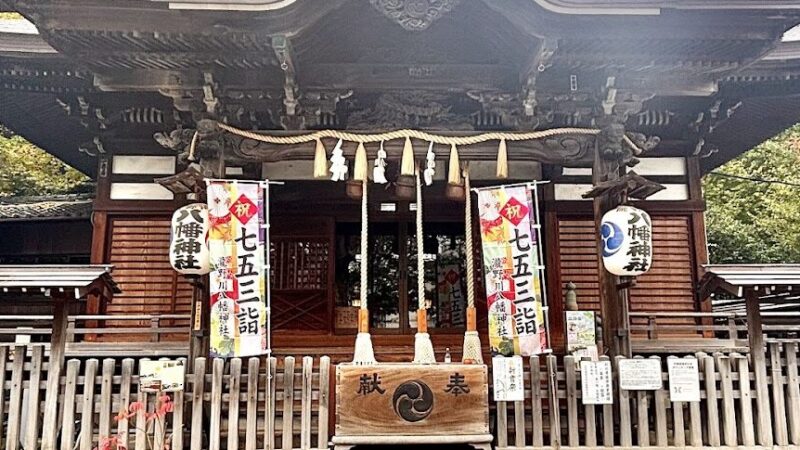
Main Hall and Worship Hall
The main hall of Takinogawa Hachimangu Shrine is constructed in the traditional shrine architectural style. In the worship hall, visitors bow their heads and convey their daily gratitude and wishes to the deity. The space provides a tranquil atmosphere where one can calm the mind and pray.
Shrine Office
The shrine office handles the distribution of omamori stamps and the sale of various protective amulets and prayer plaques. Many Demon Slayer-related offerings are available, with omamori stamp booklets and limited edition stamps featuring Shinobu Kocho being particularly popular. The shrine staff are kind and answer visitors’ questions politely.
Shrine Grounds Atmosphere
The shrine grounds are compact but well-maintained and immaculate. In this quiet environment away from urban bustle, one can pray at leisure. The trees and flowers that show different appearances with the changing seasons are also notable sights.
Prayer Plaque Dedication Area
The prayer plaque dedication area displays numerous plaques featuring illustrations of Shinobu Kocho donated by fans. Observing the plaques filled with fans’ passionate feelings is one of the joys of sacred site pilgrimage. Messages such as “I want to become strong and kind like Shinobu,” and “I’m grateful to have encountered Demon Slayer” are inscribed.
Stone Lions and Monument Stones
The shrine grounds feature stone lions and monument stones that evoke a sense of history. These are valuable cultural properties that tell the story of the shrine’s long history and are well worth careful observation.
Omamori Stamp Information
Standard Omamori Stamps
Takinogawa Hachimangu Shrine directly writes omamori stamps into visitors’ stamp books. Standard stamps feature the shrine name and visit date in ink, with a red seal impression—a simple yet elegant design. The usual initial offering is approximately 300 to 500 yen.
Demon Slayer-Related Limited Edition Omamori Stamps
As a sacred site for Demon Slayer, several special omamori stamps inspired by Shinobu Kocho are available.
- Butterfly Stamp Omamori: Features a purple or lavender butterfly stamp, evoking Shinobu’s “Butterfly Breathing.”
- Kirigami Omamori: Delicate paper-cutting techniques create beautiful expressions of butterflies and wisteria flowers.
- Gold Omamori: Features luxurious gold decorations and is distributed on special occasions.
- Seasonal Limited Omamori: Different designs appear throughout the year, such as June stamps and summer purification ritual stamps.
- Ascending Carp Omamori: Inspired by the “dragon gate” concept of carp climbing waterfalls, popular with those wishing for advancement and achievement of goals.
Omamori Stamp Books
Original omamori stamp books are also distributed by Takinogawa Hachimangu Shrine. Books featuring wisteria-colored designs with butterflies inspired by Shinobu Kocho are an essential item for fans. The cover features beautifully illustrated butterflies and wisteria flowers that lift the spirits simply by holding them.
Omamori Stamp Distribution Times and Precautions
Standard omamori stamp distribution occurs approximately 9:00 a.m. to 5:00 p.m., though times may vary due to shrine events or staff availability. To ensure you receive your stamp, check the shrine’s official website or social media in advance. Also be aware that wait times may occur during busy periods, so visit with time to spare.
If you wish to have stamps written directly in your stamp book rather than receiving a pre-printed version, bring your stamp book with you. Remember to show respect to the shrine and wait quietly for your turn.
Connection to Shibusawa Eiichi
Takinogawa in Kita Ward, where Takinogawa Hachimangu Shrine is located, is also historically connected to Shibusawa Eiichi, known as “the father of Japanese capitalism.” From the Meiji through Taisho periods, Shibusawa Eiichi maintained a residence in this area and undertook numerous business ventures.
The shrine distributes omamori stamps bearing Shibusawa Eiichi’s seal, which have garnered attention following the issuance of the new 10,000-yen bill in 2024. The site interests not only Demon Slayer fans but also history enthusiasts.
Regional History and Culture
Development of Takinogawa Village
From the Meiji through Taisho periods, Takinogawa Village developed as an agricultural area on Tokyo’s outskirts. Vegetable cultivation flourished, with seed production being particularly renowned nationally. Seeds for Nerima radish, carrots, and other crops were managed and distributed by the Tokyo Seed Traders Association, making Takinogawa one of the seed industry’s centers.
Takinogawa Before and During World War II
From the Taisho period through the early Showa period, Takinogawa underwent urbanization while maintaining a coexistence of agriculture and commerce. Until just before the war’s end, the shrine’s office served as a meeting place for the Tokyo Seed Traders Association, making it an important hub of the local economy.
Postwar Changes and the Present
After the war, Takinogawa Village was incorporated into Tokyo’s Kita Ward, and rapid urbanization followed. Farmland transformed into residential and commercial areas, and today it is a quiet residential neighborhood. However, historic structures such as Takinogawa Hachimangu Shrine and place names continue to convey the region’s memory to the present.
Access Information
Access by Train
Takinogawa Hachimangu Shrine is conveniently accessed by public transportation.
From JR Saikyo Line “Itabashi Station”:
- Approximately 7 minutes’ walk from the West Exit
- The most convenient station access
From Toei Mita Line “Shin-Itabashi Station”:
- Approximately 10 minutes’ walk from Exit A2
From JR Keihin-Tohoku Line “Kami-Nakazato Station”:
- Approximately 15 minutes’ walk
Walking Route
The path from Itabashi Station to the shrine winds through a quiet residential area. From the station’s West Exit, proceed following the directional signs and you’ll arrive without getting lost. Along the way, you’ll pass through a local shopping street where you can feel the atmosphere of traditional downtown Tokyo.
Access by Car and Parking
The shrine has no dedicated parking lot. Visitors arriving by car should use nearby coin parking. Since the area is a residential neighborhood, parking spaces are limited. Public transportation is recommended.
Nearby Sacred Site Pilgrimage Spots
Takinogawa Area Attractions
When visiting Takinogawa Hachimangu Shrine, it’s recommended to tour nearby historic sites as well.
- Shibusawa Memorial Museum: A museum introducing Shibusawa Eiichi’s life and achievements. Within walking distance of Takinogawa Hachimangu Shrine.
- Former Furukawa Garden: A metropolitan park harmonizing a beautiful Western mansion with a Japanese garden. Also famous as a rose garden.
- Takinogawa Park: A place of recreation for local residents. Cherry blossoms are beautiful in spring.
Other Demon Slayer Sacred Sites in Tokyo
Tokyo has other locations associated with Demon Slayer.
- Asakusa: The Asakusa Temple area retains Taisho-era atmosphere, evoking the streetscapes of Tokyo in the story.
- Tokyo Ten Shrine Tour: The “Tokyo Ten Shrine Tour” visiting major shrines throughout the city is also recommended for shrine-loving fans.
Prayer Etiquette and Precautions
Basic Prayer Etiquette
When visiting a shrine, observe the following basic manners.
- Bow upon passing through the torii gate: This shows respect for entering sacred ground.
- Purify yourself at the water basin: Cleanse in order: left hand, right hand, mouth.
- Avoid the center of the pathway: The center is said to be the deity’s passage.
- Two bows, two claps, one bow: The basic ritual at the worship hall.
- Pray quietly: Refrain from loud conversation or disruptive behavior.
Photography Notes
Photography at the shrine grounds is generally permitted, but refrain from photographing the main hall interior or shrine staff. Also be considerate of other worshippers. When posting to social media, take care not to capture anyone’s personal information.
Consideration During Crowded Times
Expect crowds on weekends, holidays, and during Demon Slayer-related events. Avoid lengthy stays and be considerate of other visitors. If lines form for prayer plaques or stamps, wait quietly for your turn.
Best Times to Visit
Spring (March-May)
Cherry blossoms adorn parks and street trees beautifully. The wisteria blooming season (late April to early May) aligns with Shinobu Kocho’s image, making it especially recommended.
Summer (June-August)
The summer purification ritual (nagoshi no oohare) occurs in June, with limited edition stamps distributed. Though hot, the verdant shrine grounds feel relatively cool.
Autumn (September-November)
Special events occur on the September 15 annual festival date. As fall foliage arrives, the shrine’s trees display beautiful colors.
Winter (December-February)
New Year’s visits bring crowds but offer a fresh, pristine New Year’s atmosphere. While cold, prayer in the crisp air is particularly special.
Frequently Asked Questions and Answers
Q: Is Takinogawa Hachimangu Shrine an official Demon Slayer sacred site?
A: While not officially designated, because Shinobu Kocho’s hometown is set as “Tokyo Prefecture, Kita Toshima District, Takinogawa Village,” the region’s tutelary shrine, Takinogawa Hachimangu Shrine, serves as her birthplace deity, making it considered a sacred site by fans.
Q: Do I need to reserve omamori stamps in advance?
A: Reservations are typically unnecessary. You can obtain stamps by visiting when the shrine office is open (approximately 9:00 a.m. to 5:00 p.m.). However, wait times may occur during busy periods or on special days.
Q: Are Shinobu Kocho-related goods sold here?
A: The shrine offers original omamori stamp books, stamps, and protective amulets, though these are not official anime merchandise. Offerings feature butterfly and wisteria motifs inspired by Shinobu Kocho.
Q: Is there parking available?
A: The shrine has no dedicated parking lot. Visitors arriving by car should use nearby coin parking. Public transportation is recommended.
Q: How long does a visit take?
A: Prayer itself takes approximately 10-15 minutes, but allow 30 minutes to an hour if receiving an omamori stamp or leisurely viewing the grounds.
Conclusion: Experience Shinobu Kocho’s World at Takinogawa Hachimangu Shrine
Takinogawa Hachimangu Shrine is both a venerable shrine with over 800 years of history and, for Demon Slayer fans, a special sacred site as Shinobu Kocho’s birthplace deity. Its beautiful omamori stamps featuring butterfly and wisteria motifs, fan-donated prayer plaques, and the serene atmosphere of the grounds profoundly move all who visit.
By learning about the history of the Takinogawa region in Kita Ward, Tokyo, and feeling the echoes of the Taisho era during your visit, your appreciation for the work will deepen. With its connection to Shibusawa Eiichi, it is a fascinating site where history and culture intersect.
When visiting as a pilgrim, remember to show respect to the shrine and observe proper etiquette. At Takinogawa Hachimangu Shrine, feel the gentleness and strength that Shinobu Kocho surely held dear. Your experience here will surely deepen your love for Demon Slayer: Kimetsu no Yaiba.