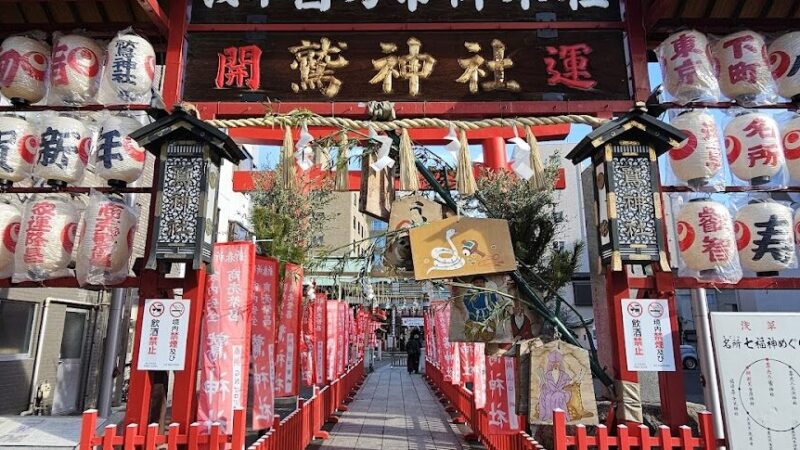

【Demon Slayer】Ushijima Shrine and Akiba Shrine (Tokyo) Complete Guide|Kanao Tsuyuri’s Sacred Site Pilgrimage and Ema Information
Mukohjima in Sumida Ward, Tokyo, is known as the birthplace of Kanao Tsuyuri, a popular character from “Demon Slayer.” Ushijima Shrine and Akiba Shrine, which have been objects of faith as the tutelary deities of this area since ancient times, have become notable sacred site pilgrimage destinations among Demon Slayer fans. This article comprehensively introduces information necessary for sacred site pilgrimages, including detailed histories of both shrines, ema stamp information, access methods, and highlights within the shrine grounds.
The Relationship Between Kanao Tsuyuri and Mukohjima, Sumida Ward
Profile of Kanao Tsuyuri and Her Birthplace
Kanao Tsuyuri is a swordswoman of the Demon Slayer Corps who appears in “Demon Slayer” and is known as the successor of Shinobu Kocho, the Insect Pillar. According to the official fanbook, Kanao’s birthplace is recorded as “Mukohjima, Honjo Ward, Tokyo Prefecture.”
Honjo Ward corresponds to present-day Sumida Ward, and Mukohjima is a historic area located on the east bank of the Sumida River. In “Demon Slayer,” set in Taisho-era Tokyo, this place where Kanao was born and raised is known as a downtown area brimming with old-town atmosphere continuing from the Edo period.
What Are Tutelary Deities?
Tutelary deities (ujigami) are deities that protect the people living in that land. In Japan’s traditional faith, the tutelary deity of one’s birthplace is said to watch over a person throughout their lifetime. In the extensive area from Mukohjima in Sumida Ward to Ryogoku, Ushijima Shrine is revered as the chief tutelary deity, while Akiba Shrine serves as the tutelary deity for part of Mukohjima 4-chome.
In other words, the guardian deities of Mukohjima, where Kanao Tsuyuri was born and raised, are Ushijima Shrine or Akiba Shrine, serving as an important element linking the character and the shrines.
History and Significance of Ushijima Shrine
From Founding Through the Heian Period
Ushijima Shrine’s founding dates back to the early Heian period. According to shrine records, it was founded in 860 (Jogan 2) when the Buddhist monk Jikaku Daishi Ennin received a divine revelation from an old man who was the incarnation of Susanoo-no-Mikoto.
Furthermore, in 877 (Gangyei 1), Prince Teishin, son of Emperor Seiwa, passed away in this place, and he was enshrined together with the main deity by the Buddhist monk Yoshimoto. Due to this historical background, Ushijima Shrine is known as a shrine with deep connections to the imperial household.
Prosperity in the Edo Period and Shogunal Reverence
Upon entering the Edo period, Ushijima Shrine became the chief tutelary deity of the Honjo and Mukohjima areas, drawing the faith of the region. In particular, it received deep reverence from the Tokugawa shogunate and was considered important as a shrine protecting against demons in the northeast direction.
Tokugawa Iemitsu, the third shogun, donated land in Honjo Ishihara-cho and established a temporary shrine (otabisho). This temporary shrine still exists today, conveying the history of Ushijima Shrine to the present day. Throughout the Edo period, Ushijima Shrine prospered as a shrine revered by both samurai and commoners.
The Great Kanto Earthquake and Postwar Relocation
A major turning point in the history of Ushijima Shrine was the Great Kanto Earthquake of 1923 (Taisho 12). At that time, Ushijima Shrine was located near the present-day Kofuku-ji Temple (approximately a 10-minute walk from Ushijima Shrine) but suffered severe damage from the earthquake.
Subsequently, in 1932 (Showa 7), the shrine was relocated to its current location. Through this relocation, the shrine came to be situated at its present position facing the Sumida River, offering a scenic location with a view of Tokyo Skytree. The history of recovery from the Great Kanto Earthquake overlaps with the historical setting of “Demon Slayer,” which is set in the Taisho era, providing deeper emotional resonance for sacred site pilgrimages.
Guide to Ushijima Shrine’s Grounds
Main Hall and Primary Deities
The primary deities enshrined at Ushijima Shrine are Susanoo-no-Mikoto, Ame-no-Hohi-no-Mikoto, and Prince Teishin. Susanoo-no-Mikoto is known as a deity of warding off evil and prevention of plague, and many worshippers visit today to pray for protection.
The current main hall was built at the time of the postwar relocation and preserves the style of traditional shrine architecture while being constructed with modern techniques. The shrine grounds are located in a quiet environment facing the Sumida River, offering a calm atmosphere that makes one forget the hustle and bustle of the city.
The Nade-Ushi (Petting Cow) and Guardian Lions
A notable feature of Ushijima Shrine is the “nade-ushi” (petting cow). Within the shrine grounds stands a bronze statue of a cow, and there is a belief that rubbing the same part of one’s body that corresponds to an illness on the statue will cure the disease. Many visitors touch this nade-ushi to pray for good health.
The guardian lions (komainu) are also worth seeing, with historic stone guardian lions dating from the Edo period protecting the approach. Their expressive carved features speak to the high level of stone carving craftsmanship of that era.
The Sanrin Torii (Three-Tier Torii Gate)
A distinctive structure of Ushijima Shrine is the Sanrin Torii (three-tier torii gate). This is a rare form of torii gate where three gates are combined, with few examples found nationwide. This torii gate follows the same format as the Omiwajinja in Nara and is an important cultural property conveying ancient forms of faith to the present day.
Views of the Sumida River and Tokyo Skytree
Ushijima Shrine faces the Sumida River, and from the shrine grounds, one can view the flow of the river and the landscape of the opposite bank. The location offers a particularly close view of Tokyo Skytree, providing a unique landscape where tradition and modernity harmonize.
In spring, the cherry blossoms along the Sumida River are beautiful, and during the cherry blossom season, many people visit. Walking paths are well-maintained, allowing visitors to enjoy both shrine visits and riverside strolls.
Overview and Characteristics of Akiba Shrine
History of Akiba Shrine
Akiba Shrine is revered as the tutelary deity of part of Mukohjima 4-chome. Akiba faith was widely revered during the Edo period as a deity of fire prevention, playing an important role in Edo, a city frequently plagued by fires.
According to Tokyo Shrine Bureau records, the Mukohjima area in Sumida Ward is primarily under Ushijima Shrine as the chief tutelary deity, but for part of Mukohjima 4-chome, Akiba Shrine serves as the tutelary deity, with the objects of faith varying by area.
Faith as a Deity of Fire Prevention
Akiba Shrine’s primary deity is Hinokagutsuchi-no-Kami, revered as the deity governing fire. During the Edo period, when wooden structures were densely packed in the downtown area, fires frequently occurred, and people deepened their faith in the deity of fire prevention.
Even today, those involved in fire prevention and those in occupations involving fire, such as food service workers, visit to pray for protection from fire. The shrine is also said to provide benefits for household safety and prosperity in business, being cherished by local residents.
Relationship with Ushijima Shrine
Akiba Shrine and Ushijima Shrine are geographically close and have supported the faith of the Mukohjima area together. It is common to visit both shrines, and for Demon Slayer sacred site pilgrimages, visiting both is recommended if time permits.
Ema Stamp Information and Offerings
Ema at Ushijima Shrine
Ushijima Shrine distributes standard ema stamps. With calligraphy reading “Ushijima Shrine” and the shrine’s seal, they follow a traditional style. The usual fee is approximately 300 to 500 yen.
Ema stamps are received at the shrine office and can be requested after visiting. During busy times, there may be waiting periods, so it is recommended to visit with time to spare.
Ema Books and Commemorative Items
Ushijima Shrine also distributes original ema books. The design represents the shrine’s characteristics and is popular as a souvenir from sacred site pilgrimages.
Various amulets and prayer plaques are also available, with amulets for warding off evil and health prayers being particularly popular. Among Demon Slayer fans, it is common to see prayer plaques dedicated in Kanao’s name.
Ema at Akiba Shrine
Akiba Shrine also distributes ema, but it is recommended to confirm in advance the shrine office’s hours and whether distribution is available. As a smaller shrine, it may not be available at all times.
Access and Visiting Information
Access to Ushijima Shrine
By Train
- Approximately 5 minutes walk from Honjo-Azumabashi Station on the Asakusa Line
- Approximately 10 minutes walk from Tokyo Skytree Station on the Tobu Skytree Line
- Approximately 15 minutes walk from Asakusa Station on the Ginza Line and Asakusa Line
By Bus
- Get off immediately at “Ushijima Shrine” bus stop on the Toei Bus
By Car
- Approximately 5 minutes from the Mukohjima exit on the Metropolitan Expressway 6
- Parking: Limited space available within the shrine grounds
Access to Akiba Shrine
Akiba Shrine is located in Mukohjima 4-chome and is within walking distance of Ushijima Shrine. The nearest stations are Hikifune Station or Higashi-Mukojima Station on the Tobu Skytree Line, both approximately a 10-minute walk away.
Visiting Hours and Shrine Office Hours
Ushijima Shrine
- Visiting hours: Grounds open 24 hours
- Shrine office hours: 9:00 AM to 5:00 PM (may vary by season)
- Ema receipt: During shrine office hours
Akiba Shrine
- Visiting hours: Grounds open 24 hours
- Shrine office: May not be staffed, prior confirmation recommended
Visiting Etiquette and Notes
Follow basic shrine visiting etiquette. Make a respectful bow before passing through the torii gate, purify your hands and mouth at the water basin before visiting, and walk along the path while avoiding the center. At the main hall, perform the traditional two bows, two claps, one bow.
Photography is generally permitted, but be considerate of the interior of the main hall and other visitors. When visiting for sacred site pilgrimages, remember that shrines are places of faith and conduct yourself with propriety.
Nearby Demon Slayer Sacred Site Pilgrimage Spots
Other Character Birthplaces in Tokyo
Beyond Ushijima Shrine and Akiba Shrine in Mukohjima, Sumida Ward, there are multiple Demon Slayer character birthplaces throughout Tokyo.
Shinobu Kocho (Takinogawa, Kita Ward)
- Takinogawa Hachiman Shrine is her tutelary deity
- Accessible from Takinogawa 1-chome Station on the Arakawa Tram
Giyu Tomioka (Nogata, Nakano Ward)
- Hikawa Shrine and Tada Shrine are related shrines
- Near Nogata Station on the Shinjuku Line
Zenitsu Agatsuma (Ushigome, Shinjuku Ward)
- Akagi Shrine is his tutelary deity
- Accessible from Kagurazaka Station on the Tokyo Metro Tozai Line
Kyojuro Rengoku (Sakura-shimmachi, Setagaya Ward)
- Sakura Shrine is a related shrine
- Within walking distance from Sakura-shimmachi Station on the Tokyu Den-en-toshi Line
Efficient Sacred Site Pilgrimage Routes
To efficiently visit Demon Slayer sacred sites throughout Tokyo, it is recommended to group them by area.
Downtown Area (Full-Day Course)
- Mukohjima, Sumida Ward: Ushijima Shrine and Akiba Shrine (Kanao Tsuyuri)
- Takinogawa, Kita Ward: Takinogawa Hachiman Shrine (Shinobu Kocho)
- Ushigome, Shinjuku Ward: Akagi Shrine (Zenitsu Agatsuma)
Western Area (Half-Day Course)
- Nogata, Nakano Ward: Hikawa Shrine and others (Giyu Tomioka)
- Sakura-shimmachi, Setagaya Ward: Sakura Shrine (Kyojuro Rengoku)
Tourist Spots in the Mukohjima and Honjo Area
There are many other attractions around Ushijima Shrine.
Kofuku-ji Temple
- Historic temple near the former site of Ushijima Shrine
- Approximately 10 minutes walk
Tokyo Skytree
- World-renowned tourist attraction
- Approximately 15 minutes walk
Mukojima Hyakkaen
- Gardens continuing from the Edo period
- Flowers of each season can be enjoyed
Sumida River Terrace
- Riverside walking path
- Famous as a cherry blossom viewing spot
The Relationship Between Demon Slayer and Shinto Faith
Shinto Elements in the Work
“Demon Slayer” features Japanese traditional beliefs and culture throughout. The protagonist Tanjiro Kamado’s “Hinokami Kagura” derives from Shinto sacred dances, and the “Breathing Techniques” used by Demon Slayer Corps swordsmen are connected to Japan’s ancient spirituality.
Character birthplace settings use actual place names from the Taisho period, and visiting the tutelary deities of those lands allows for deeper understanding of the fictional world.
Significance of Sacred Site Pilgrimages
Sacred site pilgrimages are more than mere tourism; they are acts that give form to one’s love for the work. By visiting the land where Kanao Tsuyuri was born and raised and praying at her tutelary deity, understanding of the character deepens and new connections with the work emerge.
Additionally, shrine visits provide opportunities to touch upon Japan’s traditional culture and history, allowing one to more vividly experience the Taisho-era atmosphere depicted in “Demon Slayer.”
Fan Community and Prayer Plaque Culture
Shrines that have become Demon Slayer sacred sites display prayer plaques dedicated by fans. Prayer plaques featuring Kanao illustrations and messages create a sense of connection with others who love the same work.
When dedicating plaques, follow the shrine’s rules and be mindful that others will see your contribution. If drawing illustrations, keep the content appropriate for a sacred place.
Seasonal Highlights and Events
Spring (March to May)
In spring, the cherry blossoms along the Sumida River near Ushijima Shrine are spectacular. Visiting during the Sumida Park Cherry Blossom Festival allows for simultaneous flower viewing and sacred site pilgrimage. In April, the Spring Grand Festival is held, featuring sacred dances and dedication ceremonies.
Mukojima Hyakkaen is also beautiful in spring, with peonies and wisteria in bloom.
Summer (June to August)
The Sumida River Fireworks Festival takes place at the end of July, and the area around Ushijima Shrine becomes crowded. It is recommended to plan the sacred site pilgrimage for another day due to the heavy congestion on festival day.
Summer visits (called “natsu-mairi”) include the Summer Purification Ceremony on June 30 and the Summer Grand Festival in August.
Fall (September to November)
Fall is an ideal season with pleasant weather for exploration. While autumn foliage is modest in the urban center, trees within the shrine grounds begin to change color. In September, the Autumn Grand Festival is held, where one can observe traditional ceremonies.
Winter (December to February)
New Year’s visits are bustling at year-end. Congestion is expected from New Year’s Day through the third day, so those wishing to visit at leisure are advised to go after mid-January. The Setsubun Festival features bean-throwing ceremonies and other events.
Winter winds along the Sumida River can be cold, so proper warm clothing is necessary when visiting.
Recommended Food and Cafes After Visiting
Long-Established Wagashi Shops in Mukohjima
The Mukohjima area has numerous traditional Japanese sweet shops continuing from the Edo period.
Kototoi Dango
- Historic shop founded over 150 years ago
- The signature kototoi dango is ideal as a souvenir after the shrine visit
Chomeiji Sakura Mochi
- Famous as the birthplace of sakura mochi
- Seasonal limited items are popular in spring
Cafes Near Skytree
The Tokyo Skytree Town area within walking distance offers numerous cafes and restaurants. These can be used for breaks during sacred site pilgrimages.
Downtown Cuisine
The Honjo and Mukohjima area is a treasure trove of downtown food. One can experience food culture continuing from the Taisho era, including okonomiyaki, dojo cuisine, and Edo-style sushi.
Practical Guide to Visiting Ushijima Shrine and Akiba Shrine
Checklist for First-Time Sacred Site Pilgrims
Items to Bring
- Prayer plaque book (if collecting emas)
- Camera or smartphone
- Small change (for offerings and ema fees)
- Map application (smartphone)
- Drinking water
- Comfortable walking shoes
Prior Preparation
- Confirm shrine opening times and shrine office hours
- Research access routes
- Check weather forecast
- Gather information about nearby attractions
Time Estimates
Ushijima Shrine Only
- Prayer visit only: 20 to 30 minutes
- Including ema receipt: 40 to 60 minutes
- Including surrounding exploration: 1.5 to 2 hours
Ushijima Shrine and Akiba Shrine
- Both shrine visits: 1.5 to 2 hours
- Including emas, surrounding exploration: 3 to 4 hours
Photography Tips
Recommended Photo Spots
- Front of the main hall (when few visitors are present)
- Sanrin Torii
- Nade-ushi
- Shrine grounds with Sumida River and Skytree in background
- Close-ups of guardian lions
Photography Etiquette
- Be mindful not to include other worshippers
- Photography inside the main hall is generally prohibited
- Avoid using flash
- Be careful about location tagging when posting on social media
Conclusion
Ushijima Shrine and Akiba Shrine, situated in Mukohjima, Sumida Ward, Tokyo, have become sacred pilgrimage destinations visited by many “Demon Slayer” fans as the tutelary deities of Kanao Tsuyuri’s birthplace.
Ushijima Shrine is a shrine of considerable historical significance, founded in the Heian period, with a history of relocation to its current location following the Great Kanto Earthquake, overlapping with the historical setting of the work, which is set in the Taisho era. The shrine grounds offer many points of interest, including the Sanrin Torii, nade-ushi, and scenic views along the Sumida River.
Akiba Shrine serves as the tutelary deity for part of Mukohjima 4-chome and is revered as a deity of fire prevention. By visiting both shrines, one can gain deeper understanding of the faith and history of the land where Kanao was born and raised.
Emas are distributed, with many fans recording their visit in ema books as mementos of their sacred site pilgrimage. Access is good from central Tokyo, and the surrounding area is rich in tourist attractions including Tokyo Skytree and Mukojima Hyakkaen.
Through sacred site pilgrimages, one gains deeper understanding of the work while simultaneously touching upon Japan’s traditional culture and Shinto faith, a valuable opportunity. Consider planning an enriching sacred site pilgrimage journey combined with other Demon Slayer sacred sites in the Kanto region.
When visiting, remember to follow shrine etiquette, be considerate of other worshippers, and conduct yourself with propriety. A special experience awaits in the land where Kanao Tsuyuri was born and raised, allowing one to more deeply appreciate the world of the work.