
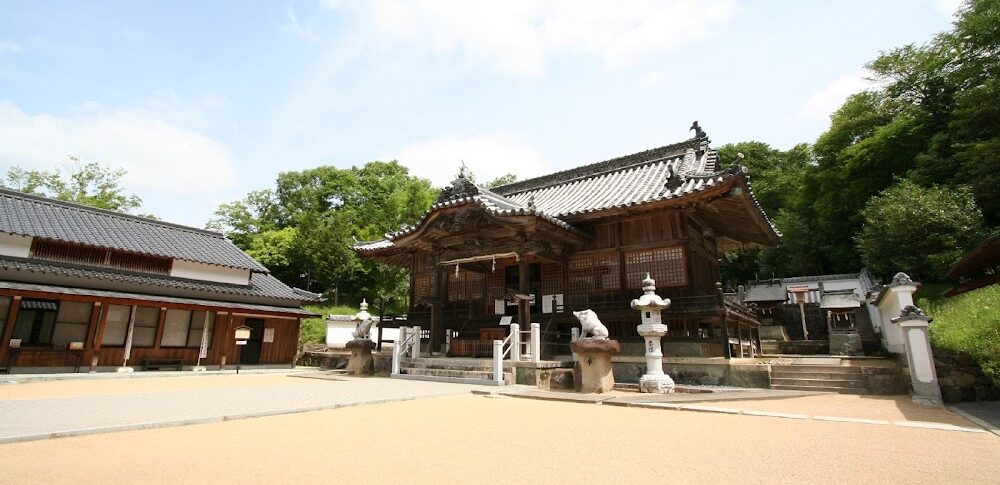
【Demon Slayer】Complete Guide to Waki Shrine (Okayama Prefecture)|A Sacred Site Pilgrimage Destination and Famous Spot for Wild Boar and Wisteria
Waki Shrine, located in Waki Town, Waki District, Okayama Prefecture, has recently attracted attention from fans nationwide as a sacred pilgrimage site for the popular anime “Demon Slayer: Kimetsu no Yaiba.” While not officially stated, elements throughout the grounds evoke the anime’s characters and worldview, continuing to captivate visitors.
This article comprehensively covers information useful for those planning sacred site pilgrimages, from the historical background of Waki Shrine to its connection with Demon Slayer, proper worship etiquette, points of interest, and information about goshuin (shrine stamps) and amulets.
What is Waki Shrine?
Waki Shrine is a shrine that enshrines Waki no Kiyomaro, a statesman active from the Nara through Heian periods, as its principal deity. While the founding year is unclear, it is said to have been relocated to its present location in Tensho 19 (1591).
Waki no Kiyomaro is known as a loyal minister who prevented the priestly statesman Dōkyō from usurping the imperial throne during the Usa Hachiman Shrine Oracle Incident of the late Nara period. He also played an important role in the founding of Heian-kyō and left a significant mark on Japanese history.
The shrine is located at 1385 Fujino, Waki Town, Waki District, Okayama Prefecture, approximately 10 minutes by car or about 30 minutes on foot from JR Waki Station. In the surrounding area is a wisteria park boasting Japan’s largest number of wisteria varieties, which hosts a wisteria festival drawing many tourists from late April through early May each year.
The current shrine buildings, rebuilt in Meiji 18 (1885), were constructed by a master carpenter renowned as “the foremost craftsman of the Kansai region,” making them a precious cultural asset combining historical value and artistic excellence.
The Enshrined Deities
The principal deity of Waki Shrine is Waki no Kiyomaro (617–799 CE). Kiyomaro was born in Bizen Province (present-day Okayama Prefecture) in Tenpyo 5 (733) and served the imperial court as a loyal minister from the Nara through early Heian periods.
The most famous legend is the “Usa Hachiman Shrine Oracle Incident.” When the priestly statesman Dōkyō aimed for the imperial throne, Waki no Kiyomaro was sent as an imperial envoy to Usa Hachiman Shrine. There he received an oracle stating, “The imperial throne should be inherited by those of imperial lineage,” and reported this truth to the court, thwarting Dōkyō’s ambitions. Though temporarily demoted for this loyalty, he was later restored to office and contributed to the construction of Heian-kyō.
According to legend, when Kiyomaro returned to the capital from Usa, he was attacked by assassins and could no longer walk, when suddenly a herd of 300 wild boars appeared to protect him, and his foot wounds were healed. From this tale, wild boars are considered sacred messengers at Waki Shrine, and “komarinoshishi” (guardian boar statues) rather than komainu (guardian lion-dogs) are placed on the grounds.
His sister Waki no Hirohachi is also enshrined as a subsidiary deity. Hirohachi is known for her compassionate nature in nurturing orphans and is said to have founded Japan’s first orphanage.
First, Worship! Purify Yourself at the Water Basin
Upon visiting Waki Shrine, first purify your body and spirit at the water basin before worship. The water basin is an important place for removing impurities before entering the sacred grounds.
Proper Water Basin Ritual
- Take the ladle with your right hand, scoop water, and wash your left hand
- Switch the ladle to your left hand and wash your right hand
- Return the ladle to your right hand, scoop water into your left palm, and rinse your mouth (do not directly touch the ladle to your mouth)
- Wash your left hand again after rinsing
- Finally, hold the ladle upright and rinse the handle with water, then place it face-down in its original position
Waki Shrine’s water basin is kept clean so visitors can purify themselves comfortably. Calm your mind and perform the ritual respectfully.
Worship at the Prayer Hall
After purifying yourself at the water basin, proceed to worship at the prayer hall. Waki Shrine’s prayer hall is a solemn structure rebuilt in Meiji 18, notable for its refined construction by the foremost Kansai craftsman.
Proper Worship Etiquette
- Bow respectfully once before the prayer hall
- Quietly place your offering in the collection box
- Ring the bell if one is present
- Perform the two bows, two claps, one bow ritual:
- Bow deeply twice
- Clap twice at chest height
- Offer your heartfelt prayer
- Conclude with one deep bow
- Step back and bow once more before leaving the prayer hall
Waki Shrine’s blessings are said to be four: healthy feet and legs, safe childbirth and child-rearing, exam success, and luck and protection from misfortune. Due to the legend of Kiyomaro’s foot wounds being healed by boars, many visitors pray for healthy feet and legs.
Worshipping the Subsidiary Shrines
After worshipping at the main hall, also visit the subsidiary shrines located throughout the grounds. Waki Shrine’s grounds contain multiple subsidiary shrines, each offering different blessings.
These subsidiary shrine grounds enshrine regional guardian deities and gods related to Kiyomaro. By respectfully visiting not just the main hall but also these subsidiary shrines, you can deepen your spiritual connection with the shrine.
The basic etiquette for subsidiary shrines is the same as the main hall. However, for smaller shrines, you may simplify the two bows, two claps, one bow ritual to a single respectful bow and brief prayer. What matters most is approaching the worship with sincerity.
Magnificent Shrine Architecture! The Masterpiece of the Kansai’s Greatest Carpenter
Waki Shrine’s main buildings were rebuilt in Meiji 18 (1885) by a master craftsman renowned as “the foremost carpenter of the Kansai region.” This shrine construction is highly regarded as a masterpiece of Meiji-period shrine architecture.
The shrine buildings are constructed in the irimoya style, a formal shrine architectural tradition, with exceptional craftsmanship evident in every detail—the curves of the roof, the bracketing beneath the eaves, and the intricate carvings. Particularly noteworthy is the unwavering commitment to quality from timber selection through assembly, with no compromises.
The architectural style follows traditional shrine building conventions while incorporating the elegance and strength characteristic of the Meiji period. The vermillion-lacquered pillars and white walls create a striking contrast that appears magnificent against the blue sky on clear days.
The arrangement of the buildings is carefully calculated, with the spatial flow from the prayer hall to the main hall guiding visitors into the sacred space. To fully appreciate the architectural beauty, view the shrine buildings from various angles.
Experience the Exquisite Carvings and Architectural Beauty of the Main Hall
Waki Shrine’s main hall is renowned not only for its beautiful exterior but also for the exquisite carvings adorning its details. The carvings executed by the foremost Kansai craftsman are truly worthy of being called works of art.
Dragons, phoenixes, lions, flowers, and birds—traditional motifs—are carved beneath the eaves and in the gable pediments of the main hall, each displaying three-dimensional, lifelike expressions. The dragon carvings in particular overflow with dynamism, appearing ready to spring to life.
The wood nose (ends of pillars) feature carvings of elephants and lions with carefully detailed fur patterns and expressions. These carvings serve not merely as ornamental decoration but also carry meanings of warding off evil and protecting the sacred space.
The openwork carvings in the transom sections are also remarkable, revealing different expressions depending on the light. The changing shadows caused by season and time of day create ever-fresh discoveries.
When viewing the main hall closely, pay special attention to the details of the carvings. You will sense both the craftsman’s technical mastery and the artistic reverence dedicated to the deity.
The Reason Demon Slayer is Called a Sacred Pilgrimage Site
Waki Shrine has gained attention as a “Demon Slayer: Kimetsu no Yaiba” sacred site because the shrine’s characteristics align remarkably with the anime’s worldview. While not officially designated as such, among fans it is said that “it may have been a model for the series.”
The main points of correspondence are as follows:
Connection to Wild Boars
Inosuke Hashibira, one of the main characters, constantly wears a boar mask and was raised by boars in the mountains. Waki Shrine features “komarinoshishi” (guardian boar statues), which are nationally rare, and the legend of Kiyomaro and boars is deeply rooted here.
Wisteria Flowers
In the world of “Demon Slayer,” wisteria flowers play an important role as plants abhorred by demons. The wisteria park adjacent to Waki Shrine boasts Japan’s largest variety of wisteria, with approximately 150 wisteria vines in bloom.
Kasumi Bridge
The grounds feature the “Kasumi Bridge,” a red bridge that fans theorize may have inspired the Mist Pillar, Muichiro Tokito. Additionally, this bridge represents the boundary between the mundane and sacred worlds, creating a mystical atmosphere.
Lightning Legend
The legend of Waki no Kiyomaro includes tales of lightning, leading some to suggest connections to Tanjiro’s friend Zenitsu, who uses Breathing Style: Thunder.
While these elements may be coincidental or deliberate references remains unclear, for “Demon Slayer” fans, Waki Shrine is worth visiting as a sacred site.
Demon Slayer Point ① Wild Boars
The most frequently cited “Demon Slayer” connection at Waki Shrine relates to wild boars. Inosuke Hashibira’s character and Waki Shrine’s boar worship contain remarkably similar elements.
The Guardian Boar Statues
While typical shrines feature komainu (guardian lion-dog statues), Waki Shrine has nationally rare “komarinoshishi” (guardian boar statues). These originate from the legend of Waki no Kiyomaro being aided by boars and serve as the shrine’s symbolic presence.
The pair of guardian boar statues positioned before the prayer hall display spirited yet endearing expressions, with many visitors photographing them. These boar statues, evoking Inosuke’s boar mask, have become the primary destination for “Demon Slayer” sacred site pilgrims.
The Healing Boar Statue
The grounds also feature a “healing boar statue.” Visitors traditionally rub the same area of this statue as their afflicted body part, hoping to cure ailments and maintain health.
Due to the legend of Kiyomaro’s foot wounds being healed by boars, particularly those praying for healthy feet and legs frequently touch this statue. The boar’s feet have become polished from being touched by countless visitors.
Among “Demon Slayer” fans, many touch this healing boar statue to gain strength comparable to Inosuke’s robust physique.
Boar Carvings in the Connecting Corridor
The corridor connecting the prayer hall and main hall also features boar decorations and carvings. These visually express Kiyomaro’s legend and represent important elements of the shrine’s history.
The corridor contains carvings depicting the herd of boars that protected Kiyomaro, rendered with dynamic, spirited figures. The meticulous carving of the boars’ forms demonstrates the craftsman’s exceptional skill.
The Boar Sacred Dance
During the annual festival, the traditional performance “the sacred boar dance” is presented at Waki Shrine. This is a rare ritual involving a performer wearing a boar mask, transmitting the connection between Kiyomaro and boars to the present day.
This boar sacred dance directly parallels Inosuke wearing his boar mask, making it an unmissable element for “Demon Slayer” fans. The annual festival is a rare opportunity, so checking the schedule beforehand is recommended.
Demon Slayer Point ② Wisteria
In the “Demon Slayer: Kimetsu no Yaiba” world, wisteria flowers play a crucial role as plants detested by demons. Poisons made from wisteria and areas overflowing with wisteria flowers are depicted as safe zones where demons cannot approach.
Adjacent to Waki Shrine is the “Waki Town Wisteria Park,” renowned as a nationally famous wisteria viewing spot. With approximately 150 wisteria vines of over 100 varieties, magnificent wisteria trellises extend from late April through early May each year.
Wisteria Park Highlights
The wisteria park stretches approximately 500 meters, with purple, white, and pink wisteria blossoms in profusion. With varieties blooming from early to late seasons, visitors can enjoy wisteria flowers throughout a month-long period.
The most spectacular sight is the over 100-meter-long wisteria trellis tunnel. The wisteria flower clusters hanging overhead create an enchanting space resembling a purple waterfall. This landscape evokes “Demon Slayer’s” Wisteria Peak, creating an emotional experience for fans.
Wisteria Festival
The “Wisteria Festival” held from late April through early May annually draws countless visitors. Evening illumination is also provided, allowing appreciation of the wisteria’s beauty differing from daytime views.
The illuminated wisteria trellises possess otherworldly beauty, creating the sensation of entering the “Demon Slayer” world. The spot is popular for photography, reputed to produce Instagram-worthy images.
The Shrine’s Connection to Wisteria
Waki Shrine and Wisteria Park are adjacent, allowing visitors to enjoy both worship and wisteria viewing simultaneously. Visiting during peak wisteria bloom combines the shrine’s solemnity with wisteria’s grace, deepening the sense of entering the “Demon Slayer” world.
The shrine’s grounds also feature planted wisteria, offering beautiful photo opportunities of the shrine buildings and flowers in contrast. Especially on clear days, the blue sky, vermillion buildings, and purple wisteria create a harmonious color composition.
Demon Slayer Point ③ The “Kasumi Bridge” and “Lightning” Legends
The shrine’s grounds feature the “Kasumi Bridge,” painted in striking red. This bridge marks the boundary between the mundane and sacred worlds, and crossing it symbolizes ritual purification as one enters the sacred space.
Kasumi Bridge and Muichiro Tokito
For “Demon Slayer” fans, the name “Kasumi” (mist) evokes Muichiro Tokito, the Mist Pillar. Tokito is a user of Mist Breathing, playing an important role throughout the series.
The Kasumi Bridge is a small vermillion bridge spanning a stream, creating beautiful scenery harmonizing with surrounding greenery. The view of the shrine grounds from the bridge is exceptional and popular for photography.
The bridge’s name derives from the misty morning atmosphere or the mysterious ambiance surrounding it. This mysticism resonates with “Demon Slayer’s” worldview, captivating fans’ hearts.
Lightning Legends
The legend of Waki no Kiyomaro includes episodes involving lightning. There are accounts of Kiyomaro making important decisions amid thunder and tales of his receiving divine protection from lightning deities.
This lightning element evokes “Demon Slayer’s” Thunder Breathing user Zenitsu Agatsuma. Despite his cowardly nature, Zenitsu demonstrates formidable power as a Thunder Breathing user, an essential character.
Among “Demon Slayer” fans visiting Waki Shrine, those who favor Zenitsu show particular interest in the lightning legends. Learning the shrine’s history offers enjoyment from angles different from the anime.
Other Related Elements
The grounds contain other elements evoking “Demon Slayer” throughout. For instance, the shrine’s solemn atmosphere and the lush old trees lining the approach path align well with the Taisho-era setting of the anime.
Additionally, Waki no Kiyomaro’s loyalty parallels the Demon Slayer Corps members’ commitment to protecting people at the cost of their lives. Waki Shrine holds special significance as a place where historical figures’ tales and anime narratives intersect.
Charming Cherry Blossom Lace Amulet
Waki Shrine distributes various types of amulets. Among the most popular is the “cherry blossom lace amulet.”
This amulet features delicate lace patterns adorned with cherry blossom designs—an extraordinarily cute amulet. With soft pink and white tones, it is particularly popular among women.
The cherry blossom lace amulet offers blessings for romantic ties, romantic fulfillment, and favorable encounters. The lace’s delicacy symbolizes the threads connecting people, recommended for those wishing to deepen bonds with loved ones.
The amulet’s design changes seasonally, allowing new discoveries with each visit. It is appreciated both for personal use and as a souvenir.
Other amulets available include those for healthy feet and legs, exam success, and safe childbirth—aligned with the shrine’s blessings. Each amulet carries the shrine priest’s sincere devotion.
Delicate Paper-Cut Goshuin Stamps
Waki Shrine offers beautiful goshuin (shrine stamps) for visitors. Particularly popular are special stamps featuring intricate paper-cut designs.
Standard goshuin stamps include the shrine name, visit date, and shrine seal in calligraphy, presented simply; however, on special dates or during limited periods, artistically rendered stamps with paper-cut or applied designs are distributed.
Paper-cut goshuin stamps feature delicate patterns carefully cut by craftspeople, often depicting wisteria flowers, boars, and the Kasumi Bridge. These motifs express the shrine’s characteristics while delighting “Demon Slayer” fans with relevant designs.
Goshuin stamps are distributed as proof of worship, so complete your worship before requesting one. Bring a goshuin collection book and politely request the stamp at the office.
Special goshuin stamps may be limited in quantity, so checking the shrine’s official information and social media in advance is recommended. For those collecting goshuin stamps, Waki Shrine’s stamps are valuable additions to collections.
Warm Messages from the Shrine Priest
Waki Shrine’s priest is known for warmly welcoming individual visitors and demonstrates understanding and welcoming attitudes toward “Demon Slayer” fans’ sacred site pilgrimages.
The priest states that it is wonderful for people to develop interest in shrines through anime and to encounter Japanese history and culture. He hopes that visiting Waki Shrine allows appreciation of the “Demon Slayer” world while also learning of Waki no Kiyomaro’s achievements and Japanese history.
At shrines, maintaining proper etiquette and approaching with respect is essential. While photography is permitted, being considerate of other worshippers and remembering that this is a sacred space is important.
The priest shares: “A shrine is a place of prayer and spiritual purification. Whether you are an anime fan or not, we hope Waki Shrine is a space where all visitors can worship peacefully.”
Additionally, maintaining and cleaning the grounds requires considerable effort. As visitors, taking trash with you, avoiding damage to shrine vegetation, and maintaining quiet during worship express gratitude to the shrine.
Access Information and Worship Tips
Basic Information
Address: 1385 Fujino, Waki Town, Waki District, Okayama Prefecture 709-0412
Phone: 0869-93-3910
Visiting Hours: Grounds open at all times (Office usually 9:00–17:00)
Parking: Available (Free; may be paid during Wisteria Festival periods)
How to Access
By Train
From JR Sanyo Main Line “Waki Station,” approximately 10 minutes by taxi or about 30 minutes on foot
By Car
Approximately 10 minutes from “Waki IC” on the Sanyo Expressway
Approximately 15 minutes from “Bizen IC” on the Sanyo Expressway
Best Seasons to Visit
Wisteria Bloom Season (late April–early May)
When wisteria park’s flowers are in full bloom, visitors most vividly experience the “Demon Slayer” worldview. However, expect crowds during the Wisteria Festival period.
Fresh Greenery Season (May–June)
The quiet period after the festival offers beautiful fresh foliage and leisurely worship.
Autumn Foliage Season (November)
The shrine’s trees display autumn colors, offering seasonal ambiance.
New Year Visits (January)
Welcome the new year by praying for safety throughout the year.
Nearby Tourist Attractions
When visiting Waki Shrine, also exploring nearby attractions is recommended.
Waki Town Wisteria Park: Adjacent to the shrine, a famous wisteria viewing spot boasting Japan’s largest variety
Waki Town Hot Spring: A hot spring facility offering day-use bathing
Waki Town History and Folk Museum: A museum where visitors learn of Waki no Kiyomaro’s history
Worship Etiquette Reminders
- Remember this is a sacred place and worship with respect
- Refrain from loud conversation or disruptive behavior
- While photography is permitted, remain considerate of other worshippers
- Always take trash with you
- Avoid touching or damaging shrine plants and structures
- Confirm with the shrine beforehand if planning cosplay visits
Conclusion: Experiencing History and Anime’s Fusion at Waki Shrine
Waki Shrine, located in Waki Town, Okayama Prefecture, is a special place where history spanning from the Nara period and contemporary pop culture beautifully converge.
The legend of Waki no Kiyomaro and wild boars, wisteria flowers boasting Japan’s largest variety, the Kasumi Bridge, and lightning legends—elements throughout evoke the “Demon Slayer” world. While not officially designated as a sacred site, the abundance of coinciding elements suggests something beyond mere chance.
For “Demon Slayer” fans, it is a sacred pilgrimage destination allowing worship while recalling anime characters and narratives; for history enthusiasts, it is a precious place to learn of Waki no Kiyomaro’s achievements, which significantly marked Japanese history.
Beautiful shrine buildings crafted by the foremost Kansai carpenter, exquisite carvings, nationally rare guardian boar statues, and the shrine priest’s warm hospitality—Waki Shrine offers fresh discoveries and inspiration with each visit.
If visiting the shrine prompted by anime leads to increased interest in Japanese history, culture, and shrine significance, that represents something wonderful. Waki Shrine is a special place where contemporary times and history, entertainment and faith intersect.
When visiting Okayama Prefecture, be sure to visit Waki Shrine. Whether during wisteria season or any other time, you will discover its unique seasonal appeal. Whether for sacred pilgrimage, historical exploration, or spiritual solace—Waki Shrine welcomes all visitors with warmth.


