
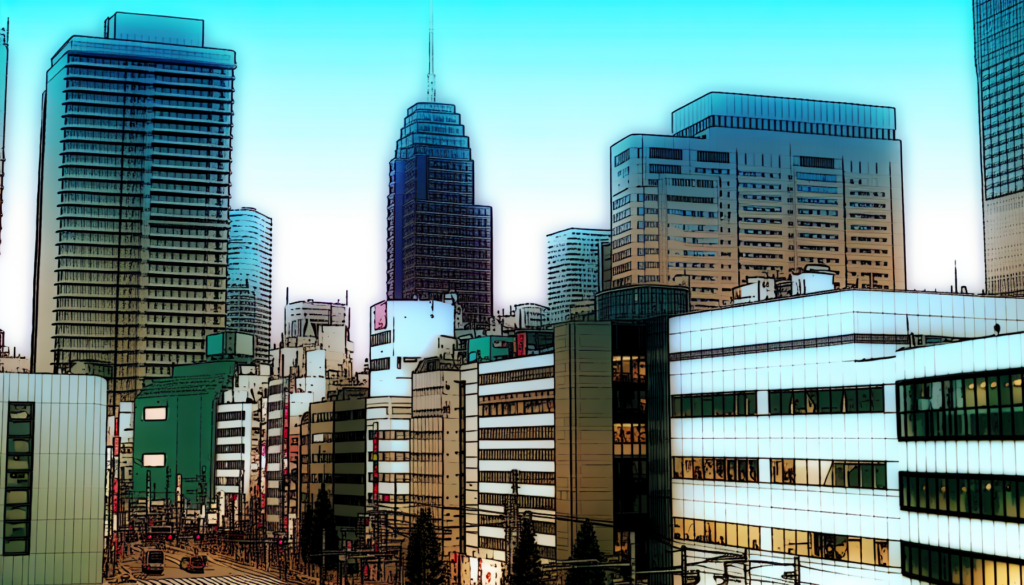
CITY HUNTER Shinjuku, Tokyo: Complete Guide from Sacred Site Pilgrimage to the Latest Theater Version
Table of Contents
- The Deep Relationship Between City Hunter and Shinjuku
- Why Shinjuku Was Chosen as the Stage and the Work’s World View
- Shinjuku Depiction in the Original Manga
- Shinjuku Expression in the Television Anime Version
- Theater Version Series and Shinjuku
- The Appeal of Theater Version City Hunter Shinjuku Private Eyes
- The Latest Work “Theater Version City Hunter Angel’s Tears (Angel Dust)”
- Complete Guide to Sacred Site Pilgrimage Spots in Shinjuku
- City Hunter Related Events in Shinjuku
- Major Developments and Changes Since the 21st Century
The Deep Relationship Between City Hunter and Shinjuku
“City Hunter” is a representative urban hard-boiled manga by Hojō Tsukasa, and Shinjuku Ward in Tokyo is indispensable as its setting. Beginning serialization in “Weekly Shonen Jump” from 1985, this work depicts Shinjuku not merely as a background but as an important element constituting the narrative.
The protagonist, Saeba Ryō, operates his “cleanup” business with an office in Shinjuku, and together with his partner Makimura Kaori, he resolves clients’ problems. The crowds of Shinjuku, the clusters of high-rise buildings, the nighttime face of Kabukicho, and the bustle of Shinjuku Station East Exit—all of these become important pieces forming the work’s world view.
Hojō Tsukasa’s choice of Shinjuku as the stage was based on the unique atmosphere that 1980s Shinjuku possessed. With many businessmen crossing through during the day and developing into an entertainment district with various human dramas at night, Shinjuku, as a city where light and shadow intersect, was ideal as the stage for a hard-boiled work.
Why Shinjuku Was Chosen as the Stage and the Work’s World View
There are multiple reasons why Shinjuku was selected as the stage for City Hunter. First, Shinjuku is one of Tokyo’s central locations while possessing a diverse character. High-rise business districts, the bustling Kabukicho entertainment area, quiet residential neighborhoods, and green spaces like Shinjuku Gyoen coexist, making various story developments possible.
Shinjuku in the 1980s possessed a unique atmosphere where glamour on the eve of and at the height of the bubble economy coexisted with shadows of the underworld. This historical background gives credibility to the world in which the character Saeba Ryō lives. Shinjuku as a city with both a public and private face overlaps with the duality of Saeba Ryō living as a sweeper.
In the work, numerous real locations appear, including the Shinjuku Station East Exit meeting place, the Tokyo Metropolitan Government Building (from the old building to the current one), Shinjuku Central Park, and tenement buildings in Kabukicho. By depicting these places concretely, they construct a world view that is realistic despite being fiction.
Shinjuku Depiction in the Original Manga
In Hojō Tsukasa’s original manga, Shinjuku’s streetscape is depicted meticulously. Changes in Shinjuku from the mid-1980s at the start of serialization to 1991 when serialization ended are also reflected in the work.
Particularly striking are the action scenes with Shinjuku’s cluster of high-rise buildings as background. Gunfights on building rooftops, pursuits on tenement building stairs—numerous productions are evident that maximize utilization of Shinjuku as a three-dimensional urban space. Through Hojō Tsukasa’s artistic skill, Shinjuku’s streetscape is depicted with presence equal to the characters, not merely as background.
In the original work, Saeba Ryō’s office is set to be somewhere in Shinjuku, but the specific location is not specified. This stimulates readers’ imagination and creates a sense of immersion, “Saeba Ryō might be somewhere in my familiar Shinjuku.”
Additionally, restaurants, coffee shops, and bars in Shinjuku appear in the work, serving as valuable documentation conveying 1980s Shinjuku culture to the present. Particularly, the coffee shop Kaori frequently visits and the bars Saeba Ryō frequents for information gathering reflect the atmosphere of Shinjuku in that era intensely.
Shinjuku Expression in the Television Anime Version
The television anime “City Hunter” broadcast from 1987 to 1991 expresses the original’s Shinjuku depiction in a more dynamic manner. The anime version produced by Sunrise depicts Shinjuku’s streetscape in vibrant colors, constructing a unique world view together with music.
In the anime version, Shinjuku’s nightscape is used impressively in openings and endings. Particularly, the Shinjuku streetscape flowing to the first opening theme “City Hunter~Ai yo Kienaide~” has become a memorable scene remaining in many fans’ memories.
Four television series were produced, each depicting Shinjuku in different periods. The first series (1987-1988), the second series “City Hunter 2” (1988-1989), the third series “City Hunter 3” (1989-1990), and the final series “City Hunter ’91” (1991), stories set in Shinjuku unfolded over approximately four years.
As a characteristic of the anime version, comedic direction is employed more than in the original work, but the depiction of Shinjuku’s streetscape maintains realism. Background art referencing actual Shinjuku buildings and scenery becomes an important element supporting the work’s reality.
Theater Version Series and Shinjuku
City Hunter had multiple theater versions produced alongside the television series. Shinjuku is depicted as an important stage in these theater versions as well.
Theater Version First Work “Theater Version City Hunter Bay City Wars” (1990)
In the first theater version, the Tokyo Bay coastal area including Shinjuku becomes the stage. In this work, while using the Shinjuku office as a base, activities across a broader area are depicted.
Theater Version Second Work “Theater Version City Hunter Million Dollar Conspiracy” (1990)
In the second work released the same year, a story centered on Shinjuku again unfolds. As an important episode related to Saeba Ryō’s past, Shinjuku’s city is used effectively.
Theater Version Third Work “Good Bye My Sweet Heart” (1997)
This work produced six years after the television series ended depicts 1990s Shinjuku. The atmosphere of Shinjuku after the collapse of the bubble economy is also reflected in the work, creating content that conveys a sense of changing times.
These theater versions feature higher drawing quality than the television series, with Shinjuku’s streetscape depicted more beautifully. Particularly nightscape scenes are impressive, fully conveying the charm of Shinjuku as a city.
The Appeal of Theater Version City Hunter Shinjuku Private Eyes
“Theater Version City Hunter Shinjuku Private Eyes,” released in February 2019, generated significant discussion as the first completely new theater version in approximately 20 years since the end of the original serialization. This work emphasizes the relationship between City Hunter and Shinjuku anew.
A Story Set in Modern-Day Shinjuku
The greatest characteristic of “Shinjuku Private Eyes” is that it is set in modern-day Shinjuku as of 2019. In Shinjuku where time has passed since the 1980s, Saeba Ryō and Makimura Kaori continue their activities as sweepers unchanged. The redevelopment of the Shinjuku Station area, the increase in high-rise buildings, and other aspects of modern Shinjuku are reflected in the work.
The story begins when model Shindō Ai requests bodyguard services. Her battle against mysterious organizations targeting her unfolds across various places in Shinjuku. Shinjuku Gyoen, Kabukicho, the Tokyo Metropolitan Government Building area—famous places in Shinjuku appear one after another, serving for fans almost as a guidebook for sacred site pilgrimage.
Full-Scale Production System by the Production Committee
“Shinjuku Private Eyes” was produced through a production committee system involving Aniplex, Yomiuri Television, Toms Entertainment, and others. This system realized high-quality work with sufficient budget and time.
Director Kodama Kanetshi, who also directed the television series, served as director, and character design was supervised by original author Hojō Tsukasa. Voice actors, starting with Kamiya Akira as Saeba Ryō and Ikura Kazue as Makimura Kaori, had original cast members continue, creating a work meeting fans’ expectations.
Music and Theme Song
In terms of music, the series’ traditions are inherited. Incidental music was handled by Iwasaki Taku, adding contemporary arrangements while maintaining City Hunter characteristics. The theme song featured Kobayashi Kahoru’s “Get Wild” being used again, with a newly recorded version employed.
The scene of “Get Wild” flowing during the ending with Shinjuku’s nightscape moved many fans and became a major topic on social media. This direction proved anew that City Hunter, Shinjuku, and “Get Wild” are inseparable three elements.
Box Office Performance and Evaluation
“Shinjuku Private Eyes” achieved the second position in box office rankings in its opening weekend and ultimately achieved box office revenue exceeding 1.8 billion yen. Despite being a new work 20 years later, it succeeded in acquiring not only longtime fans but also new-generation audiences.
It also received high critical evaluation, gaining support not only from anime fans but also from general movie audiences. Particularly, the balance sense in maintaining City Hunter characteristics while setting the story in modern-day Shinjuku was praised.
The Latest Work “Theater Version City Hunter Angel’s Tears (Angel Dust)”
Following the success of “Shinjuku Private Eyes,” the production of a new theater version “Theater Version City Hunter Angel’s Tears (Angel Dust)” was announced. In this latest work too, Shinjuku is promised to be depicted as an important stage.
Information About the New Work and Teaser
In the teaser video, the figure of Saeba Ryō is depicted impressively against Shinjuku’s nightscape as background. The production committee has announced that action set in Shinjuku will unfold on an even larger scale than the previous work, and fan expectations are mounting.
The title “Angel’s Tears (Angel Dust)” is the name of a drug appearing in the original work, and serious story development is predicted. It is suggested that this work will likely be a hard-boiled-heavy piece set against Shinjuku’s underworld.
Production System and Staff
The new work employs the same production committee system as the previous work. The continuation of main staff and cast, including director, character design, and voice actors, has been announced, establishing a framework to follow the previous work’s success.
Hojō Tsukasa continues to be deeply involved in production, with fine supervision of Shinjuku’s depiction reportedly occurring. How modern-day Shinjuku is depicted and how it is incorporated into the narrative will be one of the highlights of the new work.
Complete Guide to Sacred Site Pilgrimage Spots in Shinjuku
For City Hunter fans, Shinjuku holds special significance as a sacred site. We introduce locations appearing in the work and spots where one can feel the work’s atmosphere.
Shinjuku Station East Exit
The Shinjuku Station East Exit, appearing numerous times in the work, is a location frequently used as a meeting place. While it has changed in appearance due to recent redevelopment, it remains Shinjuku’s gateway with many people crossing through. The station plaza’s crowds are one place where one can feel City Hunter’s world view.
Shinjuku Central Park
Located west of the Tokyo Metropolitan Government Building, Shinjuku Central Park is a green space appearing in the work. Slightly removed from the bustle of the metropolis, this park is sometimes used as a place for Saeba Ryō to meet clients. The park’s scenery with high-rise buildings as background possesses an urbane atmosphere fitting City Hunter.
Tokyo Metropolitan Government Building
The Tokyo Metropolitan Government Building, a landmark of Shinjuku, became an important stage in “Shinjuku Private Eyes.” From the observation deck, one can have an overview of Shinjuku’s streetscape and experience the work’s world view. Particularly, the nightscape is impressive, evoking the nightscape of Shinjuku flowing during the ending.
Kabukicho Area
Kabukicho, Shinjuku’s nighttime face, is the place where one most deeply feels City Hunter’s world view. The streetscape of tenement buildings standing in rows conveys the underworld’s atmosphere to the present day. However, when actually visiting, we recommend taking safety precautions.
Shinjuku Gyoen
Shinjuku Gyoen, which became an important stage in “Shinjuku Private Eyes,” is a place offering rich nature while being in Shinjuku’s center. Taking a stroll while recalling scenes from the work might provide new discoveries.
Shinjuku Golden Gai
Golden Gai, where small bars are densely packed, is a place retaining an intense 1980s Shinjuku atmosphere. Numerous bars with an atmosphere where Saeba Ryō might visit for information gathering exist, allowing one to be immersed in the work’s world view.
City Hunter Related Events in Shinjuku
Various City Hunter-related events have been held in Shinjuku. As the work’s sacred site, it has become a place where fans gather.
Popup Store
In October 2024, a City Hunter popup store was held at Hands Shinjuku. Themed on Saeba Ryō’s famous line “Here is the only place where I can dream…,” the popup recreated the world view of urban hard-boiled colored pop by the 80s, featuring exhibition panels recreating famous original scenes and merchandise sales.
At this event, panels recreating famous scenes from the original work and original merchandise themed on Shinjuku’s streetscape were sold, attracting many fans. The event’s holding in Shinjuku, the sacred site, held special significance.
Theater Version Release Commemorative Events
During “Shinjuku Private Eyes”‘ release, various commemorative events were held centered on Shinjuku’s movie theaters. Stage greetings, panel exhibitions, collaboration cafes and more provided fans opportunities to experience the work’s world view.
Particularly impressive were items like diorama acrylic stands featuring Shinjuku’s nightscape as background. These items symbolizing the connection between Shinjuku as a city and City Hunter were supported by many fans.
Movi-Che Perks
With the latest work “Angel’s Tears (Angel Dust),” sales of Movi-Che perks featuring a diorama acrylic stand with Shinjuku’s nightscape as background were conducted at Jump Festa 2023. Using a single-unit stand base allows actual display with Shinjuku’s real nightscape as background—a thoughtfully designed arrangement.
Major Developments and Changes Since the 21st Century
Even after the original serialization ended, City Hunter has continued media expansion in various forms. In all of these, Shinjuku remains depicted as an important element.
Cell Media Expansion
Television series and theater versions have been repeatedly released as cell media including DVD and Blu-ray. Coinciding with the 2019 “Shinjuku Private Eyes” release, HD remaster versions of past works were also released, creating opportunities for new-generation fans to encounter the work.
They have also become viewable on streaming services like Amazon Prime Video and Hulu, creating an environment where one can experience City Hunter’s Shinjuku anytime.
CD and Music-Related
City Hunter’s music is one important element of the work. Main and insert themes including “Get Wild” are beloved by many fans even now.
In 2019, “Theater Version City Hunter
Mook and Publications
Various muks and publications related to City Hunter have been published. These include special features tracking Shinjuku’s changes as the work’s setting and sacred site pilgrimage guides—numerous valuable resources for fans exist.
Particularly at the time of “Shinjuku Private Eyes”‘ release, multiple related publications were issued, with content comparing 1980s Shinjuku and modern-day Shinjuku.
Game Expansion
City Hunter has also expanded into various video game works. In smartphone games, stories set in Shinjuku’s streetscape unfold, allowing players to experience becoming Saeba Ryō and dashing through Shinjuku themselves.
Stage and Live-Action Adaptations
In 2021, Takarazuka Revue Company Snow Group staged “CITY HUNTER,” performed at the Tokyo Takarazuka Theater. In this stage version too, Shinjuku is depicted as an important stage, with Shinjuku’s city expressed through Takarazuka’s glamorous direction.
Additionally, a live-action film adaptation was made in France, with the combination of City Hunter and Shinjuku gaining international recognition.
The Charm of Shinjuku as Depicted in City Hunter
One reason City Hunter continues to be loved across many years is its charming depiction of Shinjuku as a city. Shinjuku as depicted through the work is expressed not merely as background but as a living city breathing together with the characters.
Shinjuku has undergone significant changes from the 1980s to the present. However, Shinjuku’s essence as depicted in City Hunter—a city where diverse peoples cross through and light and shadow intersect—remains unchanged. This universality becomes the reason the work gains support beyond time periods.
As Saeba Ryō speaks, “Here is the only place where I can dream…,” Shinjuku is a special place for City Hunter and for fans. Being able to realistically experience the work’s world view by visiting actual Shinjuku becomes a major charm unavailable in other works.
Conclusion
The relationship between City Hunter and Tokyo’s Shinjuku Ward transcends a simple work-and-stage relationship, possessing deep connection. The Shinjuku depicted by Hojō Tsukasa has, through anime adaptation and theater version production, become a city etched in many people’s memories.
With “Shinjuku Private Eyes” in 2019 and the latest work “Angel’s Tears (Angel Dust),” continuing new film production ensures City Hunter’s Shinjuku continuously displays new forms. Nearly 40 years after the original serialization began, the work continues without fading, continuously acquiring new fans.
Precisely because it uses the real city of Shinjuku as its stage, fans can enter the work’s world through sacred site pilgrimage. When gazing at Shinjuku’s nightscape from the Metropolitan Government Building’s observation deck, when walking through the bustle of Shinjuku Station East Exit, City Hunter’s world surely exists there.
The story between City Hunter and Shinjuku will surely continue forward. Through production committee-produced new works, holding of various events, and expansion into new media formats, this immortal masterpiece will be passed on to the next generation. Great expectations are placed on City Hunter’s future development as it continues walking alongside Shinjuku as a city.

