
【Detective Conan | Indigo Coffin】Kozushima (Tokyo) Sacred Site Pilgrimage Guide Complete Edition
The theatrical film “Detective Conan: The Indigo Coffin (Jolly Roger)” is the 11th theatrical film work released in 2007. The stage for this work, woven together with beautiful seas and mysterious legends, is Kozushima, one of the Izu Islands that belong to Tokyo. In this article, we will introduce in detail the must-see Kozushima sacred site pilgrimage spots for Conan fans.
The Relationship Between “The Indigo Coffin” and Kozushima
“The Indigo Coffin” is a work that depicts mystery and adventure surrounding treasures sleeping at the bottom of the sea. The model for “Shin’uminoshima (Kamiuminoshima)” that appears in the work is Kozushima, located approximately 180 km south of Tokyo.
Kozushima is located in the center of the Izu Islands and is characterized by highly transparent waters, rich nature, and unique topography. Although it is a small island with a population of about 2,000, it is also famous as a diving spot, and it’s no wonder it was chosen as the stage for the film, boasting beautiful scenery.
Work Overview
- Release Date: April 21, 2007
- Director: Yasui Yamamoto
- Screenplay: Kanji Kashihara
- Box Office Revenue: 2.53 billion yen
- Main Characters: Edogawa Conan, Mouri Ran, Mouri Kogoro, Haibara Ai, Detective Boys
The story unfolds with mysteries and incidents surrounding the pirate treasure “Jolly Roger” said to have sunk to the bottom of the sea 300 years ago, set on Shin’uminoshima floating in the Pacific Ocean.
How to Access Kozushima
Before beginning the sacred site pilgrimage, let’s first confirm how to get to Kozushima.
Access by Ship
Tokai Kisen (Large Passenger Ship)
- Departure: Takeshiba Pier, Tokyo
- Travel Time: Approximately 10 hours (overnight service)
- Fare: Approximately 7,000 yen one way for 2nd class (varies by season)
- Service: Operates almost daily
High-Speed Jet Ferry
- Departure: Takeshiba Pier Tokyo, Atami, Shimoda
- Travel Time: Approximately 3 hours 45 minutes from Takeshiba
- Fare: Approximately 13,000 yen or more one way
- Service: Primarily summer, possibility of cancellation due to weather
Access by Airplane
New Central Air (Cessna)
- Departure: Chofu Airport
- Travel Time: Approximately 45 minutes
- Fare: Approximately 15,000 yen or more one way
- Capacity: 9 passengers (difficult to reserve due to small aircraft)
Access Notes
- Weather Impact: Especially in winter, the sea is rough and ship cancellations increase
- Reservations: Early booking is essential during summer and Golden Week
- Round-Trip Tickets: Always secure the return flight as well
- Island Transportation: Advance reservation recommended for rental cars, rental bikes, and rental cycles
Main Kozushima Sacred Site Pilgrimage Spots
1. Maehama Beach (Maehama Kaigan)
Scenes in the Work: Around the port where Conan and others arrive, beach swimming scenes
Maehama Beach, the main beach of Kozushima, is an important location that appears multiple times in the film. With white sandy beaches and highly transparent emerald-green waters, it became the model for the beautiful sea scenes in the work.
Points of Interest:
- Gently sloping and highly transparent waters
- Crowded as a swimming beach in summer
- Popular sunset spot
Access: Approximately 15 minutes walk from Kozushima Port, approximately 5 minutes by car
Pilgrimage Tips: Early morning or evening hours are recommended. You can photograph scenes from the same angles as the film.
2. Akasaki Promenade (Akasaki Yuho-do)
Scenes in the Work: Diving scenes, underwater exploration scenes
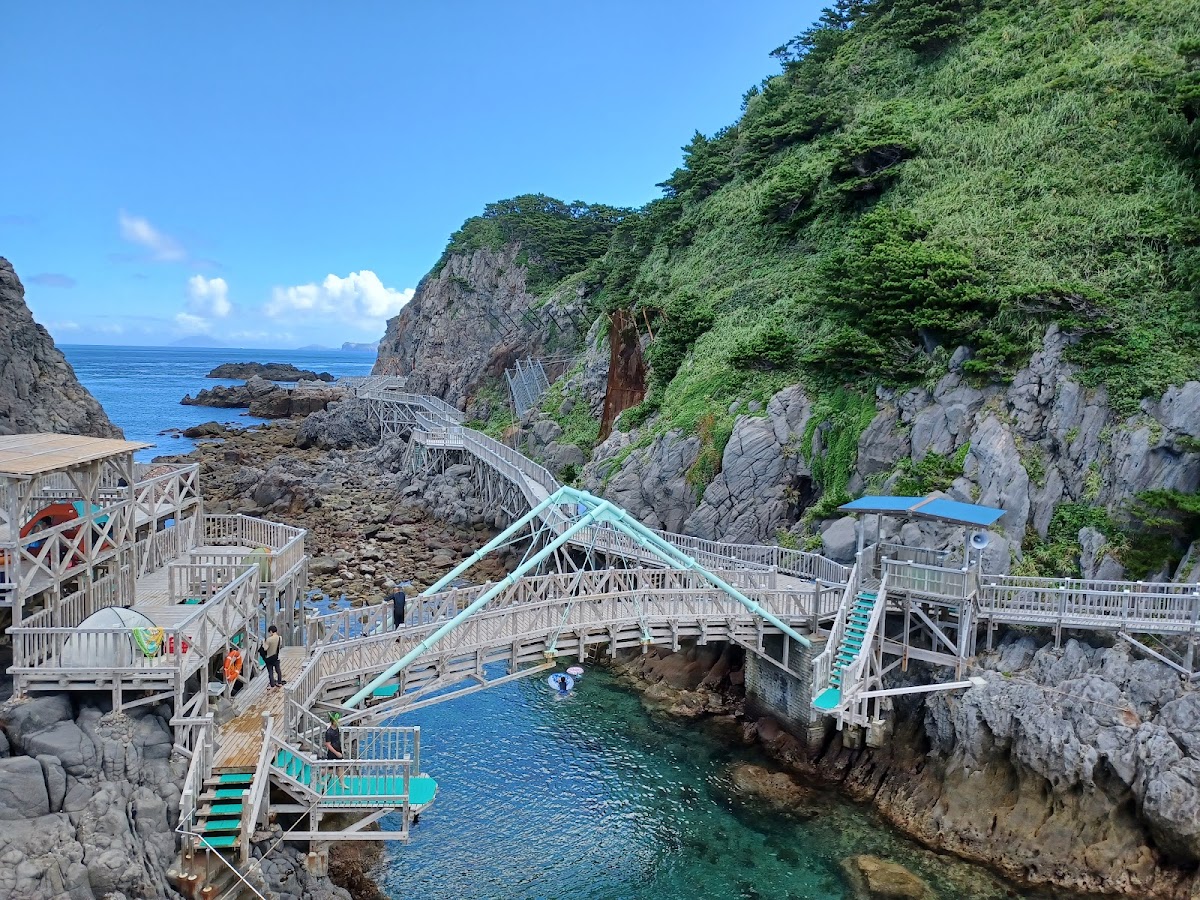
Akasaki Promenade is one of the representative tourist spots of Kozushima, with a wooden promenade set along the coast. There is also a jump platform where you can dive directly into the sea from the promenade, and it is popular as a snorkeling spot.
Points of Interest:
- Unique coastline created by lava
- Water with exceptional transparency for snorkeling
- Diving experience from jump platforms
Access: Approximately 10 minutes by car from Kozushima Port
Pilgrimage Tips: You can enjoy snorkeling while recalling the diving scenes from the work. The underwater transparency is exceptional.
3. Tenjosan Mountain (Tenjosan)
Scenes in the Work: Full view of the island, panoramic scenes
Tenjosan at 572m elevation is the highest peak of Kozushima. At the summit, small ponds such as “Tenjou no Ike” (Heaven Pond) and others are scattered, creating a mysterious landscape. It became the model for scenes in the work where the entire island is viewed.
Points of Interest:
- 360-degree panoramic view from the summit
- Heaven Pond (Fudou Pond, New Tokyo Hyakukei)
- White Island and desert-like landscape
Climbing Information:
- Duration: Approximately 2 hours up, approximately 1.5 hours down
- Difficulty: Intermediate (trail is maintained but has steep sections)
- Best Season: April-November
Access: From Kuroshima or Shirashima trailheads
Pilgrimage Tips: Early morning climbing to watch sunrise from the summit allows you to experience the mysterious atmosphere of the work.
4. Takowan (Takowan)
Scenes in the Work: Underwater cave exploration scenes
Takowan is an inlet located in the northeast of Kozushima, famous as a diving spot. Characterized by complex underwater terrain and abundant marine life, it became the image source for the underwater exploration scenes in the work.
Points of Interest:
- Famous diving and snorkeling destination
- Underwater rock formations and cave terrain
- Abundant fish and marine life
Access: Approximately 15 minutes by car from Kozushima Port
Pilgrimage Tips: With a diving license, you can experience underwater exploration similar to the work. Even without a license, you can enjoy it through introductory diving.
5. Kozushima Port
Scenes in the Work: Conan and others arriving and departing
Kozushima Port, which appears at the beginning and end of the story, is also the starting point for sacred site pilgrimage. The actual atmosphere of the port is very similar to the depiction in the work, and you are immersed in the world of the film from the moment of arrival.
Points of Interest:
- Piers where large ships dock
- Shopping streets around the port
- Landscape of fishing boats lined up
Access: The gateway to the island
Pilgrimage Tips: If arriving by ship, photographing the moment the port comes into view from the deck is recommended.
6. Sawajiriwan (Sawajiriwan)
Scenes in the Work: Twilight scenes, quiet inlet scenes
Sawajiriwan is a quiet inlet located in the southwest of Kozushima. Known for its beautiful sunsets, it became the model for the impressive twilight scenes in the work.
Points of Interest:
- Sunset views
- Quiet and calm atmosphere
- Fishing spot
Access: Approximately 20 minutes by car from Kozushima Port
Pilgrimage Tips: Best visited in the evening. You can photograph the same beautiful sunset scenery as in the work.
Kozushima’s Underwater Spots (Diving)
Since underwater treasure is an important element in “The Indigo Coffin,” actually experiencing diving at Kozushima allows you to experience the world of the work more deeply.
Main Diving Spots
1. Miura Bay
- Characteristics: Beginner-friendly, calm waters
- Points of Interest: Colorful tropical fish, soft coral
- Depth: 5m-15m
2. Nagahama
- Characteristics: Intermediate level, drop-off present
- Points of Interest: Large pelagic fish, high sea turtle encounter rate
- Depth: 10m-30m
3. Okinone
- Characteristics: Advanced level, tidal currents present
- Points of Interest: Hammerhead sharks (if lucky), large game fish
- Depth: 15m-40m
Diving Services
Kozushima has multiple diving shops that accommodate everything from introductory diving to fun diving.
- Introductory Diving: Approximately 10,000-15,000 yen
- Fun Diving (2 boats): Approximately 12,000-15,000 yen
- Equipment Rental: Full set approximately 5,000 yen
Reservations: Summer is crowded, so advance reservations are essential.
Sacred Site Pilgrimage Model Courses
1 Night, 2 Day Course
Day 1
- 9:00 AM Arrive at Kozushima Port (using high-speed ferry)
- 9:30 AM Pick up rental car/bike
- 10:00 AM Commemorative photos at Maehama Beach
- 11:00 AM Snorkeling at Akasaki Promenade
- 1:00 PM Lunch (seafood at island restaurant)
- 2:30 PM Stroll around Takowan area
- 4:00 PM Sunset at Sawajiriwan
- 6:00 PM Check into accommodation
- 7:00 PM Dinner
Day 2
- 6:00 AM Begin Tenjosan climb
- 9:00 AM Reach summit, enjoy spectacular views
- 11:00 AM Descend
- 12:00 PM Lunch
- 1:00 PM Shop for souvenirs
- 2:00 PM Depart from Kozushima Port (high-speed ferry)
2 Night, 3 Day Course (Including Diving)
Day 1
- 10:00 PM Depart from Takeshiba Pier (large passenger ship, overnight service)
Day 2
- 8:30 AM Arrive at Kozushima Port
- 9:00 AM Check into accommodation (early check-in accommodated at most inns)
- 10:00 AM Morning diving (2 dives)
- 1:00 PM Lunch
- 2:00 PM Stroll Maehama Beach and Akasaki Promenade
- 5:00 PM Hot spring (Kozushima Onsen Leisure Center)
- 7:00 PM Dinner
Day 3
- 6:00 AM Climb Tenjosan
- 10:00 AM Descend, breakfast
- 12:00 PM Tour Takowan and Sawajiriwan
- 3:00 PM Shop for souvenirs
- 4:00 PM Depart from Kozushima Port (high-speed ferry)
Kozushima’s Gourmet Food and Souvenirs
Must-Try Cuisine
1. Golden Eye Fish Dishes
The Kozushima area is a prime fishing ground for golden eye fish. Fresh golden eye fish simmered and sliced are exquisite.
- Recommended Restaurants: Food stalls in the Yocchare Center, dinners at private inns
- Price: Golden eye fish set meal 1,500-2,500 yen
2. Island Sushi
A specialty dish of the Izu Islands. Hand-formed sushi using fish marinated in soy sauce-based sauce.
- Recommended Restaurants: Sushi restaurants and food stalls on the island
- Price: Per person 1,000-1,500 yen
3. Ashitaba Dishes
Prepared from ashitaba, a specialty of Kozushima, as tempura, boiled greens, etc.
- Recommended Restaurants: Various food stalls and private inns
- Price: Ashitaba tempura 500-800 yen
Recommended Souvenirs
1. Ashitaba Products
- Ashitaba tea, ashitaba cookies, ashitaba soba
- Price: 500-1,500 yen
2. Salt
- Natural salt made from Kozushima’s seawater
- Price: 300-800 yen
3. Kusaya
- Traditional fermented food of the Izu Islands (note: strong odor)
- Price: 1,000-2,000 yen
4. Shochu “Morijaka”
- Sweet potato shochu from Kozushima
- Price: 1,500-3,000 yen
Accommodation Information
Kozushima has various types of lodging facilities.
Private Inns and Pensions
- Characteristics: Homey atmosphere, island cuisine available
- Price: 8,000-12,000 yen per night including two meals
- Recommendation: Many inns pride themselves on seafood dishes
Hotels and Ryokan
- Characteristics: Well-equipped, some with hot springs
- Price: 12,000-20,000 yen per night including two meals
- Recommendation: Accommodations with attached Kozushima Onsen Leisure Center
Campground
- Facility: Kozushima Village Campground
- Price: 500-1,000 yen per night (tent sites)
- Equipment: Cooking area, restrooms, shower facilities
Reservation Tips
- Early Reservations: Especially July-August and Golden Week are fully booked months in advance
- Accommodation-Only Plans: Meal-free plans available, but limited dining options on the island
- Shuttle Service: Most inns provide shuttle service to the port
Sacred Site Pilgrimage Notes and Etiquette
Island Rules and Manners
- Nature Conservation: Always take garbage with you, do not harvest plants
- Private Property: Do not enter without permission
- Noise: Be quiet in residential areas
- Photography: Exercise discretion if local residents’ faces appear in photos
Safety Precautions
Notes for the Sea:
- Do not swim in designated no-swimming areas
- Check weather and wave conditions
- Avoid solo snorkeling or diving
- Life jacket use recommended
Notes for Mountain Climbing:
- Mountain climbing notification (voluntary but recommended)
- Carry sufficient water and food
- Cancel or turn back if weather worsens
- Use proper equipment such as hiking boots
Notes by Weather and Season
Summer (July-August):
- Advantages: Ideal for beach and diving, high ferry operation rate
- Disadvantages: Crowded, higher accommodation prices, typhoon risk
Spring and Autumn (April-June, September-November):
- Advantages: Relatively quiet, mild weather
- Disadvantages: Slightly cool seawater, limited ferry service days
Winter (December-March):
- Advantages: Quiet, lower accommodation prices
- Disadvantages: Rough seas with frequent cancellations, no beach swimming, cold
Kozushima’s History and Culture
To enjoy sacred site pilgrimage more deeply, let’s also learn about Kozushima’s history and culture.
Origin of Kozushima’s Name
Kozushima’s name derives from mythology in which the gods of the Izu Islands gathered to hold a water-distribution conference. The “Heaven Pond” on Tenjosan is said to have been the venue for this conference, and the island name is said to have evolved from “Island Where Gods Gather” (Kamiatsushima) to “Kozushima.”
Main Historical Sites and Cultural Facilities
Monoimi-na Shrine
- Shrine dedicated to the guardian deity of Kozushima
- Annual festivals held in August
Yocchare Center
- Composite facility with tourist information, souvenir shop, and food stall
- Exhibits on Kozushima’s history and culture
Local Museum
- Exhibits on Kozushima’s history and folk materials
- Free admission
Photography Spots and Instagram-Worthy Locations
Here are recommended spots for capturing memories of your sacred site pilgrimage.
1. Tenjosan Summit
- Best Time: Early morning (sunrise), clear weather
- Photography Points: 360-degree panorama, Heaven Pond
2. Akasaki Promenade
- Best Time: Morning (front lighting)
- Photography Points: Overlooking the sea from the promenade, diving scenes
3. Maehama Beach
- Best Time: Evening (sunset)
- Photography Points: Gradation of sand and sea
4. Sawajiriwan
- Best Time: Evening (sunset)
- Photography Points: Moment when sunset touches the sea
Photography Tips
- Weather: Clear or partly cloudy is ideal
- Time of Day: Early morning and evening side-lighting is dramatic
- Composition: Use film scenes as reference
- Waterproofing: Be careful of salt water and sand when photographing at the shore
Combinations with Nearby Islands
If you have time to spare, consider visiting the islands around Kozushima.
Shikine Island
- Access from Kozushima: Approximately 15 minutes by ship
- Points of Interest: Natural hot springs (underwater hot spring), beautiful beaches
Niijima
- Access from Kozushima: Approximately 30 minutes by ship
- Points of Interest: Surfing mecca, white sandy beach, Moai statue
Oshima
- Access from Kozushima: Approximately 2 hours by ship
- Points of Interest: Mount Mihara, camellia flowers, hot springs
Voices of Actual Pilgrims
Here are testimonies from Conan fans who visited Kozushima.
Person A (20s Female)
“More than 10 years after watching the film, I finally managed to visit. The actual Kozushima was more beautiful than I imagined, and in particular, the view from Tenjosan was spectacular. The mysterious atmosphere in the work was exactly as depicted, and I was moved to tears.”
Person B (30s Male)
“I obtained my diving license before visiting. The underwater transparency was wonderful, and I was able to relive the underwater exploration scenes from the film. The diving shop staff was kind and we had great conversations about Conan.”
Couple C (40s)
“We visited as a family with our children. Snorkeling at Akasaki Promenade was especially fun. The island residents were warm and welcoming, making us want to return again.”
Conclusion: Maximizing Your Enjoyment of Kozushima Sacred Site Pilgrimage
Kozushima, the stage for “Detective Conan: The Indigo Coffin,” is a wonderful sacred site where you can experience the world of the work. Beautiful seas, mysterious mountains, and warm island residents welcome you.
Keys to Successful Pilgrimage
- Advance Preparation: Early booking of accommodations and transportation
- Weather Confirmation: Especially check ferry operation status
- Flexible Schedule: Consider additional days for cancellation risks
- Equipment: Hiking boots, swimsuit, sunscreen, waterproof camera, etc.
- Review the Work: Watching the film again before visiting makes it more enjoyable
Final Thoughts
Kozushima is not only a sacred site for “The Indigo Coffin” but also a captivating island with rich nature and culture. Through sacred site pilgrimage, you will deepen your understanding of the work and discover the charm of the island itself.
Dear Conan fans, please visit Kozushima and immerse yourselves in the world of the work. It will surely become an unforgettable memory.
With thoughtful preparation and respect for the island, we wish you a wonderful sacred site pilgrimage!