
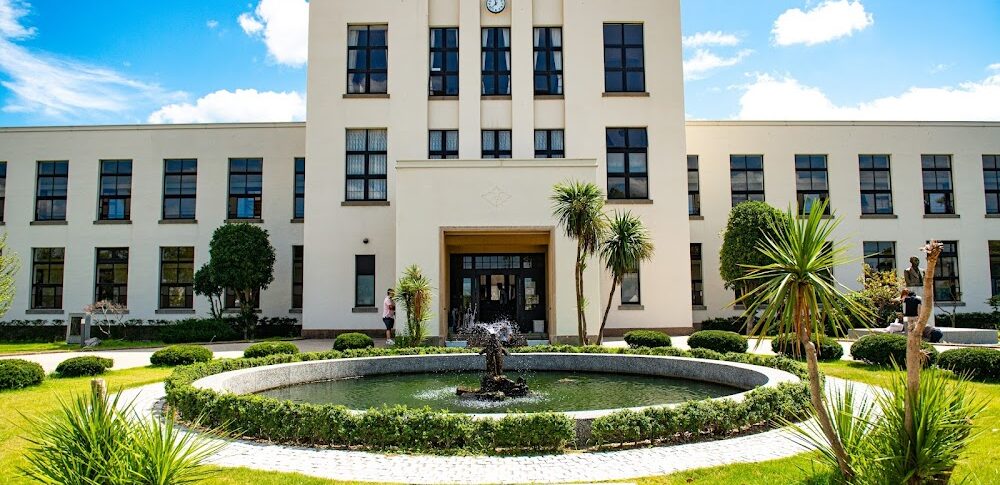
K-On! Sacred Site & Toyosato Elementary School Old School Building Complex Complete Guide | History and Charm of Toyosato Town, Shiga Prefecture
The Toyosato Elementary School Old School Building Complex located in Toyosato Town, Inukami District, Shiga Prefecture, is a world-renowned pilgrimage site known as the model setting for the anime “K-On!”. However, the true value of this building lies in its historical and architectural significance as the “finest elementary school in the East” built in the early Showa period. This article conveys all the charm of this masterpiece of architecture, covering the history of the Toyosato Elementary School Old School Building Complex, its architectural features, its relationship to K-On!, and visitor information.
What is the Toyosato Elementary School Old School Building Complex?
The Toyosato Elementary School Old School Building Complex is a reinforced concrete elementary school building constructed in 1937 (Showa 12). It was donated through the personal funds of Tekijiro Furukawa, an Omi merchant who served as managing director of the trading company Marubeni, and was designed by American architect William Merrell Vories.
At the time, it was praised as the “White Palace of Education” and the “finest elementary school in the East,” and its splendor and modernity attracted national attention. Today, it is designated as a registered tangible cultural property of Japan and is open to the public as a complex facility for the town.
Location and Basic Information
- Location: Ishihata 518, Toyosato Town, Inukami District, Shiga Prefecture
- Year of Construction: 1937 (Showa 12)
- Designer: William Merrell Vories
- Structure: Reinforced concrete
- Cultural Property Designation: Registered Tangible Cultural Property of Japan (registered in 2013)
- Opening Hours: 9:00 AM-5:00 PM
- Closed Days: Year-end and New Year holidays
- Admission Fee: Free
- Parking: 100 spaces available (free)
History and Development of Toyosato Elementary School
From the Original School Building to the Current Building
The history of Toyosato Elementary School dates back to the Meiji period. It began with the establishment of an elementary school in Toyosato Village in 1873 (Meiji 6). After several rebuildings, the current old school building was constructed as the third iteration.
Major developments:
- 1873 (Meiji 6): Elementary school established in Toyosato Village
- 1937 (Showa 12): Current old school building completed through the donation of Tekijiro Furukawa
- 1982 (Showa 57): Old school building discontinued with the construction of a new building
- Early 2000s: School building renovation issue arose
- 2009 (Heisei 21): Earthquake-resistant reinforcement completed, opened as a complex facility to the public
- 2013 (Heisei 25): Designated as a registered tangible cultural property of Japan
Tekijiro Furukawa’s Passion for Education
Tekijiro Furukawa (1878-1940) was an Omi merchant from Toyosato Town who served as managing director of Marubeni. Recognizing the importance of education and wanting to repay his hometown, Furukawa donated an enormous sum of approximately 500,000 yen at the time (equivalent to several billion yen in modern value) from his personal fortune to build this school building.
Furukawa’s educational philosophy was “to provide children with the finest educational environment.” Rather than merely constructing a school building, it was designed as a comprehensive educational facility equipped with state-of-the-art amenities for the time, including a library, auditorium, science room, and music room.
School Building Renovation Issue and Preservation Movement
In the early 2000s, plans were made to demolish the old school building due to deterioration. However, a strong opposition movement emerged from residents, architects, and cultural heritage protection organizations who valued its architectural and historical significance, leading to heated debates.
Ultimately, a decision was made to preserve and utilize the building through earthquake-resistant reinforcement, and in 2009, it was reborn as a complex facility called “Toyosato Elementary School Old School Building Complex.” This preservation movement has been noted as a successful case of historic building preservation and regional revitalization.
Value as a Masterpiece of Vories Architecture
Who is William Merrell Vories?
William Merrell Vories (1880-1964) was an American architect, educator, and businessman. He came to Japan in 1905 and was active based in Omihachiman. He left numerous architectural works centered in Shiga Prefecture, including schools, churches, and residences, and left a significant mark on the history of modern Japanese architecture.
The characteristics of Vories architecture are the harmony of functionality and beauty, and consideration for the people who use the buildings. The Toyosato Elementary School Old School Building Complex is regarded as a masterpiece of educational architecture where the ideals of Vories architecture are most distinctly expressed.
Architectural Features and Points of Interest
Exterior Design
The school building is characterized by white walls and red Spanish tile roofing, featuring a bright and open Mediterranean-style design. The symmetrical composition and the central clock tower give the entire building dignity and elegance.
Staircase Decoration
The most famous interior feature of the school building is the sculpture of a rabbit and a turtle on the staircase handrail. This is modeled after the folktale “The Tortoise and the Hare” and conveys an educational message to children. The turtle is placed on the first floor and the rabbit on the second floor, delivering the message of “the importance of effort.”
This decoration was faithfully recreated in the anime “K-On!” and has become a must-see point for fans on pilgrimage.
Auditorium (Shotoken Memorial Hall)
The auditorium, built as an independent structure, was designed with acoustic effects in mind and was equipped with state-of-the-art facilities for the time. It is now used as the Shotoken Memorial Hall, serving as an exhibition space and tourist information center.
Classrooms and Corridors
Spacious classrooms, large windows emphasizing natural light, and generously wide corridors throughout show the design’s priority on the learning environment for children. High-quality materials were used in flooring and fixtures, testifying to the luxury of the building at the time of its construction.
Library and Special Classrooms
The former library room, still in use today as a municipal library, features humidity management and lighting design that carefully consider the books. Special classrooms such as the science room and music room were also equipped with the latest educational facilities available at the time.
Relationship to K-On! and Pilgrimage Sites
What is the Anime “K-On!”?
“K-On!” is an anime work adapted from a four-panel manga by Kakifly and produced by Kyoto Animation. The first season aired from April 2009 and the second season from April 2010, achieving worldwide popularity.
The story follows Yui Hirasawa, the protagonist, and her friends who join the nearly defunct light music club and grow through their band activities. The Toyosato Elementary School Old School Building Complex was detailed as the model for the school building that the characters attend, “Private Sakura Kaoka High School.”
Why Toyosato Elementary School Was Chosen as the Model
Kyoto Animation, headquartered in Uji City, Kyoto Prefecture, is known for the “sacred site” technique of extensively researching real locations and depicting them in detail in their works. The Toyosato Elementary School Old School Building Complex was chosen because it is located in Shiga Prefecture, relatively close to Kyoto, and its retro and beautiful architecture perfectly matched the atmosphere of the story.
In the anime, the building’s exterior, the rabbit and turtle decorations on the stairs, corridors, classrooms, and other details are recreated with remarkable fidelity to the actual building.
Beginning of Pilgrimage Tourism and the Present
“Pilgrimage” by fans began shortly after the anime’s broadcast debut in April 2009. Initially, before it opened to the public, only the exterior could be viewed, but after the building opened to the public in May of the same year, the interior became freely accessible.
Toyosato Town was initially bewildered by the visits of anime fans, but gradually became accepting. Now, it has become a tourist destination attracting over 50,000 visitors annually. Visitors come not only from within Japan but also from overseas, and it is now recognized as an international tourist attraction.
K-On! Corner and Exhibitions
Inside the school building, there is a “K-On! Corner” set up by fans, displaying work-related merchandise, messages from visitors, and fan art. While not official, Toyosato Town has welcomed these fan activities with goodwill.
On the third floor, there is a recreation of the light music club’s “clubroom” from the anime, offering an emotional experience for fans of the work. Musical instruments and character panels are also displayed, making it a popular photo spot.
Current Use of the Toyosato Elementary School Old School Building Complex
Functions as a Complex Facility
The Toyosato Elementary School Old School Building Complex currently operates as:
- Toyosato Town Municipal Library: Using the former library room as the town’s library
- Toyosato Town Tourist Information Center: Located in the Shotoken Memorial Hall
- Exhibition Spaces: Displaying materials about the building’s history and Tekijiro Furukawa
- Event Spaces: Available for rental for various events and exhibitions
- Café: Food vendors occasionally operate during certain periods
Also Used as the Setting for Other Works
In addition to “K-On!”, the Toyosato Elementary School Old School Building Complex has been used as a filming location for many films and dramas:
- Film “Ace Attorney” (2012): Used in courtroom scenes
- NHK Asadora “Beppinsan” (2016): Used for school scenes
- Numerous other CM and music video shoots
The retro and beautiful architecture is in high demand as a filming location for works set in the Showa period.
Visitor Guide: Access and Viewing Information
Access by Train
Nearest Stations: JR Biwako Line “Toyosato Station” or Omi Railway “Toyosato Station”
- Approximately 15-minute walk from JR Toyosato Station (about 1.2 km)
- Approximately 10-minute walk from Omi Railway Toyosato Station (about 800 m)
Access from Major Cities:
- From Kyoto Station: About 40 minutes on JR Biwako Line, get off at Toyosato Station
- From Osaka Station: About 1 hour 10 minutes on JR Biwako Line, get off at Toyosato Station
- From Nagoya Station: About 1 hour 30 minutes on JR Tokaido Line and Biwako Line, get off at Toyosato Station
Access by Car
- About 15 minutes from Meishin Expressway “Hikone IC” (about 8 km)
- About 10 minutes from Meishin Expressway “Kotosan-sanzan Smart IC” (about 5 km)
The parking lot has 100 spaces and is free to use. It may get crowded on weekends, holidays, and holidays, so visiting in the morning is recommended.
Points for Viewing
Time Required
- Exterior view only: About 30 minutes
- Including interior tour: 1-2 hours
- Thorough viewing plus surrounding exploration: 2-3 hours
Photography
Photography inside and outside the building is generally permitted, but please note the following:
- Consideration for library users is necessary inside the library
- Photography restrictions may apply during events
- Use of tripods should be considerate of other visitors
- When posting to SNS, be careful not to photograph other visitors’ faces
Viewing Etiquette
- Shoe removal is required in non-shoe areas; slippers must be changed into
- Loud conversations and running are to be avoided
- All trash must be taken with you
- Do not damage displays or buildings
- View quietly so as not to disturb library users
Recommended Viewing Route
- Shotoken Memorial Hall (Auditorium): View historical exhibits and gather information at the tourist information center
- Main Building 1st Floor: Entrance, turtle staircase handrail
- Main Building 2nd Floor: Rabbit staircase handrail, classroom viewing
- Main Building 3rd Floor: K-On! clubroom, viewing tower
- Library: View quietly
- Exterior: Photography from various angles including front, courtyard, and rear
Nearby Tourist Spots
Within Toyosato Town
- Itotchu Hyobe Memorial Hall: Birthplace of the founder of Itochu Trading and Marubeni
- Toyosato Town Tourist Product Hall: Sales of local specialty products
- Nakasendo: Traditional townscape of a historic road
Nearby Areas
- Hikone Castle (about 20 minutes by car): National treasure with a historic donjon
- Taga Taisha (about 15 minutes by car): Ancient shrine affectionately known as “Otaga-san”
- Kotosan-sanzan (about 20 minutes by car): Three ancient temples known as autumn foliage viewing spots
- Omihachiman (about 30 minutes by car): Water town with numerous Vories buildings
Dining Information
In the Toyosato area, you can enjoy local Shiga cuisine such as Omi beef and funa-zushi (fermented carp). There are also restaurants offering menus inspired by “K-On!”.
- Omi Beef Restaurants: Numerous locations in Hikone City
- Local Eateries: Around Toyosato Station
- Cafés: Occasional seasonal operation inside the school building
Event Information
Regular Events
Various events are held throughout the year at the Toyosato Elementary School Old School Building Complex:
- Cherry Blossom Festival (early April): Cherry blossoms in the school building area are in full bloom
- K-On! Related Events: Fan events coordinated with anime broadcasting anniversaries
- Special Cultural Property Openings: Opening of areas normally closed to the public
- Concerts: Musical events held in the auditorium
Special Exhibitions
Special exhibitions related to the building’s history, Vories architecture, and Tekijiro Furukawa are held at irregular intervals. Check the official website of the Toyosato Town Tourism Association for the latest information.
Cultural Significance of the Toyosato Elementary School Old School Building Complex
Value as Early Modern Educational Architecture
The Toyosato Elementary School Old School Building Complex is an important cultural property that demonstrates the pinnacle of Japanese educational philosophy and architectural technology in the early Showa period. In an era when most schools had wooden buildings, a modern reinforced concrete school building was revolutionary.
Tekijiro Furukawa’s philosophy of “providing children with the finest environment” carries a universal message applicable to modern educational environment development.
A Model Case for Regional Revitalization
Toyosato Town, with a population of about 7,000, has become the focus of national attention as a successful case of regional revitalization using anime content, with over 50,000 tourists visiting annually due to “K-On!” making the town a pilgrimage site.
Initially bewildered by visitors, local residents now warmly welcome those who visit and work toward coexistence with fans throughout the town. This attitude is evaluated as an ideal relationship between a region and fans in “pilgrimage tourism.”
Significance of the Preservation Movement
The history of the decision to preserve the building through the school building renovation issue is an important example of reaffirming the value of historic structures and achieving both preservation and utilization simultaneously. Rather than mere preservation, the building has been successfully given new life through active use as a library and tourist facility.
Related Literature and Reference Materials
For those who wish to learn more about the Toyosato Elementary School Old School Building Complex:
Books
- “100 Years of Vories Architecture” by Masaaki Yamagata
- “Omi Merchants and Education” edited by Shiga Prefecture Educational History Research Society
- “K-On! Pilgrimage Site Guide” various anime magazine features
Papers and Reports
- “Process and Significance of the Toyosato Elementary School Old School Building Preservation Movement” Cultural Heritage Preservation Research
- “Study of Regional Revitalization Through Anime Pilgrimage Sites” Tourism Studies
Websites
- Toyosato Elementary School Old School Building Complex Official Website
- Toyosato Town Tourism Association Official Website
- Vories Architecture Preservation and Regeneration Movement
Conclusion: Architecture Loved Across Time
The Toyosato Elementary School Old School Building Complex, over 85 years after its construction, continues to captivate many people. The design philosophy of Vories, the passion for education of Tekijiro Furukawa, and the encounter with “K-On!”, a modern cultural phenomenon, give this building multilayered value.
As a historic structure of historical value, an enchanting anime pilgrimage site, and a source of regional pride, the Toyosato Elementary School Old School Building Complex will continue to be cherished by many in the future. When visiting Shiga Prefecture, be sure to visit this beautiful building.
The weight of history conveyed by the building, the beauty of its design with careful attention to detail, and the passion of anime fans converge in a unique space that offers different moving experiences to each visitor.
The Toyosato Elementary School Old School Building Complex is not merely a tourist attraction, but a special place where education, architecture, culture, and the feelings of people intersect.

