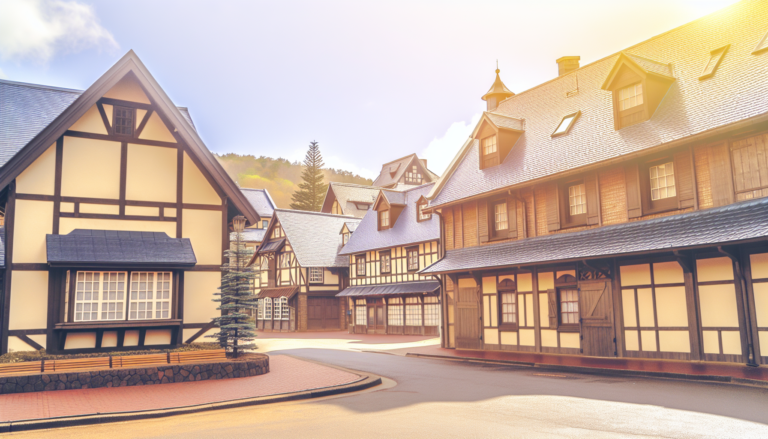

“Is the Order a Rabbit?” Model Location Attractions: A Stroll Through European-Style Scenery and a Karuizawa Pilgrimage Guide
“Is the Order a Rabbit?” (commonly known as Gochuusa) is a beloved heartwarming slice-of-life anime cherished by many fans. One of the work’s greatest attractions is its beautiful European-style townscape that feels like stepping into a storybook. This article provides a detailed introduction to the real European towns that served as models for the work, as well as spots in Karuizawa, Japan, where you can experience the world of Gochuusa.
Table of Contents
- “Is the Order a Rabbit?” Work Overview
- “The Half-Timbered Town” – The Setting of the Work
- Model Locations: Beautiful European Towns
- Experiencing the “Gochuusa” World in Karuizawa
- Holy Site Pilgrimage Tips and Recommended Spots
- Precautions When Visiting Model Locations
“Is the Order a Rabbit?” Work Overview
“Is the Order a Rabbit?” is a four-panel manga work by Koi Sensei, serialized in “Manga Time Kirara MAX” since 2011. It depicts the warm daily life of the protagonist Cocoa, who comes to the half-timbered town for high school and unfolds her story at the coffee shop “Rabbit House” where she lodges.
Plot Summary
Cocoa moves into the coffee shop “Rabbit House” run by a friend of her grandmother upon entering high school. There she meets Chino, a petite and cool girl; Rize, with a military demeanor; Chiya, an easygoing girl; and Sharo, a signboard girl from a Japanese-style cafe—a group of girls with distinctive personalities. Through daily interactions with these friends, Cocoa enjoys her life in her new town.
The work’s greatest characteristic is its beautiful European-style townscape and the warm relationships between the characters. The trivial events of daily life are depicted with care, providing viewers with healing and peace.
The Charm of the Characters
Hoto Cocoa is the bright and energetic protagonist who quickly becomes friends with anyone, displaying a sociable nature. She cares for Chino like a younger sister, though she sometimes gets carried away.
Kafuu Chino is the signboard girl of Rabbit House—a small and cool-looking girl who, beneath her exterior, has a lonely side.
Amano Zassou Rize comes from a military family and has a disciplined, serious personality. However, her love of cute things creates an appealing gap.
Uji Matsu Chiya and Kirima Sharo are girls associated with the Japanese-style cafe “Amagi” and the herbal tea specialty shop “Fleur de Lapin” respectively, and are schoolmates of Cocoa and the others.
“The Half-Timbered Town” – The Setting of the Work
The setting of “Is the Order a Rabbit?” is a fictional town called “the town of half-timbered houses and stone-paved streets” or simply “the half-timbered town” in the work. While the town’s official name has not been revealed, its beautiful scenery has fascinated many viewers.
Characteristics of Half-Timbered Architecture
Half-timbered architecture (known as colombage in French, Fachwerkbau in German) is a traditional architectural style found in Europe, particularly in Germany and the Alsace region of France. It features a structure where thick timber frames the skeleton and spaces are filled with plaster or brick, creating beautiful patterns of exposed wood on the exterior.
Many of the buildings featured in the work strongly reflect this half-timbered architectural style, with colorful exteriors, steep roofs, small windows, and stone-paved streets carefully depicting medieval European townscapes.
Atmosphere and World View of the Town
The town in the work features a unique world view blending modern elements with traditional European townscape. While contemporary technology such as mobile phones and the internet exist, the town’s scenery maintains the beauty reminiscent of 19th and early 20th century Europe.
Stone-paved streets, antique street lamps, colorfully decorated windowsills with flowers, and fountains in small plazas—every detail is carefully depicted to create landscapes that make viewers think, “I’d love to visit someday.”
Model Locations: Beautiful European Towns
The author Koi Sensei has stated that the setting of “Is the Order a Rabbit?” was not modeled after a single specific town, but rather incorporates elements from various European towns.
Alsace Region, France
Colmar
Colmar, located in the Alsace region of eastern France, is a beautiful town and one of the most famous model locations for Gochuusa. This town of approximately 70,000 people is known as the “capital of Alsace wine,” and numerous well-preserved half-timbered buildings remain.
The “Petite Venise” (Little Venice) district in the old town features colorful half-timbered houses lining the canal, evoking the world of Gochuusa. The flower-decorated windowsills, stone-paved alleys, and small bridges create scenery remarkably similar to scenes from the work.
Colmar’s main attractions include St. Martin’s Church, the Unterlinden Museum, and the Pfister House, allowing visitors to enjoy historic buildings spanning the Middle Ages. Particularly during the December Christmas market season, the entire town is illuminated, creating a magical atmosphere.
Strasbourg
Strasbourg, the central city of the Alsace region, is another town that influenced Gochuusa’s world view. Despite being an international city hosting the European Parliament, the “Petite France” district of the old town preserves beautiful half-timbered architecture.
This district, surrounded by the Ill River, is also registered as a UNESCO World Heritage Site and features buildings from the 16th and 17th centuries. Half-timbered houses reflected in the water, stone bridges, and cafes along the canal create a romantic landscape.
Strasbourg Cathedral is renowned as a masterpiece of Gothic architecture, with its delicate sculptures and beautiful stained glass windows being must-sees. Furthermore, Strasbourg’s Christmas market is Europe’s oldest and largest, earning it the title of “Christmas Capital.”
Half-Timbered Towns in Germany
Rothenburg ob der Tauber
Located in Bavaria in southern Germany, Rothenburg is praised as the “jewel of the Middle Ages.” The old town, surrounded by medieval walls, strongly retains the atmosphere of a time long past.
Centered around Marktplatz, colorful half-timbered houses line the streets, with stone-paved paths winding like a maze. The Y-shaped intersection known as Plönlein is beloved as Rothenburg’s symbolic landscape by tourists worldwide.
The town features “Käthe Wohlfahrt,” a famous shop selling Christmas goods year-round, where visitors can enjoy the whimsical atmosphere akin to Gochuusa’s world view.
Riquewihr
The small village of Riquewihr, located along the Alsace Wine Route in the Alsace region, is another must-visit spot for Gochuusa fans. This village of approximately 1,200 people is counted among “France’s most beautiful villages.”
The 16th-century townscape is preserved in nearly complete form, with colorful half-timbered houses, flower-decorated windows, and narrow stone-paved alleyways creating a storybook-like landscape. The entire village is pedestrianized, allowing leisurely exploration.
Budapest, Hungary
The Széchenyi Thermal Bath mentioned by Koi Sensei in Hungary is a historic spa facility in Budapest. Its beautiful Neoclassical building and the sight of people playing chess in the outdoor pool embody the “extraordinary in the everyday” present in Gochuusa’s world view.
Budapest contains numerous other elements aligned with the work’s atmosphere, including beautiful scenery along the Danube, colorful buildings lining the streets, and a historic cafe culture.
Other European Towns
Czech Republic’s Český Krumlov, Austria’s Hallstatt, and Belgium’s Bruges are also known as beautiful towns resonating with Gochuusa’s world view, featuring half-timbered architecture, stone-paved townscapes, and canal-rich landscapes.
Experiencing the “Gochuusa” World in Karuizawa
Visiting overseas model locations requires significant time and money, but Japan offers a place where you can feel the Gochuusa atmosphere: Karuizawa in Nagano Prefecture.
Karuizawa and European-Style Townscape
Karuizawa is a highland resort that developed as a summer retreat from the Meiji era. Strong Western cultural influences shaped the town’s development, with pockets of areas featuring Western-style architecture, stone-paved streets, and lush greenery creating a European atmosphere.
Around the former Karuizawa Ginza Street and Cathedral Street, brick and wooden Western-style buildings line the lanes, creating nostalgic yet exotic scenery. The landscape is particularly stunning during the fresh green season and autumn foliage, making it ideal for strolling.
“Usagi no Mori Karuizawa Store” – The Holy Ground for Gochuusa Fans
The absolute must-visit spot for Gochuusa fans in Karuizawa is “Usagi no Mori Karuizawa Store.” This restaurant, with its name and atmosphere evoking the Gochuusa world view, has become a popular destination for many fans.
Store Information and Basic Details
Location: 1323-967 Karuizawa, Karuizawa-cho, Kita Saku-gun, Nagano Prefecture (along Karuizawa-Shiozawa Street)
Access: Approximately 8 minutes walk north of Karuizawa Station; also convenient by car
Business Hours: Lunch 11:30~14:00 (subject to change; confirmation before visit recommended)
Average Budget: Lunch ~999 yen; Dinner 1,000~1,999 yen
Atmosphere Inside the Store
“Usagi no Mori,” a single-house restaurant, is themed around “rabbits” as the name suggests. Throughout the interior, rabbit-themed decorations appear—ceramic rabbits, stuffed animals, paintings, and more.
Retro interior design with warm lighting and antique-style furniture create an atmosphere as if visiting “Rabbit House.” Windows overlook Karuizawa’s lush scenery, letting visitors forget the urban bustle in this healing space.
Menu and Cuisine
“Usagi no Mori” serves mainly Western food and is renowned for its excellent value. Popular menu items include:
- Hamburger Steak with Tomato Sauce and Cheese Set (with salad, rice, and miso soup)
- Spicy Curry Set (with salad and miso soup)
- Various Western Food Lunch Sets (generous portions)
Notably, despite being a Western restaurant, miso soup is served—a characteristic of Karuizawa’s Western food culture. Dishes are voluminous with reasonable prices, beloved by locals too.
Notes on Visiting
“Usagi no Mori” is popular; lines often form during lunch hours. Especially on weekends and tourist seasons, expect congestion. Arriving at opening time or planning with time to spare is recommended.
Located slightly away from the tourist area along Shiozawa Street, car access is convenient, with parking available.
Other European-Style Spots in Karuizawa
Former Karuizawa Ginza
The main street of Karuizawa features stone-paved paths lined with cafes, restaurants, and souvenir shops. Many buildings showcase Western architecture, creating an atmosphere reminiscent of strolling through a small European town.
Karuizawa Kogen Church
A historic church built in the Taisho era, featuring a warm wooden structure nestled in the forest. Its appearance evokes a small European countryside church, resonating with Gochuusa’s world view.
Harunire Terrace
A commercial facility spreading along the Yugawa clear stream with nine modern buildings scattered across wooden decking surrounded by trees. The architectural design harmonizing with nature evokes European resort areas.
Vicinity of Hoshi-no-Yu Onsen by Hoshinoya
Hot spring facilities and accommodations scattered throughout the forest create a European spa resort atmosphere. The harmony between nature and architecture is beautiful, rewarding even a simple stroll.
Holy Site Pilgrimage Tips and Recommended Spots
Here are tips for planning a “Gochuusa” holy site pilgrimage.
Visiting European Model Locations
Best Seasons
Spring (April~June): Flowers bloom abundantly, and towns become colorful. Mild weather makes it perfect for strolling.
Autumn (September~November): Beautiful fall foliage and harvest festivals occur.
Winter (December): Christmas markets create a magical atmosphere. Christmas markets in Strasbourg and Colmar are particularly must-sees.
Efficient Touring Routes
For visiting primarily the Alsace region:
- Paris to Strasbourg (TGV approximately 2 hours 20 minutes)
- Stay in Strasbourg (1~2 days)
- Travel to Colmar (approximately 30 minutes by train)
- Stay in Colmar (1~2 days, visiting nearby villages like Riquewihr)
- Travel to Rothenburg, Germany (optional; approximately 3 hours by car)
Photography Spots
- Colmar: Along the canal in Petite Venise, the Pfister House
- Strasbourg: Petite France district, vicinity of Strasbourg Cathedral
- Rothenburg: Plönlein, Marktplatz
Visiting Karuizawa
Access
Located approximately 1 hour 10 minutes from Tokyo via the Tohoku Shinkansen, day trips are possible. However, 1-2 nights allow better enjoyment of the town’s atmosphere.
Recommended Itineraries
Day 1:
- Morning: Arrive at Karuizawa Station, stroll former Karuizawa Ginza
- Lunch: Enjoy lunch at “Usagi no Mori”
- Afternoon: Visit Karuizawa Kogen Church, Harunire Terrace
- Evening: Relax at Hoshi-no-Yu Onsen
Day 2:
- Morning: Enjoy nature by bicycle in Karuizawa
- Lunch: Dine at a cafe in former Karuizawa
- Afternoon: Shopping, souvenir purchases
What to Bring and Dress Code
Karuizawa sits at approximately 1,000 meters elevation in highland areas; even summer mornings and evenings are cool. Especially in spring and autumn, bring layers. Since strolling is the primary activity, comfortable walking shoes are essential.
Photography Tips
Tips for capturing the Gochuusa world view:
- Early morning photography: Few tourists and soft morning light create beautiful photos
- Focus on details: Photograph window flowers, stone-paved texture, architectural decorations
- Incorporate seasonal elements: Include flowers, autumn leaves, or snow in compositions
- Cafe atmosphere: Capture warm interior lighting and street views through windows
Precautions When Visiting Model Locations
Respecting Local Culture and Etiquette
European model locations are actual places where people live. Particularly in residential areas:
- Avoid loud noise
- Do not trespass on private property
- Do not disturb residents’ daily lives
- Take trash with you or dispose in designated areas
Photographic Consideration
- Obtain permission for photography inside stores
- Be considerate if people appear in photos
- Commercial photography may require special permits
Language Preparation
When visiting Europe, learning basic phrases in local languages (French, German, etc.) proves helpful. While English is widely spoken, greeting in the local language creates a good impression.
Safety Measures
- Manage valuables carefully
- Avoid solo nighttime walks
- Beware of pickpockets in tourist areas
- Obtain travel insurance
Budget Planning
For European Trips
- Airfare: Round-trip 100,000~200,000 yen (varies by season)
- Accommodation: 5,000~15,000 yen per night (depending on hotel grade)
- Meals: 3,000~8,000 yen daily
- Transportation: 2,000~5,000 yen daily for intercity and local transit
- Sightseeing: 1,000~3,000 yen daily for entrance fees
For Karuizawa Trips
- Transportation: Round-trip from Tokyo approximately 12,000 yen (Shinkansen)
- Accommodation: 5,000~30,000 yen per night (varies significantly by facility)
- Meals: 3,000~8,000 yen daily
- Bicycle rental: 1,000~2,000 yen daily
Enjoying the “Gochuusa” World More Deeply
Preparing with the Work
Rewatching anime or manga before visiting model locations enhances comparison with actual scenery. Particularly note scenes with impressive townscapes beforehand.
Enjoying Cafe Culture
Experience the cafe culture, an essential element of Gochuusa, at the actual locations. In Europe:
- France: Culture of leisurely coffee drinking at cafes
- Germany: Afternoon cake time “Kaffee und Kuchen”
- Hungary: Historic cafe house culture
Karuizawa also offers numerous historic teahouses and specialty cafes.
Experiencing Local Food Culture
Sampling regional specialties and local cuisine is a major travel enjoyment:
- Alsace Region: Choucroute, Tarte Flambée, Alsace wine
- Germany: Sausage, pretzel, beer
- Karuizawa: Highland vegetables, jam, craft beer
Souvenir Selection
Souvenirs matching Gochuusa’s world view:
- Rabbit-themed goods
- Antique-style tableware
- Local sweets and jam
- Herbal tea and coffee
- Postcards and photo books featuring half-timbered architecture
Conclusion: Journey to Experience the “Gochuusa” World
The beautiful European towns that served as models for “Is the Order a Rabbit?” are wonderful places that deepen appreciation for the work’s appeal. Towns like Colmar and Strasbourg in France and Rothenburg in Germany, with their half-timbered architecture and stone-paved streets, offer landscapes seemingly stepping out of the work itself.
Meanwhile, Japan offers an excellent option: Karuizawa. Particularly “Usagi no Mori Karuizawa Store,” with its name and atmosphere, has become a special place for Gochuusa fans. Karuizawa, where European-style townscape harmonizes with Japan’s beautiful nature, is an attractive spot where one can readily experience Gochuusa’s world view.
Regardless of destination, what matters is love for the work and respect for local culture and people. Following etiquette and savoring the unique charm of each place, spend special time immersed in Gochuusa’s world.
Beautiful townscapes, warm cafe atmosphere, heartfelt encounters. Rediscovering the wonderfulness of everyday life that Gochuusa teaches in an actual journey—that is the greatest joy of visiting model locations.
Why not embark on a journey to the “half-timbered town”? You’ll surely experience a portion of the warm daily life Cocoa and friends share.