Urusei Yatsura and Tokyo’s Nerima Ward: A Deep Connection | Complete Guide to Sacred Sites
Takahashi Rumiko’s immortal masterpiece “Urusei Yatsura,” serialized in Weekly Shonen Sunday from 1978 to 1987, shines brilliantly in the history of Japanese manga and anime. Did you know that “Tomobiki Town,” the setting of this work, was actually modeled after Nerima Ward, Tokyo? This article provides a detailed explanation of the deep relationship between Urusei Yatsura and Nerima Ward, sacred pilgrimage spots, and the regional character embedded in the work.
The Setting of Urusei Yatsura is Tokyo’s Nerima Ward
Nerima Ward Setting Revealed in the Original Work
Tomobiki Town, the setting of “Urusei Yatsura,” is clearly positioned in Nerima Ward, Tokyo in the original work. This fact was first revealed in the original manga’s fifth episode, “Desperate Situation.” In this episode, a Self-Defense Force aircraft disappearance incident caused by Lum’s telephone interference between Ataru and Shinobu is reported in the news, and it becomes clear that Tomobiki Town is located in Nerima Ward.
Ataru Moroboshi’s Address and Nerima Ward
The address of the protagonist Ataru Moroboshi’s house is listed as “4-chome Koizumi Gakuen, Nerima Ward, Tokyo.” In the mail received at the Moroboshi residence in manga volume 7, “Nerima Ward, Koizumi Gakuen” is clearly written, showing that author Takahashi Rumiko intentionally set Nerima Ward as the stage.
This place name “Koizumi Gakuen” is believed to be modeled after the real “Oizumi Gakuen.” Oizumi Gakuen is known as a literary and cultural district located in the northwestern part of Nerima Ward, with a Seibu Ikebukuro Line station.
Tomobiki Town is Fictional but Nerima Ward is the Setting
The Fictional Town of Tomobiki
The “Tomobiki Town” that appears in the work is a fictional place name. However, the setting that this town exists within Nerima Ward is consistent throughout the work. The daily lives of Ataru Moroboshi, Lum, and Shutaro Mendou, who attend Tomobiki High School, can be said to reflect the atmosphere of Nerima Ward in the 1980s.
The name “Tomobiki” itself is taken from “Tomobiki,” one of the six days of the traditional Japanese calendar, and the name symbolizes the world view where mysterious and strange events occur one after another in the story.
The Reason Nerima Ward Was Chosen as the Setting
The specific reason why Takahashi Rumiko chose Nerima Ward as the setting has not been explicitly stated, but Nerima Ward has a relatively high proportion of residential areas among Tokyo’s 23 special wards, with a down-to-earth and approachable atmosphere. It is also a region where many animation studios are concentrated, and it has a high affinity with anime and manga culture.
From the 1970s to the 1980s, Nerima Ward developed as a residential area with good access to the city center while still retaining greenery. This “middle ground between urban and suburban” character may have made it suitable as the setting for Urusei Yatsura.
Sacred Pilgrimage Spots in Nerima Ward
Oizumi Gakuen Station and Surroundings | The Largest Sacred Site of Urusei Yatsura
The greatest spot symbolizing the relationship between Nerima Ward and Urusei Yatsura is the area around Oizumi Gakuen Station on the Seibu Ikebukuro Line. This region has multiple sacred sites that fans must see.
Oizumi Anime Gate
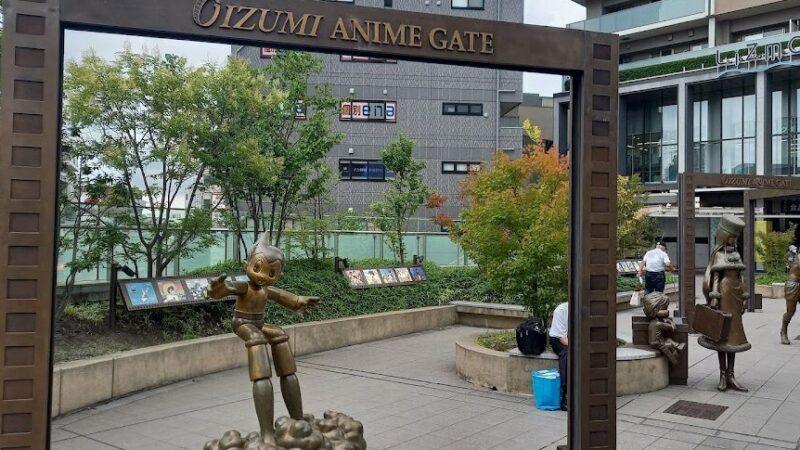
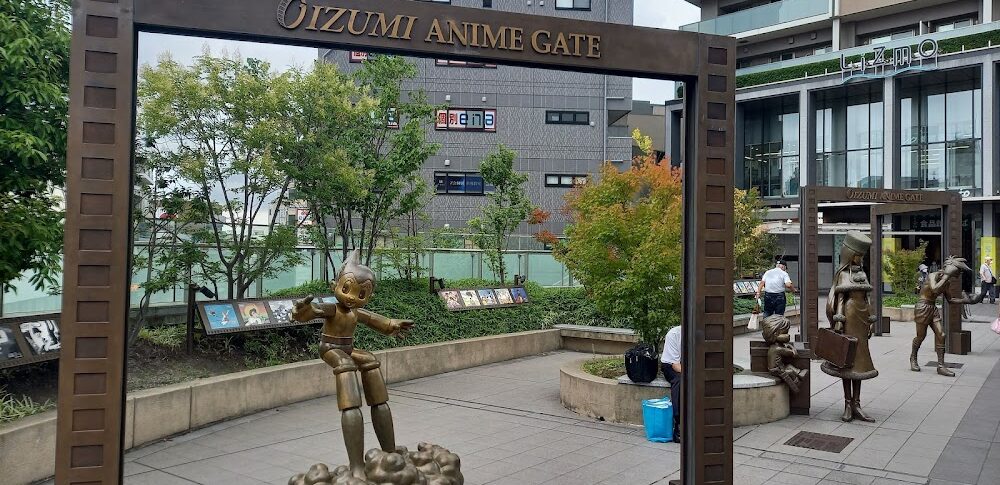
On April 4, 2015, the “Oizumi Anime Gate” was opened on a pedestrian road directly connected to the north exit of Oizumi Gakuen Station. Bronze statues of manga characters associated with Nerima Ward are installed here, and “Urusei Yatsura” was selected from Takahashi Rumiko’s works.
A bronze statue of Lum in a tiger-striped bikini smiling cutely is displayed and has become an established sacred pilgrimage spot for fans. There is an endless stream of fans taking commemorative photos in front of the statue, with many posts visible on social media.
In addition to Urusei Yatsura, the Oizumi Anime Gate features character statues such as “Tomorrow’s Joe” and “Astro Boy,” which are associated with Nerima Ward, creating a pilgrimage route for anime and manga fans.
Design Manhole Covers
As part of efforts to promote the region’s appeal, Nerima Ward has installed design manhole covers. Near Higashi-Oizumi 1-28-1 in Nerima Ward (near the entrance of Grand Emio Oizumi Gakuen at the north exit of Oizumi Gakuen Station), a design manhole cover featuring “Lum (Urusei Yatsura)” was installed.
This manhole cover features a cute illustration of Lum and has become a must-see photo spot for fans. As a practical piece of infrastructure that also leverages regional cultural assets, it is a wonderful initiative.
Grand Emio Oizumi Gakuen
The area around “Grand Emio Oizumi Gakuen,” a shopping center directly connected to Oizumi Gakuen Station, is also an important spot for Urusei Yatsura fans. The well-maintained streets in front of the station are places where you can stroll while feeling the work’s worldview.
The Deep Relationship Between Nerima Ward and Anime Culture
Nerima Ward: The Town of Anime
Nerima Ward is sometimes called “the birthplace of Japanese anime,” with many animation production companies such as Toei Animation concentrated there. Since the Oizumi Studio of Toei Doga (now Toei Animation) was established in 1958, Nerima Ward has developed as one of the centers of the anime industry.
Against this background, Nerima Ward actively utilizes anime culture for regional revitalization, with Urusei Yatsura being one of the important pillars.
Other Works Set in Nerima Ward
Nerima Ward is the setting for many other manga and anime works besides Urusei Yatsura. The fact that works representing Japan, such as “Tomorrow’s Joe” and “Astro Boy,” are connected to Nerima Ward tells of how much this region has been loved by creators.
The Charm of Urusei Yatsura
Work Overview and Serialization History
“Urusei Yatsura” is the debut and representative work of Takahashi Rumiko, serialized in Weekly Shonen Sunday from 1978 to 1987. It became a long-running series of 34 volumes total, achieving a massive hit with cumulative sales exceeding tens of millions of copies.
The story centers on Lum, a beautiful demon alien girl who came to invade Earth, and Ataru Moroboshi, a unfaithful high school student selected as Earth’s representative. The work revolutionized the genre as an SF comedy, enchanting many fans with its exquisite fusion of slapstick gags and romantic elements.
Characters and Setting
The protagonist Ataru Moroboshi is a high school student attending Tomobiki High School in Tokyo, possessing one of the rarest inauspicious features. His hobby is girl-hunting, and Lum calls him “Darling.” He possesses a phoenix-like vitality and, when suspected of infidelity, receives electric shocks from Lum but remains utterly unfazed due to his tough personality.
Lum is a beautiful demon alien girl from space, with a tiger-striped bikini as her trademark. She calls Ataru “Darling” and loves him devotedly, but is troubled by his infidelity habit. She possesses the ability to manipulate electricity and can also fly through the air.
History of Anime Adaptation
Urusei Yatsura was adapted into a television anime in 1981 and aired until 1986. It became a long-running series of 218 episodes total, with 1981 anime series, 6 theatrical films, and 12 OVAs produced. The merchandise achieved great commercial success, selling over 1 billion yen.
In particular, Mamoru Oshii’s work as chief director and the production of the theatrical film “Beautiful Dreamer” became significant events in anime history.
In 2022, a completely new remake version was produced, acquiring new-generation fans. With a stellar cast including Hiroshi Kamiya (as Ataru Moroboshi) and Sumire Uesaka (as Lum), it resurrects the original’s charm for modern times.
The 2022 Remake Version’s Setting
Nerima Ward Remains in the Remake Version
In the remake version of “Urusei Yatsura” that began airing in 2022, the basic setting generally follows the original work. The setting that Tomobiki Town is located in Nerima Ward remains unchanged, which fans of the original appreciate.
In the remake version, with advances in video technology, cityscapes and backgrounds are depicted in greater detail, making it possible to feel the atmosphere of Nerima Ward even more.
Sacred Sites Where Old and New Fans Gather
With the broadcast of the remake version, both old and new fans have begun visiting the Oizumi Gakuen Station area. Scenes where the generation that enjoyed the work in real-time in the 1980s and younger generations experiencing the work for the first time through the 2022 version interact at the same sacred site are now visible.
Nerima Ward’s Initiatives and Regional Revitalization
Nerima Ward’s Official Anime Promotion Strategy
Nerima Ward actively engages in regional revitalization through anime culture. It has formulated a “Nerima Ward Anime Promotion Plan” and promotes regional, industrial, and cultural revitalization through anime.
Urusei Yatsura is positioned as one of the core works in this plan, and the installation of bronze statues and design manhole covers can be said to be concrete results of this strategy.
Events and Collaborations
Nerima Ward regularly hosts anime-related events. At large-scale events such as “Nerima Anime Carnival,” works associated with Nerima Ward, including Urusei Yatsura, are introduced and serve as spaces for fan interaction.
Additionally, collaboration projects with local shopping streets are implemented, with activities such as stamp rallies and limited merchandise sales providing enjoyable experiences for fans.
How to Enjoy Sacred Site Pilgrimage
Access Methods
To reach Oizumi Gakuen Station, use the Seibu Ikebukuro Line. It takes approximately 15 minutes by express from Ikebukuro Station and approximately 20 minutes by local train, with excellent access from the city center.
The area around the station is well-developed, and major sacred sites can be visited on foot. Lum’s bronze statue and design manhole are within walking distance, and it is possible to enjoy the sites thoroughly in half a day.
Recommended Pilgrimage Route
- Arrive at Oizumi Gakuen Station north exit
- View and photograph Lum’s bronze statue at Oizumi Anime Gate
- Explore the design manhole near the entrance of Grand Emio Oizumi Gakuen
- Stroll through the shopping streets around the station
- Visit other anime spots in Nerima Ward (if time permits)
With this route, you can efficiently visit the sacred sites of Urusei Yatsura.
Photography Tips
Lum’s bronze statue has beautiful natural light from late morning to early afternoon on clear days. The design manhole looks best photographed when the road surface is wet after rain, as the reflection creates beautiful photos.
When posting to social media, using hashtags such as “#UrusalYatsura,” “#NerimaWard,” “#OizumiGakuen,” and “#SacredSitePilgrimage” allows you to connect with fans who share the same interests.
Experiencing the World of Urusei Yatsura in Nerima Ward
The Atmosphere of Tokyo Suburbs in the 1980s
Walking around Oizumi Gakuen Station, you can feel the coexistence of urban convenience and the calm of a residential area. This is precisely the image of Tokyo suburbs in the 1980s depicted in Urusei Yatsura.
The everyday landscapes that appear in the work—shopping streets, residential areas, schools—still breathe in the reality of Nerima Ward. By imagining the streets where Ataru and Lum walked while on a sacred pilgrimage, your understanding of the work will deepen.
The Relationship Between Local Residents and the Work
For Nerima Ward residents, Urusei Yatsura is a source of local pride. Local people cherish the bronze statues and design manhole covers and warmly welcome visiting fans.
In local bookstores and libraries, special feature corners for Urusei Yatsura are sometimes set up, and you can feel the deep connection between the work and the region.
The Cultural Legacy Urusei Yatsura Left in Nerima Ward
Contribution to Japanese Anime and Manga Culture
Urusei Yatsura transcends mere entertainment and has had a significant impact on Japanese anime and manga culture. The character Lum is said to be the origin of “moe” culture and has influenced many subsequent works.
By setting the work in Nerima Ward, the region established its position as a sacred site for anime and manga, and it continues to be visited by many creators and fans.
A Work Loved Across Generations
More than 40 years after its serialization began in 1978, Urusei Yatsura continues to be loved across generations. The 2022 remake version production proves the work’s universal appeal.
By setting the story in the real place of Nerima Ward, fans can feel the world of the work more intimately, and a new way of enjoying the work—sacred site pilgrimage—was born.
Conclusion | Experiencing the World of Urusei Yatsura in Nerima Ward
The relationship between “Urusei Yatsura” and Tokyo’s Nerima Ward goes beyond a mere setting and involves a deep connection. By being clearly set in Nerima Ward in the original work and depicting the region modeled after Oizumi Gakuen, Nerima Ward has become a special place for fans.
Around Oizumi Gakuen Station, fan-essential spots such as Lum’s bronze statue and design manhole covers have been established, making it a confirmed sacred pilgrimage destination. Nerima Ward itself is actively engaged in regional revitalization using anime culture, with Urusei Yatsura positioned as its central work.
With the broadcast of the 2022 remake version, a new generation of fans has grown, and Nerima Ward’s appeal as a sacred site has further increased. With good access from the city center and the ability to visit major spots in half a day, it is easily accessible.
For Urusei Yatsura fans, Nerima Ward is a must-visit sacred site. Why not experience the work’s worldview firsthand and feel the atmosphere of Tomobiki Town as Takahashi Rumiko depicted it? Walking the stage where Lum and Ataru unfolded their slapstick comedy with your own feet will deepen your affection for the work even further.