“Your Name” Suwa Lake and Nagano Prefecture Sacred Site Pilgrimage Complete Guide: Thorough Explanation of the Itomori Lake Model Location
Released in 2016, Director Makoto Shinkai’s “Your Name” recorded a major hit that will remain in the history of Japanese cinema. The beautiful Itomori Lake that appears in the work is said to be modeled after multiple real lakes. Among these, Lake Suwa in Nagano Prefecture has become a sacred site pilgrimage spot visited by many fans as one of the important model locations for Itomori Lake.
In this article, we will explain in detail the relationship between “Your Name” and Lake Suwa and Nagano Prefecture, and comprehensively provide information for actually enjoying sacred site pilgrimage.
Why Lake Suwa is Said to Be the Model for Itomori Lake in “Your Name”
Geographical Characteristics of Lake Suwa and Similarities with Itomori Lake
Lake Suwa is the largest lake in Nagano Prefecture, located in the Suwa Basin. It has a circumference of approximately 16km and an area of approximately 13.3 square kilometers, situated at a high altitude of approximately 759 meters above sea level.
The following similarities exist between Itomori Lake in the work and Lake Suwa:
- A lake located in a basin surrounded by mountains: Lake Suwa is surrounded by mountains including Mount Yatsugatake, Kirigamine, and the Northern Alps, overlapping significantly with the landscape of Itomori Lake
- Town layout centered around the lake: Suwa City, Okaya City, and Shimosuwa Town develop surrounding the lake, similar in structure to Itomori Town
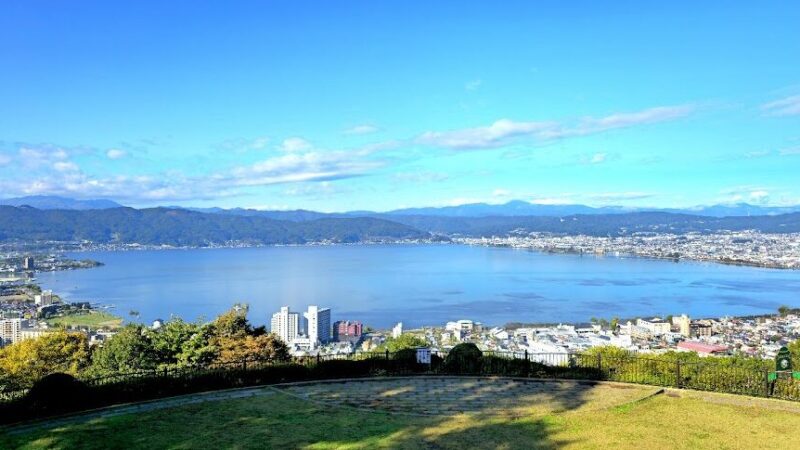
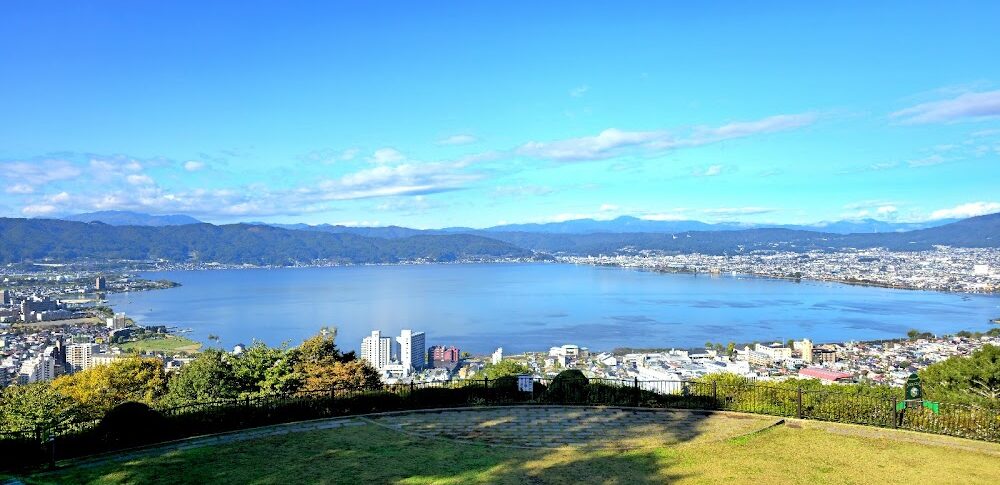
- Scenery of mountains visible from the lake shore: Especially from high points like Tateishi Park, the composition of Lake Suwa and the townscape viewed from above closely resembles the impressive scenes in the work
Director Makoto Shinkai’s Connection to Nagano Prefecture
Director Makoto Shinkai is from Koumi Town in Nagano Prefecture, and the landscapes of Nagano Prefecture frequently appear in the director’s works. In the production of “Your Name,” it is easy to imagine that Nagano Prefecture’s scenery, which the director has been familiar with since childhood, became a major source of inspiration.
In fact, Director Shinkai has stated in past interviews that regarding the model for Itomori Lake, “It was not inspired by a single specific lake, but by multiple locations.” It is said that Itomori Lake was created by combining elements from multiple places including the Hida region in Gifu Prefecture, Lake Suwa in Nagano Prefecture, and the Asuka region in Nara Prefecture.
“Your Name” Sacred Site Pilgrimage Spots Around Lake Suwa
Tateishi Park: Sacred Site of the Scene Overlooking Itomori Lake
Tateishi Park is the most important spot for Lake Suwa sacred site pilgrimage. Located on a high point in Suwa City, this park offers a panoramic view of Lake Suwa, the Suwa City area, and distant mountains.
Why Tateishi Park is Considered a Sacred Site
The scene in the movie where Taki first looks down at Itomori Lake, and the impressive bird’s-eye view scene that appears at the climax of the story, are very similar to the landscape of Lake Suwa seen from Tateishi Park. Particularly:
- The layout of the townscape centered around the lake
- The shape of the lake and the composition of surrounding mountains
- How light enters at twilight or dawn
These elements overlap with the depictions in the work, which is why many fans visit this location.
Access Methods to Tateishi Park
- By car: Approximately 15 minutes from Suwa IC on the Chuo Expressway. The park has a free parking lot (approximately 30 spaces)
- By public transportation: Approximately 15 minutes by taxi from JR Kamisuwa Station. Bus service is limited, so car or taxi use is recommended
- On foot: Approximately 50 minutes from Kamisuwa Station (uphill, requires physical fitness)
Best Times for Photography
- Early morning (sunrise): Lake Suwa tinted by the morning glow is exceptionally beautiful. Particularly from autumn to winter, the air is clear, and distant mountains are visible with clarity
- Twilight: The light of the setting sun reflecting on the lake surface is said to be closest to the atmosphere in the work
- Night scenery: The night view of Suwa City lights reflected on the lake surface is also beautiful and has its own charm
Lake Suwa Shore: Lakeside Promenade Spots
A promenade is maintained along the shore of Lake Suwa, allowing you to enjoy the lake up close while taking a walk. The scenery brings to mind scenes in the work where Mitsuha walks along the lake shore.
Recommended Lakeside Spots
Kamisuwa Lakeside Park
- Approximately 10 minutes on foot from JR Kamisuwa Station
- A spacious park facing the lake
- Foot bath facilities are also available, perfect for resting during walks
Around Suwa Lake Geyser Center
- Tourist facilities including geysers and hot spring museums are concentrated
- Foot baths while enjoying views of the lake are popular
Shimosuwa Lake Shore
- A quieter, more peaceful atmosphere
- The composition of viewing the Suwa cityscape from the opposite shore is also beautiful
Takabotchi Highlands: Another Scenic Spot
Takabotchi Highlands is another popular spot alongside Tateishi Park. Located at an altitude of approximately 1,665 meters, it is known as a scenic spot overlooking Lake Suwa.
Characteristics of Takabotchi Highlands
- Lake Suwa can be viewed from an even higher position
- Mount Fuji can be seen on clear days
- Famous as a stargazing spot (reminiscent of the comet scene)
- Cloud seas sometimes form, allowing for fantastical scenery
Access and Precautions
- Car access is basic (from Shiojiri City or Okaya City side)
- Roads are closed during winter (late November to late April)
- Some sections are unpaved, so careful driving is necessary
- Temperatures are low near the summit, so cold weather protection is essential
Other “Your Name” Related Spots in Nagano Prefecture
JR Koumi Line: Director Makoto Shinkai’s Original Scenery
The JR Koumi Line passing through Koumi Town, the hometown of Director Makoto Shinkai, is a railway that frequently appears in the director’s works. Many railway scenes appear in “Your Name,” and it is said that the original scenery is found in the Koumi Line.
Attractions of the Koumi Line
- A highland railway running along the base of Mount Yatsugatake
- Passes through the highest point in the JR line (between Nobesayama Station and Kiyosato Station, altitude 1,375m)
- Popular as “Japan’s best highland train” for its beautiful scenery from the windows
Recommended Stations
Nobesayama Station
- The station at the highest point of the JR line (altitude 1,345.67m)
- Highland vegetable fields spread out around the station
Kiyosato Station
- Developed as a highland resort area
- Surrounding areas have plenty of tourist facilities and cafes
Shirakaba Lake and Tateshina Highland Area
Shirakaba Lake and Tateshina Highland located in Nagano Prefecture’s mountainous areas are also thought to be one of the image sources for Itomori Lake in terms of being a lake in mountains.
- Shirakaba Lake: An artificial lake located at an altitude of approximately 1,400 meters. A quiet lake surrounded by forests
- Tateshina Highland: A highland resort with vacation homes and resort facilities scattered throughout
Practical Guide for Lake Suwa and Nagano Prefecture Sacred Site Pilgrimage
Model Course: Lake Suwa Sacred Site Pilgrimage in One Day
Morning
6:00-7:00 Sunrise viewing at Tateishi Park
- Enjoy Lake Suwa illuminated by the morning sun in the quiet early morning hours
- Optimal time for photography
8:00-9:00 Breakfast and rest
- Breakfast in the Kamisuwa Station area or Suwa city center
9:30-11:00 Lake Suwa shore walk
- Stroll along the lake shore promenade from Kamisuwa Lakeside Park
- Experience foot baths at the Geyser Center
Afternoon
11:30-13:00 Lunch
- Enjoy Shinshu soba, a specialty of Suwa, and fish dishes from Lake Suwa
13:30-15:00 Visit Suwa Taisha
- Visit Suwa Taisha Upper Shrine Honmiya or Lower Shrine Akimiya
- Said to be one of the models for the shrine in Itomori Town (various theories)
15:30-17:00 Sunset viewing at Tateishi Park
- Revisit Tateishi Park for sunset views of Lake Suwa
- Photograph the fantastical scenery at sunset
17:30- Onsen (hot spring) and accommodation
- Day bathing or overnight stay in Kamisuwa Onsen
Two-Day Course: Enriching Plan Including Takabotchi Highlands
Day 1
Following the one-day course above
Day 2
Early morning Sunrise and cloud sea viewing at Takabotchi Highlands
- When conditions are right, the spectacular view of Lake Suwa floating in a cloud sea is visible
Morning Kirigamine Highland drive
- Enjoy highland scenery traveling Venus Line
Afternoon Move toward Koumi Line or Shirakaba Lake
- Tour Director Shinkai’s original scenery
Detailed Access Methods
From the Tokyo Area
Train
- Limited express “Azusa” on JR Chuo Main Line from Shinjuku Station to Kamisuwa Station in approximately 2 hours 30 minutes
- Fare: Approximately 6,000 yen per way (unreserved seat)
Car
- Approximately 2 hours 30 minutes to 3 hours via Chuo Expressway
- Shinjuku → Suwa IC (approximately 180km)
Highway Bus
- Approximately 3 hours from Busta Shinjuku to Kamisuwa
- Fare: Approximately 3,000 yen and up per way (varies by season)
From the Nagoya Area
Train
- Limited express “Shinano” on JR Chuo Main Line from Nagoya Station via Shiojiri Station to Kamisuwa Station in approximately 2 hours 30 minutes
Car
- Approximately 2 hours 30 minutes via Chuo Expressway
Accommodation Information
Kamisuwa Onsen
A hot spring resort town facing Lake Suwa with many inns and hotels lined up.
Characteristics
- Many hot springs allow bathing while viewing the lake
- Water quality: Simple mineral spring, weakly alkaline
- Price range: Approximately 8,000 to 30,000 yen per night with two meals
Recommended Areas
- Lakeside inns: Can fully enjoy views of Lake Suwa
- Inns near the station: Convenient access
Shimosuwa Onsen
A historic hot spring town that flourished as a post town on the Nakasendo Road.
Characteristics
- A quieter, more peaceful atmosphere
- Historic buildings and townscape remain
- Close to Suwa Taisha Lower Shrine Akimiya
Business Hotels and Inns
For budget-conscious travelers:
- Business hotels around Kamisuwa Station: Approximately 5,000 to 8,000 yen
- Inns and guesthouses: Approximately 3,000 to 6,000 yen
Precautions and Etiquette When Visiting
Precautions at Tateishi Park
- Be mindful of noise during early morning and night: Residential areas are nearby, so be considerate of loud conversations and car engine sounds
- Limited parking: Early arrival is recommended during busy seasons
- Always take trash with you: There are no trash bins in the park
- Be considerate when using tripods: Limited shooting spots, so avoid long-term occupation
Precautions at Takabotchi Highlands
- Watch for winter closures: Roads are closed from late November to late April
- Be prepared for sudden weather changes: Weather changes easily at high altitudes
- Night stargazing: Minimize light use (consideration for astronomy enthusiasts)
- Mobile phone signal: Signals may be unavailable in some areas
Consideration for Local Residents
Sacred site pilgrimage is a form of tourism, but it is also where local residents live:
- Never trespass on private property
- Be restrained when photographing in residential areas
- Never park on the street
- Respect local rules and manners
Attractions of Lake Suwa and Nagano Prefecture Beyond “Your Name”
Suwa Taisha: One of Japan’s Oldest Shrines
Suwa Taisha is the head shrine of approximately 25,000 Suwa shrines throughout Japan and is said to be one of Japan’s oldest shrines. It consists of four shrines: Upper Shrine Honmiya, Upper Shrine Maemiya, Lower Shrine Akimiya, and Lower Shrine Harumiya, each with different attractions.
Highlights of Suwa Taisha
- Onbashira Festival: A grand festival held once every seven years (every seventh year in counting years)
- Unique architectural style without a main hall
- Mystical atmosphere: You can feel the history of ancient faith
Lake Suwa Fireworks Festival
Lake Suwa hosts fireworks displays of nationally leading scale in summer.
Suwa Lake Festival Lake Fireworks Display
- Event date: August 15
- Number of fireworks: Approximately 40,000
- Characteristic: Fireworks launched from the lake create a fantastical sight reflected on the water surface
- Popular as reminiscent of the comet scene in the work
National New Fireworks Competition
- Event date: First Saturday in September
- Fireworks artists from across the nation compete with new works
- Artistically sophisticated fireworks can be enjoyed
Cuisine of the Suwa Region
Shinshu Soba
A representative regional dish of Nagano Prefecture. The Suwa region has many famous restaurants.
Fish Dishes from Lake Suwa
- Wakasagi (pond smelt): In tempura or karaage
- Carp dishes: In carp soup or carp sashimi
- Wakasagi (pond smelt) tsukudani: Popular as souvenirs
Highland Vegetables
Fresh highland vegetables cultivated around Mount Yatsugatake can be enjoyed at restaurants and direct sales shops.
Suwa Sake
The Suwa region has five sake breweries called the “Suwa Five Breweries,” each brewing sake with distinctive characteristics. Brewery tours and tastings are also available.
Nearby Tourist Spots
Kirigamine Highland
A highland area at an altitude of approximately 1,600 to 1,900 meters.
- Venus Line: A scenic driving course
- Kurumayama Highland: Reach the summit by lift. 360-degree panoramic view
- Summer Nikkō Kisuge: Peak viewing from mid-July to early August
Yatsugatake Area
- Art museums and museums: Many cultural facilities scattered
- Outdoor activities: Mountain climbing, trekking, cycling
- Farms and sightseeing orchards: Interaction with animals and harvesting experiences
Tips for Enjoying “Your Name” Sacred Site Pilgrimage More
Film Review and Recap
Rewatching the movie before sacred site pilgrimage increases the emotional impact at the actual location. Particularly:
- Check scenes featuring Itomori Lake
- Pay attention to the composition of landscapes and how light enters
- Confirm changes in atmosphere by time of day (morning, evening, night)
Photography Tips
Composition References
- Use movie screenshots as reference for composition
- Wide-angle lenses allow shooting a wide range including the lake and mountains
- Pay attention to exposure at dusk (large brightness difference between sky and ground)
Seasonal Differences
Spring (April-May)
- Particularly beautiful during cherry blossom bloom
- Mountains appear clearly after snow melts
Summer (June-August)
- Lush greenery, feeling of nature’s vitality
- Special experiences possible during fireworks festival season
Autumn (September-November)
- Beautiful autumn foliage (mid-October to early November)
- Clear air allows viewing far distances
- Sunsets are particularly beautiful
Winter (December-March)
- Snowy landscape is fantastical
- Omiwatari (Omiwater): Natural phenomenon where Lake Suwa freezes completely and ice builds up (becomes rare due to global warming)
- Clearest starry skies of the year
SNS Information Gathering
Searching hashtags like “#YourName #SuwaLake” and “#TateishiPark” on Instagram and Twitter allows you to obtain photos and latest information from other pilgrims.
Official Merchandise and Region-Limited Products
The Suwa region tourism information centers and souvenir shops may sell “Your Name” related merchandise and region-limited products. Purchasing as a memento is also recommended.
Frequently Asked Questions
Is Lake Suwa Really the Setting for “Your Name”?
Director Makoto Shinkai officially stated that “Itomori Lake was not modeled after one specific lake.” However, it is certain that Lake Suwa is one of multiple inspiration sources, and particularly the view from Tateishi Park closely resembles important scenes in the work. While the Hida region in Gifu Prefecture is said to be the main setting model, it is believed that Lake Suwa, as part of Director Shinkai’s original scenery, influenced the work.
Is Tateishi Park Crowded?
It is relatively quiet on weekdays and normal weekends, but crowding is possible during:
- Immediately after movie release or commemorative dates
- Golden Week, Obon holiday, year-end/New Year
- Autumn foliage season weekends
- Early morning or twilight “magic hour” times
To avoid crowds, visiting on weekdays or early morning hours is recommended.
Is Sacred Site Pilgrimage Possible Without a Car?
It is possible, but with limitations:
- Lake Suwa shore: Can be enjoyed within walking distance from JR Kamisuwa Station
- Tateishi Park: Taxi use is practical (approximately 2,000 yen one way from Kamisuwa Station)
- Takabotchi Highlands: Difficult to access by public transportation. High costs even by taxi due to distance
Renting a car greatly expands the range of movement.
Is Winter Visitation Possible?
It is possible, but precautions are necessary:
- Tateishi Park: Winter visitation is possible. Be careful of icy road surfaces
- Takabotchi Highlands: Winter closure (late November to late April)
- Cold weather protection essential: High altitude means low temperatures
- Studless tires essential: When visiting by car
Winter Lake Suwa is beautiful with snow scenery, and with luck you may witness “Omiwatari,” a rare natural phenomenon.
Can Families Enjoy It Too?
It can be thoroughly enjoyed. Around Lake Suwa there are:
- Lake shore promenade (can be strolled with stroller)
- Foot bath facilities (children can enjoy)
- Suwa Lake Geyser Center (also educational)
- Sightseeing boat (enjoy scenery from the lake)
- Aquarium and glass workshop and other experience facilities
etc., where a wide age range can have fun.
Conclusion: Experience the World of “Your Name” at Lake Suwa and Nagano Prefecture
Lake Suwa, said to be one of the model locations for Itomori Lake in “Your Name,” is a wonderful sacred site pilgrimage spot where you can experience the world of the work. You can fully appreciate Lake Suwa’s beauty from various angles including the bird’s-eye view from Tateishi Park, walks along the shore, and spectacular views from Takabotchi Highlands.
The landscape with the strong reflection of Director Makoto Shinkai’s original scenery, who is from Nagano Prefecture, is a sight that will move anyone who has seen the movie. With abundant attractions beyond sacred site pilgrimage including Suwa Taisha, hot springs, gourmet cuisine, and surrounding highland resorts, you will find new discoveries no matter how many times you visit.
The four-season faces of Lake Suwa and Nagano Prefecture’s nature. Why not immerse yourself in the world of “Your Name” and fully savor the attractions of this land? Enjoy a wonderful sacred site pilgrimage journey while not forgetting consideration for local residents and following proper etiquette.