[Makoto Shinkai Works] Your Name Pilgrimage Guide – Charms and Complete Strategy for Tateishi Park (Nagano Prefecture)
Released in 2016, “Your Name” directed by Makoto Shinkai recorded a mega-hit that remains in Japanese animation film history. One of the settings for this beautiful visual world is Tateishi Park located in Suwa City, Nagano Prefecture. Known as the model for Lake Itomori featured in the film, this scenic spot has now become a holy site visited by many fans.
This article comprehensively introduces the attractions of Tateishi Park and provides detailed information useful for those planning a pilgrimage to this holy site.
The Relationship Between Tateishi Park and “Your Name”
Lake Suwa as the Model for Lake Itomori
The fictional town of Itomori in the Hida region appears in the film “Your Name.” Lake Itomori at its center is a beautiful lake with the setting that it was formed by a meteorite impact. The visual image model for this Lake Itomori is said to be the view of Lake Suwa overlooking from Tateishi Park.
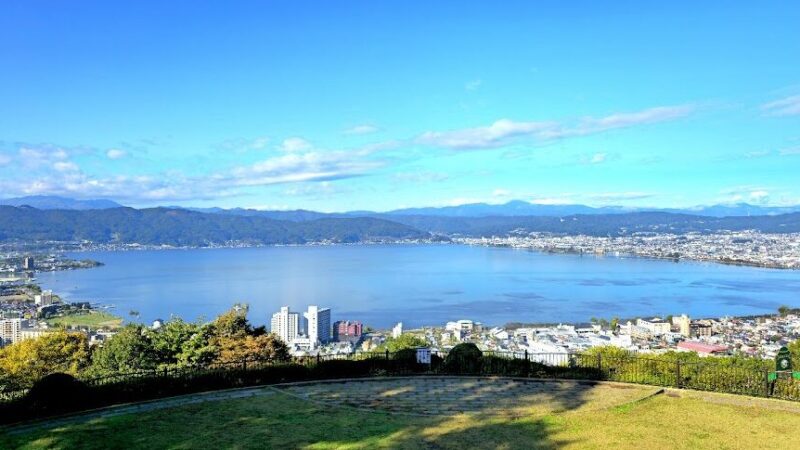
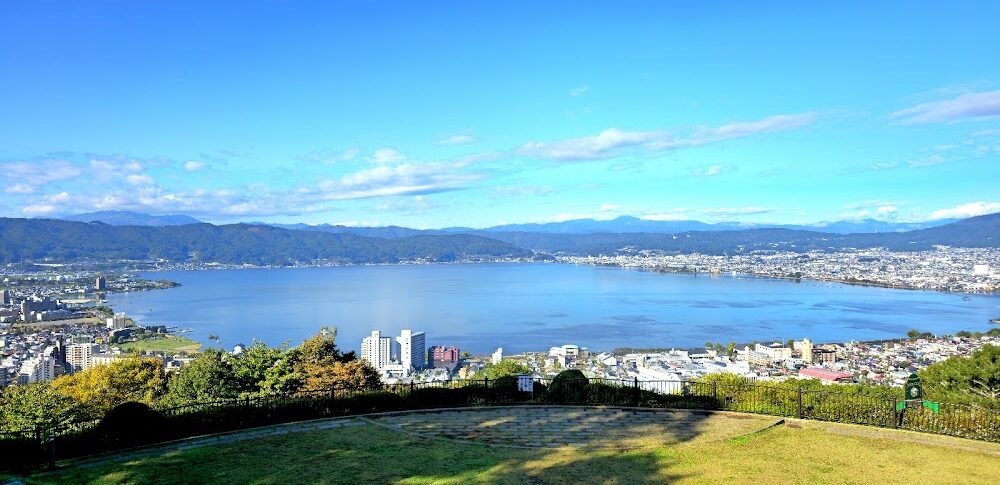
The view from Tateishi Park is strikingly similar to the scene in the film looking down on Lake Itomori, with the composition of a lake spread in the center of a basin surrounded by mountains. Particularly, the angle from a high point overlooking the lake, the shape of the lake, and the surrounding topography overlap with the film’s illustrations, which is why many fans now recognize it as a holy site.
Connection to the “Katawaretoki” (Twilight Hour) Scene
The “Katawaretoki” (twilight hour) plays an important role in the climactic scenes of the film. Many fans point out that the scene where the protagonists Taki and Mitsuha meet across time at the mountaintop where the Mizumine Shrine’s deity resides resembles the landscape of Lake Suwa viewed from Tateishi Park.
The expression of Lake Suwa during the brief time period from sunset until nightfall is exactly like the mystical “Katawaretoki” depicted in the film. Visiting Tateishi Park during this time period allows you to experience the film’s world more deeply.
Makoto Shinkai’s Connection to Nagano Prefecture
Director Makoto Shinkai is from Saku City, Nagano Prefecture, and Nagano’s scenery frequently appears in his works. In “Your Name,” the landscapes of Nagano Prefecture that the director has been familiar with since childhood are believed to have had a major influence on forming the film’s world.
Lake Suwa and Tateishi Park are said to be places the director actually visited and was impressed by their beauty, and are believed to have been used as reference materials for the film’s background art.
Basic Information and Attractions of Tateishi Park
What is Tateishi Park?
Tateishi Park is an observation park located at an elevation of 934 meters on a hill in Kamiasuwa, Suwa City, Nagano Prefecture. As a scenic spot offering a panoramic view of Lake Suwa, it has been loved by local residents and tourists even before the release of “Your Name.”
The park is equipped with an observation platform, walking trails, benches, and other facilities where you can enjoy the scenery at a leisurely pace. A parking lot is also available, making access by car convenient.
The Evening Glow Selected for “100 Sunset Points in Shinshu”
Tateishi Park is selected among the “100 Sunset Points in Shinshu,” making it one of Nagano Prefecture’s representative sunset viewing spots. The sunset reflecting on Lake Suwa’s water surface is breathtakingly beautiful, and the evening view seen in the clear air from autumn through winter is particularly exceptional.
At dusk, the sky gradually changes from orange to pink to purple, with Lake Suwa’s water surface mirroring these colors. This scene is reminiscent of “Katawaretoki” and becomes a particularly special experience for film fans.
Certified Night View of “Japanese Night View Heritage” and “Night View 100 Selections”
Tateishi Park is selected for both “Japanese Night View Heritage” and “Japan’s Night View 100 Selections,” making it a nationally famous night view spot. The lights of the city surrounding Lake Suwa reflect on the water, creating a beautiful night view like an overturned jewelry box.
The night view seen in the clear winter air is particularly spectacular, with starlight and city lights merging into a fantastical atmosphere. It is also popular as a dating spot, attracting many couples.
A Grand Panorama of Lake Suwa and Surrounding Areas
The view from Tateishi Park is not limited to Lake Suwa alone. On the left lies the majestic Yatsugatake Range, on the right the Kiso Mountains (Central Alps), and on clear days you can even see the peaks of the Northern Alps in the distance.
Lake Suwa has an area of approximately 13 square kilometers, making it Nagano Prefecture’s largest lake. The sight of this vast lake from a high point is spectacular, and you can enjoy its changing faces through the four seasons. Depending on the season you visit—cherry blossoms in spring, fresh greenery in summer, autumn leaves in fall, and snowy landscapes in winter—you will discover different charms.
Access Methods to Tateishi Park
Access by Train and Walking
From JR Kamiasuwa Station on Foot
From Kamiasuwa Station on the JR Chuo Main Line to Tateishi Park is approximately 40 to 50 minutes on foot. However, since the park is located at an elevation of 934 meters on a hilltop, there are considerable uphill sections. This is recommended for those with confidence in their physical fitness or those who want to enjoy the scenery along the way.
The walking route generally goes from Kamiasuwa Station via Route 20 national highway, through residential areas, and into mountain trails. Along the way, you can enjoy the gradually opening vista overlooking Lake Suwa.
Using Taxi
Taking a taxi from Kamiasuwa Station, you can arrive in approximately 10 to 15 minutes. The fare is estimated at around 1,500 to 2,000 yen. You can call a taxi from the park for the return trip, but depending on the time of day, there may be waiting time, so it’s reassuring to arrange a ride using a ride-hailing app in advance.
Using Route Bus
There are bus routes from Kamiasuwa Station toward Tateishi Park, but the number of buses is limited, so it’s recommended to check the timetable in advance. Walking is necessary from the nearest bus stop to the park.
Access by Car and Parking Lot Information
Access by Private Vehicle
From the Suwa Interchange on the Chuo Expressway, it takes approximately 15 to 20 minutes by car. You drive via Route 20 national highway and prefectural roads, then up a mountain road. Some sections have narrow road widths, so be careful of oncoming traffic.
Parking Lot
Tateishi Park has a free parking lot. There is space for approximately 30 standard vehicles, and congestion may occur during tourist season, weekends, and especially at dusk. If you want to ensure parking, arriving at an earlier time is recommended.
From the parking lot to the observation spot is just a few minutes walk, with walking trails that accommodate accessibility considerations.
Recommended Visit Times
Dusk (Katawaretoki)
The time you can most feel the world of “Your Name” is indeed dusk. The period from about 30 minutes before sunset to 30 minutes after sunset is when the sky’s colors change most beautifully. Sunset times vary by season, so check in advance.
Early Morning
The morning sun illuminating Lake Suwa is also extremely beautiful, and as there are few tourists at this time, you can enjoy the scenery in quiet solitude. Particularly from autumn through winter, you may witness the fantastical sight of morning mist covering the lake’s surface.
Night View Appreciation
The night view after complete darkness falls is also not to be missed. The streetlights surrounding Lake Suwa reflect on the water, creating a romantic atmosphere. Winter air is particularly clear, allowing you to enjoy the collaboration of starlight and night views.
Photography Guide for Tateishi Park
Photography Points Recreating Film Scenes
Signature Angle from the Observation Platform
The angle from Tateishi Park’s observation platform looking down on Lake Suwa is the composition most closely resembling the film’s scenes. Photographing from a position where the entire lake and surrounding mountains fit within the frame will capture photos reminiscent of Lake Itomori.
Using a wide-angle lens allows you to capture the expanse of Lake Suwa and surrounding mountains in a single photograph. Using standard or telephoto lenses makes it possible to crop portions of the lake, creating compositions even more similar to the film’s scenes.
Photography Technique During Katawaretoki
When photographing at dusk, be conscious of the sky’s gradient and the reflection on the lake’s surface. Adjusting exposure compensation to the minus side will make the sky’s colors more vivid. Using a tripod to photograph multiple exposures and create HDR composites allows you to beautifully express both sky and ground.
The time period just after sunset, called “blue hour,” is when the sky turns a deep blue and city lights begin to illuminate—a magical time. Photography during this time period is highly recommended.
Best Shots for Each Season
Spring (March–May)
Spring is when cherry blossoms bloom around the park and new leaves sprout. There are spots where you can photograph cherry blossoms and Lake Suwa together, capturing landscapes characteristic of Japanese spring. Mid-to-late April is peak bloom time.
Summer (June–August)
Summer features rich green vegetation, and the contrast between Lake Suwa’s blue and the mountains’ green is beautiful. The Suwa Lake Festival Fireworks display is held on August 15th, and fireworks can be enjoyed from Tateishi Park (though the parking lot will be very crowded).
Autumn (September–November)
Autumn is foliage season, and the trees around Tateishi Park turn red and yellow. Late October to early November is peak foliage time, and the combination of autumn leaves and Lake Suwa is spectacular. The air is clear, distant mountains appear sharp, and conditions are ideal for photography.
Winter (December–February)
Winter offers the clearest air, making it optimal for night view and starry sky photography. On snowy days, you can photograph the fantastical combination of snow scenery and Lake Suwa. However, road surfaces may freeze, so extra caution is necessary when accessing by car.
On cold early mornings, a phenomenon called “Omiwatari” (divine crossing) ice patterns may appear on Lake Suwa (though this has become less frequent due to global warming). If you can photograph this phenomenon from Tateishi Park, it would be an extremely precious shot.
Photography Tips Using Smartphones
Modern smartphones have high-performance cameras capable of taking sufficiently beautiful photographs. Keeping the following points in mind will result in more impressive photos.
- Utilize HDR Mode: In scenes with large light/dark contrast, turning on HDR mode allows you to capture both sky and ground beautifully.
- Display Grid Lines: To arrange composition, display grid lines in your camera settings. Being conscious of the rule of thirds will result in well-balanced photographs.
- Use Night Scene Mode: For night photography, using your smartphone’s night scene or night mode allows you to capture bright, low-noise photographs even handheld.
- Utilize Burst Mode: Particularly at dusk, the sky’s color changes constantly, so use burst mode to photograph multiple frames and later select the best shot.
Points of Interest Around Tateishi Park and Tourist Attractions
Sightseeing Around Lake Suwa
Lake Suwa Shoreline
After looking down at Lake Suwa from Tateishi Park, try enjoying it from the shoreline. Walking trails are maintained around the lake shoreline, where you can enjoy walking and cycling. There are several free foot bath spots along the shore.
Suwa Taisha Shrine
Suwa Taisha Shrine is the head shrine of approximately 25,000 Suwa shrines nationwide, consisting of four shrines: Kamisha Honmiya, Kamisha Maemiya, Shimosa Akimiya, and Shimosa Harumiya. Each has distinct characteristics and is popular as a power spot where you can feel history and culture.
Katakura Villa
Katakura Villa, designated as an important cultural property, is a day-use hot spring facility built in Western style in the early Showa period. The “Thousand Person Bath” with a depth of 1.1 meters is impressive, offering the unique experience of bathing while standing.
Takabotchi Highland
Another location famous as a holy site of “Your Name,” alongside Tateishi Park, is Takabotchi Highland. From this 1,665-meter-high plateau, you can see a spectacular panorama of Lake Suwa and Mount Fuji.
It is approximately 40 minutes by car from Tateishi Park, so if you have time, visiting both is recommended. However, access roads to Takabotchi Highland are closed in winter, so verify the accessible season beforehand.
Suwa City Art Museum
Located approximately 15 minutes by car from Tateishi Park, Suwa City Art Museum displays works primarily by artists with local connections. Special exhibitions related to Director Makoto Shinkai’s works sometimes occur, so check before visiting.
Kirigamine Highland
Kirigamine Highland, where a field of Japanese false hellebore blooms in summer, is another spot worth visiting when exploring the Suwa area. It is approximately 30 minutes by car from Tateishi Park and offers the refreshing air and stunning views characteristic of highlands.
Points for Enjoying Pilgrimage to Holy Sites
Enjoy While Respecting Manners
Tateishi Park is a public place loved by local residents. When enjoying pilgrimage to this holy site, observe the following etiquette.
- Always Take Trash Home: There are no trash bins in the park. Always take home packaging from food and beverages and empty cans.
- Be Mindful of Noise: Particularly during early morning and nighttime, avoid speaking loudly or playing music. Consideration for nearby residents is necessary.
- Do Not Trespass on Private Property: Absolutely avoid entering private land outside the park while searching for photography spots.
- Respect Parking Etiquette: Do not park outside the parking lot or in places obstructing traffic.
- Respect Nature: Do not pick plants or damage trees.
Packing Checklist
Here are items useful to bring when visiting Tateishi Park.
Essential Items
- Camera or smartphone (don’t forget to charge)
- Drinking water
- Hat and sunscreen (summer)
- Warm clothing (winter)
- Flashlight (for nighttime visits)
Convenient Items
- Tripod (for sunset/night photography)
- Leisure sheet (if you want to relax and enjoy scenery)
- Binoculars (if you want to observe distant mountains)
- Insect repellent spray (summer)
- Hand warmers (winter)
- Garbage bags (for taking trash home)
Clothing and Equipment
Since Tateishi Park is at an elevation of 934 meters, temperatures are lower than in flatlands. Especially during morning/evening and winter, bring an extra layer.
Comfortable sneakers or athletic shoes are recommended. While paths within the park are paved, night dew can make them slippery, so avoid heels or sandals.
In summer, strong sunlight makes hats and sunscreen essential. Also, higher elevation means stronger UV radiation.
Tips for Avoiding Crowds
Tateishi Park has become increasingly popular as a holy site of “Your Name,” especially crowded during:
- Golden Week
- Summer vacation period
- Autumn foliage season (late October–early November)
- Year-end and New Year holidays
- Dusk on weekends and holidays
To avoid crowds, weekday daytime or early morning is recommended. Rainy days also have fewer visitors, allowing you to experience the fantastical misty scenery to yourself.
Suwa Tourism Model Courses Including Tateishi Park
Day Trip Course
Morning
- 9:00 AM Arrival at Kamiasuwa Station
- 9:30 AM Visit Suwa Taisha Kamisha Honmiya
- 11:00 AM Walk along Lake Suwa shoreline, experience foot baths
Afternoon
- 12:00 PM Lunch at Lake Suwa shoreline
- 1:30 PM Bathe in hot spring at Katakura Villa
- 3:00 PM Move to Tateishi Park
- 3:30 PM Arrive at Tateishi Park, enjoy scenery
- 5:00 PM Evening glow photography (adjust time by season)
- 6:30 PM Night view appreciation
- 7:30 PM Return to Kamiasuwa Station
- 8:00 PM Depart from Kamiasuwa Station
2-Day Overnight Course
Day 1
- Morning: Visit all four Suwa Taisha Shrines
- Afternoon: Suwa Lake area sightseeing, museum visit
- Evening: Evening glow and night view appreciation at Tateishi Park
- Night: Stay at hot spring inn near Lake Suwa
Day 2
- Early morning: Watch sunrise from Tateishi Park (optional)
- Morning: Visit Takabotchi Highland
- Afternoon: Explore Kirigamine Highland
- Evening: Head home
This course allows you to visit both Tateishi Park and Takabotchi Highland, holy sites of “Your Name.”
Gourmet Information for the Suwa Area
Suwa Specialty Dishes
Shinshu Soba
Nagano Prefecture is famous for Shinshu soba. The Suwa area has many soba restaurants where you can taste fragrant soba made with locally-produced soba flour.
Lake Suwa Smelt
Smelt caught in Lake Suwa is served as tempura, fried, or as sweet-simmered preparations. Fresh smelt dishes can be enjoyed at restaurants along the shoreline.
Horse Meat
Nagano is a region with high consumption of horse meat, where fresh horse meat sashimi can be enjoyed. Restaurants and izakayas around Kamiasuwa Station offer this specialty.
Miso
Suwa is also known as a miso-producing region, and local miso-based dishes and miso warehouse tours are available.
Recommended Restaurants and Cafes
Various restaurants and cafes around Tateishi Park and Lake Suwa allow you to dine while enjoying the view. Lunch or cafe time overlooking Lake Suwa is one of the pleasures of sightseeing.
The area around Kamiasuwa Station has many eateries offering cuisine using local ingredients. Obtain the latest information from the tourist information center.
Precautions When Visiting Tateishi Park
Weather and Temperature
Since Tateishi Park is at high elevation, temperatures are lower than in lowland areas, and weather can change easily. Check the weather forecast before visiting and prepare appropriate clothing.
Particularly in winter, road surfaces may freeze, so extra caution is necessary for vehicle access. Installation of studless tires or carrying chains is recommended.
Facility Information
Tateishi Park has restroom facilities, but no shops or vending machines. Prepare beverages and food in advance.
Street lighting in the park is limited, so use a flashlight or smartphone light function when visiting at night.
Wildlife Precautions
Located in a mountainous area, wild animals (wild boar, deer, etc.) may appear during early morning and dusk. If encountered, do not provoke them and quietly leave the area.
Mobile Phone Reception
Main carriers’ mobile phones are available at Tateishi Park, but signal may be weak in some locations. Check surrounding information beforehand as a precaution for emergencies.
History and Cultural Background of Tateishi Park
Origin of the Name Tateishi
The name “Tateishi” derives from a large standing stone (tateishi) within the park. This stone has long been cherished as a symbol of the region and has also been an object of reverence.
History of Lake Suwa
Lake Suwa is believed to have been formed approximately 20,000 years ago through volcanic activity. Since ancient times, it has been a place for water transport and fishing, and also the center of Suwa faith, closely tied to the lives of local people.
During the Edo period, it prospered as the intersection of the Nakasendo and Koshu highways, and many travelers left records of Lake Suwa’s beauty.
Modern Tourism Development
Tateishi Park was formally developed as a tourist destination during the Showa period. It has been enjoyed by local residents and tourists as a scenic spot offering a panoramic view of Lake Suwa.
After the release of “Your Name,” many anime fans from Japan and abroad have visited, making it an important tourism resource for Suwa City.
Annual Events in the Suwa Area
Suwa Lake Festival Fireworks (August 15)
A fireworks display of national significance with approximately 40,000 fireworks illuminating Lake Suwa’s night sky. The display can be viewed from Tateishi Park, but the area is very crowded on the day.
Onbashira Festival (Every 7 Years)
The Onbashira Festival, Suwa Taisha Shrine’s most significant religious ritual, is held once every seven years (years of the Tiger and Monkey). The sight of giant pillars being transported by human power is magnificent, attracting many visitors. The next occurrence is scheduled for 2028.
Lake Suwa Illumination (Winter Season)
An illumination event is held around Lake Suwa during winter. Combined with the night view seen from Tateishi Park, the lakeside illumination creates an even more brilliant landscape.
Trivia for “Your Name” Fans
Film’s Box Office Performance
“Your Name” set a mega-hit record with over 2.5 billion yen in domestic box office revenue, holding the position of Japan’s second-highest-grossing film until 2023. It received high international acclaim and was shown in many countries.
Other Makoto Shinkai Works and Nagano Prefecture
Long-distance landscapes of Nagano Prefecture appear in other works by Director Makoto Shinkai. “Beyond the Clouds” features the Saku area, and “5 Centimeters per Second” includes scenes modeled on the Koumi Line.
When visiting Nagano Prefecture, try visiting holy sites from other Shinkai works in addition to “Your Name” to more deeply understand the director’s worldview.
Film’s Music
The music produced by RADWIMPS for “Your Name” also became a major topic of conversation. Listening to the film’s theme song while viewing the scenery at Tateishi Park allows you to immerse yourself even more in the film’s world.
Testimonials from Tateishi Park Visitors
Emotion at Dusk
Many visitors speak unanimously about being moved by Lake Suwa’s beauty at dusk. Comments include: “I was so moved seeing the landscape from the film spread before my eyes in reality” and “The way the sky’s colors changed during Katawaretoki was truly beautiful—I lost track of time watching it.”
Attractions of Each Season
Many repeat visitors come different seasons, with comments such as: “Spring cherry blossoms, summer greenery, autumn foliage, winter snow—each season is wonderful” and “No matter how many times I visit, it never gets old.”
Recommended for Families
Feedback indicates it’s suitable for family visits, with comments such as: “Visiting with children, they were delighted by the beautiful scenery” and “The park is well-maintained, allowing families to spend time relaxing together.”
Other “Your Name” Holy Sites Besides Tateishi Park
Holy Sites in Tokyo
Many real locations within Tokyo appear in the film. The Suga Shrine stairs in Yotsuya, the Shinanomachi Station area, and the Yoyogi pedestrian bridge are known as holy sites.
Holy Sites in the Hida Region
Many holy sites exist in the Hida region (Gifu Prefecture), the main setting of the film. Popular spots include Hidafurukawa Station, Ketaiwakamiya Shrine, and the Hida City Library.
Holy Site Pilgrimage Tours
Travel companies arrange tours visiting “Your Name” holy sites. For those wanting to efficiently visit multiple sites, consider using such tours.
Photography Manners and SNS Posting Precautions
Photography Etiquette
Since this is a popular spot, many people enjoy photography. Observe the following manners:
- Don’t obstruct other people’s photography: While focused on your own shooting, be considerate so others can also enjoy the experience.
- Avoid prolonged space occupation: Especially during crowded times, give up your spot to the next person once you’ve finished.
- Caution when using tripods: When using tripods, choose locations not obstructing foot traffic and show consideration for surroundings.
SNS Posting Precautions
When posting photos taken to SNS, note the following:
- Protect personal information: If other visitors appear in your photo, either blur their faces or choose angles without them appearing.
- Handle location information carefully: Publishing precise location information can cause excessive crowding. Share information within appropriate scope.
- Convey factual information: Avoid false or exaggerated expressions, sharing information based on actual experience.
Conclusion
Tateishi Park in Suwa City, Nagano Prefecture has become a beloved holy site of Director Makoto Shinkai’s masterpiece “Your Name.” The spectacular view of Lake Suwa seen from the 934-meter-high plateau brings to mind Lake Itomori from the film, and especially at dusk during “Katawaretoki,” offers an emotion of stepping into the film’s world.
Selected for the “100 Sunset Points in Shinshu,” “Japanese Night View Heritage,” and “Japan’s Night View 100 Selections,” Tateishi Park is a scenic spot all people, not just film fans, should visit. It has attractions for all four seasons—cherry blossoms in spring, fresh greenery in summer, autumn leaves in fall, and snowy landscapes in winter—with new discoveries each visit.
Access is relatively convenient: approximately 40 minutes on foot from JR Kamiasuwa Station, or about 15 minutes by car from Suwa Interchange. With free parking available, it’s safe for families to visit.
When visiting Tateishi Park, respect manners and show consideration for other visitors and local residents. Then, camera or smartphone in hand, enjoy photographing scenes from the film. The spectacular landscape of Lake Suwa and the film world awaiting your visit will surely create unforgettable memories.
The Suwa area offers many attractive tourist spots beyond Tateishi Park, including Suwa Taisha Shrine, Katakura Villa, and Takabotchi Highland. With time available, visiting these sites allows you to fully experience Suwa’s history, culture, and nature.
Why not plan a trip to Tateishi Park, whether as a pilgrimage to “Your Name” holy sites or simply to seek beautiful landscapes? The spectacular view overlooking Lake Suwa will surely become a memory deeply engraved in your heart.