Takagi Nanahiko’s historical manga “Angolmois: Record of Mongol Invasion” is highly regarded by both history fans and anime enthusiasts as a work depicting the Battle of Tsushima during the Mongol invasions in the Kamakura period. It was adapted into a television anime in 2018, and Tsushima City, Nagasaki Prefecture, was selected as one of “88 Japanese Anime Sacred Sites Worth Visiting.” This article provides detailed introductions to pilgrimage spots in Tsushima, the setting of the work, along with its historical background.
About Angolmois: Record of Mongol Invasion
“Angolmois: Record of Mongol Invasion” is a historical epic romance themed around the Battle of Tsushima during the First Mongol Invasion (Bunei no Eki) in 1274. With the exiled Kamakura samurai Kusui Jinzaburo as the protagonist, it depicts the battles of people trying to defend Tsushima against overwhelming numerical odds.
The work concluded with the Tsushima arc spanning 10 volumes, followed by serialization of the Hakata arc, with the Second Mongol Invasion (Kouan no Eki) arc currently unfolding. Original author Takagi Nanahiko has visited Tsushima numerous times and conducted detailed on-site research, with the work featuring many actual historical sites and place names.
In the anime adaptation as well, the production staff conducted research in Tsushima, faithfully recreating actual landscapes and terrain to achieve high realism. This thorough location recreation further enhances the appeal of pilgrimage visits.
Historical Background of Tsushima and the Mongol Invasions
As a border island located between Kyushu and the Korean Peninsula, Tsushima has walked a turbulent path through history since ancient times. Legends of the Dragon Palace have been transmitted since mythological times, it flourished as a Bronze Age kingdom mentioned in the Wei Chronicles, and during the Nara period, frontier soldiers were stationed there.
In October 1274, approximately 30,000 troops of the Mongol-Goryeo alliance invaded Tsushima. This marked the beginning of the First Mongol Invasion. A band of over 80 samurai led by Tsushima Guardian Deputy Sō Sukekuni fought courageously despite overwhelming numerical disadvantage but were completely destroyed in the Battle of Komoda Beach. This tragic battle becomes the central theme of “Angolmois: Record of Mongol Invasion.”
The Mongol invasions represented Japan’s first full-scale invasion by a foreign power, with Tsushima at the front lines. Many islanders were sacrificed, and Tsushima suffered devastating damage, but the memory of this battle remains in historical sites scattered throughout the island today.
Detailed Explanation of Major Pilgrimage Spots
Sasuura (Komoda Beach) – Site of the Mongol Invasion’s First Major Battle
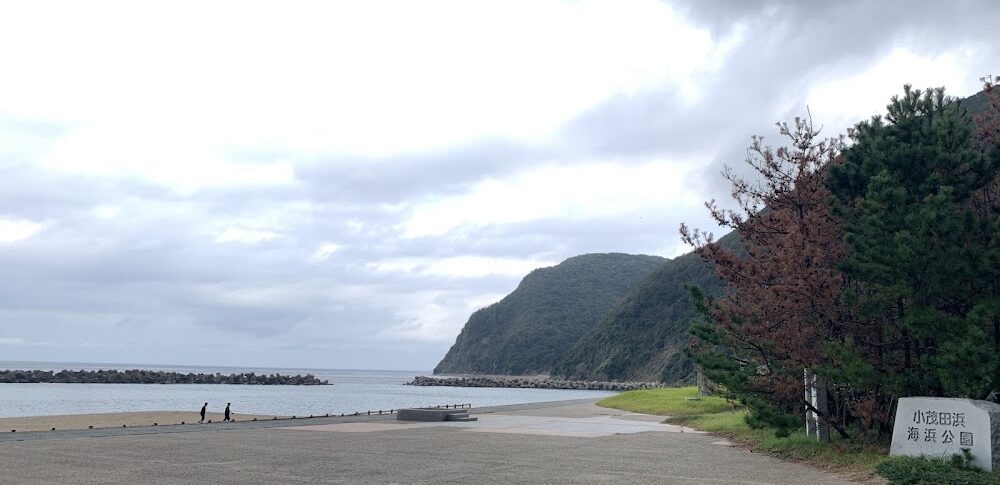
Sasuura is one of the most important settings in “Angolmois: Record of Mongol Invasion.” Located in present-day Komoda, Izuhara Town, Tsushima City, it is known as the site where the Mongol-Goryeo alliance first landed on October 5, 1274.
Komoda Beach features beautiful sandy shores and a quiet coastline, but here fierce combat unfolded between the samurai band led by Sō Sukekuni and the Mongol forces. In the work, this beach battle is depicted with vivid brushwork, and the anime recreates it as an impressive scene.
Visiting the site allows one to feel the quietness that prompts imagination of the battle’s intensity, contrasted with beautiful nature. The view from the coastline recalls the sight of the Mongol fleet approaching over 740 years ago.
As a photography spot, shooting from the beach looking toward the sea is recommended. On clear days, the contrast between the blue sea and sky is beautiful, allowing visitors to enjoy pilgrimage while feeling the work’s world.
Komoda Hama Shrine – Sacred Site Honoring Mongol Invasion Casualties
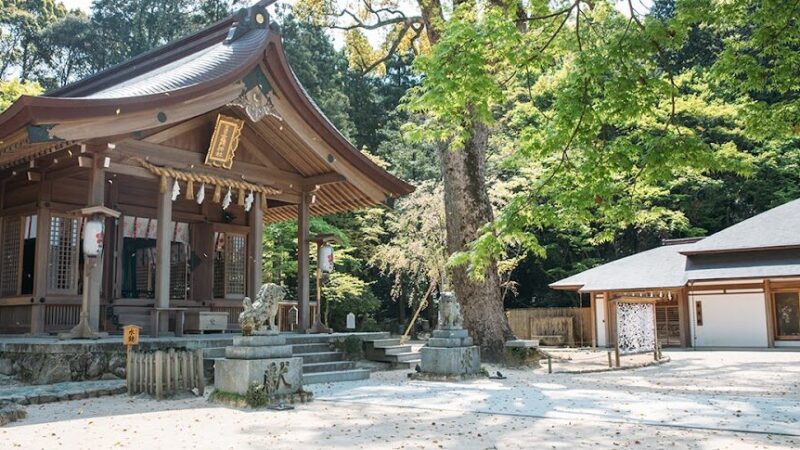
Located near Komoda Beach, Komoda Hama Shrine enshrines Sō Sukekuni and other Tsushima samurai who fell in the Mongol invasions. The shrine appears as an important location in “Angolmois: Record of Mongol Invasion” and serves as a central pilgrimage spot.
The shrine sits on a small hill, with Komoda Beach visible from the grounds. Climbing the stone steps reveals the solemn shrine building, evoking respect for the spirits who fell in the Mongol invasions.
Every November 12th, the Komoda Hama Shrine Grand Festival is held, performing Shinto rituals to comfort the war dead from the Mongol invasions. During this festival, the traditional “dantsuké mochi” mentioned in the work is sold. Dantsuké mochi is a Tsushima local confection depicted in the story, making it something fans want to taste.
Explanatory plaques about the Mongol invasions are installed in the shrine grounds, allowing visitors to learn the historical background while praying. This location is worth visiting for both anime and manga fans and those interested in history.
Kokufu and Izuhara Hachiman Shrine – Tsushima’s Central Shrine
Izuhara Hachiman Shrine, located in Izuhara district where Tsushima’s provincial office once stood, is one of the island’s most prestigious shrines. “Angolmois: Record of Mongol Invasion” depicts scenes where Tsushima’s guardians and samurai visit to pray for victory in battle.
The shrine has ancient origins, having walked through history alongside Tsushima. During the Mongol invasions, it garnered people’s faith as a shrine protecting the island. The grounds are spacious, with impressive shrine buildings and torii gates conveying the weight of history.
Izuhara is Tsushima’s center, flourishing as the castle town of the Tsushima Clan during the Edo period. Around the Hachiman Shrine, remnants of samurai residences and other sites remain, allowing visitors to enjoy historical walks. Combined with pilgrimage, this area offers precious opportunities to experience Tsushima’s historical culture.
Visiting the shrine helps deepen understanding of the work’s world. Standing in the place where samurai once prayed before battle allows one to re-experience the tension and resolve of that time.
Shiratake – Tsushima’s Sacred Peak
Shiratake, a 519-meter-high sacred peak representing Tsushima, appears impressively in the background of “Angolmois: Record of Mongol Invasion.” Long considered a target of mountain worship, the area around its summit features mystical scenery with connected massive rocks.
In the work, Shiratake’s majestic form appears as a symbol of Tsushima, featured in scenes where characters overlook the island’s geography. Actually climbing the mountain allows one to see the entire landscape of Tsushima, providing valuable perspective for understanding the Mongol invasion-era terrain.
Shiratake climbing takes about 3 hours round-trip with a well-maintained trail, though the summit area has many rocky sections requiring proper equipment. Planning pilgrimage visits requires considering weather and physical fitness.
The summit view is spectacular, with visibility on clear days extending to the Tsushima Strait and possibly the Korean Peninsula. Witnessing this landscape makes one realize the geographic importance of the border island of Tsushima. It’s an ideal photography spot where the work’s world unfolds in spectacular scenery.
Kanda Castle – Remnants of an Ancient Mountain Fortress
Kanda Castle, located in Mitsushima Town, Tsushima City, is an ancient mountain fortress built in the late 7th century and ranks among Japan’s oldest mountain castles. “Angolmois: Record of Mongol Invasion” portrays it as a strategically crucial location playing an important role.
After Japan’s defeat by the Tang-Unified Silla alliance at the Battle of Baekgang (663), Japan strengthened its defense system by building mountain castles in Tsushima, Iki, and northern Kyushu. Kanda Castle is a representative example, featuring magnificent stone walls built on Castle Mountain at 276 meters elevation that remain today.
The castle ruins have a well-maintained hiking trail, forming approximately a 2-hour round-trip trekking course. Along the way, visitors can see impressive stone ramparts and gate ruins, marveling at ancient construction technology. In particular, the stone walls called “First Castle Gate” and “Second Castle Gate” are magnificent, with preservation quality surprising for 1,300-year-old remains.
From the summit, the beautiful ria-type coastline of Asakaki Bay comes into view, allowing imagination of how frontier soldiers once kept watch from this location. The Mongol invasion era likely saw this area surrounding the castle ruins as an important defense strongpoint.
Kanda Castle is designated as a Special Historic Site by the nation, bearing extremely high historical value. Highly recommended for fans of “Angolmois: Record of Mongol Invasion” and those interested in Japanese history or castles.
Tomb of Echizen Goro – Remembering Mongol Invasion Heroes
Echizen Goro was a samurai who fought in Tsushima during the Mongol invasions, with his tomb remaining in Tsushima City. As a historical figure related to “Angolmois: Record of Mongol Invasion,” his tomb is sometimes included as a pilgrimage spot.
The tomb sits in a quiet location, conveying to the present the memory of samurai who fought in the Mongol invasions. While modest in scale, this important historic site demonstrates how Tsushima’s people have carefully preserved the memory of the Mongol invasions.
Historic sites related to the Mongol invasions scatter throughout Tsushima, and touring them allows visitors to feel the layering of history and the islanders’ continuation of memory. Echizen Goro’s tomb, as one such site, has value in being added to pilgrimage itineraries.
Izakaya Taigen – Pilgrimage Rest Stop
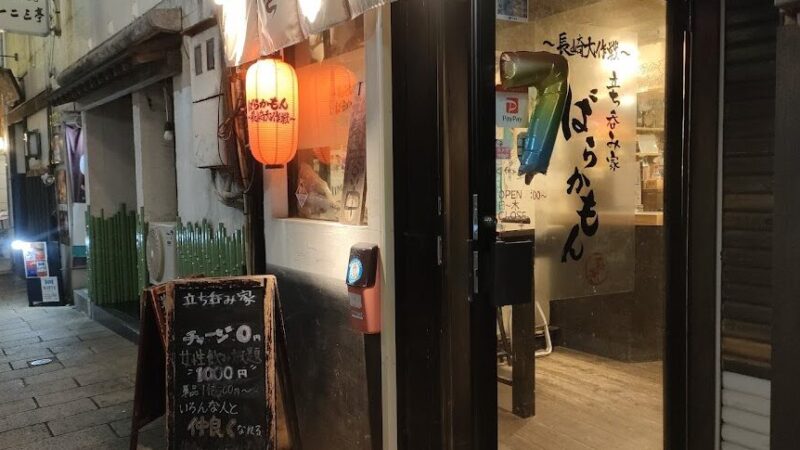
A place to visit during pilgrimage breaks is local dining establishments. “Izakaya Taigen” is known as a restaurant where visitors can enjoy Tsushima local cuisine and is popular among pilgrims.
Tsushima abounds in seafood, and the restaurant prides itself on dishes using fresh fish and shellfish. Particularly excellent are fish caught in Tsushima waters, enjoyed as sashimi, grilled fish, simmered dishes, and more. Tsushima soba and stone-grilled cuisine, among other island regional dishes, can also be enjoyed.
“Angolmois: Record of Mongol Invasion” depicts the food culture of the era, and experiencing Tsushima’s cuisine contributes to understanding the work. Taking a break after tiring pilgrimage walks with local food and drink is one of the travel’s pleasures.
Imperial Mausoleum of Emperor Antoku – Land of Heike Legend
Tsushima preserves legends related to Emperor Antoku, with a reference tomb location existing. Though Emperor Antoku is said to have entered the water at the Battle of Dannoura (1185), tradition holds he escaped to Tsushima, with a place in the island believed to be his tomb.
“Angolmois: Record of Mongol Invasion” is set approximately 90 years after the Heike clan’s destruction (1274), yet Tsushima preserves strong legends of Heike refugees and Emperor Antoku traditions, becoming part of island historical culture.
The reference tomb location sits in a quiet forest, enveloped in solemn atmosphere. As a place feeling historical romance, adding it to pilgrimage itineraries allows experiencing Tsushima’s multilayered history.
Pilgrimage Events and Stamp Rallies
To commemorate the 2018 anime broadcast, Tsushima City held a stamp rally for “Angolmois: Record of Mongol Invasion.” This event became notable as “overly high participation hurdles,” due to requiring travel to Tsushima, an remote island.
The stamp rally operated until March 20, 2019, with courses set to tour historic sites and famous locations throughout Tsushima City. The kickoff event featured original author Takagi Nanahiko and voice actors, drawing significant excitement.
Though participation hurdles were certainly high, the sense of achievement proved substantial, with many fans who actually visited Tsushima reporting “experiences exceeded imagination.” The remote island location paradoxically created a special feeling, enhancing pilgrimage value.
Currently no permanent stamp rally operates, though Tsushima City and tourism associations continue various collaborative tourism promotions with “Angolmois: Record of Mongol Invasion.” Checking official websites and SNS for latest information before visiting is recommended.
Wata Tsumi Shrine – Sacred Site of Dragon Palace Legend
Wata Tsumi Shrine, an ancient shrine in Toyotama Town, Tsushima City, is known for its mystical scenery with torii gates standing in the sea. Considered the birthplace of Dragon Palace legend, it has long gathered faith as a shrine enshrining Princess Toyotama.
“Angolmois: Record of Mongol Invasion” does not directly feature it as a setting, but it remains important for understanding Tsushima’s mythological background and spiritual culture. As a sacred site where one can feel Tsushima’s history continuing from the age of gods, it has value in pilgrimage itineraries.
The five torii gates standing in the sea appear floating on the water during high tide, creating a fantastic landscape. Popular as a photography spot, it ranks as a highlight of Tsushima tourism.
The shrine area faces a quiet inlet, with calm wave sounds soothing the mind. The peaceful scenery contrasts with memories of fierce Mongol invasion battles, conveying Tsushima’s multifaceted nature.
Practical Advice for Pilgrimage
Access Methods
Access to Tsushima is approximately 35 minutes by plane from Fukuoka Airport, or approximately 4 hours 30 minutes by ferry from Hakata Port. Flights also operate from Nagasaki Airport.
Planes are operated by ANA (All Nippon Airways) and Oriental Air Bridge with multiple daily flights. Ferries are operated by Kyushu Yusen with both night and day service. For those with time, ferry travel is also recommended for experiencing travel atmosphere.
Renting a car provides the most convenient island transportation. Since major pilgrimage spots scatter throughout the island, relying solely on public transportation makes efficient touring difficult. Car rental companies operate around Tsushima Airport and Izuhara Port.
Recommended Staying Duration and Pilgrimage Routes
At least 2-3 days of stay is recommended to fully enjoy pilgrimage. One night/two days suffices for efficiently touring major spots, but 3-4 nights works ideally when wanting to spend time on mountain climbing and historic site visits.
Example recommended route:
Day 1
- Tsushima Airport arrival
- Izuhara Hachiman Shrine visit
- Izuhara town exploration
- Visit Komoda Beach and Komoda Hama Shrine
- Stay in Izuhara area
Day 2
- Kanda Castle trekking
- Wata Tsumi Shrine visit
- Tour northern Tsushima tourism spots
- Stay in northern or central area
Day 3
- Shiratake climbing (depending on fitness and weather)
- Tour other historic sites
- Purchase souvenirs
- Depart Tsushima Airport
This route is an example; customize according to interests and fitness level.
Packing and Clothing
Prepare the following items for pilgrimage:
- Comfortable hiking shoes (trekking shoes for mountain climbing)
- Easy-to-move clothing
- Rain gear (Tsushima weather changes quickly)
- Sunscreen, hat
- Drinking water
- Camera/smartphone
- Mobile battery
- Maps or guidebooks
- “Angolmois: Record of Mongol Invasion” comics (rereading on-site increases emotional impact)
Planning mountain climbs of Kanda Castle or Shiratake requires proper mountaineering equipment. Particularly for Shiratake’s rocky terrain, gloves enhance safety.
Photography Etiquette and Precautions
Photography during pilgrimage is enjoyable, but observe the following etiquette:
- Prioritize prayer over photography at shrines and temples, considering other visitors’ convenience
- Never trespass on private property
- Respect locals’ daily lives
- Always take trash with you
- Protect natural environment (don’t collect plants, avoid writing on rocks, etc.)
Tsushima is an island where rich nature and history remain. While enjoying pilgrimage, remember environmental protection and respect for the region.
Understanding Tsushima’s Historical Culture More Deeply
Tsushima’s Multilayered History
The Mongol invasions depicted in “Angolmois: Record of Mongol Invasion” represent only one part of Tsushima’s history. The island has carved a unique path through time as a border island from ancient to modern days.
Ancient Period: Known as “Tsushima Country” in the Wei Chronicles, it served as a continental trade hub. Bronze Age culture flourished, leaving many remains.
Asuka and Nara Periods: After the Battle of Baekgang, defense facilities like Kanda Castle were constructed. Frontier soldiers were stationed, with Tsushima-related poems preserved in the Man’yōshū.
Heian Period: Heike refugee and Emperor Antoku legends emerged.
Kamakura Period: The Mongol invasions brought devastating damage, followed by recovery.
Muromachi and Sengoku Periods: It became a Wakō base, greatly influencing Japanese-Korean relations.
Edo Period: The Tsushima Clan monopolized Korean diplomacy and trade, playing important roles including hosting the “Korean Diplomatic Mission.”
Modern Era: The Battle of Tsushima in the Russo-Japanese War made it a stage, with Tsushima Fortress constructed.
Understanding this multilayered history allows deeper appreciation of Tsushima as the setting for “Angolmois: Record of Mongol Invasion.”
Legacy Left by the Mongol Invasions in Tsushima
The Mongol invasions left deep scars in Tsushima, yet simultaneously shaped the island’s identity. The invading forces’ memory is transmitted through various forms: memorial facilities like Komoda Hama Shrine, transmitted traditions, and modern creative works including “Angolmois: Record of Mongol Invasion.”
Tsushima’s people have never forgotten the Mongol invasion tragedy while simultaneously valuing continental exchange as a border island. This complex historical awareness creates Tsushima’s cultural richness.
Work Information for “Angolmois: Record of Mongol Invasion”
About the Original Manga
The original manga by Takagi Nanahiko is published by KADOKAWA Kadokawa Comics Ace.
- Tsushima Arc: 10 volumes (concluded)
- Hakata Arc: 12 volumes published (serializing)
- Second Mongol Invasion Arc: Launched from 2024
The Tsushima arc depicts the Battle of Tsushima during the First Mongol Invasion, while the Hakata arc shows the Mongol forces advancing into Hakata and protagonist Kusui Jinzaburo avenging Tsushima in resulting battles.
Work characteristics include thorough historical verification and creating compelling characters and stories based on historical facts. The powerful battle scenes, deep character psychology, and sense of history’s weight receive high praise.
About the Anime Version
A television anime broadcast from July to September 2018, spanning 12 episodes depicting the Tsushima arc’s story in a work faithfully recreating the original’s atmosphere.
A talented voice cast assembled, with accomplished voice actors bringing characters to life including the protagonist Kusui Jinzaburo. Web programs were also produced, including voice actor and original author discussions among other fan-pleasing content.
Blu-ray/DVD BOX upper and lower volumes are available with special features included. The official website previously featured various campaign information.
Related Books and Resources
The following materials are helpful for fuller pilgrimage enjoyment:
- Tourism pamphlets issued by Tsushima City
- History books about the Mongol invasions
- Books regarding Tsushima’s history and culture
- Nagasaki Prefecture official tourism website “Nagasaki Island Travel” special feature pages
Reading these resources beforehand enriches the pilgrimage experience.
Tsushima Tourism Association and Pilgrimage Support
The General Incorporated Association Tsushima Tourism and Commerce Association provides information and support for “Angolmois: Record of Mongol Invasion” pilgrimage sites. The official blog features location introduction articles with detailed photos and explanations useful for pilgrimage reference.
The tourism association provides maps and guide materials for Mongol invasion-related historic sites and other Tsushima tourism spots. When visiting Tsushima, utilizing association information enables efficient and fulfilling pilgrimage.
Local guide tours are also occasionally organized, allowing visitors to tour sites while hearing expert explanations. Guide tours usually require advance reservations; check the official website for confirmation.
Significance of Selection as “88 Japanese Anime Sacred Sites Worth Visiting”
In 2018, Tsushima City’s selection as one of “88 Japanese Anime Sacred Sites Worth Visiting” holds significant meaning from an anime tourism perspective. This is a project by the General Incorporated Association Anime Tourism Association selecting regions serving as settings for anime works.
Tsushima’s selection demonstrates “Angolmois: Record of Mongol Invasion” transcends mere entertainment, serving to promote regional history and culture. Anime fans visiting Tsushima for pilgrimage encounter opportunities to engage with the historical Mongol invasion event and Tsushima’s culture.
Such cultural exchange contributes to regional development. Increased pilgrimage visitor numbers stimulate tourism industries while raising regional history and culture interest. The relationship between “Angolmois: Record of Mongol Invasion” and Tsushima exemplifies anime and regions mutually enhancing each other’s value.
Conclusion: Special Experiences Gained Through Pilgrimage
“Angolmois: Record of Mongol Invasion” pilgrimage is not merely visiting anime and manga settings. It is a journey tracing memories of the Mongol invasions, an important historical event, and experiencing the border island Tsushima’s multilayered history and culture.
Standing on Komoda Beach, contemplating the fierce battles waged here over 740 years ago, history transforms from mere past events into stories continuing to the present. Looking up at Kanda Castle’s stone walls, gazing across the Tsushima Strait from Shiratake’s summit, one understands the weight of the roles this island has borne.
Through pilgrimage, not only does work understanding deepen but interest in Japanese history and culture expands. The experience of “Angolmois: Record of Mongol Invasion” and actual history intersecting in the special place of Tsushima becomes a lifetime memory.
Pilgrimage to Nagasaki Prefecture’s Tsushima may certainly have “high participation hurdles.” However, the experiences gained are correspondingly special and valuable. In Tsushima, where beautiful nature, deep history, and warm people await, enjoy your unique pilgrimage journey.