![[Bakemonogatari] Series Kunitachi City, Tokyo](https://anime-place.site/cms/wp-content/uploads/2026/05/autogen-1783-52510980.png)
The popular light novel series “Monogatari” by Nisioisin has captivated many fans with its unique dialogue-driven storytelling and compelling characters. Playing a crucial role as the setting for this series is Kunitachi City in Tokyo. This article provides a comprehensive explanation of the relationship between the Monogatari series and Kunitachi City, real-world sacred sites, and how to enjoy pilgrimages to these locations.
About the Monogatari Series
“Bakemonogatari” is the first work in a light novel series written by Nisioisin and published by Kodansha Box in 2006. It depicts the story of the protagonist Koyomi Araragi and the various girls he encounters who are possessed by “oddities.”
The series continues as “First Season,” “Second Season,” “Final Season,” “Off Season,” and “Monster Season,” becoming a massive hit with cumulative sales exceeding 29 million copies.
The anime adaptation was also highly successful, with the unique visual expression by Shaft and the direction of Akiyuki Shinbo receiving high praise. Since the first season aired in 2009, numerous series installments have continued to be produced.
Why Kunitachi City is the Setting
While author Nisioisin has not explicitly stated that “Kunitachi City” is the setting for the Monogatari series, many fans and researchers have concluded that it is the model based on various descriptions and geographical characteristics that appear in the work.
Characteristics of Kunitachi City
Kunitachi City is a small city with an area of approximately 8.15 square kilometers, located near the center of Tokyo. With a population of around 76,000, it is known as an educational district.
The city’s greatest characteristic is its nature as an academic city centered around the campus of Hitotsubashi University. The beautiful streetscape radiating outward from Daigaku-dori (University Avenue) and the harmonious integration with a rich natural environment create a calm and peaceful atmosphere.
This “academic city” setting perfectly aligns with the backdrop of the Monogatari series. The model for “Naoezu High School,” where the protagonists attend, is believed to exist within Kunitachi City.
Sacred Sites in Kunitachi City
For Monogatari fans, Kunitachi City is an important “sacred site.” Below are real locations believed to appear in the work.
Daigaku-dori (University Avenue)
Daigaku-dori, which can be called the symbol of Kunitachi City, is a straight road of approximately 1.2 kilometers extending from JR Kunitachi Station to Hitotsubashi University. Both sides of the road are lined with cherry blossoms and ginkgo trees, allowing visitors to enjoy beautiful scenery throughout the seasons.
This avenue is believed to be depicted in the Monogatari series as a road the protagonists frequently walk. Particularly, depictions of the cherry blossom season and autumn leaves overlap significantly with the actual scenery of Daigaku-dori.
Yaho Tenmangu
Located in Yaho, Kunitachi City, Yaho Tenmangu is known as the oldest Tenmangu shrine in eastern Japan. Founded in 903, it enshrines Sugawara Michizane, the deity of learning.
Shrines appear multiple times as important settings in the Monogatari series. In particular, in episodes such as “Hitagi Crab” and “Mayoi Snail,” shrines become turning points in the narrative. The atmosphere and structure of Yaho Tenmangu have many points in common with the image of the shrine depicted in the work.
Within the grounds stand large trees with a history of several hundred years and historic structures that truly evoke a mysterious atmosphere where “oddities” seem to lurk.
Around Kunitachi Station
JR Chuo Line’s Kunitachi Station was known for its distinctive red triangular roof station building (now rebuilt, though the design has been inherited). The shopping arcades and parks around the station are areas where daily scenes from the work are likely depicted.
The atmosphere of the rotary in front of the station and the shopping arcade extending from it evokes scenes of the protagonists stopping by convenience stores and fast-food restaurants after school.
Tamagawa Riverbank
The riverbank of the Tamagawa River flowing along the southern edge of Kunitachi City is also one of the important locations. The spacious riverbank is believed to be depicted as a place where characters have conversations or where important events occur in the work.
The Tamagawa riverbank at dusk, in particular, has an atmosphere perfectly suited to the fantastical and philosophical dialogue scenes unique to the Monogatari series.
Around Hitotsubashi University
The Hitotsubashi University campus at the center of Kunitachi City and the surrounding area symbolize the academic city of Kunitachi. The vast campus and historic buildings may have served as models for depictions of school surroundings in the work.
Around the university, bookstores for students, cafes, and restaurants are scattered, retaining the atmosphere of the “academic city” depicted in the work.
How to Enjoy Pilgrimages to Sacred Sites
Here is an introduction to effective methods for fans of the Monogatari series when visiting Kunitachi City for sacred site pilgrimages.
Recommended Routes
Morning Route:
- Start from JR Kunitachi Station
- Explore Daigaku-dori toward Hitotsubashi University (approximately 20 minutes)
- Explore the area around Hitotsubashi University (approximately 30 minutes)
- Return along Daigaku-dori while taking photographs
Afternoon Route:
- Move from Kunitachi Station to Yaho Tenmangu (approximately 15 minutes on foot or by bus)
- Thoroughly visit and explore Yaho Tenmangu (approximately 45 minutes)
- Move to the Tamagawa riverbank (approximately 10 minutes on foot)
- Enjoy the sunset on the riverbank
Precautions When Visiting
When conducting sacred site pilgrimages, please observe the following:
Etiquette:
- Do not speak loudly in residential areas
- Do not trespass on private property without permission
- Always take garbage with you
- Observe shrine visitation etiquette
Regarding Photography:
- Be considerate of the privacy of surrounding people
- Be careful not to obstruct traffic
- Confirm photography permissions at commercial facilities
Consideration for the Community:
- Respect the daily lives of local residents
- Follow local rules
- If possible, shop at local stores to contribute to the local economy
Best Seasons
The optimal times for sacred site pilgrimages in Kunitachi City are as follows:
Spring (late March to early April):
The cherry blossom trees along Daigaku-dori bloom fully during this period. This is the best season to experience the spring scenes of Monogatari. However, as it becomes crowded with flower-viewing visitors, weekday visits are recommended.
Autumn (mid-November to early December):
The ginkgo trees along Daigaku-dori turn golden during this period. The beauty of the autumn leaves is spectacular and evokes the autumn scenes from the work.
Summer (July to August):
The summer festival of Yaho Tenmangu is held during this time. The festival atmosphere at the shrine helps provide a deeper understanding of the work’s world.
Winter (December to February):
With fewer tourists, this is a time to conduct pilgrimages in a calm manner. The serene winter atmosphere also overlaps with some scenes from the work.
Cultural Background of Kunitachi City
The cultural characteristics unique to Kunitachi City likely contributed to it being chosen as the setting for the Monogatari series.
History as an Academic City
Kunitachi City was developed as a planned “educational district” in the 1920s. Urban planning emphasizing education and culture was conducted, centered on attracting Hitotsubashi University (then Tokyo Commercial University).
This historical background has created an orderly streetscape and calm atmosphere. The worldview depicted by the Monogatari series—”non-everyday yet certainly existing in everyday life”—resonates beautifully with Kunitachi’s characteristic of being “a planned city where history and nature harmonize.”
A City of Culture and Art
Kunitachi City has many cultural facilities, and artistic activities are active. Regular performances of theater, music, and art exhibitions are held at venues such as Kunitachi Citizen’s Art Small Hall and Kunitachi Municipal Community Center.
Additionally, unique bookstores, antiquarian bookstores, galleries, and cafes are scattered throughout, creating a cultured atmosphere. This cultural soil has high affinity with the intellectual and literary style of the Monogatari series.
Harmony with Nature
Despite its proximity to the urban center, Kunitachi City maintains a rich natural environment. The waters of the Tamagawa, the tree-lined Daigaku-dori, and the sacred forest of Yaho Tenmangu create an environment where city and nature coexist.
In the Monogatari series, everyday urban life and the non-everyday world of “oddities” intersect. Kunitachi’s dual nature of being “urban yet naturally abundant” makes it an ideal setting for expressing this fictional world.
The Appeal of the Monogatari Series and Kunitachi City
The greatest appeal of the Monogatari series is the narrative unfolding on the boundary line between the everyday and the non-everyday. The characters lead ordinary high school lives while simultaneously engaging with “oddities,” non-everyday entities.
Kunitachi City as a setting is an ideal place to express this “coexistence of the everyday and non-everyday.” The orderly streetscape symbolizes the “everyday,” while the historic shrine and rich nature symbolize the “non-everyday.”
As a Stage for Dialogue Drama
The Monogatari series is characterized by long dialogue scenes between characters. This style of extended philosophical and literary conversation becomes possible only in a calm environment.
Kunitachi’s quiet and intellectual atmosphere is perfectly suited as a stage for such dialogue drama. Walking along Daigaku-dori, sitting on the riverbank, or in the shrine grounds, one can imagine the deep conversations exchanged by the characters.
Nearby Tourist Attractions
Here are nearby tourist attractions worth visiting along with sacred site pilgrimages in Kunitachi City.
Fuchu City Furusato Museum
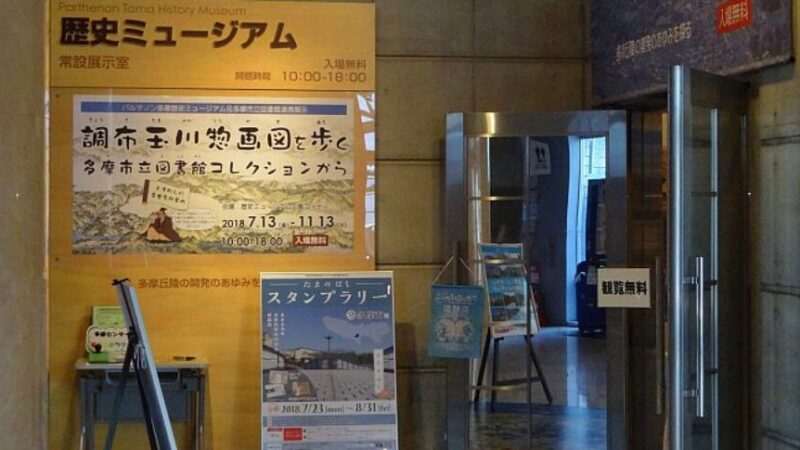
Located in Fuchu City, adjacent to Kunitachi City, this museum allows visitors to learn about the history and nature of the Tama region, and features a planetarium. Since astronomical elements sometimes appear in the Monogatari series, visitors can have an interesting experience.
Kunitachi Historic House (Former Yanagisawa Residence)
An Edo period historic house preserved within Kunitachi City. Visitors can view traditional Japanese architecture and experience an atmosphere where “oddities” seem to lurk.
Tama Zoological Park
A large-scale zoo in nearby Hino City. It is ideal for spending relaxed time during breaks from sacred site pilgrimages.
Access Information
Access to Kunitachi City is extremely convenient.
By Train
JR Chuo Line:
- Approximately 25 minutes from Shinjuku Station (using rapid trains)
- Approximately 40 minutes from Tokyo Station
- Approximately 5 minutes from Tachikawa Station
Kunitachi Station is served by both local and rapid trains on the Chuo Line, making access easy.
Transportation from the Station
Transportation from Kunitachi Station to major sites:
- Daigaku-dori: Walking distance from the station
- Hitotsubashi University: Approximately 10 minutes on foot from the station
- Yaho Tenmangu: Approximately 15 minutes on foot from the station, or by bus
- Tamagawa Riverbank: Approximately 20 minutes on foot from the station
The city is relatively compact, so traveling on foot is the basic mode of transportation. Bicycle rental services are also available, and if you want to efficiently visit multiple sites, consider using them.
Accommodation Information
While there are few large-scale hotels in Kunitachi City itself, various lodging facilities are available in the surrounding area.
Within Kunitachi City
There are several business hotels near Kunitachi Station. While small, these facilities are generally clean and comfortable.
Tachikawa City
The adjacent Tachikawa City has many hotels. Since it is approximately 5 minutes by train to Kunitachi Station, using Tachikawa as a base is also convenient. The area around Tachikawa Station is well-equipped with commercial facilities, so there are plenty of shopping and dining options.
Shinjuku and Tokyo Area
Since it is within a reasonable distance for day trips, staying at a hotel in central Tokyo and visiting Kunitachi City during the day is also a realistic plan.
Local Cuisine
One of the pleasures of sacred site pilgrimages is savoring local cuisine. Kunitachi City has numerous distinctive restaurants.
Around Daigaku-dori
True to its student district character, there are abundant affordable and delicious restaurants. Options include traditional coffee shops, quirky cafes, and full-service restaurants with diverse selections.
In particular, old-fashioned coffee shops offer a calm atmosphere where it seems the characters from Monogatari might visit.
Around Yaho Station
Near Yaho Station, close to Yaho Tenmangu, there are restaurants loved by local residents. Particularly at Japanese sweet shops, visitors can purchase souvenirs when visiting the shrine.
Event Information
Various events are held throughout the year in Kunitachi City. Experiencing them along with sacred site pilgrimages will enable a more fulfilling experience.
Kunitachi Cherry Blossom Festival (April)
A spring celebration held when the cherry blossoms on Daigaku-dori are in full bloom. Various events and performances are held, drawing large crowds.
Tenka-ichi (November)
An autumn grand festival held at Yaho Tenmangu. A traditional festival featuring portable shrines and floats, offering the chance to experience local culture.
Kunitachi Autumn Citizen’s Festival (November)
A community-participation event where various activities are held centered on Daigaku-dori. It is a good opportunity to discover the attractions of the region.
Fan Community
Monogatari series fans exist worldwide, and information exchanges about Kunitachi City sacred site pilgrimages are actively conducted.
Information Sharing on Social Media
On Twitter and Instagram, many fans share their pilgrimage experiences using hashtags such as “#化物語聖地巡礼” and “#国立市”. Checking these posts before visiting can help you learn about the latest information and photography spots.
Meetups and Events
Off-meetings where fans gather and guided sacred site pilgrimage tours are held irregularly. Conducting a pilgrimage together with fellow fans who love the same work can lead to a deeper experience.
To Deepen Your Understanding of the Work
Understanding the Monogatari series more deeply before visiting Kunitachi City will make your sacred site pilgrimage more meaningful.
Reading the Original Novels
Reading Nisioisin’s original novels allows for a deeper understanding of the fictional world. Paying particular attention to descriptions of locations reveals the correspondence with Kunitachi City.
Watching the Anime
The anime adaptation by Shaft visualizes the fictional world through unique visual expression. Paying attention to background art may reveal similarities to actual locations.
Related Publications
Numerous explanatory books, critical works, and fan books related to the Monogatari series have been published. Reading these helps you understand the depth of the work and the significance of the setting.
Conclusion
The relationship between the Monogatari series and Kunitachi City in Tokyo holds special meaning for fans who love the work. By using a real city as the setting, the fictional world feels more familiar and realistic.
Kunitachi City is a unique and charming city where the orderly beauty of an academic city harmonizes with historic shrines and abundant nature. By walking through this city, we can experience the same scenery the characters of the Monogatari series saw.
Sacred site pilgrimages are not only an opportunity to deepen one’s love for a work but also a chance to discover new places and learn about the culture and history of a region. When visiting Kunitachi City, savor the city’s charm fully, not just as a fan of the work but as a traveler.
Respecting etiquette and never forgetting consideration for local residents, please enjoy a wonderful sacred site pilgrimage. The special experience of the Monogatari world and the reality of Kunitachi City intersecting awaits you.